
Are you about to witness a miracle? If you’re incubating or have a broody hen, soon you’ll be welcoming new chicks into your flock. Chicken egg hatching is an intricate and fascinating process that spans 13 days, from day zero to emergence. It’s a journey filled with growth, transformation, and crucial milestones. As a chicken keeper, understanding the stages of embryonic development will help you better care for your eggs and ensure a smooth hatch.
In this comprehensive guide, we’ll take you through each critical phase, explaining what happens during each 24-hour period. From fertilization to pipping and finally, breaking free from their shells, we’ll cover it all. Whether you’re an experienced breeder or just starting out with backyard chickens, our detailed day-by-day account will provide valuable insights into the incredible process of chicken egg hatching.
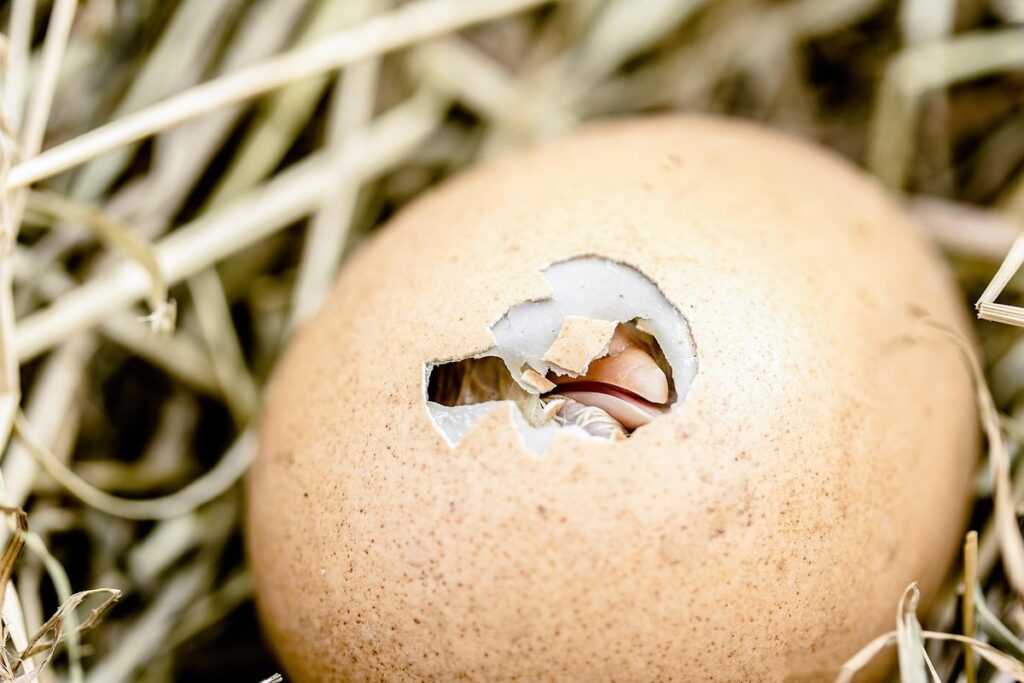
Day Zero to One: Preparation and Incubation
Before hatching day arrives, a lot of preparation goes into creating an optimal environment for your chicks. Let’s dive into the crucial steps involved in setting up for success from Day Zero to One.
Understanding the Basics of Embryonic Development
As we approach Day Zero to One, it’s essential to understand the initial stages of embryonic development. This process begins with fertilization, where a sperm meets an egg in the hen’s oviduct. When this happens, it triggers a chain reaction that sets off a series of cellular divisions and growth.
Within 24 hours after fertilization, the embryo undergoes its first cleavage, dividing into two cells. These cells then continue to divide, multiplying rapidly as they grow. This initial cell division lays the foundation for the entire development process.
As the embryo grows, it begins to implant itself in the hen’s uterus lining. This is a critical stage, where the embryo starts to absorb nutrients and oxygen from the mother. The growth rate is incredibly fast, with some embryos doubling in size every 24 hours.
By the end of Day One, the embryo has already developed into a small ball of cells, called a blastoderm. This marks the beginning of gastrulation, a complex process where the embryo starts to take shape and form its basic structures. The next stage will be crucial for hatching, as the chick begins to develop its vital organs and features.
Setting Up the Incubator for Success
Setting up an incubator for success is crucial to ensure that your chicks develop properly and hatch healthy. The temperature, humidity, and ventilation controls are critical factors to consider when setting up your incubator.
First, let’s start with the temperature control. A consistent temperature between 99°F to 100°F (37°C to 38°C) is essential for proper embryonic development. It’s vital to ensure that the temperature remains stable throughout the incubation period. You can use a thermometer to monitor the temperature and make adjustments as needed.
Next, humidity plays a significant role in incubation. A humidity level of around 50-60% is ideal for the first half of the incubation period. As the eggs approach hatching, the humidity should be reduced to around 30-40%. You can control humidity by using a water tray or a humidifier.
Ventilation is another essential aspect of incubator setup. Proper ventilation helps maintain a healthy environment and prevents moisture buildup. Make sure to follow the manufacturer’s guidelines for ventilation settings.
To ensure that your incubator is functioning correctly, it’s recommended to perform regular checks on temperature, humidity, and ventilation levels. By doing so, you’ll be able to catch any issues early on and make necessary adjustments to create an ideal environment for hatching success.
Day One: Fertilized Egg Characteristics and First Signs of Life
On day one, your fertilized egg is a tiny cluster of cells that will soon develop into an adorable chick. Let’s take a closer look at its characteristics and first signs of life!
Recognizing a Fertilized Egg
When it comes to identifying a fertilized egg, it’s essential to look beyond its outward appearance. While some differences may be subtle, there are distinct characteristics that can indicate whether an egg has been successfully fertilized.
To start with, a fertilized egg will typically have a more even and consistent texture. When you gently rotate the egg between your fingers, you’ll notice that it feels denser and firmer compared to an unfertilized egg. This is due to the presence of the embryo, which begins to develop shortly after fertilization.
In terms of appearance, look for a slightly darker or more mottled sheen on the shell’s surface. Some farmers swear by the “dark line” method: gently pressing your finger onto the egg white to see if a dark line forms – this can indicate the presence of an embryo.
It’s also worth noting that some eggs may exhibit slight imperfections, such as tiny ridges or pitting, which are harmless and not indicative of fertility. By taking a closer look at these subtleties and paying attention to texture and appearance, you can gain a better understanding of whether your egg has been successfully fertilized.
The First Signs of Embryonic Activity
As we enter day one of the incubation process, tiny yet remarkable changes are occurring within the fertilized egg. These early developments set the stage for the incredible journey that lies ahead. The first physical sign of life is often referred to as cleavage, where the single cell undergoes rapid division to form two, then four, and eventually eight cells.
This initial segmentation process establishes the foundation for further growth and development. The cells begin to take on distinct characteristics, forming a layer called the blastoderm. It’s essential to note that these early divisions occur within the first 24 hours after fertilization, making it crucial to provide optimal incubation conditions during this critical period.
As the embryo continues to grow, the yolk sac begins to form, providing vital nutrients for its development. The formation of the yolk sac is a significant milestone in the process and will continue to play a vital role as the embryo grows. It’s essential to maintain precise temperature control, humidity levels, and turning frequency during this early stage to ensure optimal development.
The first signs of embryonic activity are subtle but essential for understanding the complex processes at work within the egg. As we move forward in our daily journey, it’s crucial to recognize these developments as a sign of life and growth, setting us up for the exciting hatching process that awaits us on day 21.
Day Three: Gastrulation and Organ Formation
On day three, your embryo is undergoing a remarkable transformation as it begins to develop its internal organs and start taking shape. Gastrulation is underway!
Understanding Gastrulation
Gastrulation is a complex and fascinating process that occurs within the first three days of embryonic development. As the blastoderm begins to fold in on itself, cells start to differentiate into distinct layers: ectoderm, endoderm, and mesoderm. These layers will eventually give rise to all tissues and organs in the chick embryo.
During gastrulation, the blastoderm undergoes a series of cellular rearrangements, including invagination (where cells fold inward) and ingression (where cells migrate into the interior). This process is critical for establishing the basic body plan of the embryo. For example, the ectoderm will give rise to the nervous system and skin, while the endoderm will form the lining of internal organs such as the gut.
Understanding gastrulation can be a challenge, but one way to visualize it is by imagining a sheet of cells that begins to fold and crease, eventually forming distinct layers. This process occurs rapidly, often within 24-48 hours. By day three, the chick embryo has begun to take shape, with its basic body plan in place.
The Emergence of Vital Organs
As we reach day three of incubation, the embryo is undergoing a significant transformation. Gastrulation, which began around 48 hours ago, has given way to organogenesis – the formation of vital organs that will sustain life outside the egg. It’s an incredible process where complex tissues start to differentiate and organize into distinct structures.
One of the first organs to take shape is the heart. The cardiogenic field, located near the ventral midline, begins to contract and pump blood through its primitive chambers. This marks a crucial milestone in development, as the embryo’s circulatory system starts to function independently. As the heart pumps blood, it also helps to stimulate the growth of surrounding tissues.
The lungs begin to form around this time as well, with the trachea (windpipe) emerging from the floor of the pharynx. This early branching pattern will eventually give rise to the complex airways and lungs we see in hatching chicks.
Day Five: Limb Formation and Organ Maturation
On day five of your chicken egg hatching journey, remarkable developments are taking place as tiny limbs start to form and vital organs mature in preparation for life outside the shell.
The Development of Limbs
As we reach day five of incubation, a pivotal moment in embryonic development occurs: the formation of limbs. At this stage, the embryo’s body begins to take shape, and the initial limb buds start to emerge. These buds are small protrusions that will eventually develop into fully formed wings, legs, and other appendages.
As the embryo grows, the limb buds begin to differentiate and grow in size. The upper limb bud starts to form first, followed by the lower limb bud. As you observe your chick’s development, you’ll notice that the limb buds are initially quite small and rounded. However, as they continue to grow and develop, they start to take on a more defined shape.
It’s essential to remember that each day is crucial in the formation of limbs. During this period, the embryo’s body undergoes rapid growth and differentiation, making it a critical time for proper incubation conditions. Maintaining a consistent temperature and humidity level will help ensure that your chick develops properly.
Maturation of Internal Organs
As we approach day five, the embryos’ internal organs are rapidly maturing to prepare for life outside the egg. One of the most critical developments is the formation and functioning of the heart, lungs, and digestive system. The heartbeat becomes more rhythmic and stronger, while the lungs begin to produce a small amount of surfactant, which will aid in expanding them after hatching.
The liver starts producing bile, and the pancreas begins secreting digestive enzymes. These developments enable the embryo’s internal organs to become functional and independent before breaking free from its shell. The kidneys start filtering waste products from the bloodstream, ensuring that the embryo is equipped with essential systems for survival.
As you observe your chick on day five, look for signs of these maturing organs, such as increased movement and responsiveness. However, it’s essential not to stress the developing chick, as excessive handling can disrupt its delicate development process. Instead, maintain a consistent environment, provide adequate nutrition, and ensure proper temperature control to support the internal organs’ maturation.
Day Seven: Feather Peep and Lung Development
On day seven, your chick’s lung development is gaining momentum, allowing them to take their first puffs of air, while feathers start to show. This marks a crucial turning point in their growth.
Understanding Feather Peeps
As you approach day seven, you may notice some significant changes in your chicks. Around this time, they start to develop their feathers, and it’s not uncommon for them to look a bit fluffy and puffed up. This is because the quill knobs on their skulls are starting to form, which will eventually support their flight feathers. These tiny growths can be quite noticeable, especially if your chicks have white or light-colored plumage.
This stage of feather development is often referred to as “feather peeping” or simply “peeping.” It’s a natural part of the hatching process and usually occurs between day six and eight. During this time, your chicks are also undergoing significant changes in their respiratory system, including the growth of lungs and air sacs.
It’s essential to provide adequate ventilation and humidity levels during this stage to ensure proper development. As your chicks continue to grow and develop, they’ll start to regulate their body temperature more efficiently, and you may notice them getting more mobile and active. Keep a close eye on their surroundings, as they can be prone to overheating or cooling down too quickly.
Advancements in Lung Functionality
As we approach day seven of the incubation process, significant advancements are taking place within your chick’s respiratory system. The lungs, which were previously underdeveloped and fragile, are now maturing at an incredible rate. Over the next few days, you can expect to see noticeable changes in lung functionality.
One key indicator of progress is the expansion of the air sacs, which provide vital oxygenation and carbon dioxide removal for your chick. As these sacs continue to grow and mature, you may notice a slight increase in the amount of yolk sac remaining within the egg. This is completely normal and indicates that the lungs are taking over respiratory functions.
Potential complications can arise if the air sacs become too large or fail to expand properly. Monitor your chick’s development closely, ensuring that there are no signs of distress or difficulty breathing. By day nine or ten, you should start noticing significant improvements in lung functionality, with visible expansion and a decrease in yolk sac size.
Keep an eye out for these key milestones: the air sacs should be prominent, and the lungs will have taken over respiratory functions, leading to a more efficient exchange of oxygen and carbon dioxide.
Day Ten: Beak Development and Feather Emergence
Today, you’ll get to witness your chick’s beak start taking shape and their delicate feathers begin emerging from their tiny bodies, a remarkable transformation. This is an exciting milestone in their development!
The Growth of Beaks
As we reach day ten of incubation, you’ll start to notice significant changes in your chick’s beak. What was initially a soft, sensitive point is gradually taking shape into a hardened, functional tool that will play a crucial role in feeding behavior post-hatching.
At this stage, the beak tip begins to harden, and the upper mandible starts to grow, eventually meeting the lower one. This process, called keratinization, involves the formation of tough, protein-based fibers that give the beak its strength and rigidity.
As your chick’s beak takes shape, you may observe changes in their feeding behavior. They’ll begin to peck at food and water more confidently, using their new beak to scoop up and manipulate particles. It’s essential to provide a shallow dish for water to allow them to easily access it with their developing beaks.
By day ten, your chick should have a fully formed beak that will continue to grow and develop after hatching. As they transition from the incubator to their new surroundings, ensure you offer a well-rounded diet and plenty of fresh water to support optimal growth and development.
Initial Appearance of Feathers
As you observe your chick on day ten, you’ll start to notice small protrusions emerging from its body. These tiny growths are the initial appearance of feathers, a crucial milestone in the hatching process. At this stage, the plumage is still soft and fluffy, but it’s a vital step towards developing the insulating layer that will keep your chick warm.
These early feather buds start as small pinpricks on the skin, gradually growing longer and thicker over the next few days. You might see them as tiny white or yellowish dots scattered across the body, particularly around the neck, back, and wings. These emerging feathers are still quite soft to the touch but will soon develop into a beautiful, vibrant plumage.
As your chick grows, these initial feather buds will begin to take shape, eventually forming the distinctive contours of its adult plumage. To encourage healthy growth, make sure your chick’s environment remains warm and humid, with plenty of ventilation to prevent respiratory issues. Keep an eye out for any signs of stress or discomfort, as this can hinder feather development.
Day Twelve to Thirteen: Advanced Lung Function and Final Preparations
As we reach the twelfth to thirteenth day, your chicks’ lungs are maturing rapidly, and it’s essential to monitor their progress closely. Their beaks and legs should also be getting stronger by now.
Further Maturation of Lungs
As you reach day twelve to thirteen, your chick’s lungs are still maturing. This final stage of lung development is crucial for a healthy hatch. It’s essential to understand that even though the chick has been breathing air from the outside through the eggshell pores since around day 12-13, its lungs continue to develop and refine their function.
You might notice your chick tucking its beak under its wing more often now. This behavior is not only a sign of relaxation but also a reflection of its developing respiratory system. As the lungs expand and become more efficient, the chick’s need for oxygen increases, causing it to breathe more frequently.
Keep an eye out for a slight increase in moisture on the beak and around the nostrils, as this indicates improved lung function. However, don’t worry if you notice any changes – they’re normal signs of maturation.
The final stage of lung development is almost complete by day 13. Now your chick’s respiratory system is ready to support life outside the eggshell.
Final Days Before Hatching
As you approach the final days before hatching, several critical developments have been unfolding within the egg. From day one to thirteen, a multitude of intricate processes have converged to bring your chick to life. The lungs, which were initially underdeveloped, are now fully formed and functional, allowing for gas exchange between the embryo and the air.
In these final stages, you may notice the chick’s lungs expanding and contracting as they prepare for their first breaths outside the egg. This is an exciting moment, but it also requires careful attention to ensure a smooth transition to life outside the shell. Make sure the incubator or brooder is maintained at optimal temperatures (around 99-100°F) and humidity levels (50-60%) to support healthy lung development.
As hatching approaches, you’ll also notice increased pecking and pip attempts from the chick. This behavior is a sign that they’re ready to break free from their confines. Keep a close eye on the egg, as it’s essential to intervene if necessary to prevent damage or injury to the developing chick.
Frequently Asked Questions
What should I do if my incubator fails to keep a consistent temperature during the early stages of embryonic development?
Be sure to monitor your incubator’s temperature closely, especially from Day Zero to Three, as these initial days are critical for proper development. If you notice any fluctuations, adjust your temperature control settings accordingly and ensure good air circulation within the incubator.
How can I prevent moisture buildup in my incubator, which could lead to mold or bacterial growth?
To maintain a healthy environment, regularly clean and disinfect the incubator, and check for condensation on the walls and floor. Also, keep the incubator well-ventilated by adjusting air circulation settings to promote airflow.
What are some common signs of embryonic distress that I should look out for during the hatching process?
Monitor your eggs closely from Day Twelve to Thirteen, watching for reduced movement or no movement at all. If you notice any unusual behavior, it may indicate a problem with lung development or other issues related to hatching.
How do I know when my chicks are ready to emerge from their shells after pipping has started?
Pay attention to the time elapsed since pipping began and look for signs of vigorous pecking at the air sac. As long as your incubator’s humidity is around 40-50%, it should be safe to leave your eggs alone, allowing nature to take its course.
What can I do if my chicks don’t hatch within a reasonable timeframe after Day Thirteen?
If you haven’t observed any movement or signs of life by the end of Day Thirteen, consider opening the incubator door slightly and carefully inspecting each egg. However, avoid touching or moving eggs excessively, as this could cause more harm than good.