
If you’re considering adding some feathered friends to your farm or backyard, understanding geese breeds is essential. With over 100 recognized varieties worldwide, choosing the right breed can be overwhelming. Not only do different breeds have unique characteristics, but they also serve various purposes – from providing eggs and meat for food production to being loving companions.
This article will delve into the world of geese breeds, exploring their history, characteristics, and uses in both agriculture and as companion animals. We’ll cover native breeds, hybrids, and everything in between, helping you find the perfect fit for your needs. Whether you’re a seasoned farmer or just starting out, learning about geese breeds will give you a solid foundation to make informed decisions and create a harmonious relationship with these majestic birds.
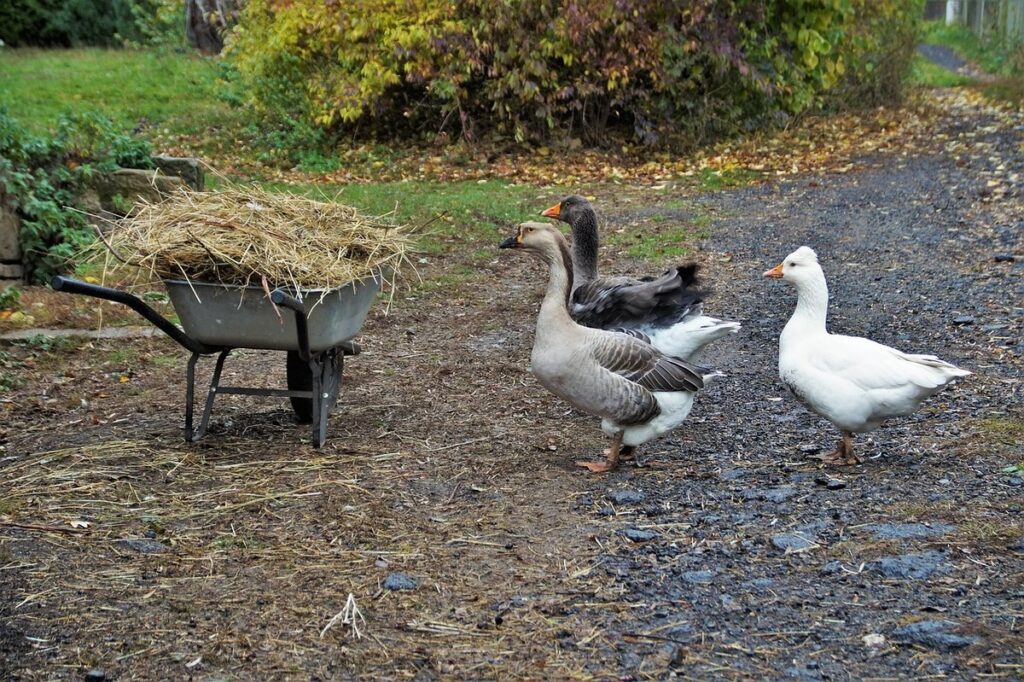
Introduction to Geese Breeds
Welcome to our comprehensive guide to geese breeds! Let’s dive into the fascinating world of these remarkable birds, exploring their unique characteristics and features.
History of Domesticated Geese
Geese have been domesticated for thousands of years, with evidence suggesting that they were first kept by ancient Egyptians around 3000 BC. These early birds were likely obtained from the wild and selectively bred to enhance desirable traits such as docility, smaller size, and a more docile temperament. The Egyptians prized geese not only for their meat but also for their role in protecting grain stores and temples from pests.
As civilizations rose and fell, the domestication of geese spread throughout Europe and Asia. In medieval times, geese were an integral part of rural life, providing both meat and eggs for households. Monasteries, with their extensive gardens and agricultural activities, also played a significant role in early goose breeding.
Today’s popular breeds such as Toulouse and Embden owe their origins to the selective breeding practices of these early farmers and monks. By understanding the history behind domesticated geese, we can appreciate the long journey that has led to the diverse range of breeds available today, each with its unique characteristics and traits.
Importance of Geese in Agriculture and Companion Animals
In addition to their fascinating diversity and unique characteristics, geese play a crucial role in agriculture and make wonderful companion animals. When it comes to pest control, geese are invaluable assets for farmers. Their keen sense of smell and agility allow them to detect and eliminate unwanted insects, rodents, and weeds with ease. For instance, a study conducted by the University of California found that geese can effectively reduce Japanese beetles in corn fields by up to 70%. By introducing these feathered friends to your farm, you’ll not only save time and resources but also reduce chemical usage.
Beyond their practical uses, geese are also a reliable source of protein-rich meat and eggs. With proper care and management, they can provide a steady supply of fresh produce for your family. For example, many backyard farmers opt for Khaki Campbells or Sebastopol geese due to their high egg-laying abilities. As companion animals, geese are known to form strong bonds with humans. They’re social creatures that thrive on interaction and attention, making them perfect additions to farms or homes with children. By embracing the importance of geese in agriculture and as companions, you’ll not only enjoy the benefits but also create a more harmonious and self-sufficient living environment.
Native and Ancient Geese Breeds
Some geese breeds have remained unchanged for thousands of years, their origins rooted deeply in ancient cultures and traditional farming practices. Let’s explore these incredible native and ancient breeds together!
Egyptian Goose
The Egyptian Goose is an ancient breed with a rich history that dates back over 4,000 years. Originating from Africa and the Middle East, this bird was highly revered by the Egyptians for its striking appearance and gentle nature. As you would expect from such an old breed, the Egyptian Goose has undergone minimal changes over time, retaining many of its original characteristics.
In terms of temperament, the Egyptian Goose is known to be friendly and social. They are often described as “dog-like” in their behavior, as they have a strong instinct to follow their owners around and interact with them. This trait makes them an excellent choice for families or individuals who want a geese breed that will form close bonds with its handler.
One of the most distinctive features of the Egyptian Goose is its striking appearance. They sport a sleek black neck, white face, and reddish-brown body plumage, making them a stunning addition to any backyard or farm. However, it’s worth noting that this breed can be quite vocal, so if you live in a residential area, it may not be the best choice.
In terms of characteristics, Egyptian Geese are relatively small compared to other breeds, weighing around 7-10 pounds (3-5 kg). They require regular exercise and a balanced diet to maintain their health and well-being. With proper care and attention, an Egyptian Goose can live for up to 15 years or more in captivity.
Sebastopol White Geese
The Sebastopol White Geese is one of the rarest and most unique goose breeds found globally. Originating from the French region of Normandy, this breed was initially prized for its exceptional egg-laying capabilities and soft, white down feathers.
Notably, the distinctive features of this breed include its small to medium size, weighing around 8-10 pounds, and its snow-white plumage, which remains even in adulthood. The Sebastopol White Geese has a relatively calm temperament, making it suitable for family-friendly farms or homesteads.
To maintain their unique characteristics, owners must ensure that the geese are bred naturally, without the influence of other breeds. It’s also essential to note that this breed is extremely sensitive to heat and humidity, necessitating cooler climates for optimal living conditions.
If you’re considering bringing a Sebastopol White Goose into your family or farm, be prepared for a long-term commitment, as these geese can live up to 20 years with proper care.
Toulouse Geese
Toulouse Geese have been around for centuries, originating from southwest France. Their rich history and heritage are still evident today, making them a popular choice among waterfowl enthusiasts. These gentle giants are known for their calm temperament, which makes them an ideal breed for families with children or for those who want a low-maintenance pet.
Toulouse Geese are primarily used for meat production, but they also have a secondary use as egg layers. They are prolific egg producers, laying around 40-50 large brown eggs per year. Their eggs are highly prized for baking and cooking due to their rich flavor and firm texture. In terms of temperament, Toulouse Geese are known to be docile and friendly, making them an excellent choice for those who want a breed that is easy to handle.
One of the key characteristics of Toulouse Geese is their ability to adapt to different living situations. They can thrive in small backyards or larger pastures, as long as they have access to plenty of water and space to roam. With proper care and attention, Toulouse Geese can live up to 20-25 years, making them a long-term companion for many families.
European and American Geese Breeds
Let’s explore the wonderful world of European and American geese breeds, including popular varieties like Embden and Pilgrim.
Embden Geese
The Embden Geese breed is a popular choice among farmers and hobbyists alike due to its impressive size and rich history. Originating from Germany in the late 19th century, this breed was developed for its exceptional meat production capabilities.
As a meat-producing breed, Embden Geese are known for their rapid growth rate and high-quality carcass. They typically reach maturity in just under 16 weeks, making them an attractive option for commercial farmers looking to capitalize on the demand for fresh poultry. In fact, studies have shown that Embden Geese can achieve weights of up to 4 pounds in a mere 12-14 weeks, far surpassing other breeds.
Breeding Embden Geese is relatively straightforward, as they are a hardy and adaptable breed that thrives in various environments. However, it’s essential to note that their size and growth rate require careful management to prevent overcrowding and disease outbreaks. With proper care and attention, an Embden Geese flock can provide a sustainable source of fresh meat for years to come.
African Geese (including Khaki Campbell and Brown African)
African geese, including the Khaki Campbell and Brown African breeds, are popular for their unique features, temperaments, and uses in agriculture and companion settings.
The Khaki Campbell breed is known for its brown feathers with a khaki tint, greenish-black bill, and legs of a pale pink color. They are a lightweight breed, making them suitable for smaller farms or homesteads. Their temperament is friendly and docile, but they can be wary of strangers. In agriculture, Khaki Campbells are used for egg production, laying an average of 300 large white eggs per year.
In contrast, the Brown African geese have a rich brown plumage with a distinctive golden sheen on their necks. They are larger than the Khaki Campbell breed and have a more assertive temperament, making them suitable for farms or properties with adequate space to roam. Brown Africans are also used in agriculture for egg production but are valued for their ability to protect other animals from predators due to their strong guarding instincts.
When keeping African geese as companions, it’s essential to note that they require regular exercise and a varied diet to maintain their health and well-being. A balanced feed or mix of grasses, plants, and grains is recommended to ensure they receive the necessary nutrients for optimal growth and egg production.
Ancona and Toulouse Geese
Ancona geese are known for their striking white plumage with black wings and tails, while Toulouse geese boast a rich, dark grey coat. When it comes to choosing between these two breeds, consider the specific needs of your flock.
Both Ancona and Toulouse geese excel in laying eggs, producing around 20-30 per year. However, Anconas tend to be more prolific layers during their first two years of life. Their eggs are often a beautiful shade of white, making them highly prized by commercial farmers for egg production. In contrast, Toulouse geese focus on meat production and typically weigh between 10-12 pounds at maturity.
If you’re looking to add geese to your backyard flock or start a small-scale farm, consider the space and care requirements of each breed. Ancona geese are generally more adaptable and easier to handle than Toulouse geese, which can be quite temperamental. When it comes to noise level, both breeds make their presence known but tend to quiet down after initial settling-in period.
Ultimately, your decision between Ancona and Toulouse geese will depend on your primary purpose: egg-laying or meat production, as well as the space and care you’re willing to provide for each bird.
Hybrid and Crossbred Geese
If you’re looking for a unique geese breed, you might want to consider hybrid or crossbred geese, which combine characteristics from different pure breeds. These birds offer exciting possibilities for waterfowl enthusiasts and poultry keepers.
Purpose and Benefits of Hybridization
Breeders create hybrid geese for several compelling reasons. One of the primary advantages is improved egg-laying capacity. By combining the high-yielding qualities of one breed with the exceptional laying abilities of another, hybrid geese can produce a significantly higher number of eggs per year compared to purebred individuals. For instance, crossing Embden geese with Toulouse geese resulted in offspring that laid up to 300 eggs annually.
Another significant benefit of hybridization is enhanced disease resistance. This is particularly crucial for large-scale commercial operations where the risk of disease outbreaks can be substantial. Hybrid geese are more resilient and better equipped to combat various pathogens, thereby reducing the need for antibiotics and other medications.
By selecting parents with desirable traits, breeders can create hybrid geese that excel in multiple areas, including egg production, feather quality, and overall hardiness. This strategic approach enables farmers and backyard enthusiasts alike to raise high-performing birds while minimizing health risks.
Characteristics of Popular Hybrid Breeds (e.g., Embden x Toulouse)
When it comes to hybrid breeds, the possibilities are endless. One of the most popular combinations is the Embden x Toulouse crossbreed. This mix brings together the gentle nature and friendly disposition of the Toulouse goose with the robust body type and high egg production of the Embden.
The result is a bird that excels in both farm and backyard settings. They are well-suited for small farms or homesteads, as they require minimal maintenance and are relatively low-maintenance compared to purebred geese. Their temperament makes them an excellent choice for families with children, as they are calm and gentle.
In terms of strengths, the Embden x Toulouse crossbreed boasts impressive egg production, averaging around 60-80 eggs per year. They also have a moderate growth rate, making them an ideal choice for those looking to raise geese from goslings. However, their growth rate can be slower compared to some purebred breeds, requiring patience and proper care.
When selecting this breed, it’s essential to consider your specific needs and environment. If you’re looking for a hardy bird that excels in cold climates, the Embden x Toulouse crossbreed is an excellent choice. They are also relatively quiet compared to other breeds, making them suitable for urban or suburban settings.
Some popular variations of this breed include:
* The Khaki Campbell x Embden combination, which brings together the prolific egg-laying ability of the Khaki Campbell with the robust body type of the Embden.
* The African x Toulouse crossbreed, which combines the hardiness and adaptability of the African goose with the gentle nature of the Toulouse.
Keep in mind that while these combinations may offer desirable traits, they can also result in unpredictable characteristics. It’s essential to research and understand the strengths and weaknesses of each breed involved before making a decision.
Ultimately, the Embden x Toulouse crossbreed is an excellent choice for those seeking a reliable and productive bird that excels in both farm and backyard settings. With proper care and attention, this hybrid breed can thrive and provide years of enjoyment and productivity.
Geese Breed Selection Criteria
When selecting a geese breed, it’s essential to consider factors such as purpose, climate, and personal preference. These criteria will help you narrow down your options and choose the perfect fit for your needs.
Choosing the Right Breed for Your Needs
When choosing a geese breed for your needs, there are several factors to consider. First and foremost, think about the size of the space you have available for your flock. Some breeds, such as Toulouse and Embden, can grow quite large and require plenty of room to roam, while others like Chinese or African Geese are more compact and suitable for smaller areas.
Temperament is also an essential consideration. If you’re looking for a breed that’s friendly and social, consider the Pilgrim or American Buff geese. These breeds are known for their gentle nature and make excellent family pets. On the other hand, if you need a breed with a more assertive personality to protect your property, the Embden or Toulouse may be a better fit.
Another key factor is egg-laying capacity. If you’re looking for a breed that will provide a steady supply of eggs, opt for breeds like Sebastopol or African Geese, which are known to produce around 30-40 eggs per year.
Temperament and Socialization Considerations
When it comes to domesticated geese breeds, socialization is crucial for their overall well-being and behavior. Geese are social animals that thrive on interaction with their flock members, which can lead to potential behavioral issues if not managed properly. For instance, geese may become aggressive or territorial if they’re isolated from their group for extended periods.
To prevent such issues, it’s essential to introduce your geese to other birds and people early in their life. Start by introducing them to a flock at around 6-8 weeks old, ensuring the introduction is slow and supervised to avoid any conflicts. You can also try separating your geese from time to time to provide them with some alone time, which can help prevent over-dependency on human interaction.
Maintaining a balanced social hierarchy within your flock is equally important. This involves monitoring their behavior, intervening if you notice signs of aggression or dominance, and adjusting the composition of the flock as needed. By doing so, you’ll create a harmonious environment that promotes the overall health and happiness of your geese.
Conclusion: Geese Breeds for Every Purpose
In conclusion, there’s an impressive array of geese breeds out there, each with its unique characteristics and uses. Whether you’re looking to add some ornamental flair to your yard or seeking a reliable source of fresh eggs and meat, there’s a breed that suits your needs. For example, the Embden goose is well-suited for large farms due to its impressive weight and high egg production. On the other hand, the Chinese goose makes an excellent choice for smaller properties due to its compact size and gentle demeanor.
Ultimately, the key to choosing the right geese breed lies in understanding your specific requirements and lifestyle. Take the time to research different breeds, consider factors like climate and space constraints, and don’t be afraid to consult with experienced breeders or enthusiasts. With patience and planning, you can find a breed that thrives under your care and brings joy and value to your life.
Frequently Asked Questions
How do I determine the right space requirements for my geese breed?
When choosing a geese breed, it’s essential to consider their specific needs regarding space and housing. Research the breed you’re interested in to learn about its recommended enclosure size, fencing requirements, and socialization needs. Ensure your available space can accommodate the breed’s adult size, wing span, and potential escape attempts.
Can I keep multiple geese breeds together, or do they have compatibility issues?
Geese breeds can be kept together, but it’s crucial to choose breeds with compatible temperaments and habits. Research the social dynamics of different breeds to avoid introducing aggressive or dominant birds into a flock. For example, some breeds like Toulouse Geese are known for their calm nature, making them suitable companions.
How do I ensure my geese breed is protected from predators?
Protecting your geese from predators requires careful planning and execution. Fencing should be sturdy enough to prevent escape attempts and predator entry. Consider adding protective barriers around the perimeter of your property, as well as securing any potential food sources that might attract unwanted visitors.
What are some key differences between native and hybrid geese breeds?
Native breeds have been developed over centuries in specific regions, resulting in distinct characteristics like unique feather patterns or disease resistance. Hybrid breeds, on the other hand, combine desirable traits from different native breeds to create more robust or high-yielding birds. When choosing a breed, weigh the benefits of each type and select one that meets your needs.
How can I determine if my geese are healthy and thriving?
Regularly monitor your geese’s behavior, appetite, and overall health to detect potential issues early on. Keep an eye out for signs like lethargy, changes in droppings or egg production, or unusual feathering. Consult with a veterinarian experienced in caring for geese to develop a comprehensive health plan tailored to your flock’s needs.