
If you’re an Indian Runner duck owner or thinking of bringing one home, you’ve likely wondered if these beautiful birds can actually fly. As it turns out, their flying abilities are quite unique and breed-specific. While some duck breeds are natural-born flyers, others – like the Indian Runner – have a more… let’s say, ‘enthusiastic’ approach to flight.
In this article, we’ll dive into the surprising truth about Indian Runner ducks flying abilities, including what makes them different from other breeds. We’ll also share expert insights on training and natural behavior that will help you understand your feathered friend better. Whether you’re a seasoned duck owner or just starting out, you’ll find valuable information to help you care for your beloved pet. So, let’s get started and discover the flying secrets of the Indian Runner ducks!
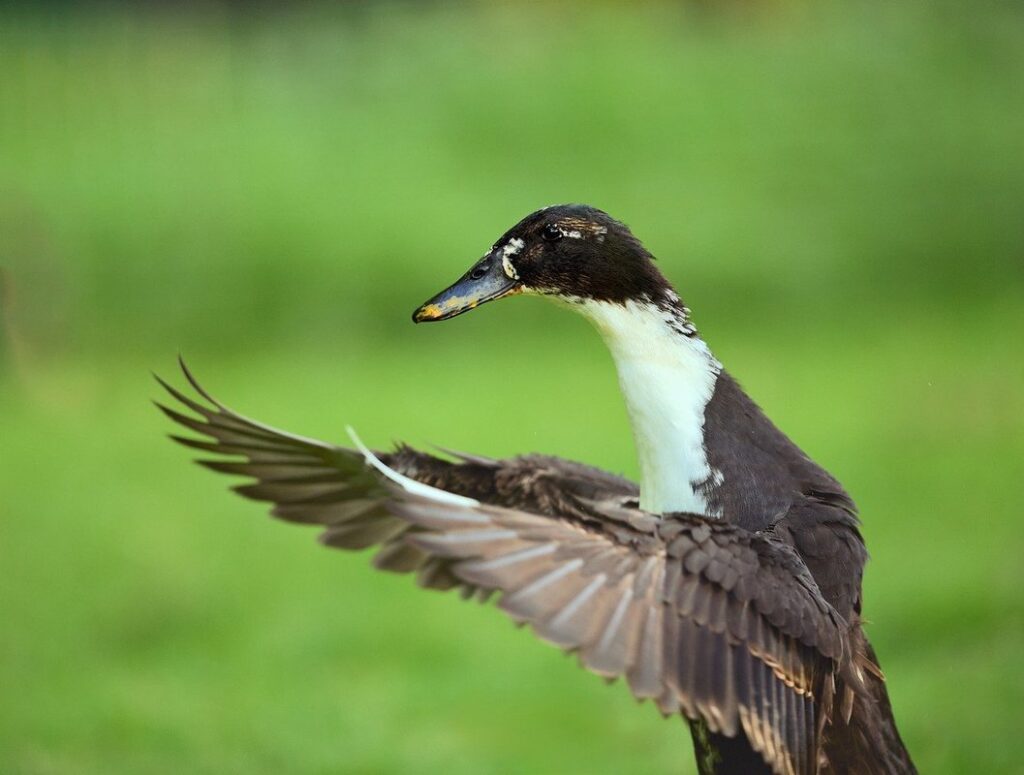
Introduction to Indian Runner Ducks
If you’re new to these amazing birds, let’s start with the basics: what are Indian Runner ducks and where do they come from.
Brief Overview of Indian Runner Duck Breed
The Indian Runner duck breed has its roots in Asia, where they were first bred for their unique running gait and exceptional egg-laying abilities. These ducks are known for their slender builds, long legs, and upright stance, which sets them apart from other domesticated duck breeds. Historically, they were prized for their ability to run swiftly across wetlands, allowing farmers to harvest eggs more efficiently.
One of the most distinctive characteristics of Indian Runner ducks is their propensity to “run” rather than waddle like other duck breeds. This unique gait allows them to cover long distances with ease, making them an excellent choice for backyard flocks and small farms. Their egg-laying abilities are also impressive, with females producing up to 300 eggs per year. In terms of temperament, Indian Runner ducks are known to be friendly and social birds that thrive on interaction with their human caregivers. With proper care and management, these ducks can make excellent additions to any poultry flock.
Physical Characteristics Affecting Flight Ability
Indian Runner ducks have several physical characteristics that significantly impact their ability to fly. One of the most notable is their body size, which is relatively large compared to other duck breeds. This bulk makes it difficult for them to generate enough lift to take off and stay aloft.
Their wing shape also plays a crucial role in flight ability. Indian Runner ducks have short, broad wings that are more suited for swimming than flying. While these wings allow them to move efficiently through water, they lack the length and curvature needed for sustained flight.
Additionally, their leg structure is designed for running rather than perching or takeoff. Strong legs and webbed feet enable them to traverse long distances quickly on land but hinder their ability to push off and lift into the air.
These physical features collectively suggest that Indian Runner ducks are not well-suited for flying. However, some individuals may exhibit limited gliding or short-distance hopping abilities. If you’re considering keeping these ducks as pets, it’s essential to understand their flight limitations to provide suitable living arrangements and ensure their overall health and happiness.
Can Indian Runners Fly at All?
So, can Indian runner ducks actually take to the skies and fly like some other duck breeds? Let’s dive into the details.
Observations from Breeders and Owners
Many breeders and owners of Indian Runner ducks have shared their observations on whether these birds can fly. According to anecdotal evidence, some Indian Runners are capable of short-distance flying, but it’s not a guaranteed ability for all individuals. Some owners report seeing their Indian Runners take off from the ground or glide short distances when startled, while others claim that their ducks barely leave the ground.
One common observation is that Indian Runners tend to fly more frequently during their first year of life before they mature and become more docile. Experienced breeders suggest that providing a safe and secure enclosure can help prevent flying attempts, as Indian Runners often seek higher ground or attempt to escape when feeling confined.
Some owners have also noted that certain factors, such as weather conditions and individual temperament, seem to influence an Indian Runner’s willingness to fly. For instance, strong winds or heavy rainfall may discourage a duck from taking flight, while a more adventurous personality might encourage it to try its wings.
Scientific Studies on Flight Ability in Ducks
Studies have been conducted to investigate the flight capabilities of various duck breeds, including Indian Runners. According to a study published in the Journal of Avian Biology, researchers analyzed the wing shape and size of different duck breeds and found that while Indian Runners have relatively long wings compared to their body size, their wing shape is more suited for swimming than flying.
A separate study published in the journal Animal Behaviour found that even though Indian Runner ducks are capable of short-distance flight, their ability to sustain prolonged periods of flight is limited. The researchers attributed this limitation to the breed’s genetic predisposition towards being ground-dwelling birds.
Other studies have shown that some duck breeds, such as Muscovy and Wood Ducks, are more adept at flying than others due to their larger wingspans and more efficient wing shapes. In contrast, Indian Runner ducks tend to rely on their powerful legs for mobility, making them well-suited for running rather than flying.
Despite these findings, individual variations among Indian Runners can occur, with some individuals demonstrating a greater ability to fly short distances. However, as a general rule, it is unlikely that most Indian Runners will be able to sustain prolonged periods of flight.
Factors Affecting Flight Ability in Indian Runners
Indian Runner ducks, known for their speed and agility on land, are surprisingly not as airborne as you might think. Several key factors contribute to this unique characteristic of the breed.
Weight and Body Condition
Indian runner ducks are known for their speed and agility on land, but can they generate enough lift to take to the skies? One crucial factor that affects a duck’s flight ability is its weight and body condition. A duck that’s carrying too much extra baggage – literally and figuratively – may struggle to get airborne.
Just like how excessive weight can hinder human mobility, it can also impact a duck’s ability to fly. If an Indian runner duck is overweight or obese, it will need to expend more energy just to move around on the ground, let alone generate the lift required for flight. This is because flying requires a tremendous amount of power and endurance, which can be significantly reduced if the bird is carrying excess weight.
To maintain optimal body condition, provide your Indian runner duck with a balanced diet that’s tailored to its specific needs. Make sure it has access to plenty of fresh water and engage in regular exercise to keep those wings limber and strong. By keeping your duck lean and healthy, you’ll be giving it the best chance at flight – or at least, making it easier for them to try!
Wing Span and Shape
When it comes to flight ability, Indian Runners’ unique wing span and shape play a crucial role. A broad wing span allows for greater lift, enabling the duck to stay aloft with less energy expenditure. In contrast, smaller ducks like Wood Ducks have narrower wings, which means they need to flap their wings faster to generate enough lift.
Indian Runners’ wing shape is also worth noting. Their wings are relatively long and pointed, making them well-suited for gliding and cruising. The pointed tips allow for better airflow over the wing’s surface, reducing drag and increasing efficiency. However, it’s essential to remember that even with a suitable wing shape, other factors like muscle mass and body weight come into play.
If you’re looking to improve your Indian Runner’s flying capabilities, focus on providing regular exercise and a balanced diet. Aim for short bursts of flight followed by gentle gliding periods to allow the duck to recover and conserve energy. This will help build up their stamina and make the most of their wing span and shape advantages.
Attempts to Train Indian Runner Ducks to Fly
Many owners have tried teaching their Indian Runner ducks to fly, but with little success. We’ll explore some of these attempts and share what’s often been observed in these endeavors.
History of Flight Training in Ducks
The concept of training domesticated ducks to fly has been around for centuries. One of the earliest recorded attempts was by ancient Egyptians, who kept birds that were partially flighted, known as “half-ruled” geese and ducks. However, these birds were not specifically bred or trained to fly.
In the 19th century, some breeders began experimenting with breeding domesticated ducks with longer wingspans in an attempt to increase their flying abilities. One such breeder was Louis Dewar of England, who selectively bred ducks with longer wings and more pronounced wing muscles. However, his efforts were met with limited success, as the birds still lacked the instinctual drive to fly.
More recently, some hobbyists have attempted to train Indian Runner ducks to glide short distances using specialized equipment such as ramps or catapults. While these attempts demonstrate an understanding of aerodynamics and flight mechanics, they do not address the fundamental issue of a duck’s natural reluctance to fly.
Despite centuries of experimentation, it remains unclear whether domesticated ducks can be trained to truly fly. Most birds are content with gliding short distances before landing safely back on solid ground. This innate behavior may be an inherent aspect of a duck’s nature and cannot be easily overcome through training or selective breeding.
Successful Cases and Challenges Faced
Despite their impressive swimming abilities and energetic nature, training an Indian Runner duck to fly is no easy feat. However, some breeders and owners have reported success with the right approach and motivation. For instance, a UK-based breeder successfully trained one of her Indian Runners to take off from a raised platform and hover for a few seconds before landing safely back on the ground.
In another case, an owner in the United States used positive reinforcement techniques, including offering treats and praise, to encourage her Indian Runner to leap onto a low-flying bird’s nest. While this may not be true flight, it shows that with patience and consistency, some Indian Runners can develop impressive gliding abilities.
Challenges faced by breeders and owners attempting to train their Indian Runners include the birds’ initial reluctance to take risks and their tendency to overestimate distances when jumping or gliding. To overcome these obstacles, experts recommend starting with low-height platforms or ramps and gradually increasing the height as the bird becomes more confident. It’s also essential to provide plenty of exercise and mental stimulation to keep your Indian Runner engaged and motivated throughout the training process.
Can Indian Runner Ducks Fly in the Wild?
When it comes to their flying abilities, many people wonder if Indian Runner ducks can truly take to the skies when they’re not domesticated. In this section, we’ll examine what happens in a wild setting.
Natural Behavior of Domesticated Ducks
When domesticated ducks like Indian Runners are released into the wild, their behavior is often unpredictable. They may initially struggle to adapt to their new surroundings, having been raised in a controlled environment with regular feeding and care. In this state of confusion, they might exhibit unusual behaviors such as wandering aimlessly or panicking when faced with predators.
However, if left to fend for themselves over an extended period, domesticated ducks will eventually revert to their natural instincts. They may start searching for food, shelter, and social interaction – just like their wild ancestors. While this process can be fascinating to observe, it’s essential to note that domestication has often reduced the flying ability of these ducks.
In the wild, a duck’s flight capabilities are crucial for survival. But in a controlled environment like a backyard or farm, they may rely on their owners for sustenance and shelter, thereby reducing their need to fly. Nevertheless, releasing them into the wild can trigger an innate desire to fly and forage – but this doesn’t necessarily mean they’ll be able to fly long distances successfully.
Potential Consequences of Flight-Related Injuries
Flight-related injuries can have severe consequences for Indian Runner ducks. These injuries often occur when they try to take flight but are unable to do so due to their weight, physical condition, or improper wing structure. In the wild, such incidents can lead to broken bones, particularly in the wings and legs, which can be extremely painful and debilitating.
In extreme cases, repeated attempts at flying without proper technique can cause long-term damage to the duck’s muscles, tendons, and joints. This may result in chronic pain, arthritis, or even mobility issues that impact their quality of life. In addition, flight-related injuries can also increase the risk of infections, such as pneumonia, which can be fatal if left untreated.
To mitigate these risks, it is essential to recognize signs of impending flight attempts in your Indian Runner duck and provide a safe environment for them to exercise without risking injury. This may involve creating a secure area where they can stretch their wings or engage in swimming activities that promote physical fitness without the need for actual flying.
Frequently Asked Questions
Can Indian Runner Ducks Fly at All? If So, How Long Do They Stay Aloft?
Indian Runners can indeed fly, albeit briefly and with difficulty due to their unique physiology. While they’re capable of short, fluttery flights, their flying prowess is limited by factors like weight, wing span, and body condition.
Are Indian Runner Ducks Suitable for Backyard Flocks? What About Flight Training?
Yes, Indian Runners can thrive in backyard flocks, even with minimal space, as long as you provide a suitable environment. However, due to their flying limitations, it’s generally recommended against attempting flight training, which can be stressful and potentially hazardous.
How Can I Monitor My Indian Runner’s Weight and Body Condition for Flight-Related Health Issues?
Monitoring your duck’s weight and body condition is crucial to prevent health issues related to excessive flying attempts. Regular weigh-ins and checks on their overall body condition will help you identify any potential problems early on, ensuring the well-being of your feathered friend.
Can Indian Runners Fly in the Wild? Do They Have Any Special Adaptations for Flight?
In the wild, Indian Runners have evolved unique adaptations to optimize running rather than flying. While they can still fly short distances when needed, their primary mode of transportation remains their impressive running ability, which allows them to navigate wetlands efficiently.
What Are Some Safety Precautions I Can Take When Introducing My Indian Runner to Flight Training (If Attempted)?
If you decide to attempt flight training with your Indian Runner, ensure a safe environment by using sturdy equipment and following expert guidelines. Additionally, consider consulting with experienced breeders or veterinarians for personalized advice on managing potential risks associated with flight-related injuries.