
If you’ve ever wondered just how much diversity exists within the world of chickens, you’re not alone. With over 400 breeds recognized globally, domesticated chickens have been selectively bred for centuries to serve various human purposes. But did you know that there are also wild species of chickens roaming our planet? In fact, scientists estimate that there may be as many as 20 distinct species within the genus Gallus, including the red junglefowl, grey junglefowl, and Ceylon junglefowl. This comprehensive guide will delve into the evolution, taxonomy, and global distribution of these fascinating birds. Whether you’re a seasoned poultry enthusiast or just starting to explore the world of chickens, this article aims to shed light on the astonishing diversity that exists within the chicken family tree.
Understanding the Diversity of Chickens
You might be surprised to learn that there are over 300 distinct species of chickens, each with its own unique characteristics and traits. In this section, we’ll explore what makes these birds so diverse.
Domesticated vs. Wild Chickens: A Brief Overview
When it comes to understanding the diversity of chickens, it’s essential to recognize the distinction between domesticated and wild chickens. While they share a common ancestor, these two categories have undergone significant changes over time.
Domesticated chickens, for instance, have been selectively bred by humans for various purposes such as egg production, meat, or companionship. This selective breeding has resulted in over 300 breeds worldwide, each with unique characteristics like feather pattern, size, and temperament. In contrast, wild chickens, also known as jungle fowl or Gallus gallus, are the ancestors of domesticated birds. They can still be found in their natural habitats in Southeast Asia.
One key difference between the two is their adaptability to human environments. Domesticated chickens have adapted well to living with humans and thrive in a variety of settings, while wild chickens tend to remain in their natural habitats. Understanding this distinction helps us appreciate the complexity and richness of chicken diversity.
Taxonomy and Classification: The Basics
When it comes to understanding the diversity of chickens, it’s essential to grasp the basics of taxonomy and classification. Taxonomy is the science of categorizing living things into groups based on their shared characteristics. In the case of chickens, this means grouping them according to their physical traits, behavior, and genetic makeup.
Classification involves assigning a scientific name to each group, using a combination of Latin words that provide information about the species’ characteristics. For example, the domestic chicken is classified as Gallus gallus domesticus, where “Gallus” refers to its genus (a level above species) and “domesticus” indicates its domesticated status.
To get started with taxonomy and classification in chickens, you can begin by looking at their physical characteristics. Note the size, plumage coloration, beak shape, and leg length of different breeds. You can also observe their behavior, such as aggression levels or foraging habits. By analyzing these traits, you can start to group chickens into broader categories and eventually identify distinct species.
By understanding the fundamental principles of taxonomy and classification, you’ll be better equipped to navigate the complex world of chicken diversity and appreciate the unique characteristics of each breed.
Evolutionary History of Chickens
Did you know that chickens have a fascinating evolutionary history, with a surprising number of species that diverged over millions of years. Let’s explore how they came to be.
Early Origins of Domestication
The early origins of chicken domestication are shrouded in mystery, but archaeological evidence and genetic studies have shed light on this fascinating process. It’s believed that chickens were first domesticated from the red junglefowl (Gallus gallus) around 8,000 years ago in the Southeast Asian region, specifically in present-day Thailand and Myanmar.
Genetic research suggests that these early humans likely encountered wild fowl during their transition from a nomadic to a more sedentary lifestyle. Over time, natural selection favored birds with desirable traits such as docility, smaller body size, and increased egg production. As humans began to actively manage and breed these birds, the foundation for modern chicken domestication was laid.
The geographical distribution of early chicken domestication was likely limited to the tropical regions of Asia, where wild fowl were abundant. Archaeological evidence from Neolithic sites in China, India, and Southeast Asia has confirmed the presence of early domesticated chickens around 7,000 years ago. These findings support the notion that chicken domestication occurred independently in different parts of Asia before spreading to other continents via trade and migration routes.
Phylogenetic Relationships Between Chicken Species
Chickens have been domesticated for thousands of years, but their evolutionary history is still shrouded in mystery. Phylogenetic studies have attempted to unravel the relationships between different chicken species, but the results are often conflicting and debated among scientists.
One notable finding is that chickens belong to a single genus, Gallus, which includes over 30 species. However, not all of these species are considered valid by taxonomists. For instance, some studies group the Red Junglefowl (Gallus gallus) and the Grey Junglefowl (Gallus sonneratii) as separate species, while others consider them to be subspecies.
The debate surrounding chicken phylogeny is further complicated by the presence of introgressed populations. These are groups that have interbred with domestic chickens, leading to a mixing of genetic material and making it difficult to determine their true relationships.
In fact, a study published in the journal Molecular Ecology found that some wild chicken species were more closely related to domestic chickens than others. This highlights the complex history of chicken domestication and the need for continued research into the phylogenetic relationships between different chicken species.
Researchers are now using advanced genetic techniques such as whole-genome sequencing to shed light on these relationships. By understanding the evolutionary history of chickens, we can better appreciate the diversity within this group and make informed decisions about conservation efforts.
Major Chicken Species Groups
The chicken world is incredibly diverse, and you might be surprised by how many distinct species exist within this vast group. Let’s dive into three major categories that make up a significant portion of all chicken species.
Gallus gallus: The Red Junglefowl and Its Relatives
The red junglefowl (Gallus gallus) is often considered the ancestor of all domesticated chickens. Native to Southeast Asia, this species is characterized by its vibrant plumage and distinctive call. In fact, research suggests that the red junglefowl’s genetic makeup is closely tied to that of modern chicken breeds. Studies have shown that nearly 90% of a red junglefowl’s DNA can be found in domesticated chickens.
Interestingly, the red junglefowl has two recognized subspecies: Gallus gallus murghi and Gallus gallus jabourovii. The former is found primarily in India and Pakistan, while the latter inhabits Cambodia and parts of Thailand. Understanding the relationships between these various species can provide valuable insights into chicken evolution.
One key takeaway from studying the red junglefowl is that many modern breeds have been bred from this ancestral stock. For example, some ornamental breeds are direct descendants of the wild red junglefowl’s genetic material. Knowing your chicken breed‘s ancestry can be essential for breeders and owners looking to appreciate their bird’s origins.
Phasianidae Family: A Diverse Group of Fowl
The Phasianidae family is one of the most diverse groups within the chicken species, comprising over 200 species. These birds are found in various parts of Asia and Europe, with habitats ranging from dense forests to arid deserts. One notable characteristic of Phasianidae birds is their impressive plumage, often featuring vibrant colors and intricate patterns.
Some members of this family, such as the partridges and pheasants, have unique mating behaviors that involve elaborate courtship displays. These displays can include complex songs, dances, and even extravagant plumage displays. For example, the Golden Pheasant’s iridescent feathers create a mesmerizing display during courtship.
Phasianidae birds are also skilled foragers, using their strong legs to scratch up seeds, insects, and other invertebrates from the ground. Many species are also known to be opportunistic omnivores, consuming a wide range of food sources depending on what’s available. Some Phasianidae species, such as the Himalayan Quail, have adapted to live in areas with limited vegetation by using their strong beaks to dig for roots and tubers.
Understanding the characteristics and behaviors of Phasianidae birds can provide valuable insights into chicken evolution and diversity. By studying these unique features, bird enthusiasts can gain a deeper appreciation for the rich history and adaptability of our feathered friends.
Other Notable Chicken Species
While we’ve focused on some of the most popular chicken breeds, there are many other notable species worth mentioning that are less well-known but equally fascinating. Let’s take a look at a few examples.
Common Pheasant (Phasianus colchicus): A Look at a Popular Game Bird
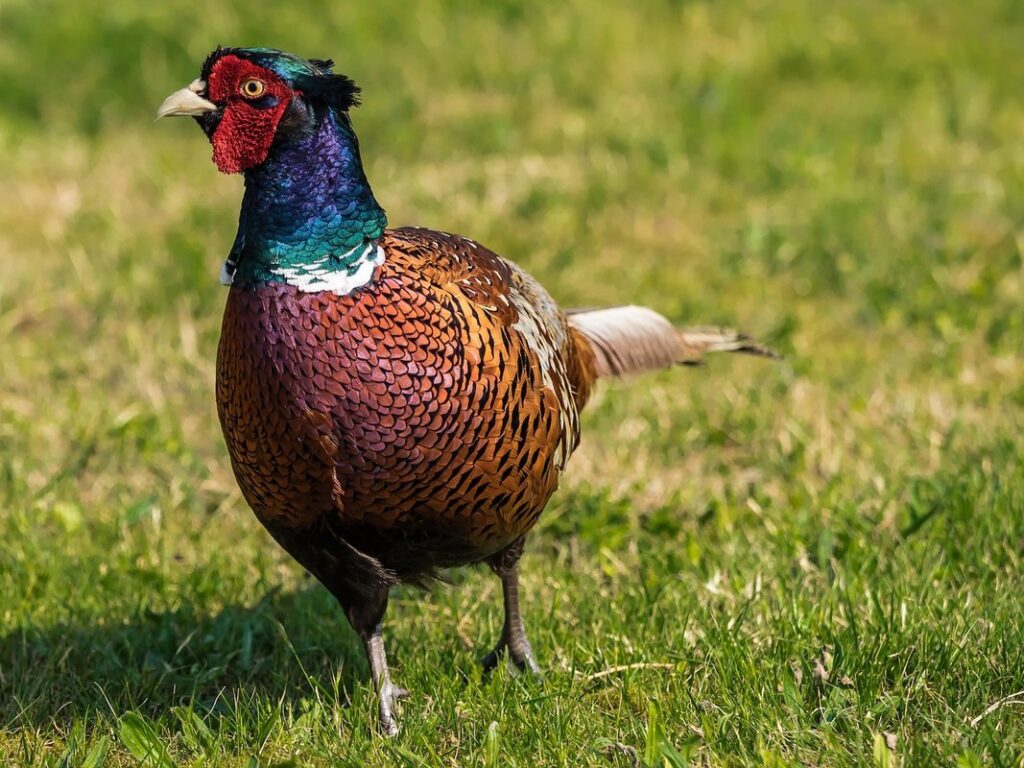
The Common Pheasant (Phasianus colchicus) is one of the most recognizable and sought-after game birds globally. Native to Asia, this stunning bird has been introduced to various parts of Europe and North America for hunting purposes.
In its natural habitat, the Common Pheasant inhabits grasslands, forests, and wetlands. These adaptable birds can be found in a wide range of environments, from the arid steppes of Mongolia to the lush countryside of the UK. Their unique plumage pattern of iridescent greens and browns allows them to blend seamlessly into their surroundings.
Throughout history, the Common Pheasant has played a significant role in human culture and hunting practices. In ancient China, pheasants were considered a symbol of good fortune and prosperity. Today, they remain a prized game bird for sportsmen and women worldwide. If you’re planning to go on a pheasant hunt, make sure to familiarize yourself with local regulations and safety guidelines to ensure a successful and enjoyable experience.
In terms of conservation efforts, the Common Pheasant is listed as Least Concern by the IUCN Red List. However, habitat destruction and hunting practices continue to threaten their populations in some areas. As responsible hunters and bird enthusiasts, it’s essential to respect these magnificent creatures and their habitats.
Buttonquail (Turnicidae family): Small but Distinctive Birds
Buttonquails are some of the most distinctive and intriguing members of the chicken family. These small birds may not be as well-known as their larger counterparts, but they have a unique set of characteristics that set them apart.
Found primarily in Southeast Asia and Australia, buttonquails inhabit grasslands, wetlands, and even urban areas. Their distribution is surprisingly diverse, considering their relatively small size. The Buttonquail’s ability to thrive in various environments can be attributed to their adaptability and flexibility.
Interestingly, buttonquails are known for their monogamous behavior. Many species form long-lasting pair bonds, with some pairs staying together for several breeding seasons. This level of commitment is rare among bird species, making the buttonquail all the more fascinating.
Buttonquails are also skilled foragers, using their sharp eyesight and agility to navigate through dense vegetation in search of insects, seeds, and fruits. Their small size belies a remarkable efficiency in finding food sources, allowing them to thrive in areas where larger birds might struggle to survive.
Domesticated Chicken Breeds: A World of Variety
From Leghorns to Orpingtons, there are over 300 recognized domesticated chicken breeds, each with its own unique characteristics and charm waiting to be discovered. Let’s take a closer look at some of these fascinating varieties.
Selective Breeding for Desired Traits
Selective breeding has been instrumental in creating an astonishing array of domesticated chicken breeds worldwide. By carefully selecting and mating chickens with desired traits, breeders have been able to produce a staggering number of breeds that cater to various needs and preferences.
Through selective breeding, we’ve seen the development of breeds that excel in egg-laying, such as Leghorns, which can lay up to 300 eggs per year. On the other hand, we have breeds like Brahmas, which are prized for their large size and gentle nature, making them ideal as pets or show birds.
To give you an idea of just how extensive this process has been, consider that there are over 3,000 distinct chicken breeds recognized globally by the American Poultry Association. This staggering number is a testament to the power of selective breeding in shaping the incredible diversity we see in domesticated chickens today.
When it comes to selecting your own breed, think about what you want from your chickens: do you need a high-egg producer or a gentle companion? Researching and choosing a breed that meets your needs can make all the difference in creating a happy and thriving flock.
Maintaining Biodiversity Among Domesticated Chickens
Breeders and conservationists are taking steps to preserve genetic diversity within domesticated chickens. Many organizations, such as the Livestock Conservancy, work with breeders to identify and promote heritage breeds that are at risk of extinction. These efforts involve preserving historical strains and promoting them in breeding programs.
One example is the development of the “Orpington” chicken breed, which originated from a single individual in England. Today, breeders continue to develop this strain through selective breeding, aiming to preserve its unique characteristics while maintaining genetic diversity. The Orpington’s story highlights the importance of preserving heritage breeds and promoting their conservation.
To contribute to preserving genetic diversity among domesticated chickens, individuals can:
* Support local farmers and breeders who prioritize preserving heritage breeds
* Learn about different chicken breeds and their histories to make informed decisions when choosing a breed for your farm or backyard flock
* Consider participating in breeding programs that promote genetic diversity within specific breeds
By working together, breeders, conservationists, and enthusiasts can help maintain the rich genetic diversity of domesticated chickens.
Global Distribution and Habitat Diversity
As we explore the fascinating world of chicken species, let’s take a closer look at how these birds have adapted to diverse habitats across our planet.
Tropical, Temperate, and Desert Habitats
Chickens have adapted to thrive in diverse environments worldwide. One of the primary factors influencing their distribution is climate and geography. Tropical habitats support a wide range of chicken species due to the region’s high temperatures, humidity, and abundant food supply.
For instance, the Red Junglefowl, considered one of the closest ancestors to domesticated chickens, is native to tropical forests in Southeast Asia. Similarly, many indigenous breeds found in India and Sri Lanka have evolved over time to withstand the extreme heat and humidity of their environments.
In temperate regions, chicken populations are more diverse due to the presence of a wider range of climates and vegetation types. In North America, for example, you can find breeds adapted to cold winters like the Brahma and Cochin, while in Europe, there’s a focus on heritage breeds such as the Leghorn and Marans.
Desert environments also support unique chicken species. The Egyptian Fayoumi, originating from the arid regions of Egypt, is well-suited for its hot and dry climate.
Human Impact on Chicken Populations
Humans have significantly impacted chicken populations worldwide through various activities. One major contributor is agriculture, which has led to widespread habitat destruction and fragmentation. As forests and grasslands are converted into agricultural land for crops like corn and soybeans, chickens lose their natural habitats and are forced to adapt to new environments.
Urbanization also plays a role in declining chicken populations. Cities expand, encroaching on rural areas where wild chickens once lived. This loss of habitat forces birds to migrate or live in smaller, fragmented groups, making them more vulnerable to predators and human activities like hunting.
Human actions have also driven domesticated chickens towards extinction. The rise of industrial farming has led to the selection of breeds that prioritize high egg production over genetic diversity. As a result, many heritage breeds are at risk of disappearing due to their lower productivity and lack of demand. By supporting sustainable agriculture and conservation efforts, we can help preserve chicken populations and promote biodiversity.
Frequently Asked Questions
How can I apply the understanding of chicken diversity to my own backyard flock?
If you’re a backyard chicken keeper, recognizing the different species and their characteristics can help you make informed decisions about your flock’s health, behavior, and well-being. For instance, knowing that certain breeds are more tolerant of heat or cold can aid in choosing the right birds for your climate.
What role does selective breeding play in maintaining biodiversity among domesticated chickens?
Selective breeding is a double-edged sword when it comes to preserving chicken diversity. On one hand, it allows humans to create specific traits and characteristics desirable for farming purposes. However, if not done carefully, it can also lead to the loss of genetic diversity within certain breeds.
Can I raise wild junglefowl in my backyard, or are they too challenging to care for?
While it’s theoretically possible to keep wild junglefowl as pets, it’s essential to consider their specific needs and requirements. They demand a lot of space, specialized housing, and a diet rich in insects and seeds – making them a significant undertaking for inexperienced chicken enthusiasts.
How can I learn more about the evolutionary history of chickens?
For those interested in delving deeper into the scientific aspects of chicken evolution, there are numerous resources available online, including peer-reviewed articles and academic journals that explore the phylogenetic relationships between different species. Additionally, museums and natural history institutions often host exhibitions and events focused on bird evolution.
What’s the difference between a breed and a species when it comes to chickens?
A breed typically refers to a specific domesticated chicken developed through selective breeding for desirable traits such as egg-laying capacity or feather quality. A species, on the other hand, represents a distinct group of organisms that can interbreed and produce fertile offspring – in this case, birds like the red junglefowl or Ceylon junglefowl.