
Are you considering adding some beautiful Toulouse geese to your backyard flock, or perhaps looking for a more comprehensive understanding of this historic breed? Either way, you’re in the right place. When it comes to choosing the perfect goose breed for your farm or homestead, knowledge is power – and that’s exactly what we’ll be diving into with this comprehensive guide on Toulouse geese.
From their origins as a prized meat bird in medieval France to their modern-day reputation as gentle giants, Toulouse geese have earned a special place in the hearts of many waterfowl enthusiasts. But there’s more to these birds than just their charming appearance – we’ll be exploring everything from their temperament and health considerations to expert care and management tips. Whether you’re a seasoned farmer or a curious newcomer to the world of waterfowl, this guide will give you all the essential Toulouse goose breed info you need to make informed decisions about your flock.
History and Origins
The Toulouse goose has a rich history that dates back centuries, with origins tracing back to medieval Europe where they were highly prized for their meat and eggs. Let’s take a closer look at how this breed came to be.
Early Development of the Breed
The Toulouse goose breed has its roots in medieval France, where it was first developed for its exceptional meat production. Initially, these geese were kept on small farms and estates to provide a source of protein for the local population. They were highly valued for their tender meat, which was often served at special occasions.
In terms of early characteristics, Toulouse geese were known for their distinctive black plumage with white feathers on their faces and wings. They also had a compact build, weighing around 12-14 pounds when mature. Their friendly and docile nature made them an ideal choice for family farms.
One of the key factors that contributed to the development of this breed was its adaptability to different environments. Toulouse geese were able to thrive in both hot and cold climates, making them a versatile choice for farmers across France.
Influence from Other Breeds
The Toulouse goose is not a purebred descendant of a single breed, but rather a result of crossbreeding with other geese to enhance its desirable characteristics. One key breed that significantly influenced the development of the Toulouse goose is the Embden. The Embden’s impressive size and robust build were likely introduced through crossbreeding, contributing to the Toulouse goose’s large stature.
Another important influence on the Toulouse goose was the African goose. This breed brought with it a unique combination of heat tolerance and gentle disposition, which are now hallmarks of the Toulouse goose. The addition of African genes is believed to have improved the Toulouse’s ability to thrive in warmer climates.
The interaction between these breeds has also led to the development of distinct feather patterns on the Toulouse goose. While some individual birds may exhibit a predominantly white or brown plumage, others display the characteristic “blaze” marking – a distinctive red stripe that runs along their breast and shoulders.
Historical Significance
The Toulouse goose has a rich and storied history that dates back to 17th and 18th centuries France. During this time, the breed was considered a luxury item among the nobility, prized for its exceptional meat quality, impressive size, and unique appearance. In fact, the Toulouse goose was so highly regarded that it became a staple at royal tables across Europe.
One of the main reasons for the breed’s popularity was its ability to produce succulent meat with minimal feed. This made it an attractive option for wealthy landowners who wanted to showcase their wealth through elaborate feasts and banquets. The Toulouse goose was often served as the centerpiece of these events, and its impressive size and rich flavor were sure to impress even the most discerning guests.
The breed’s association with French nobility is also evident in its use as a status symbol. Only those who could afford to keep such a high-end breed on their estates were considered worthy of respect. As a result, the Toulouse goose became an integral part of French aristocratic culture, and its legacy continues to be celebrated to this day.
Physical Characteristics
Let’s take a closer look at what makes Toulouse geese unique, starting with their physical characteristics that set them apart from other breeds.
Size and Build
Adult Toulouse geese are known for their robust build and impressive size. On average, they weigh between 15-20 pounds (6.8-9 kg), with some individuals reaching up to 25 pounds (11.3 kg) or more. In terms of height, they can stand around 24-30 inches (61-76 cm) tall at the shoulder.
One of the distinctive features of Toulouse geese is their muscular build, which is evident in their well-developed wings and strong legs. This build enables them to move efficiently on land and in water, making them excellent foragers and grazers.
Their feather coverage is another notable characteristic of Toulouse geese. They have a thick layer of soft, white feathers that provide insulation against cold temperatures and protect them from the elements. The feathers are also quite dense, which helps to reduce wind resistance and make flight more efficient.
When it comes to selecting a suitable enclosure for your Toulouse geese, consider providing enough space for them to move around comfortably. A minimum of 10 square feet (0.9 square meters) per bird is recommended, with adequate fencing to prevent escape attempts.
Plumage and Colors
The Toulouse goose breed is renowned for its stunning plumage colors and patterns. As you begin to learn about this magnificent bird, it’s essential to understand the various color types that can be found within this breed.
One of the most distinctive features of the Toulouse goose is its range of solid colors. These birds display a rich palette of hues including white, black, gray, brown, and buff. Each solid-colored goose has a uniform coat with no visible markings or patterns, making for a striking appearance that’s sure to turn heads.
In addition to solid colors, the Toulouse goose breed also boasts mottled and pied patterns. Mottled geese have irregular patches of color on their feathers, giving them a unique multi-tonal effect. Pied geese, on the other hand, display white bases with patches or splashes of color elsewhere on their bodies.
When selecting a Toulouse goose for your flock, it’s essential to consider not only its temperament and ability but also its striking appearance. If you’re looking to add some visual flair to your collection, mottled or pied geese could be the perfect choice – just be aware that these unique color patterns can make them slightly more challenging to identify during breeding season.
Head and Beak Characteristics
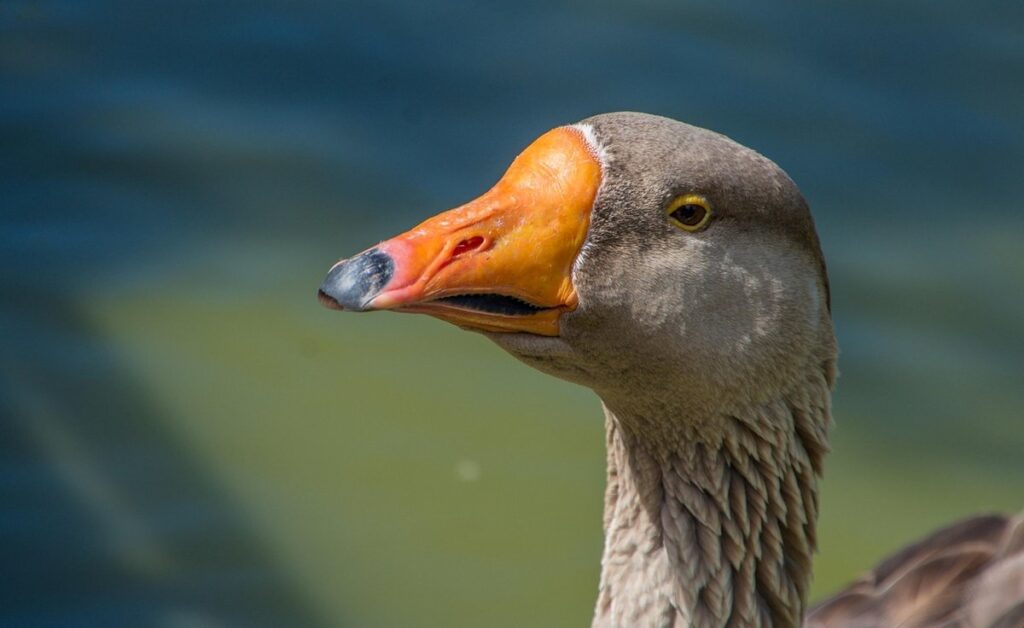
The head and beak of a Toulouse goose are distinctive features that set this breed apart from others. One of the most notable characteristics is their beak shape, which is broad and slightly curved upwards. This unique shape allows for efficient pecking at food and helps to break up seeds and grains with ease.
In terms of size, the beak of a Toulouse goose is relatively large compared to other breeds. This is likely due to its role in helping to process tough plant material. The coloration of the beak varies from yellowish-gray to dark gray, depending on the individual bird’s genetics. A pale yellow or orange tint may also be present on the tip.
When it comes to head shape, Toulouse geese have a relatively short neck and a broad, flat head that tapers slightly towards the eyes. This compact head shape is well-suited for its original purpose as a meat-producing breed in southern France. Overall, the distinctive head and beak characteristics of the Toulouse goose are just two of many features that make this breed so unique.
Temperament and Behavior
When it comes to getting along with your Toulouse goose, understanding their temperament and behavior is key. This crucial aspect of their personality will help you determine if they’re a great fit for family life or better suited as backyard companions.
Friendly Nature
One of the most appealing characteristics of Toulouse geese is their exceptionally friendly and docile nature. This trait makes them an ideal choice for family farms or smallholdings where social interaction with humans is encouraged. The temperament of a Toulouse goose is calm, gentle, and non-aggressive, allowing them to thrive in close proximity to people.
In contrast to other breeds that can be wary or even aggressive towards humans, Toulouse geese are known to form strong bonds with their owners. They are often described as being ‘lap-friendly’ and enjoy being handled, making them a delight for children to interact with. This friendly nature also makes them an excellent choice for teaching children about responsibility and animal care.
To encourage the development of this gentle personality, it’s essential to socialize your Toulouse goslings from an early age. Introduce them to various environments, people, and other animals to ensure they become confident and well-adjusted adults. With proper care and handling, Toulouse geese will reward you with years of loyal companionship and affectionate behavior.
Guarding Instincts
The Toulouse goose breed is renowned for its exceptional guarding instincts, making them invaluable companions for families and farmers alike. As natural watchdogs, they take their responsibilities seriously, actively defending their territory and loved ones against potential threats.
Their protective nature is deeply ingrained, often stemming from their instinctual behavior to safeguard their young. This trait can be observed when a Toulouse goose sees its chicks threatened by predators – it will fiercely defend them, using its powerful beak and wings to fend off the intruder. Their loyalty extends beyond just defending their immediate family; they are also fiercely protective of their home and surrounding area.
If you’re considering bringing a Toulouse goose into your life, it’s essential to understand and respect this aspect of their temperament. With proper training and socialization, their guarding instincts can be channeled into a valuable asset for your farm or homestead. By establishing clear boundaries and providing regular exercise and mental stimulation, you can help harness their natural protective abilities to ensure the safety and security of your property and loved ones.
When introducing a Toulouse goose to your family or farm, start by creating a safe and secure environment that allows them to thrive while also learning to trust new people and animals. This may involve gradually introducing the bird to its new surroundings and gradually increasing exposure to visitors and other animals on your property.
Training and Socialization
Training and socialization are crucial aspects of raising Toulouse geese from a young age. These birds are known for their strong personalities and can be quite stubborn if not properly handled. To develop a well-adjusted and friendly adult goose, it’s essential to start training and socialization early on.
Begin by establishing trust with your goslings through consistent interaction. Handle them gently and regularly, making sure they become accustomed to human presence. Start with short sessions, gradually increasing the duration as they grow more comfortable.
As they mature, focus on teaching basic obedience commands like “come” and “stay.” Reward good behavior with treats and praise, while ignoring misbehavior. Be patient and persistent – Toulouse geese can be strong-willed at times.
It’s also vital to socialize your goslings with other birds and people to prevent aggression or fear-based behaviors later on. Introduce them to a variety of environments, sights, and sounds to help them become confident and well-rounded individuals. With time and effort, you’ll have a well-mannered Toulouse goose that’s a joy to own.
Health Considerations
When considering a Toulouse goose for your flock, it’s essential to be aware of some potential health concerns that may arise. Regular veterinary care and monitoring can help prevent common issues.
Common Health Issues
As you consider bringing a Toulouse goose into your family, it’s essential to be aware of the potential health issues that can affect this breed. Obesity is a significant concern for Toulouse geese, particularly if they’re not getting enough exercise or are overfed with high-calorie foods. A sedentary lifestyle and excessive weight can lead to a range of problems, including heart disease, diabetes, and respiratory difficulties.
Another common health issue affecting Toulouse geese is respiratory problems. This breed can be prone to issues such as bronchitis, pneumonia, and sinus infections due to their compact body type and tendency to overeat. Regular cleaning of the enclosure, provision of fresh air, and a balanced diet can help prevent these conditions.
To minimize the risk of obesity and respiratory problems in your Toulouse geese, ensure they get plenty of space to move around outside, engage in regular exercise, and have access to fresh vegetables and fruits as part of their diet. Regular veterinary check-ups will also allow you to monitor your birds’ health closely and address any potential issues promptly.
Nutritional Needs
When it comes to maintaining the health and well-being of Toulouse geese, their nutritional needs are crucial. These birds require a balanced diet that includes essential nutrients such as protein, calcium, and vitamin A.
Toulouse geese need access to high-quality protein sources like grains, seeds, and legumes. You can provide them with oats, barley, or wheat, but it’s also important to supplement their diet with vegetables and fruits. Leafy greens like kale and spinach are rich in calcium and other minerals that support strong bone growth.
Vitamin A is another essential nutrient for Toulouse geese, particularly during molting seasons when their skin and feathers require extra nourishment. You can offer them foods high in beta-carotene such as sweet potatoes or carrots to ensure they get enough vitamin A.
To maintain a healthy digestive system, it’s recommended to provide fresh water at all times and limit the use of commercial pellets, which may contain fillers that can cause health issues over time. By understanding and meeting your Toulouse geese’ nutritional needs, you’ll be taking a significant step towards ensuring their overall well-being and longevity.
Breeding Programs and Genetics
The Toulouse goose breed is one of the oldest and most iconic waterfowl breeds, and preserving its genetic purity is crucial for its survival. To achieve this, several breeding programs have been established worldwide, focusing on maintaining the breed’s original characteristics.
These programs prioritize selecting parents with desirable traits such as feather quality, size, temperament, and egg-laying capacity. Breeders also pay close attention to avoiding inbreeding, which can lead to genetic disorders and decreased fertility. To maintain genetic diversity, cross-breeding with other heritage breeds is sometimes employed, but care must be taken not to dilute the Toulouse goose’s unique characteristics.
Some notable breeding programs include those run by the American Livestock Breeds Conservancy (ALBC) and the Waterfowl Association of America (WAA). These organizations work together to register and monitor Toulouse geese, ensuring that only birds with verified heritage status are bred. By supporting these efforts, enthusiasts can help preserve the breed’s integrity while also promoting its popularity among waterfowl keepers.
Care and Management
To care for a Toulouse goose, you’ll need to establish a regular routine that includes daily feeding, exercise, and monitoring of their health. This ensures they stay happy and healthy in their new home.
Housing Requirements
When it comes to providing suitable housing for your Toulouse geese, their welfare and health depend on it. First and foremost, ensure that you have enough space allocated for the birds. The minimum recommended enclosure size is 10 feet by 12 feet (3 meters by 3.6 meters) per pair of geese. However, bigger is always better when it comes to housing these magnificent creatures.
The shelter should be sturdy and well-ventilated with adequate protection from extreme weather conditions. A waterproof roof or canopy will help keep the birds dry during rain and snow, while a shade cloth can provide relief from scorching sunlight. You’ll also want to include a secure entrance that allows easy access for feeding and cleaning without allowing the geese to escape.
In addition, consider incorporating features such as nesting boxes, perches, and a water pool for your Toulouse geese to enjoy. This not only adds visual appeal but also keeps them happy and active throughout the day.
Feeding and Nutrition Plans
When it comes to feeding and nutrition plans for Toulouse geese, their specific needs should be considered at every stage of life. From goslings to adults, a well-planned diet is crucial for optimal health and performance.
For goslings (0-8 weeks), provide a starter crumble or pellet specifically formulated for waterfowl, along with access to fresh water and a calcium-rich oyster shell grit to support strong beak growth. A good rule of thumb is to feed 10-15% of their body weight daily, divided into 3-4 meals. For example, if your gosling weighs 1 pound, offer 0.1-0.15 pounds of starter crumble per meal.
As they mature (8 weeks and older), switch to a layer or maintenance feed, providing 16-18% protein content. Supplement with whole grains like oats, barley, and wheat, as well as fruits and vegetables like apples, carrots, and leafy greens. Fresh water and a calcium-rich grit should remain available at all times.
For breeding birds (6 months and older), consider offering a high-energy feed with 18-20% protein content to support reproductive health. Remember to provide fresh water and maintain a balanced diet that includes whole grains, fruits, and vegetables for optimal egg production and overall well-being.
Health Monitoring and Maintenance
Regular health checks and maintenance tasks are crucial to preventing common issues in Toulouse geese. As an owner, you should familiarize yourself with the breed’s specific needs to ensure they lead a long and healthy life.
Toulouse geese are prone to obesity due to their love for food, so it’s essential to monitor their weight and adjust feeding accordingly. A general rule of thumb is to provide 1/4 pound of food per goose per day, but this may vary depending on age, size, and activity level. Regular exercise, such as daily walks or playtime in a secure area, can also help maintain a healthy weight.
Additionally, keep an eye out for common health issues like mites, lice, and feather pecking. Regularly inspect their feathers and skin, and take prompt action if you notice any signs of infestation or damage. Clean living conditions and regular sanitation can go a long way in preventing these problems.
Conclusion and Final Thoughts
As you’ve made it through this comprehensive guide on Toulouse goose breed information, I’m sure you now have a deeper understanding of these magnificent creatures. If you’re considering adding a Toulouse goose to your family, remember that they thrive in social environments with plenty of attention and exercise. Don’t be fooled by their gentle nature – they still require regular veterinary care and a balanced diet. With proper care, a Toulouse goose can live up to 20 years or more, providing endless entertainment and companionship.
As you weigh the pros and cons of owning a Toulouse goose, remember that their unique charm and adaptability make them an excellent choice for families, farmers, and backyard enthusiasts alike. Whether you’re looking to add some excitement to your daily routine or simply provide a loving home for these magnificent birds, I’m confident that you’ll fall in love with the Toulouse breed.
Frequently Asked Questions
Can I raise Toulouse geese in a small backyard flock?
Yes, with proper housing and care, Toulouse geese can thrive in small backyard flocks, providing companionship and entertainment for you and your family. However, be prepared to provide sufficient space for exercise and socialization, as these birds are highly social and require regular interaction.
What’s the ideal ratio of Toulouse geese to other poultry breeds?
A good rule of thumb is to introduce one or two Toulouse geese to a flock that already has established dominance by other waterfowl breeds. This will help prevent territorial conflicts and ensure a harmonious coop environment.
How often should I collect eggs from my Toulouse goose hens?
Toulouse geese are prolific egg layers, producing around 200-250 large white eggs per year. Collecting eggs daily or at least every other day is recommended to encourage continued laying and prevent breakage in the nesting box.
Can I train a guard instinct into my Toulouse goose?
While Toulouse geese can make excellent watchdogs due to their alert nature, it’s essential to introduce them to guarding duties gradually. Start by exposing them to gentle commands and rewarding desired behaviors, then progress to more intense training scenarios with close supervision.
What are the most common health issues in Toulouse geese, and how can I prevent them?
Regular check-ups with a veterinarian experienced in waterfowl care are crucial for maintaining your Toulouse goose flock’s overall health. Common issues include respiratory problems, feather pecking, and bumblefoot; take proactive measures to address these concerns by providing adequate shelter, clean living conditions, and nutritious feed.