
Are you waiting with bated breath for your chicken eggs to hatch? The anticipation is over, and it’s time to learn about the critical stages of chick development. As an expectant backyard breeder or seasoned farmer, understanding what happens from pre-hatch to post-hatch care can make all the difference in raising healthy chicks.
Temperature control, air sac expansion, and first signs of hatching preparedness are just a few of the essential factors you’ll learn about in this article. We’ll take you through the day-by-day journey of chick development, highlighting key milestones that signal your eggs are ready to hatch. With expert insights, we’ll cover everything from pip-to-peck timing to post-hatch care essentials. Whether you’re new to backyard chicken-keeping or an experienced farmer, this guide will walk you through the intricacies of hatching healthy chicks.
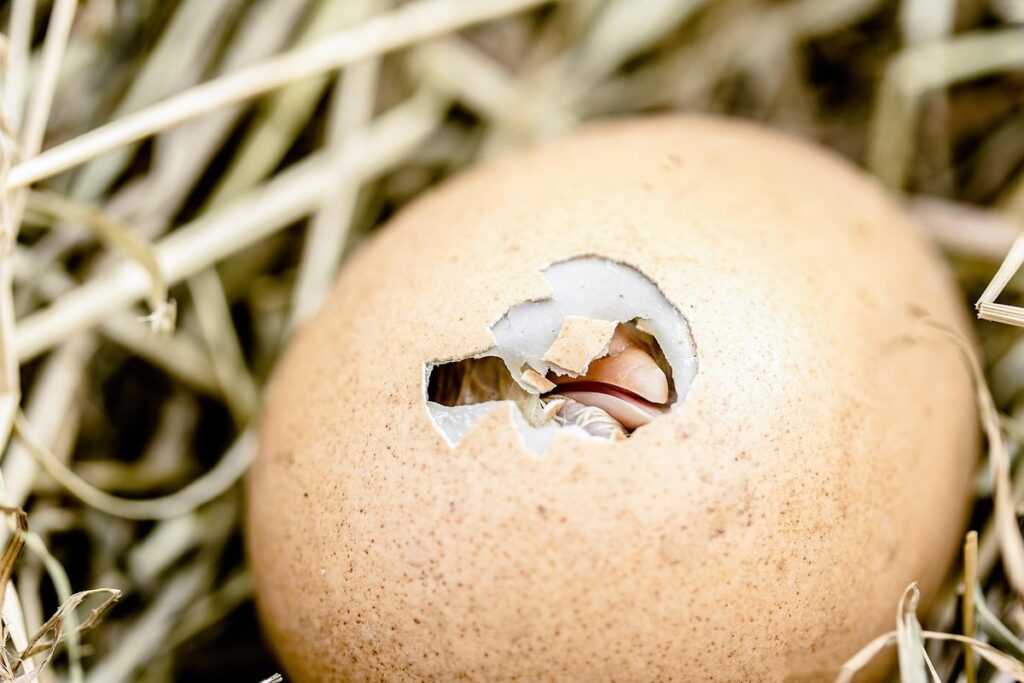
Day 0-1: Pre-Hatch Preparation
Before the big moment arrives, make sure you’ve got everything ready for your chicks to thrive. This includes preparing their brooder and gathering essential supplies.
Understanding Embryonic Development
As we approach hatching day, it’s essential to understand the embryonic development stages that occur before chicks crack out of their shells. From fertilization to pipping, there are critical periods and major milestones that contribute to a successful hatch.
After insemination, the sperm penetrates the egg yolk, initiating the process of fertilization (Day 0). This is followed by several hours of cell division and growth, setting the stage for embryonic development. By around Day 1-2, the blastoderm forms, marking the beginning of embryogenesis.
As the embryo grows, it goes through three distinct stages: morula, gastrula, and organogenesis. During this period, critical organs like the heart, lungs, and liver start to form. Around Day 5-6, the feathers begin to develop, and by Day 10-11, the chick’s limbs are fully formed.
Keep in mind that temperature plays a significant role during these stages, with optimal temperatures between 99°F to 100°F for optimal development. It’s crucial to maintain a consistent temperature range to ensure your chicks hatch healthy and strong.
Setting Up a Safe Incubator Environment
When setting up an incubator for chick hatching, it’s essential to ensure a safe environment that fosters healthy development. This begins with temperature control. The ideal temperature range for incubation is between 99°F and 100°F (37°C to 38°C), with slight variations depending on the breed. Maintain this precise temperature by calibrating your thermometer and ensuring consistent temperature readings throughout the incubator.
Next, monitor humidity levels closely. Aim for a relative humidity of around 50% during the first two days, increasing gradually to 60-70% until day 18. This can be achieved using a water reservoir or a humidifier specifically designed for incubators. Proper ventilation is also crucial; ensure adequate airflow by leaving space between each egg and not overcrowding the incubator.
For example, commercial hatcheries often maintain precise temperature control using climate-controlled rooms with air conditioning and heating systems. While you may not have these resources at home, investing in a reliable thermometer and hygrometer will help you achieve the necessary conditions for healthy chick development.
Caring for the Broody Hen (If Applicable)
If you’ve been lucky enough to have a broody hen take over one of your nesting boxes, congratulations! This is often a sign that your flock has reached a high level of social and reproductive maturity. However, it’s essential to care for the broody hen properly during this time to ensure her health and well-being.
First and foremost, make sure the broody hen has access to plenty of food and water, as her metabolism will be higher due to the constant incubation. You can also provide a calcium supplement to help support her eggshell production. Keep an eye on her temperature too – a typical range for a healthy broody hen is between 100-102°F (38-39°C). Make sure she’s comfortable and has enough space in the nesting box.
Monitor your broody hen closely for signs of stress or exhaustion, such as excessive panting, drooping wings, or lethargy. If you notice any of these symptoms, it may be a sign that she needs to be given some extra care. Provide her with a quiet and peaceful environment, free from predators and disruptions.
In terms of nesting box maintenance, make sure to clean the box regularly to prevent ammonia buildup from droppings. Also, check for any eggs that may have been laid outside the nesting box or broken during incubation.
Make it a habit to gently turn the eggs every 2-3 days (or as often as your broody hen is willing to let you!) to promote even development and help prevent stuck joints. And remember – patience is key! With proper care, your broody hen will successfully hatch out your chicks in no time.
Day 2-4: Early Embryonic Development
Now that your fertile eggs are incubating, let’s dive into the amazing process of early embryonic development from day 2 to 4. This critical phase sets the stage for your chick’s future growth and development.
Critical Periods in Embryonic Growth
Between day 2 and 4 of incubation, some crucial developments take place that will shape the chick’s future growth. The embryonic heart starts to beat around day 3, a vital milestone marking the beginning of circulation. Initially, the heartbeat is weak and fast-paced, but it gradually stabilizes as the embryo develops.
As the heart pumps blood, vascular development accelerates. Blood vessels start forming in the yolk sac, which will eventually supply oxygen and nutrients to the growing chick. This network of tiny vessels also serves as a precursor to the chick’s circulatory system.
Another significant change during this period is the initiation of feather growth. Although you won’t be able to see any noticeable differences yet, the formation of feathers has begun in earnest. The chick’s skin will start producing small bumps called papillae, which eventually develop into tiny feathers.
Importance of Proper Temperature Control
Maintaining optimal incubation temperatures is crucial for successful embryonic development. The ideal temperature range for chick hatching is between 37.0°C to 38.0°C, but a consistent temperature of 37.5°C is recommended. This precise control ensures that the embryo develops properly and increases hatchability rates.
Temperature fluctuations can have devastating effects on developing chicks. If the incubator temperature is too high, it can cause dehydration and death, while temperatures that are too low can lead to developmental issues and poor growth rates. To avoid these risks, make sure your incubator has a reliable temperature control system and monitor its performance regularly.
A slight deviation in temperature of just 1°C can affect the embryo’s development significantly. For instance, a study found that embryos developed at temperatures below 37.0°C had reduced viability rates compared to those incubated at optimal temperatures. To ensure you’re providing the best environment for your chicks, invest in a good quality thermometer and follow the manufacturer’s guidelines for temperature control.
Signs of Normal Development at This Stage
Between days 2-4 of incubation, you’ll start to notice signs of normal development as your embryo grows and becomes more active. One key indicator is movement. Around day 3, the embryo will begin to flex its tiny body, stretch its limbs, and even move its head from side to side. This movement may be subtle, but it’s a crucial sign that all is well inside the egg.
Another important process occurring during this stage is yolk sac absorption. The yolk sac provides nutrients to the embryo before the major organs develop enough to produce their own food. By day 4, you should see a noticeable decrease in the amount of visible yolk sac. This indicates that the embryo is now relying on its growing body and internal organs for nourishment.
Keep an eye on your incubator’s temperature and humidity levels during this stage, as these factors can affect development. Aim for a consistent temp between 99°F to 100°F (37°C to 38°C) and around 50-60% humidity. If you notice any signs of stunting or slow growth, consult the incubation manual or reach out to an experienced breeder for guidance.
Day 5-7: Embryo Growth Accelerates
By day five, your chick embryo has grown significantly and is now developing tiny feathers, while by day seven, its growth accelerates rapidly.
Major Milestones in Chick Development
Between day 5 and 7 of incubation, your chick embryo is experiencing a period of rapid growth and development. One of the most exciting milestones during this time is the formation of feathers. You may notice tiny little quills protruding from the downy layer, which will eventually develop into the soft, fluffy feathers we associate with chicks.
In addition to feather growth, beak formation is also underway. The beak begins as a small nubbin on the tip of the upper mandible and gradually lengthens and hardens over the next few days. This process is crucial for the chick’s ability to eat and peck at food once it hatches.
Another significant development during this period is eye opening. Although the eyes are not fully formed, they will begin to take on a more defined shape and will be visible through the transparent eyelids. As you check on your eggs regularly, you may notice that the chicks’ eyes appear more alert and responsive to light, which is an indication of their increasing awareness.
It’s essential to provide adequate lighting in your incubator during this critical period to ensure proper eye development. A temperature range between 99°F to 100°F (37°C to 38°C) and a humidity level between 50-60% will also help facilitate healthy growth and development.
Role of Air Sac Expansion in Embryonic Development
As the embryo grows and develops over the next few days, one crucial process is taking place: air sac expansion. But what exactly does this have to do with the chick’s lung development? In simple terms, the air sacs act as a precursor to the lungs, allowing for gas exchange to prepare the chick for life outside the egg.
On Day 5-7, you’ll notice that the air sacs are expanding rapidly, pushing the yolk and other tissues aside. This is an essential step in preparing the chick’s respiratory system. As the air sacs grow, they begin to take on a more lung-like function, helping to regulate the pH balance and prepare for gas exchange.
By Day 7, you should see visible expansion of the air sacs, which will eventually become the lungs of the hatchling. The expansion process helps to develop the delicate tissues that will be responsible for exchanging oxygen and carbon dioxide in just a few short days. As an embryo grows rapidly during this time, it’s essential to provide optimal environmental conditions, such as maintaining a stable temperature and humidity level, to support healthy development and eventual hatching.
First Signs of Hatching Preparedness
As you approach day 5-7 of incubation, you may start to notice some significant changes within the egg. These subtle cues can signal that the chicks are preparing for hatching, and it’s essential to be aware of them to ensure a smooth and healthy process.
One of the first signs of hatching preparedness is increased pecking. You might observe the chick moving its beak against the shell, which helps to wear away the air sac and establish communication with the mother hen in nature. This gentle exercise also aids in strengthening the beak muscles for eventual breaking through the shell.
Another sign you may witness is egg movement, where the chick rotates within the egg. This motion allows the developing chick to settle into a more favorable position for hatching, which can last from several hours to a day or two before actual emergence. Keep an eye on these subtle changes and stay alert for any other indicators of impending hatching, such as pip marks (small holes in the shell), yolk sac release, and eventual break-out.
Day 8-10: Last Stages of Incubation
On Day 8-10, you’ll witness the final stages of incubation as your embryos prepare for hatching. Their development will be rapid and intense during this period.
Pipping (Breaking Through the Shell) Preparation
As we approach the final stages of incubation, you’ll start to notice some subtle yet crucial changes in your chicks’ behavior. This is a critical period, and understanding what’s happening will help you provide the best possible care for your soon-to-hatch chicks.
Pipping, or breaking through the shell, is a delicate process that requires precise preparation from the chick’s side. Around day 8-10 of incubation, chicks start to position themselves in a way that allows them to access the air sac and begin their escape plan. This means they’ll be pressing against the shell, testing its strength, and trying to create an opening.
During this time, it’s essential to maintain the correct incubation temperature. A slight drop in temperature can slow down or even stop pipping altogether. Keep your incubator at a stable 99-100°F (37-37.7°C) to ensure your chicks have the best chance of successful hatching.
Monitor your chicks’ behavior closely, as they’ll be making their move soon. By understanding these subtle cues and maintaining optimal conditions, you’ll be well-prepared for the big day when your chicks finally pip and take their first breaths outside the shell.
Air Sacs Expansion Continues
As we approach day 8-10 of incubation, one of the most critical processes is taking place within the developing chick: air sac expansion. This phenomenon plays a vital role in lung maturity and prepares the young bird for gas exchange after hatching. The air sacs, also known as pneumatic cavities, are essentially balloons made of tissue that store air within the body.
As the embryo grows, these air sacs expand to become larger and more complex, eventually connecting with the lungs. This expansion allows the chick’s lungs to mature fully, enabling them to exchange gases effectively after hatching. By day 10, the air sacs should have expanded significantly, taking up about a quarter of the chick’s body cavity.
Keep in mind that air sac expansion is not just a passive process; it requires a conducive environment within the incubator. Maintain optimal temperature (around 99°F to 100°F), humidity levels (50-60%), and ensure proper ventilation to facilitate healthy development. If you notice any signs of slowed or uneven air sac growth, consult with an experienced breeder or veterinarian for guidance.
Signs That Hatching Is Imminent
As we approach day 8-10 of incubation, you’ll start to notice significant changes within the egg. One of the most critical signs that hatching is imminent is increased egg movement. You might see the egg shifting slightly or rotating inside the incubator. This is a sign that your chick is getting ready to pip, and it’s essential to ensure the temperature and humidity levels are optimal for successful hatching.
Another indication that hatching is near is increased pecking at the air cell. Your chick will start to break through the membrane separating itself from the egg white and yolk. You might notice small cracks or a slight dimpling on the surface of the egg, which can be an exciting sign for expectant hatchers.
Chick emergence attempts are also a clear indication that hatching is imminent. You’ll see the chick’s head start to push through the shell, usually between the air cell and the larger end of the egg. Keep in mind that this process can take several hours or even occur over multiple days, so be patient and monitor your incubator closely for signs of progress.
Day 11: Chick Emergence and Post-Hatch Care
As we approach Day 11 of chick development, your chicks will start to emerge from their shells, and it’s essential to know how to care for them properly after hatching. Now, let’s dive into the details of what to expect during this exciting time!
Final Preparations Before Emergence
As you reach the final hours before emergence, it’s essential to be prepared for this critical moment. One of the most crucial steps is pip preparation. A pip is a small hole made by the chick as they start to break free from the eggshell. Around 24-48 hours before hatch, you might notice your chicks starting to pip. This is usually accompanied by increased pecking at the air cell.
To ensure the chicks have enough room to emerge, gently help them make an enlarged pip by carefully tapping on the egg or using a pair of clean tweezers to assist in making the hole larger. However, avoid pressing too hard as this can damage the chick’s beak or cause injuries.
As you wait for the actual emergence, keep a close eye on your chicks and ensure their environment remains warm, humid, and free from drafts. The temperature should remain around 90-95°F (32-35°C), with a humidity level of 50-60%. This will help the chicks absorb moisture as they break through the eggshell.
Monitor for signs of impending hatch, such as increased movement, vocalizations, or visible beak protrusion. With proper care and preparation, you’ll soon welcome your newly hatched chicks into their new home.
Essential Steps for Immediate Post-Hatch Care
Now that your chicks have hatched, it’s essential to provide them with the right environment for growth and development. The brooder setup is crucial during this stage. Ensure the temperature is between 90°F to 95°F (32°C to 35°C) within the first 24 hours after hatch. You can use a heat lamp or ceramic heat emitters, but be cautious of overheating.
For feeding, introduce starter feed with an 18-20% protein content within the first few hours of hatching. Place the feeder at a comfortable height for the chicks to access without having to stretch their necks. Make sure to provide fresh water in a separate container, not directly from the waterer to prevent chilling.
Provide adequate ventilation by ensuring airflow through the brooder and maintaining good hygiene practices to keep your chicks healthy. Monitor temperature closely as it may fluctuate depending on the environment. Check for any sign of distress or illness and take immediate action if you notice any unusual behavior.
Early Life Stage Development Overview
As you witness your precious eggs hatch into adorable chicks, it’s essential to understand their early life stage development. From day one to around 7-10 days post-hatch, the chick undergoes rapid growth and transformation.
In the first few hours after hatching, the chick takes its first breaths and starts absorbing water from the yolk sac. This crucial process kickstarts the chick’s digestive system, allowing it to begin pecking at food within a day or two. Around 24-48 hours post-hatch, the chick develops its feathers, starting with soft down that will eventually give way to more robust plumage.
Between 2-5 days, your chick begins to exercise its wings and legs, gradually becoming more agile and mobile. During this period, ensure you provide a safe environment for exploration by offering a suitable brooder or incubator. By around 7-10 days post-hatch, the chick has developed a more robust appetite, and you can start introducing more solid foods alongside its starter mash.
Keep in mind that every breed develops at slightly different rates, so stay attentive to your chicks’ unique needs and progress. With proper care and attention, these tiny balls of fluff will rapidly grow into energetic, thriving young birds.
Frequently Asked Questions
How do I maintain optimal temperature control during the incubation period?
Temperature control is crucial for successful hatching. To ensure a consistent temperature, use a reliable thermometer to monitor the incubator’s temperature. Aim for a temperature range of 99-100°F (37-38°C) for most chicken breeds. Make adjustments as necessary to prevent overheating or underheating.
What are some common signs that indicate hatching is imminent?
Look for air sac expansion, where you’ll see the egg expanding and becoming more pronounced. You might also notice a darkening of the egg’s coloration around the air sac area. These signs signal that hatching is about to occur. Monitor your eggs closely during this period to ensure everything goes smoothly.
How long after pipping can I expect chicks to fully emerge from their shells?
After pipping, or breaking through the shell, it usually takes around 24-48 hours for chicks to fully emerge. This can vary depending on factors like breed and incubation conditions. Be prepared to provide care for your chicks shortly after emergence.
What if I notice an abnormality during the hatching process? How do I proceed?
If you observe any irregularities or signs of distress during hatching, it’s crucial to remain calm and monitor the situation closely. If necessary, carefully intervene by gently helping the chick through a small opening in the shell. However, avoid over-handling your chicks, as this can cause more harm than good.
Can I reuse an incubator for multiple batches, or do I need to sterilize it after each use?
Yes, you can reuse an incubator for multiple batches, but make sure to clean and disinfect it thoroughly between uses. This involves washing the interior with soap and water, then sanitizing it with a 1:10 bleach solution. Rinse and dry the incubator completely before reusing it to prevent any potential health issues.