
When it comes to optimizing your farm’s efficiency and productivity, having the right tools at your disposal is crucial. One essential tool that can help you achieve this goal is the broiler growth rate chart. These charts provide a visual representation of how fast your chickens are growing, helping you make informed decisions about feed intake, vaccinations, and other critical factors.
But what exactly is a broiler growth rate chart, and why do you need one? In this comprehensive guide, we’ll delve into the world of broiler growth rate charts, exploring their types, limitations, and practical applications. We’ll also discuss how these charts can help you streamline your operations, reduce waste, and increase profits. Whether you’re a seasoned farmer or just starting out, this article will give you the knowledge you need to take your farm’s efficiency and productivity to the next level.
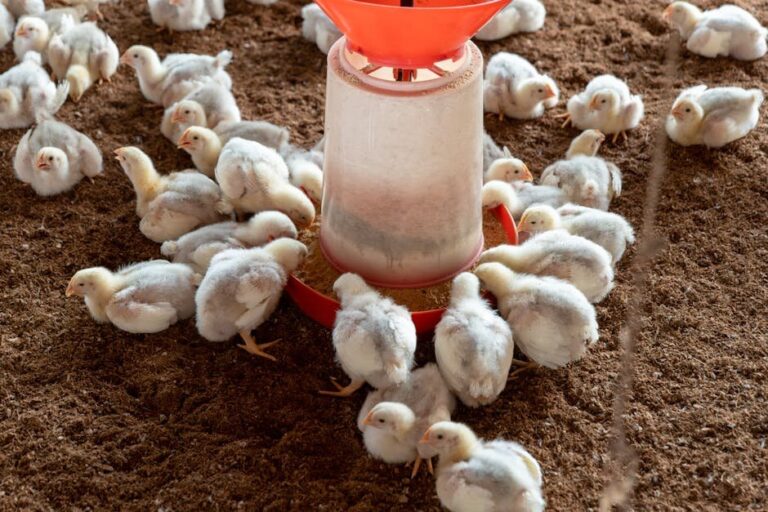
What is a Broiler Growth Rate Chart?
A broiler growth rate chart helps you track and analyze your birds’ weight gain over time, providing valuable insights into their health and productivity. Let’s take a closer look at what this essential tool entails.
Importance of Accurate Growth Data
Accurate growth data is the backbone of successful broiler farming. Without it, poultry industry professionals risk making decisions that can have far-reaching consequences for their operations, from inefficient feed usage to suboptimal breeding programs. To put this into perspective, a single percentage point deviation in growth rate can result in millions of dollars lost over the course of a year.
Broiler farmers rely heavily on accurate growth data to fine-tune their breeding and nutrition strategies. For instance, if a farmer discovers that their birds are growing at an average rate of 1.5% slower than expected, they can adjust their feed intake accordingly, saving money on unnecessary feed purchases. Conversely, faster-growing birds may require more nutrients, which can drive up costs.
Inaccurate growth data can also lead to under- or over-stocking, impacting both the financial and animal welfare aspects of a farm. By prioritizing accurate growth data collection, farmers can make informed decisions that optimize their operations for maximum efficiency and profitability.
Types of Growth Rate Charts Available
When it comes to tracking and analyzing broiler growth, different types of growth rate charts can be used depending on the specific needs of the farm. One common type is the linear growth rate chart, which plots weight gain against time using a straight line equation. This model assumes that weight gain is constant over a given period, making it easy to use for simple calculations.
However, many farms find that their broilers don’t grow at a uniform rate. For these cases, non-linear models like the Gompertz curve or the logistic curve can be more accurate. These models account for the slowing down of growth rates as birds approach maturity, providing a more realistic representation of actual growth patterns.
To choose the right model, consider the specific characteristics of your flock and production goals. If you’re looking to make quick adjustments based on current performance, a linear chart may suffice. But if you need to accurately predict future growth or account for changes in nutrient intake, a non-linear model is likely a better fit.
Limitations of Traditional Growth Rate Charts
Traditional growth rate charts have been a staple in poultry farming for decades, but they’re not without their limitations. One of the primary issues with these charts is that they can’t account for individual bird variability. Each broiler has its own unique characteristics, such as weight gain potential, feed conversion efficiency, and growth patterns, which can significantly impact overall performance.
When relying solely on traditional growth rate charts, farmers may struggle to identify birds that are performing below average or those that have the potential to outperform their peers. This can lead to missed opportunities for optimized feeding programs, inadequate resource allocation, and potentially reduced flock productivity. To overcome these limitations, many farms are incorporating more advanced data collection methods, such as individual bird weighing and automated monitoring systems.
These newer approaches enable farmers to capture a more accurate picture of each broiler’s growth trajectory, allowing for targeted interventions and adjustments to be made along the way. By acknowledging the limitations of traditional growth rate charts and exploring alternative solutions, poultry producers can unlock greater potential in their flocks and drive improved efficiency and profitability.
Factors Affecting Broiler Growth Rates
When analyzing broiler growth rate charts, it’s essential to consider various factors that can influence a bird’s weight gain and overall health. These include nutrition, climate, and genetics.
Nutritional Factors
Nutritional factors play a crucial role in determining broiler growth rates. Adequate protein and energy intake are essential for optimal growth and development. A diet that provides the right balance of amino acids, vitamins, and minerals is vital to support muscle growth and overall health.
Research has shown that broilers require around 20-25% crude protein (CP) in their starter phase, which can be reduced to 18-22% CP as they grow. Energy intake also plays a significant role, with broilers requiring around 3,000-4,000 kcal/kg of feed to maintain optimal growth rates.
Feed formulation and nutrition must be carefully managed to ensure that the nutritional needs of the birds are met. Factors such as feed particle size, moisture content, and ingredient selection can impact nutrient availability and absorption. To optimize growth rates, it’s essential to strike a balance between protein and energy intake, ensuring that the broilers receive adequate nutrients without overfeeding or underfeeding.
Proper nutrition also impacts other factors like feathering, immune function, and overall health, which in turn affect growth rates. For example, a study found that broilers fed with a diet rich in omega-3 fatty acids had improved feather quality and reduced stress levels.
Environmental Factors
Environmental factors play a crucial role in determining broiler growth rates. Temperature is one of the most significant environmental factors affecting broiler growth. Ideally, broilers should be kept at temperatures between 18°C and 22°C (64°F to 72°F). Temperatures above or below this range can lead to reduced growth rates and increased mortality.
Humidity levels also impact broiler growth. High humidity can lead to respiratory problems in broilers, while low humidity can cause dehydration. The ideal humidity level for broilers is between 50% and 70%.
Light exposure is another essential environmental factor that influences broiler growth. Broilers need adequate light to grow and develop properly. Providing 24-hour lighting can help improve growth rates, but it’s essential to ensure the lights are not too intense, as this can cause stress.
In terms of practical advice, farmers should monitor temperature, humidity, and light levels regularly to ensure optimal conditions for their broilers. This can be achieved by investing in advanced climate control systems or using natural ventilation methods to regulate temperatures and humidity levels.
Health-Related Factors
Disease is one of the most significant health-related factors affecting broiler growth rates. Respiratory issues such as bronchitis and pneumonia can lead to decreased feed intake, reduced weight gain, and lower overall performance. According to a study published by the National Animal Health Monitoring System (NAHMS), disease incidence can account for up to 30% of mortality in commercial broiler flocks.
Stress is another critical factor influencing growth rates. Chronic stress caused by factors like heat stress, cold stress, or inadequate space and ventilation can suppress the immune system and lead to decreased weight gain. A study conducted by the University of Arkansas found that broilers subjected to chronic heat stress experienced reduced growth rates compared to those in thermoneutral conditions.
To mitigate these effects, it’s essential to implement robust biosecurity measures, maintain proper ventilation systems, and ensure adequate space per bird. Additionally, providing access to clean water, a balanced diet, and optimal temperature ranges can help reduce the impact of disease and stress on broiler growth rates. Regular monitoring and vaccination programs can also aid in preventing outbreaks and maintaining flock health.
Understanding Broiler Growth Rate Charts: A Step-by-Step Guide
Let’s break down the growth rate chart, starting with understanding the key metrics that influence broiler development and weight gain over time. You’ll be able to interpret charts like a pro in no time.
Identifying Key Variables for Analysis
When analyzing broiler growth rate charts, it’s essential to identify key variables that can significantly impact growth rates. The first step is to consider the breed of the broilers. Different breeds have varying growth rates due to their genetic makeup. For instance, some popular breeds like Ross 308 and Cobb 500 have faster growth rates compared to others.
Next, you need to account for sex differences. Broiler chicks grow at different rates depending on whether they’re male or female. Research shows that male broilers tend to grow faster than females, especially during the initial stages of growth.
Age is another critical factor in determining growth rate. Growth charts typically divide the growth period into several stages, including starter, grower, and finisher phases. Each stage has specific growth targets and requirements. For example, broilers in the starter phase (0-4 weeks) require more protein-rich feed to support rapid growth.
Identify these key variables when analyzing broiler growth rate charts to get a comprehensive understanding of your flock’s growth performance.
Choosing the Right Type of Growth Chart
When choosing a growth chart for broilers, it’s essential to select one that aligns with your individual needs and circumstances. The type of chart you choose will depend on several factors, including the size of your operation, the breed of birds you’re raising, and the level of precision you require.
For small-scale operations, a basic growth chart that tracks weight gain over time may be sufficient. However, for larger operations or those seeking greater accuracy, more advanced charts that incorporate additional metrics such as feed conversion ratios (FCR) or liveweight gains may be necessary.
Consider your goals: are you looking to optimize feed efficiency or maximize weight gain? If so, a chart that tracks FCR and liveweight gain will provide the insights you need. On the other hand, if you’re focused on ensuring birds reach market weight at an optimal age, a chart that prioritizes growth rate may be more suitable.
Ultimately, choose a chart that addresses your specific pain points and provides actionable data to inform decision-making.
Interpreting Growth Rate Data
When interpreting growth rate data from broiler charts, it’s essential to identify patterns and trends that can impact your flock’s overall performance. Start by examining the data for any irregularities or outliers, which may be influenced by factors such as nutrition, health issues, or environmental conditions.
To accurately interpret growth rate data, look for:
• Steep slopes indicating rapid weight gain
• Plateaus suggesting a stable growth phase
• Dips in growth rates that could signal potential issues
Identifying these patterns can help you pinpoint areas where your flock may need attention. For instance, if you notice a dip in growth rate during the second week of life, it may indicate inadequate nutrition or health problems.
To further analyze the data, consider comparing different groups within your flock, such as birds fed with various feed formulations or those receiving supplements. This will enable you to determine which factors contribute to improved growth rates and make informed decisions for future operations. By carefully examining growth rate data, you can refine your management strategies and optimize your broiler production.
Applying Broiler Growth Rate Charts in Real-World Scenarios
Now that you’ve grasped the basics of broiler growth rate charts, it’s time to put them into action – let’s explore how to apply this knowledge in real-world scenarios.
Example 1: Monitoring Individual Bird Performance
Let’s say you’re raising broilers on your farm and you want to monitor their growth rate. A simple way to do this is by tracking individual bird performance using a broiler growth rate chart. For instance, let’s consider John’s poultry farm where he raises 10,000 chickens.
To track the growth of individual birds, John creates a table with columns for weight, age, and sex. He records the weight of each bird at regular intervals, say every week. Using this data, he plots the weights on a graph to get a visual representation of their growth rate. This chart is updated regularly, so John can identify which birds are growing faster or slower than others.
By monitoring individual bird performance using broiler growth rate charts, farmers like John can identify early warning signs of potential health issues or nutritional deficiencies. For example, if one bird is significantly lagging behind its peers in weight gain, it may indicate an underlying issue that needs to be addressed promptly.
Example 2: Optimizing Feed Formulation
In Example 2, we’ll explore how broiler growth rate charts can be used to optimize feed formulation. Let’s consider a real-life scenario: a poultry farm with a flock of 20,000 broilers. By analyzing the growth rate chart for this specific breed and age group, the farm manager identifies that the birds are growing at an optimal rate between 1.2 kg and 1.5 kg per day.
To optimize feed formulation, the manager uses this information to adjust the nutrient profile of the feed. For instance, if the birds are growing too quickly, the manager might reduce the protein content in the feed to prevent excessive weight gain. Conversely, if growth rates are slower than expected, increasing protein levels can help stimulate growth.
A common mistake many farms make is overfeeding or underfeeding their broilers. By using growth rate charts to inform feed formulation decisions, farmers can avoid these pitfalls and achieve optimal growth while minimizing waste and optimizing feed costs. This approach also allows for more accurate forecasting of future growth rates and better resource allocation.
Challenges and Limitations in Using Broiler Growth Rate Charts
While broiler growth rate charts are a valuable tool, they also come with some challenges and limitations that you should be aware of as a poultry producer.
These include inaccurate readings, equipment malfunctions, and difficulties in interpreting complex data.
Technical Issues
When using broiler growth rate charts, you may encounter technical issues that can hinder accurate decision-making. Data accuracy is a common concern, as small errors can significantly impact the interpretation of results. For instance, if the feed intake or water consumption data is not accurately recorded, it can lead to misleading conclusions about the bird’s growth rate.
Formatting issues can also arise, particularly when working with complex datasets. Incompatible file formats, missing or incorrect labels, and inconsistent units can make it difficult to visualize and analyze the data. To avoid these issues, ensure that you are using a compatible spreadsheet software and that all data is properly labeled and formatted before importing it into your growth rate chart.
Another technical issue that may arise is data consistency across different sources. If you’re comparing data from multiple farms or suppliers, inconsistencies in measurement techniques or equipment can lead to discrepancies in the results. To mitigate this, establish clear guidelines for data collection and ensure that all parties involved are using consistent methods and equipment.
Practical Applications
While broiler growth rate charts are valuable tools for monitoring and optimizing broiler production, their practical implementation can be hindered by several limitations. One of the primary challenges is data accuracy and reliability. In real-world settings, factors such as equipment malfunction, human error, or inconsistent record-keeping can compromise the integrity of the data used to generate these charts.
Another limitation is the complexity of interpreting chart results. Without adequate training or experience, farm managers may struggle to understand how to use growth rate charts effectively. This can lead to misinterpretation of data, resulting in inappropriate decisions that negatively impact production efficiency and animal welfare.
To overcome these limitations, it’s essential for farm managers to invest time and resources into proper training and equipment maintenance. Regular data audits should also be conducted to ensure accuracy and consistency. By acknowledging and addressing these practical limitations, farmers can maximize the benefits of growth rate charts and optimize their broiler operations for improved productivity and profitability.
Future Directions for Broiler Growth Rate Chart Development
As we’ve explored various aspects of broiler growth rate charts, let’s now dive into potential future directions that could take these tools to the next level in efficiency and effectiveness for farmers. This includes integrating new technologies and data analysis methods.
Emerging Trends and Technologies
The future of broiler growth rate charts is poised to be shaped by emerging trends and technologies that will revolutionize the way we analyze and predict poultry growth. One such trend gaining momentum is the integration of machine learning (ML) and artificial intelligence (AI). By leveraging ML algorithms, developers can create more sophisticated models that learn from vast amounts of data, identifying complex patterns and correlations that may not be apparent to human analysts.
This technological advancement will enable the creation of more accurate and reliable growth rate charts. For instance, AI-powered systems can process large datasets in real-time, flagging anomalies and predicting potential setbacks before they occur. Additionally, ML algorithms can be trained on historical data from various sources, including farm records, weather patterns, and nutritional intake, to develop a more comprehensive understanding of the factors influencing broiler growth.
Incorporating these technologies into growth rate chart development will not only improve accuracy but also reduce the time and resources required for analysis.
Potential Areas for Improvement
While broiler growth rate charts have become increasingly popular among poultry producers and researchers, there are still areas for improvement to make them even more effective. One key area is the collection of data. Current methods often rely on manual or semi-manual recording, which can be time-consuming, prone to errors, and may not accurately capture real-time data.
To improve this, advanced technologies such as artificial intelligence (AI), machine learning (ML), and sensor-based monitoring systems could be integrated into broiler growth rate chart development. These technologies enable more accurate and timely data collection, reducing the risk of human error and allowing for more precise predictions.
For instance, AI-powered sensors can monitor temperature, humidity, and other environmental factors that impact broiler growth. This data can then be fed into advanced algorithms to predict growth rates and optimize production processes. By embracing these innovations, poultry producers can create more accurate and reliable broiler growth rate charts, ultimately driving efficiency and profitability in their operations.
Frequently Asked Questions
What are some common mistakes to avoid when using broiler growth rate charts?
When implementing a broiler growth rate chart, it’s essential to avoid relying solely on visual representations of data. Make sure to back up your findings with actual weight measurements and statistical analysis to ensure accuracy. Additionally, regularly monitor your birds for any signs of illness or stress, as these can significantly impact growth rates.
How do I select the right type of broiler growth rate chart for my farm?
Choosing the correct type of growth chart depends on various factors, including your farm’s size, production level, and specific needs. Consider factors like breed, age, and sex when selecting a chart. If you’re unsure, consult with a poultry expert or conduct research to determine which type best suits your operation.
Can I use broiler growth rate charts for breeds other than chickens?
Yes. While broiler growth rate charts are often associated with chicken farming, they can also be applied to other poultry breeds like turkeys and ducks. However, you may need to adjust the chart’s parameters to accommodate specific breed requirements.
How do I account for seasonal variations in broiler growth rates?
Seasonal fluctuations in temperature, humidity, and daylight hours can significantly impact broiler growth rates. To accurately reflect these changes, consider using charts with dynamic or adaptive features that can adjust to changing environmental conditions. This will allow you to make informed decisions about feed intake and other critical factors.
Can I use digital tools or software to create custom broiler growth rate charts?
Yes. Digital tools like spreadsheet programs (e.g., Microsoft Excel) or specialized poultry management software can help you create custom charts tailored to your specific needs. These tools often come with built-in templates, statistical analysis capabilities, and data visualization features that can streamline your operations and provide valuable insights into broiler growth rates.