
If you’ve ever spent time near a pond or lake, chances are you’ve seen geese and ducks hanging out together. It’s not uncommon to spot them waddling around, swimming in unison, or even sharing their nests. But have you ever wondered what it is about these two waterfowl that makes them such perfect companions? As it turns out, geese and ducks have a lot more in common than you might think – from their shared habitats and behaviors to the crucial ecological roles they play together.
In this article, we’ll be diving into the fascinating world of geese and ducks living in harmony. We’ll explore how these birds adapt to each other’s presence, what benefits they derive from coexisting, and what insights this relationship offers us about our own ecosystems. By the end of it, you might just find yourself seeing these feathered friends in a whole new light!
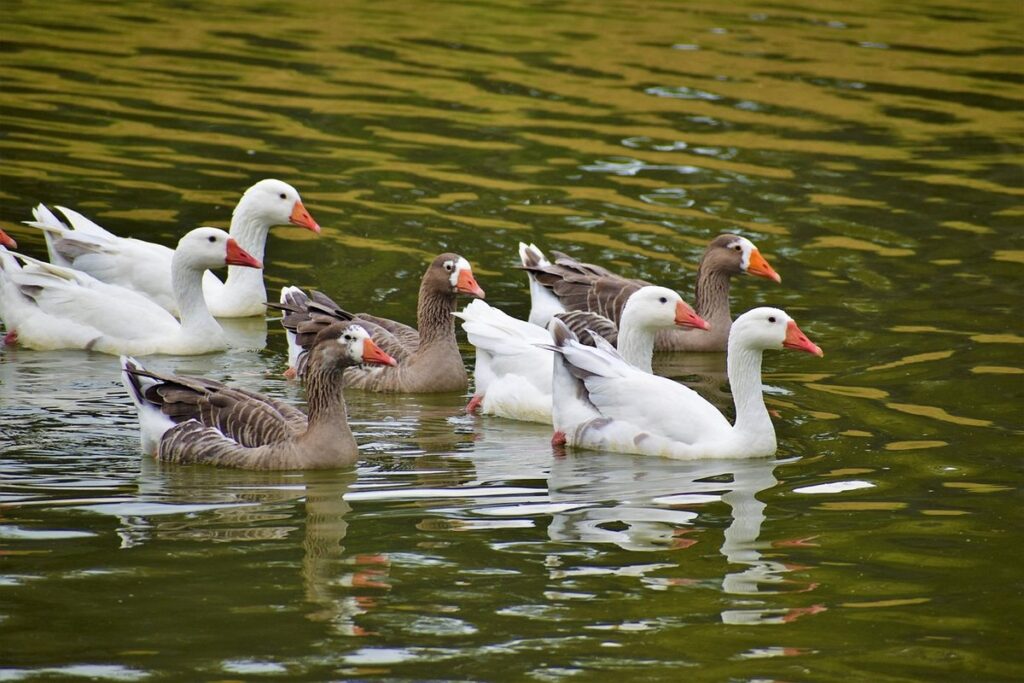
Introduction to Waterfowl Mixing
When it comes to mixing geese and ducks, there are a few essential things to understand before introducing these waterfowl together. This includes considering their natural behavior and social dynamics.
Benefits of Mixed Species Flocks
When geese and ducks live together, they form mixed species flocks that offer numerous benefits. One of the primary advantages is increased vigilance, as each species provides a unique perspective on potential threats. Geese are notorious for their aggressive behavior when defending their young or territory, which deters predators such as foxes and coyotes. Meanwhile, ducks contribute with their keen eyesight, detecting approaching threats from a distance.
As a result of this cooperative relationship, mixed species flocks can exploit their surroundings more efficiently than solitary birds. By working together, geese and ducks can forage in areas that might be inaccessible to either species alone, such as shallow waters or dense vegetation. This not only enhances their feeding success but also allows them to cover larger territories.
For example, a study on bird flocks in North America found that mixed species flocks were more likely to thrive in environments with diverse food sources and complex habitats. By embracing this synergy, geese and ducks can create mutually beneficial relationships, each complementing the other’s strengths and weaknesses.
Historical Context of Mixed Species
Humans have been keeping geese and ducks together on farms and in domestic settings for centuries. A prime example of this is seen in medieval Europe, where mixed species were a common sight on aristocratic estates. These early breeders recognized the benefits of cross-species companionship, including improved egg production, increased vigilance against predators, and enhanced overall health.
In 18th-century England, duck-keeping was popular among wealthy landowners, who would often introduce geese to their collections to create hybrid flocks. This practice allowed for a more diverse range of behaviors, sounds, and visual displays on the estate. As an example, Sir William Temple, a prominent English aristocrat, maintained a mixed flock at his estate in Ireland during this period.
By intentionally keeping these species together, early breeders demonstrated an understanding of their unique relationship. This knowledge has been passed down through generations, influencing modern-day practices and providing valuable insights for those looking to establish their own geese-and-duck flocks.
Geese Behavior Around Ducks
When it comes to geese and ducks living together, understanding their unique behavior towards each other is crucial for a harmonious relationship. Let’s dive into the fascinating world of geese interactions around our feathered friends!
Aggressive Posturing by Geese
When geese exhibit aggressive behavior towards ducks, it’s often a sign of territorial defense and dominance displays. Geese are known to be fiercely protective of their territory, which includes their nesting sites, food sources, and water bodies. They may view ducks as intruders or competitors for resources, leading to aggressive posturing.
One common display of aggression is the “hiss-swivel-bob” behavior, where geese raise the hackles on their necks, hiss loudly, and bob their heads towards potential threats. This is often accompanied by direct stares and deliberate approaches to intimidate the perceived intruder. In such situations, it’s essential for duck owners or caretakers to understand that geese are not attacking out of malice but rather defending their territory.
To minimize conflicts, ensure that ducks have separate areas where they can feed, nest, and swim without encroaching on goose territories. Regularly monitoring the behavior of both species can also help identify potential issues early on, allowing for proactive measures to be taken to prevent aggression.
Social Learning Among Waterfowl
When geese and ducks interact with each other, they don’t just coexist – they also learn from one another. This phenomenon of social learning is a fascinating aspect of their relationship.
Geese, being highly social birds, tend to pick up behaviors and habits by observing others, including ducks. For instance, if a goose notices that a duck uses a particular spot as a feeding ground, it’s likely to follow suit and claim the same area for itself. This is an example of observational learning, where one bird observes another’s behavior and incorporates it into its own routine.
In return, geese also teach ducks important survival skills, such as migrating patterns and foraging techniques. For example, a goose may show a duck how to recognize and follow specific landmarks during migration, ensuring they both reach their destination safely.
By observing and learning from each other, geese and ducks develop a unique bond that goes beyond mere coexistence. This mutual learning process highlights the importance of social interaction in the lives of these waterfowl species.
Habitat Preferences and Niche Partitioning
When it comes to coexisting with geese, understanding their habitat preferences is crucial. Let’s dive into how they adapt to different environments alongside ducks.
Shared Habitat Requirements
When it comes to sharing habitats, geese and ducks have some specific requirements that they need to thrive together. One of the primary shared habitat requirements for both species is access to wetland habitats. This can range from shallow ponds and lakes to marshes and coastal areas with mudflats and sandy beaches.
These wetlands provide an ideal environment for both geese and ducks, offering a mix of open water and vegetation that allows them to feed on aquatic plants, insects, and small invertebrates. Geese are particularly fond of grazing on grassy wetland edges and salt marshes, while ducks tend to prefer feeding on submerged plants in deeper waters.
In addition to wetlands, both geese and ducks need access to a reliable food source that can support their populations year-round. This includes aquatic plants, seeds, grains, and insects, as well as small crustaceans like snails and crayfish. To create a shared habitat for these birds, it’s essential to provide a mix of open water, shallow areas with vegetation, and access to nearby food sources.
To get started on creating a shared habitat for geese and ducks, identify an area with existing wetlands or consider creating artificial ponds and pools that mimic natural habitats. Add native plants, shrubs, and trees that offer shelter, nesting sites, and food resources for both species.
Competitive Exclusion and Coexistence
In shared spaces, geese and ducks often coexist without one species dominating the other entirely. This phenomenon is a result of competitive exclusion and coexistence. When two species occupy the same ecological niche, one will typically outcompete the other for resources such as food, water, and shelter. However, in the case of geese and ducks, they have found ways to share their environment without causing harm to each other.
This is largely due to their unique habitat preferences and dietary needs. Geese tend to prefer open areas with grassy vegetation, while ducks are more adaptable and can thrive in a variety of environments. By occupying different ecological niches, geese and ducks reduce competition for resources and minimize conflicts. For example, geese may focus on grazing in open fields, while ducks forage for food in nearby ponds or wetlands.
In shared waterways, such as parks or reservoirs, geese and ducks can also coexist peacefully. By understanding their distinct needs and preferences, individuals can create a harmonious environment where both species thrive. This requires careful observation of the birds’ behavior and adjustments to habitat management strategies.
Ecological Roles of Geese and Ducks
As we explore the fascinating bond between geese and ducks, let’s dive into their ecological roles, where they occupy unique positions within their shared habitats. Their distinct behaviors shape their ecosystems in surprising ways.
Predator-Prey Dynamics
When it comes to navigating predator-prey dynamics, geese and ducks have developed fascinating strategies to protect each other. One of the most striking examples is their mutual defense behavior. When a goose detects a predator, such as an owl or a fox, it will often sound an alarm call to alert nearby ducks to potential danger. This allows both species to be on high alert and take evasive action.
However, research has shown that geese are more vulnerable to predation than ducks due to their larger size and slower flight speeds. In response, ducks have been observed adopting a “sentry” role, standing watch while the goose forages or rests nearby. This differential vulnerability highlights the intricate social dynamics between these two species.
To promote a safe coexistence with geese and ducks, consider placing nesting sites or feeding areas in protected locations, such as behind fences or under dense vegetation. Regularly monitoring your property for signs of predation can also help you intervene early if necessary. By understanding and respecting the unique predator-prey relationships between geese and ducks, you can create a harmonious environment that benefits both species.
Trophic Interactions Within Ecosystems
When geese and ducks inhabit the same ecosystem, their feeding habits can create a fascinating dynamic. By examining the trophic interactions within these systems, we gain valuable insights into the ecological roles of both species.
One of the most striking aspects of this relationship is the overlap in their diets. Geese are herbivores that feed on grasses, aquatic plants, and grains, while ducks are omnivores with a diverse diet consisting of aquatic plants, insects, small crustaceans, and even tiny fish. This dietary overlap can lead to competition for food resources, particularly during periods of scarcity.
However, there is also evidence of complementarity in their ecological roles. Geese tend to prefer higher-elevation areas where vegetation is more abundant, whereas ducks often inhabit lower-lying regions with rich aquatic life. By inhabiting different niches, these species can reduce competition and create a more harmonious coexistence. To foster this balance in your own ecosystem, consider introducing native plant species that cater to the dietary needs of both geese and ducks, such as duckweed or watercress.
Breeding and Migratory Patterns
When geese and ducks live together, their breeding patterns are influenced by factors such as availability of food and suitable nesting sites. Let’s explore how these external factors shape their reproductive behaviors.
Shared Migration Routes
When geese and ducks migrate together, they often follow shared routes that have been established over centuries. These paths are influenced by factors such as food availability, water sources, and shelter. For instance, the Canada goose typically migrates to the Gulf Coast of Texas, while wood ducks winter in similar regions. This synchronization is largely driven by their instinctual need for survival.
One notable example of shared migration routes can be seen during the V-shaped formations observed in geese migrations. Research has shown that these patterns often coincide with common water sources and suitable habitats. Understanding these routes can be valuable for duck hunters, as they can predict and plan for areas where geese and ducks are likely to congregate.
By mapping out shared migration routes, bird enthusiasts and researchers can gain a deeper understanding of the complex interactions between these species. This knowledge can also inform conservation efforts, such as habitat preservation and management strategies that support both geese and duck populations.
Reproductive Strategies Compared
When it comes to breeding behaviors, geese and ducks exhibit some fascinating differences. Geese are known to be more territorial and often choose a single nesting site that they will return to year after year. In contrast, ducks tend to be more nomadic and may change their nesting sites from one season to the next.
Clutch sizes also vary between the two species. Geese typically lay 2-5 eggs per clutch, while ducks can have anywhere from 6-12 eggs in a single brood. However, it’s worth noting that both geese and ducks will often abandon their nests if they feel threatened or if the environment becomes too unpredictable.
In terms of parental care, both species are devoted to their young, but geese tend to be more aggressive when defending their territory and family members. Ducks, on the other hand, are generally more laid-back and may allow other duck families to join them in a communal nesting site. Understanding these differences can help you create a harmonious cohabitation environment for your geese and ducks together.
Conservation Implications of Mixed Species
As we explore the fascinating world of geese and ducks living together, it’s essential to consider the conservation implications that arise from these mixed species interactions. What can we learn about habitat preservation?
Threats Facing Geese and Ducks
Both geese and ducks face numerous threats that are closely linked to their shared habitats. Habitat loss and fragmentation, largely due to urbanization and agricultural expansion, have significant impacts on these bird populations. As natural wetlands disappear or become degraded, the remaining areas become overcrowded, leading to increased competition for resources such as food and breeding grounds.
Climate change is another pressing issue affecting both species. Rising temperatures are altering the timing of seasonal events like migration and breeding, causing confusion among geese and ducks about when to arrive at their traditional habitats. Moreover, changes in precipitation patterns can lead to droughts or floods, further exacerbating habitat degradation.
Hunting practices also pose a significant threat to these bird populations. Geese, particularly Canada geese, are often targeted for their meat and feathers, while ducks may be hunted for sport or as a means of controlling their populations. However, such practices can have unintended consequences, including the displacement of native species from their habitats.
Collaborative Conservation Efforts
Managing geese and ducks together can have numerous benefits for conservation efforts. By pooling resources and expertise, wildlife managers and organizations can tackle complex issues affecting both species more effectively. A prime example is the collaborative conservation initiative between the Audubon Society and local governments in the state of Maryland.
Through this partnership, over 2,000 acres of wetlands were restored to provide a safe haven for waterfowl populations. This concerted effort resulted in significant increases in both geese and duck populations. The program also implemented educational programs for residents and visitors, focusing on responsible coexistence with wildlife.
By following suit, your local community can establish its own collaborative conservation initiatives. Start by gathering stakeholders from various backgrounds – government agencies, non-profits, and private landowners – to discuss mutual goals and objectives. Leverage existing resources, such as research grants or volunteer programs, to streamline efforts. By pooling expertise and resources, you’ll be well on your way to making a lasting impact in protecting both geese and ducks populations in your area.
Frequently Asked Questions
Can I raise geese and ducks together on my small farm or backyard pond?
Yes, raising geese and ducks together can be a great way to create a harmonious ecosystem, but it’s essential to research their specific needs and ensure you have sufficient space for both species. Geese require more room to roam than ducks, so plan accordingly.
How do I introduce new geese or ducks to an existing flock without causing tension?
When introducing new birds, start by keeping them separate from the existing flock for a few days to allow them to get used to each other’s sounds and presence. Once introduced, supervise their interactions closely and be prepared to intervene if necessary.
What are some common challenges I might face when managing a mixed species flock of geese and ducks?
Some common challenges include competing water sources, shared nesting areas, and territorial disputes between dominant birds. Be prepared to provide separate resources or modify your habitat design to accommodate these needs.
Can I use natural deterrents like scarecrows or visual repellents to protect my geese and ducks from predators?
Yes, using natural deterrents can be an effective way to safeguard your flock without relying on pesticides or other chemicals. However, it’s essential to ensure that the deterrent is humane and safe for both humans and wildlife.
How do I promote social learning among geese and ducks in a mixed species flock?
Promote social learning by providing a diverse and stimulating environment with various water features, plants, and hiding spots. Also, consider rotating your birds’ access to food sources or other resources to encourage exploration and interaction between species.