
When it comes to understanding duck mating behavior, there’s more to it than just a simple quack. Ducks have evolved complex courtship rituals that involve elaborate displays of aggression and affection, all in an effort to secure the best mate and increase their chances of reproductive success.
But have you ever wondered what happens behind closed doors – or rather, in the quiet waters of their natural habitats? How do ducks actually copulate? It’s a question that may seem unusual, but understanding their mating habits can provide valuable insights into their behavior, social dynamics, and even environmental factors that influence their reproductive success.
In this article, we’ll delve into the fascinating world of duck mating behavior, exploring courtship rituals, copulation techniques, and the environmental factors that impact their ability to reproduce.
Understanding Duck Reproduction Basics
Ducks exhibit a unique mating behavior, and understanding their reproductive process is crucial for anyone interested in raising ducks. Let’s dive into the basics of duck copulation to appreciate their fascinating courtship rituals.
Overview of Duck Anatomy and Physiology
When it comes to understanding duck mating behavior, having a solid foundation in their anatomy and physiology is essential. Let’s take a closer look at the basic structure of a duck’s reproductive system.
Ducks, being waterfowl, have a unique reproductive system designed for aquatic living. The male duck, or drake, has a pair of testes located near his kidneys, which produce sperm. He also has a penis, although it’s not as visible as that in other birds. Instead, the cloaca serves as both an opening and closing valve for the reproductive, urinary, and digestive systems.
The female duck, or hen, has two ovaries and oviducts, where eggs are produced and fertilized. Her reproductive system is also connected to her cloaca, which opens into the vent, allowing for egg-laying. One of the most fascinating aspects of ducks’ anatomy is their ability to reproduce in water. This unique adaptation allows them to mate and lay eggs with ease, making them one of the most prolific bird species.
Understanding these basic anatomical structures lays the groundwork for exploring how ducks copulate and engage in mating behavior. By grasping these fundamental concepts, you’ll be better equipped to appreciate the intricacies of duck reproduction and even learn ways to encourage healthy breeding habits in your own backyard flock.
Types of Ducks and Their Mating Habits
There are approximately 120 different species of ducks found worldwide, each with its own unique characteristics and mating habits. Let’s take a look at some of the most common types of ducks and their fascinating mating behaviors.
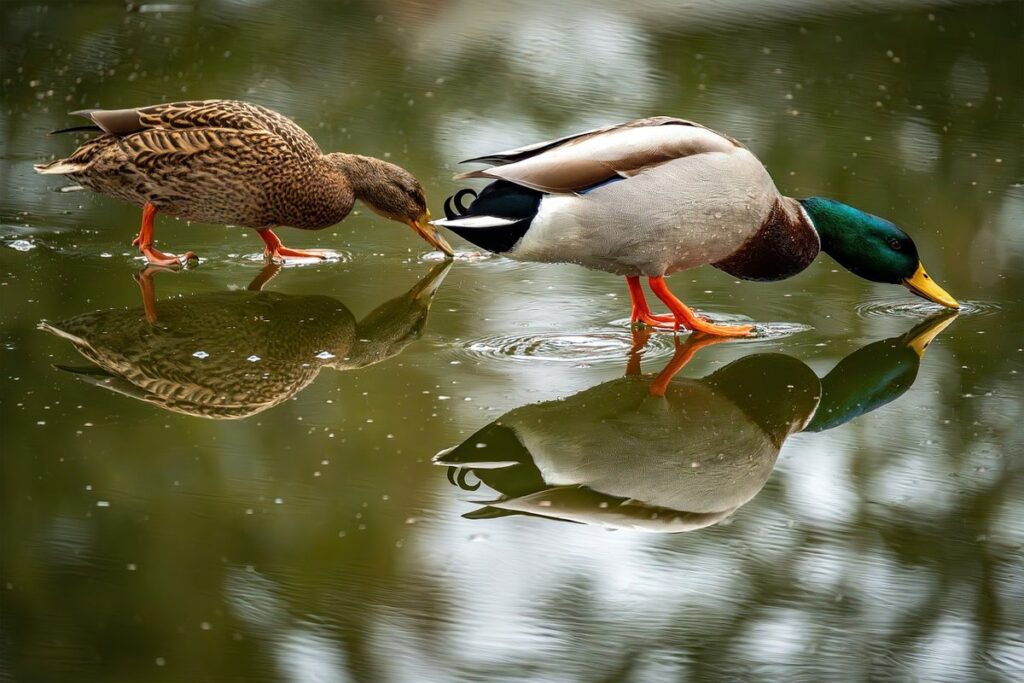
Mallards, for example, are one of the most recognizable duck species and are known for their complex courtship rituals. During mating season, males will engage in loud quacking and posturing to attract females, often displaying vibrant plumage to win over potential mates. In contrast, Wood Ducks exhibit a more subtle approach to mating, with males using gentle cooing calls to woo females.
Some duck species, such as the Muscovy Duck, are known to form long-term monogamous relationships, while others, like the Pekin Duck, are prolific breeders and will often mate with multiple partners throughout their lives. Understanding these variations can help us better appreciate the complexities of duck mating behavior and perhaps even inform our own approaches to pairing ducks in breeding programs or backyard flocks.
Interestingly, some duck species have been observed displaying unique adaptations when it comes to mating, such as the drake’s ability to produce a distinctive ‘drumming’ sound by beating his tail feathers against the water.
The Mating Process: Courtship and Pair Bonding
Let’s dive into the nitty-gritty of duck courtship, where ducks engage in complex behaviors to attract a mate and strengthen their pair bond through rituals like preening and displays of dominance.
Attracting a Mate: Visual Displays and Vocalizations
When it comes to attracting a mate, ducks employ an array of fascinating visual displays and vocalizations that showcase their charm. One of the most striking aspects of duck courtship is preening. By meticulously smoothing out their feathers, ducks exhibit their cleanliness and attention to detail, making them more attractive to potential partners. Posturing also plays a significant role in duck mating behavior. Males will often stand tall, puff out their chests, and spread their wings to display their plumage and intimidate rivals.
Vocalizations, particularly quacking and whistling, are another crucial way ducks communicate during courtship. The pitch and tone of these calls can convey a variety of messages, from territorial announcements to romantic overtures. For instance, males may use specific quacks to signal their interest in a female or to warn off potential competitors. By paying attention to these visual displays and vocalizations, you can better understand the intricate dance of duck courtship and pair bonding.
Establishing Pair Bonds: A Deep Dive into Duck Behavior
When it comes to establishing pair bonds, ducks exhibit fascinating behaviors that are shaped by social learning and influenced by various factors. In the wild, mate choice is often driven by availability, with males competing for the attention of receptive females. However, beyond mere availability, ducks also engage in complex courtship displays to showcase their suitability as a partner.
These displays can include preening rituals, where one duck gently grooms the other’s feathers, signaling acceptance and affection. Quacking and whistling are also common vocalizations used during pair bonding, allowing ducks to communicate their emotions and intentions. In some species, like wood ducks, males will even perform elaborate displays of agility and strength by flying through a “display tree” or showcasing their courtship plumage.
For breeders aiming to replicate this natural behavior in captivity, it’s essential to provide a suitable environment that encourages social interaction and exploration. By mimicking the conditions found in the wild, such as providing adequate space and visual barriers, you can promote healthier pair bonding among your ducks.
Copulation Techniques: A Closer Look at Duck Mating Rituals
Let’s take a closer look at how ducks actually mate, and explore the fascinating nuances of their copulation techniques in nature. We’ll examine the unique behaviors that ensure successful breeding.
The Role of Water in Duck Mating Behavior
Water plays a vital role in duck mating behavior, and understanding this aspect is essential to appreciate the intricacies of their copulation rituals. Aquatic environments are crucial for ducks as they provide a unique setting that fosters social interaction, courtship displays, and ultimately, successful breeding.
When it comes to finding a suitable mate, ducks rely heavily on water-based cues. Males will often engage in elaborate displays, such as swimming patterns and preening, to attract females. These behaviors not only showcase their vigor but also demonstrate their ability to thrive in the aquatic environment. In turn, females will assess potential mates based on these displays, ensuring that they select a partner capable of providing for their young.
In many waterfowl species, including ducks, copulation occurs in shallow waters or wetlands. This environment allows for a relatively safe and private space for mating to take place. The water’s calm surface also enables males to showcase their agility and speed, further impressing potential mates. By appreciating the significance of aquatic environments in duck mating rituals, we can better understand the complexities of these fascinating creatures’ behavior.
Different Copulation Positions: An Exploration of Male and Female Roles
When it comes to copulation, ducks exhibit a wide range of positions and postures, each with its unique characteristics. One notable aspect is the division of labor between males and females. In many species, the male takes on the role of mounter, while the female assumes the position of receiver.
Interestingly, some duck species have been observed engaging in coitus aequinoctialis – a mating position where both partners face each other directly. This position allows for intense visual stimulation, which is thought to enhance bonding and courtship behavior. Other species, like the Wood Duck, exhibit more unusual postures. During copulation, males often grasp the female’s tail feathers with their beak, using them as a makeshift “handle” to maintain balance.
In addition to these specific positions, research suggests that ducks may also use scent marking during mating encounters. Males will often anoint their mates’ preen glands with secretions from their own uropygial gland, which contains oils rich in pheromones. This behavior serves as a form of communication and bonding between partners. By understanding these diverse copulation positions and the roles played by males and females, we can gain a deeper appreciation for the complexities of duck mating rituals.
Factors Influencing Duck Mating Success
When it comes to successful duck mating, several key factors come into play, including a duck’s age, social status, and overall health. Understanding these influences can help you better appreciate their unique courtship rituals.
Environmental Factors: Weather, Habitat, and Resource Availability
Ducks are highly adaptable birds that thrive in various environments, but their mating success is heavily influenced by environmental factors. Weather conditions play a significant role in their reproductive behavior. For instance, extreme temperatures, droughts, and heavy rainfall can all impact duck courtship rituals. During periods of cold weather, ducks may delay their breeding season to conserve energy and resources.
Habitat quality also affects duck mating success. Female ducks require suitable nesting sites with adequate vegetation cover to conceal themselves from predators while laying eggs. In contrast, males prefer areas with abundant food sources, such as aquatic plants or insects, to fuel their courtship displays. A balanced mix of these two habitat requirements is essential for successful pair bonding.
Resource availability is another crucial environmental factor influencing duck mating success. Access to a reliable water source and sufficient food are vital for both male and female ducks. In areas with scarce resources, competition among males can be intense, leading to territorial disputes and reduced mating opportunities. By understanding the interplay between these environmental factors, you can better appreciate the complexities of duck mating behavior and even support conservation efforts by providing suitable habitats for these amazing birds.
Social Factors: Dominance Hierarchy, Territoriality, and Group Size
When it comes to duck mating behavior, social dynamics play a crucial role in determining reproductive success. One key factor is dominance hierarchy. In many waterfowl species, including ducks, dominant individuals have priority access to mates and resources such as food and shelter. This can lead to a situation where subordinate males are left with limited opportunities for copulation.
Territoriality also plays a significant role in duck mating behavior. Dominant males often defend large territories from other males, which can limit the availability of potential mates. For example, studies have shown that male mallards (Anas platyrhynchos) engage in intense territorial displays to attract females and deter rivals.
Group size is another important social factor influencing duck mating success. In larger groups, competition for mates increases, leading to a higher likelihood of successful copulation for dominant individuals. However, this can also lead to reduced reproductive success for subordinate males due to limited access to mates. Understanding these social dynamics can provide valuable insights into the complex world of duck mating behavior.
Reproductive Strategies and Adaptations
Ducks have evolved some fascinating reproductive strategies and adaptations that enable them to successfully mate, with varying approaches depending on their species and environment. Let’s explore these unique behaviors together.
Polygyny, Polyandry, and Monogamy: A Comparison of Duck Mating Systems
When it comes to duck mating systems, there are three primary structures that have evolved over time: polygyny, polyandry, and monogamy. While humans often view duck relationships as straightforward pair bonds, the reality is more complex.
Polygyny, where one male mates with multiple females, is common in ducks such as wood ducks and mergansers. In these species, dominant males will defend large territories, attracting numerous females to breed within their domains. The advantages of polygyny include increased genetic diversity and a higher reproductive success for the dominant male.
On the other hand, polyandry occurs when one female mates with multiple males, often observed in a few duck species like the ruddy duck. This mating system provides benefits such as reduced intraspecific competition among females and the ability to choose from a wider gene pool.
Monogamy, where pairs form for an extended period, is also prevalent among ducks. Mallards, for instance, exhibit monogamous behavior during breeding season, with some pairs staying together for several years. While this system can lead to increased parental investment and reduced aggression between mates, it may limit genetic diversity due to inbreeding.
Ultimately, the choice of mating system depends on various factors such as resource availability, predation pressure, and climate conditions. Understanding these complexities can help us better appreciate the intricate social dynamics within duck populations.
Evolutionary Pressures Shaping Duck Reproductive Strategies
As we delve into the fascinating world of duck mating behavior, it’s essential to understand the evolutionary pressures that have shaped their reproductive strategies. Ducks, like many other birds, face numerous challenges that influence their breeding habits. One significant pressure is predation. In the wild, ducks must be mindful of predators such as foxes, coyotes, and hawks that can easily snatch them up during mating season. As a result, they’ve developed adaptations to minimize vulnerability, such as nesting in hidden areas or taking flight at the slightest sign of danger.
Climate change is another factor influencing duck reproductive strategies. Changes in temperature and precipitation patterns affect food availability, making it crucial for ducks to breed during optimal conditions. Disease prevalence also plays a significant role, with ducks often developing immunity to certain pathogens through their reproductive cycles. By understanding these pressures, we can appreciate the complexities of duck mating behavior and how they’ve evolved to thrive in their environments.
Frequently Asked Questions
Can ducks copulate on land or do they require water?
Yes, while ducks often mate in the water, they can also engage in copulation on land. However, their mating habits are heavily influenced by environmental factors such as availability of suitable breeding grounds and access to resources like food and shelter.
How long does it take for a pair bond to form between ducks?
The formation of a pair bond between ducks can take anywhere from a few days to several weeks or even months, depending on various factors such as the species of duck, environmental conditions, and social dynamics within their group.
Are there any specific health risks associated with duck copulation?
Yes, like all birds, ducks are susceptible to certain health issues related to mating. For example, ducks may be prone to injuries during aggressive courtship displays or may contract diseases through close contact with other ducks. Maintaining a clean and healthy environment is crucial for reducing these risks.
Can ducks engage in multiple copulations in a single day?
Yes, some duck species are known to engage in multiple copulations within a 24-hour period. This behavior is often linked to factors such as high reproductive pressure, optimal environmental conditions, or the influence of dominant males on mating success.
How do I observe and learn more about duck mating behavior in my local area?
Observing duck mating behavior requires patience, knowledge of local species, and awareness of environmental conditions. It’s advisable to study from a safe distance using binoculars or a camera, being mindful of local regulations regarding wildlife observation and respect for the animals’ privacy.