
Are you looking to forage for a new ingredient or explore the medicinal properties of wild mushrooms? You’re in luck if Laetiporus sulphureus is on your radar. Commonly known as chicken of the woods, this versatile mushroom has been prized by chefs and natural healers alike for centuries. But what makes it so special? Not only does Laetiporus sulphureus have a unique flavor profile that’s perfect for a variety of dishes, but it also boasts a range of potential health benefits. From its habitats in deciduous forests to its distinctive orange-yellow pores, we’ll delve into the identification features and edibility of this fascinating fungus. In our comprehensive guide, you’ll learn how to spot Laetiporus sulphureus in the wild, harness its culinary and medicinal uses, and unlock its secrets for a healthier lifestyle.
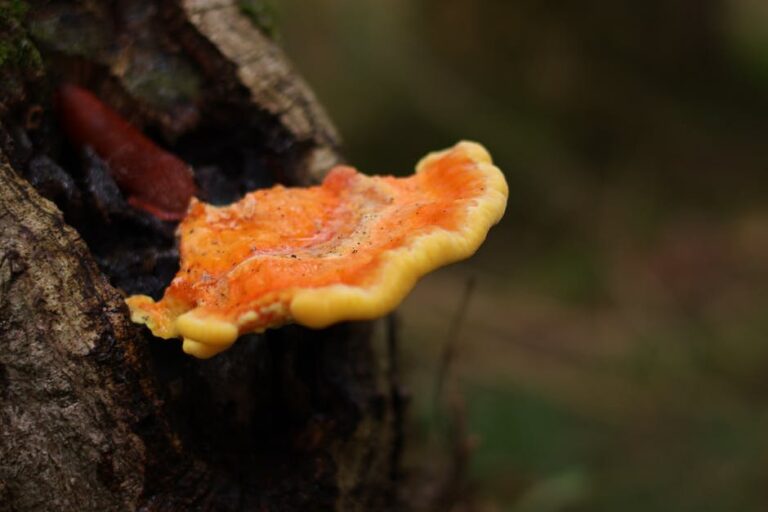
What is Laetiporus sulphureus?
So, you’re curious about what all the fuss is about when it comes to Laetiporus sulphureus? Let’s dive in and explore exactly what this fascinating fungus is.
Definition and Classification
Laetiporus sulphureus is a fascinating fungus that has captivated the hearts of many mushroom enthusiasts. To delve into its world, it’s essential to understand its botanical definition and classification.
At its core, Laetiporus sulphureus is a type of bracket fungus, belonging to the family Hymenochaetaceae. Its scientific name, Laetiporus sulphureus, is composed of two Greek words: ‘laetiporus’ meaning ‘golden fungus’ and ‘sulphureus’ referring to its sulfur-yellow color. This unique naming convention hints at the mushroom’s striking appearance.
In the realm of classification, Laetiporus sulphureus falls under the kingdom Fungi, phylum Basidiomycota, class Agaricomycetes, order Hymenochaetales, and family Hymenochaetaceae. Its common names include Chicken of the Woods, Chicken Mushroom, and Golden Bracket. This dual identity as a fungus with multiple names underscores its adaptability and widespread presence in various ecosystems.
Understanding Laetiporus sulphureus’ classification is crucial for mushroom enthusiasts seeking to identify and cultivate this species safely. By recognizing its unique characteristics and habitat preferences, individuals can appreciate the intricate relationships between fungi and their environments.
Habitat and Distribution
Laetiporus sulphureus can be found growing in nature across much of North America, Europe, and Asia. It’s a common sight in deciduous forests, particularly those dominated by oak, beech, and maple species. In the United States alone, it’s been reported to grow in over 30 states, with the highest concentrations found in the eastern regions.
When searching for Laetiporus sulphureus, look for areas with mature trees, especially those that are dead or dying. The fungus tends to thrive on decaying wood, often growing out of stumps or logs. In some cases, it can be found colonizing living trees as well, particularly if they’re under stress due to disease or insect infestations.
Some of the most ideal regions for finding Laetiporus sulphureus include the Appalachian Mountains, the Ozark Plateau, and the Great Lakes region. It’s also commonly found in Europe’s temperate forests, such as those found in Germany, France, and Italy. In Asia, it can be spotted growing in China, Japan, and Korea.
If you’re interested in foraging for Laetiporus sulphureus, remember to look for areas with mature trees and signs of decay or stress. Avoid over-harvesting, as this can harm the ecosystem and reduce future supplies.
Identification Features and Characteristics
One of the most crucial aspects of foraging for Laetiporus sulphureus is accurately identifying its key features, which can be broken down into several distinct characteristics. Let’s take a closer look at what to look out for.
Physical Appearance
Laetiporus sulphureus, commonly known as Chicken of the Woods, has a distinctive physical appearance that makes it easily identifiable. In terms of size, this fungus can grow quite large, with some specimens reaching up to 60 inches (152 cm) in diameter and weighing several pounds. The shape is typically fan-like or semicircular, often growing in clusters on tree trunks.
The color of Laetiporus sulphureus varies from bright yellow to orange-yellow, sometimes with a white underside. The texture is fleshy and soft when young, becoming more woody as it matures. One notable feature of this fungus is the presence of wavy or lobed edges on its cap, which can give it a unique appearance.
High-quality images or illustrations are essential for accurate identification. When trying to identify Laetiporus sulphureus in the wild, look for these distinctive features and consider the environment it’s growing in – typically deciduous trees like oak, beech, or maple.
Growth Patterns and Habitats
Laetiporus sulphureus is known for its unique growth patterns and adaptability to various environments. One of the defining characteristics of this species is its ability to grow on dead trees, particularly those that have been killed by insects or diseases. In fact, studies have shown that Laetiporus sulphureus can colonize trees within a matter of weeks after they’ve succumbed to decay.
The fungus prefers to attach itself to tree trunks and branches, often forming massive clusters of golden-yellow pores. Its preferred host species include oak, beech, and maple trees, although it’s been known to grow on other deciduous trees as well. When it comes to environmental preferences, Laetiporus sulphureus thrives in humid, temperate climates with average temperatures ranging from 40°F to 70°F (4°C to 21°C). It’s worth noting that this fungus can tolerate a wide range of moisture levels, making it adaptable to various habitats.
In terms of growth patterns, Laetiporus sulphureus tends to grow in a radial fashion, often covering large areas of the tree surface. This extensive growth is made possible by its unique ability to break down cellulose and other complex organic compounds found in wood.
Edibility and Culinary Uses
When foraging for Chicken of the Woods, it’s essential to know how to use them safely in your kitchen. This section covers their edibility and various culinary applications.
Preparation Methods
Preparing Laetiporus sulphureus for consumption requires careful attention to cleaning and cutting. Start by gently brushing off any dirt or debris from the caps with a soft-bristled brush. Next, submerge the mushrooms in cold water to rehydrate them, then scrub them with a gentle sponge to remove any remaining impurities. Rinse thoroughly and pat dry with paper towels.
Cutting techniques vary depending on your desired culinary use. For salads or sautés, simply slice the caps into thin strips. For heartier dishes like stews or soups, cut the mushrooms into larger chunks or wedges. Be sure to discard any woody stems or damaged areas, as these can be tough and unpalatable.
When it comes to cooking methods, Laetiporus sulphureus is incredibly versatile. Sautéing with garlic and herbs brings out its rich, earthy flavor, while slow-cooking in soups or stews adds depth and body. Some chefs also enjoy grilling or roasting the mushrooms for a smoky, caramelized taste.
One potential health benefit of Laetiporus sulphureus is its high water content, making it an excellent choice for low-calorie dishes. Additionally, research suggests that the mushroom contains antioxidants and beta-glucans, which may have immunomodulatory effects and help support digestive health.
Recipes and Cooking Tips
Laetiporus sulphureus is incredibly versatile and can be incorporated into a variety of dishes to add unique flavor and texture. Here are some mouth-watering recipes that showcase its culinary potential:
One of the simplest ways to prepare Laetiporus sulphureus is by sautéing it in olive oil with garlic and herbs, serving as a side dish or topping for pasta, pizza, or salads. You can also add it to soups, stews, or casseroles for an extra boost of flavor.
For a more substantial meal, try making Laetiporus sulphureus fritters by mixing diced mushrooms with breadcrumbs and spices, then deep-frying until crispy. Serve as an appetizer or snack. Another option is to grill sliced Laetiporus sulphureus alongside vegetables and meat for a hearty summer barbecue.
When cooking with Laetiporus sulphureus, keep in mind that it tends to absorb flavors well, so be mindful of seasoning levels. It’s also important to cook it until tender, as raw or undercooked mushrooms can cause stomach upset. To ensure even cooking, slice the mushroom into uniform pieces and don’t overcook. Experiment with different seasonings and recipes to unlock its full culinary potential.
Medicinal Properties and Benefits
Laetiporus sulphureus has been used for centuries to alleviate various health issues, from inflammation and pain to digestive problems. Let’s dive into its proven medicinal properties and benefits.
Traditional Uses
Laetiporus sulphureus has been used for centuries in various cultures for its medicinal properties. In traditional Chinese medicine, it’s believed to tonify the spleen and boost immune function. In some African countries, it’s used to treat fever and rheumatism. The indigenous people of North America have used it as a natural remedy for respiratory issues, such as bronchitis and asthma.
In folk remedies, Laetiporus sulphureus is often used to make teas or decoctions to soothe sore throats and coughs. For example, in some Appalachian communities, it’s brewed into a tea with other herbs like sassafras and slippery elm to treat colds and flu. However, it’s essential to note that while these uses are rooted in tradition, their effectiveness has not been extensively scientifically studied.
When using Laetiporus sulphureus for medicinal purposes, caution should be exercised. Some individuals may experience allergic reactions or digestive issues when consuming the mushroom. Furthermore, if you’re pregnant or breastfeeding, consult with a healthcare professional before using it as a treatment.
Scientific Research and Studies
Research has shown that Laetiporus sulphureus contains various bioactive compounds with potential medicinal properties. Studies have isolated several active components, including polysaccharides, phenolic acids, and triterpenoids, which may contribute to its health benefits.
These compounds have been found to exhibit antioxidant, anti-inflammatory, and immunomodulatory activities. A study published in the Journal of Ethnopharmacology demonstrated that Laetiporus sulphureus extract exhibited significant antioxidant activity, scavenging free radicals and reducing oxidative stress.
Furthermore, research has highlighted its potential in supporting cardiovascular health by lowering cholesterol levels and triglycerides. In a study on rats, supplementation with Laetiporus sulphureus extract resulted in reduced lipid profiles and improved insulin sensitivity.
In comparison to other edible mushrooms, Laetiporus sulphureus stands out due to its unique combination of bioactive compounds. While some mushrooms are high in specific nutrients or antioxidants, Laetiporus sulphureus offers a broader range of health benefits due to its diverse chemical profile.
When foraging for wild Laetiporus sulphureus, it’s essential to ensure proper identification and handling to maximize potential health benefits.
Cultivation and Sustainability
To cultivate Chicken of the Woods successfully, you’ll want to learn about the best techniques for spawning and growing your own laetiporus sulphureus at home. We’ll walk through the process step-by-step.
Growing Conditions
Laetiporus sulphureus thrives in a controlled environment with specific conditions that mimic its natural habitat. To replicate these conditions, you’ll want to focus on temperature, humidity, light exposure, and substrate requirements.
Temperature plays a crucial role in the growth of Laetiporus sulphureus. The ideal temperature range is between 50°F to 65°F (10°C to 18°C), with optimal growth occurring at around 55°F (13°C). Avoid placing your culture near heating vents or radiators, as sudden temperature fluctuations can be detrimental.
Maintaining a humid environment is also essential for Laetiporus sulphureus. Aim for a relative humidity of 70-90% by misting the substrate with water daily. You can achieve this level of humidity using a humidifier or by placing the culture on top of a tray filled with water and pebbles.
When it comes to light exposure, Laetiporus sulphureus prefers low to moderate lighting. Direct sunlight can scorch the mycelium, so it’s best to provide indirect light or use grow lights with a spectrum suitable for mushroom growth.
Choose a substrate that is rich in organic matter, such as hardwood sawdust or straw. Avoid using substrates high in nitrogen, like peat moss, as they can promote overgrowth and inhibit fruiting. Sterilize your substrate by autoclaving or pasteurizing to prevent contamination.
Environmental Impact
Cultivating Laetiporus sulphureus can have both positive and negative environmental impacts. On one hand, it provides a sustainable alternative to traditional protein sources like meat and fish, reducing the pressure on wild fisheries and agricultural land. However, large-scale cultivation requires significant water resources, which can strain local ecosystems if not managed properly.
To mitigate these effects, it’s essential to adopt responsible cultivation practices. This includes using rainwater harvesting systems or greywater reuse for irrigation, minimizing waste generation through efficient cutting and processing methods, and implementing a closed-loop system where all by-products are utilized. For example, mushroom farms can utilize the spent substrate as nutrient-rich compost for local gardens or community plots.
Incorporating Laetiporus sulphureus into your existing ecosystem can also have beneficial effects on biodiversity and soil health. Its mycelium breaks down organic matter, improving soil structure and fertility, while its fruiting bodies provide a food source for wildlife. By choosing a mushroom species like Laetiporus sulphureus that is native to your region, you can create a thriving and diverse ecosystem with minimal external inputs.
Safety Precautions and Identification Risks
When handling chicken of the woods, it’s crucial to exercise caution, as improper identification can lead to serious consequences. This section will guide you through potential hazards and misidentification risks.
Lookalike Species
Laetiporus sulphureus is often mistaken for several other species of bracket fungi that share similar characteristics. One lookalike species to be aware of is Laetiporus cincinnatus, also known as the “honey mushroom.” While it shares a similar bright yellow or orange coloration with Laetiporus sulphureus, it has a distinctive white mycelium running through its pores and grows in clusters on trees. This similarity can lead to misidentification, especially for inexperienced foragers.
Another species that may be mistaken for Laetiporus sulphureus is Grifola frondosa, commonly known as the “hen of the woods.” While it has a similar fan-shaped appearance, Grifola frondosa tends to grow in more compact clusters and has a coarser texture than Laetiporus sulphureus. Its pores are also smaller and more crowded.
To ensure accurate identification, examine the size and shape of the fungal growths, as well as their coloration and texture. Take note of any distinctive features such as mycelium or pore patterns. Consult multiple field guides and expert opinions to confirm your findings.
Poisonous Counterparts
When foraging for wild mushrooms like Laetiporus sulphureus, it’s crucial to be aware of its poisonous counterparts. Two species that closely resemble the Chicken of the Woods are Laetiporus conifericola and Grifola frondosa.
Laetiporus conifericola is often found growing on conifers in North America and has a similar bright yellow to orange cap. However, it tends to have a stronger, more unpleasant odor than Laetiporus sulphureus. This mushroom can cause gastrointestinal upset if ingested, but its toxicity levels are still being researched.
Grifola frondosa, also known as the Hen of the Woods, has a similar fan-shaped appearance and grows on hardwood trees in North America. While edible, it is often confused with Laetiporus sulphureus due to their similarities. However, Grifola frondosa tends to have a stronger woody flavor and a more robust texture than its poisonous counterpart.
If you’re new to mushroom foraging, it’s essential to exercise extreme caution when identifying species. Study multiple field guides, consult with experienced mycologists, and be aware of the unique characteristics of each species to avoid misidentification.
Conclusion
Now that you’ve learned about the identification, preparation, and uses of Laetiporus sulphureus, let’s summarize what we’ve covered so far. Here’s a recap of key takeaways from our comprehensive guide.
Recap of Key Points
In conclusion, we hope you now have a comprehensive understanding of Laetiporus sulphureus, also known as chicken of the woods. This article has covered key aspects of this fascinating fungi species.
Firstly, let’s recap some essential details about its appearance and habitat. Remember that chicken of the woods typically grows in clusters at the base of trees, particularly oak, beech, and willow. Its vibrant yellow to golden caps can reach up to 20 inches in diameter, making it a striking sight in the forest.
When it comes to identification, pay attention to the underside of the cap, which is often smooth but sometimes has a wavy or wrinkled appearance. The spines on the stem are another key characteristic, usually arranged in a spiral pattern and often darker than the rest of the fungus.
It’s also crucial to note that chicken of the woods can be found in various parts of North America, Europe, and Asia, making it a relatively widespread species. In terms of culinary uses, Laetiporus sulphureus is highly prized for its delicate flavor and tender texture when cooked.
To put your newfound knowledge into practice, remember these key takeaways: always research local regulations before foraging, ensure proper identification to avoid confusion with other fungi species, and only harvest what you need to avoid over-harvesting and harming the ecosystem. With these guidelines in mind, you’ll be well-equipped to explore the fascinating world of Laetiporus sulphureus and enjoy this delicious edible mushroom responsibly.
Frequently Asked Questions
Can I cultivate Laetiporus sulphureus at home for personal use?
Yes, with the right conditions and care, you can successfully cultivate Laetiporus sulphureus at home. Make sure to replicate its natural habitat by providing a deciduous tree or log substrate, maintaining high humidity, and ensuring adequate light exposure. This will not only provide you with a steady supply of this versatile mushroom but also help reduce your carbon footprint.
How do I avoid mistaking Laetiporus sulphureus for poisonous lookalikes?
To confidently identify Laetiporus sulphureus in the wild, study its distinctive orange-yellow pores and yellowish-brown cap. Be aware that it can resemble other bracket fungi like Trametes or Polyporus. Consult multiple field guides, online resources, and experienced foragers to develop a keen eye for detail. When in doubt, err on the side of caution and avoid harvesting.
Can I use Laetiporus sulphureus in place of traditional medicines?
Laetiporus sulphureus has been traditionally used for its medicinal properties, but it’s not a direct substitute for conventional medications. While some studies suggest its potential antifungal and antibacterial effects, more research is needed to confirm its efficacy as a treatment for specific health conditions. Consult with a healthcare professional before using Laetiporus sulphureus for medicinal purposes.
How do I store and preserve Laetiporus sulphureus for extended use?
To maintain the freshness and quality of your harvested Laetiporus sulphureus, store it in a cool, dry place or refrigerate at 32°F (0°C) with high humidity. You can also freeze-dry or dehydrate the mushroom to extend its shelf life. When preserved correctly, Laetiporus sulphureus can be stored for several months without significant loss of nutritional value or flavor.
Are there any specific precautions I should take when handling Laetiporus sulphureus?
When handling Laetiporus sulphureus, wear gloves and protective eyewear to avoid skin irritation and potential allergic reactions. Be cautious not to confuse it with poisonous lookalikes, and ensure proper identification before harvesting or consuming. Follow safe foraging practices, respecting local regulations and private property rights.