
The Cornus kousa Japanese dogwood tree is an understated gem in the world of ornamental trees. Its unique characteristics have captivated gardeners and nature enthusiasts for centuries, making it a must-have addition to any outdoor space. Not only does this stunning tree bring a touch of elegance with its striking white or pink flowers and vibrant red berries, but it’s also incredibly low maintenance. Whether you’re a seasoned gardener or just starting out, learning how to grow and care for the Cornus kousa Japanese dogwood tree is a great place to begin your journey into gardening. In this article, we’ll delve into the benefits of having this remarkable tree in your garden, provide expert tips on growing and maintaining it, and explore all that makes it so special.
History and Origins
The Cornus Kousa Japanese Dogwood tree has a rich history, originating from East Asia where it’s been cultivated for centuries. Let’s explore its fascinating origins and evolution over time.
Native Habitat and Distribution
The Cornus kousa species, commonly known as the Japanese Dogwood tree, has its origins in East Asia. Specifically, it is native to China, Japan, and Korea. These regions provide a favorable climate for the tree’s growth, with mild winters and hot summers.
Its native habitat ranges from low-lying areas near rivers and streams to mountainous regions at high elevations. The tree thrives in well-drained soil and partial shade, making it adaptable to various environments. This adaptability has led to its widespread distribution across East Asia, where it is often cultivated for its ornamental value.
Interestingly, the Cornus kousa was introduced to Europe by Dutch botanist Isaac de la Pena in 1780, marking the beginning of its global cultivation. Today, it can be found in many parts of the world, including North America, where it is valued for its stunning flowers and red berries.
If you’re considering planting a Cornus kousa tree, keep in mind that it prefers cooler climates with moderate temperatures. Avoid areas with intense heat or frost, as this may affect its growth and longevity.
Introduction to Cultivation
The Cornus kousa was first introduced as an ornamental tree in other parts of the world, and its history in North America and Europe is particularly noteworthy. This stunning tree, native to East Asia, has been a prized addition to many gardens and landscapes for centuries.
In the early 1900s, the Cornus kousa was brought to the United States by nurserymen who recognized its potential as an ornamental tree. They were attracted to its showy white or pink flowers, which bloom in late spring, and its striking red berries that persist well into fall. The tree’s compact growth habit, tolerance of a range of soils, and resistance to disease also made it an attractive choice for gardeners.
As the popularity of the Cornus kousa grew, so did its availability. By the mid-20th century, nurseries in North America were offering the tree widely, and it quickly became a staple of many landscapes. In Europe, the tree was introduced somewhat later, but it has since become a popular choice for gardens and parks due to its unique characteristics and low maintenance requirements.
One reason the Cornus kousa was so readily adopted is its ability to thrive in a range of conditions. From well-drained soils to those that are heavier and more alkaline, this tree can adapt to almost any environment. This adaptability has made it an attractive choice for gardeners who want a low-maintenance yet visually striking tree.
In addition to its ornamental value, the Cornus kousa also provides habitat and food for wildlife. The berries, which are an important food source for birds and small mammals, remain on the tree well into winter. This makes it a valuable resource for gardeners who want to support local wildlife.
Today, the Cornus kousa is widely available in nurseries and online retailers across North America and Europe. Its popularity can be attributed not only to its stunning appearance but also to its hardiness and adaptability.
Characteristics and Identification
To confidently grow and care for your Cornus kousa, it’s essential to be able to spot its unique characteristics, which can vary depending on climate and environment.
Morphology and Growth Habits
The Cornus kousa, also known as the Japanese Dogwood tree, is a stunning deciduous shrub or small tree that commands attention with its unique physical characteristics. When mature, it typically grows to be around 15-20 feet tall and 10-15 feet wide, making it an excellent choice for gardens of various sizes.
In terms of shape, the Cornus kousa has a broad, spreading canopy with multiple stems emerging from the base of the plant. This growth habit makes it ideal for use as a specimen or hedge plant. The tree’s bark is smooth and gray when young, developing a beautiful mottled pattern of gray, brown, and tan as it matures.
In addition to its size and shape, the Cornus kousa is also prized for its stunning flowers and foliage. In late spring, the tree produces clusters of white or pink bracts surrounding small yellow flowers, attracting pollinators and adding a pop of color to the landscape. In autumn, the leaves turn a vibrant red or purple hue, creating a dramatic display of fall color.
When planting a Cornus kousa, it’s essential to consider its growth habits to ensure optimal results. Plant multiple stems around 6-8 feet apart for a lush, full hedge effect. This technique also helps to prevent the need for frequent pruning and maintains the tree’s overall health and appearance.
Leaves, Flowers, and Fruits
When it comes to identifying a Cornus kousa Japanese Dogwood tree, its leaves, flowers, and fruits are some of the most distinctive features that set it apart. The leaves of this tree are typically 3-5 inches long and 1-2 inches wide, with pointed tips and serrated edges. They’re usually a deep green color on top and lighter underneath, providing excellent contrast against the surrounding foliage.
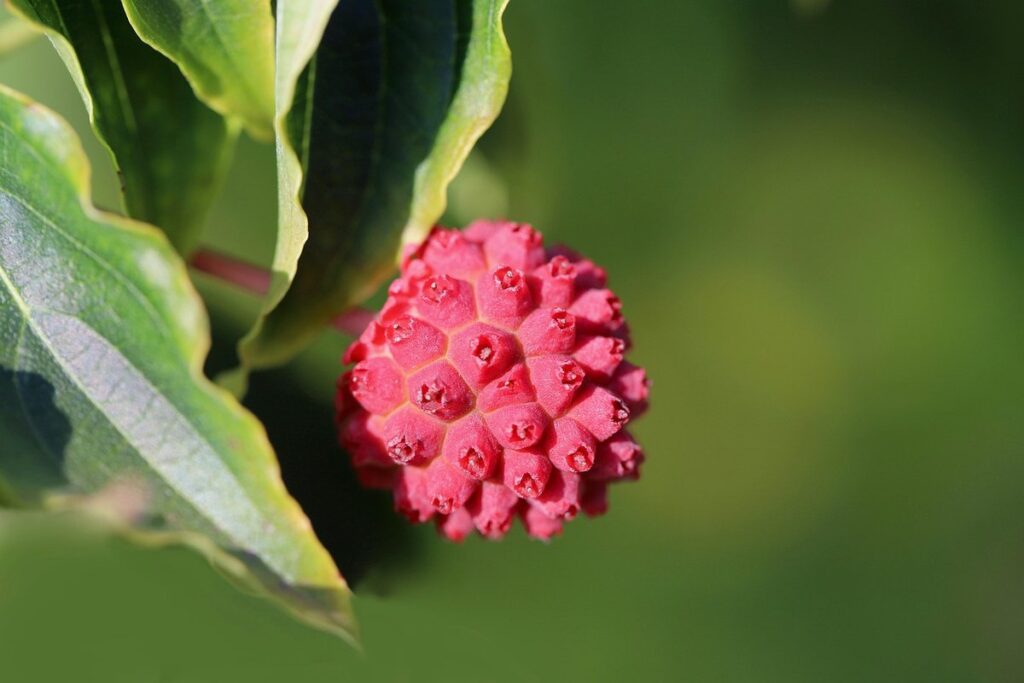
In spring, the Cornus kousa Japanese Dogwood tree produces showy white flowers that bloom in clusters at the end of branches. These flowers are a key identifier for the species, as they have four petals and produce a small amount of nectar to attract pollinators. After pollination, the tree produces red or purple fruits that are 1-2 inches long and contain two seeds each.
To properly identify a Cornus kousa Japanese Dogwood tree, look for these distinct features in your local landscape. With practice and attention to detail, you’ll become proficient at identifying this stunning species and enjoying its unique beauty throughout the seasons.
Care and Maintenance
To keep your Cornus Kousa Japanese Dogwood tree thriving, it’s essential to understand its specific care needs, from pruning to fertilizing and more. Proper maintenance will ensure your tree stays healthy and beautiful for years to come.
Planting and Establishment
When planting your new Cornus kousa tree, choosing the right location is crucial for its establishment and long-term health. Consider a spot with well-draining soil that receives partial shade to full sun, depending on your climate. In warmer zones, provide some afternoon shade to prevent scorching. If you have a choice, select a location with good air circulation to help prevent disease.
Before planting, test the pH level of your soil and amend it if necessary. Cornus kousa prefers slightly acidic to neutral soil (pH 6.0-7.0). Loosen the soil to a depth of about 12 inches and mix in some organic matter like compost or well-rotted manure. This will improve drainage, aeration, and nutrient availability.
Plant your tree at the same depth as it was in its container, taking care not to disturb the roots. Water thoroughly after planting and keep the soil consistently moist during the first growing season. Mulch around the base to retain moisture and suppress weeds. By following these steps, you’ll be well on your way to establishing a healthy and thriving Cornus kousa tree.
Watering and Fertilization
When it comes to keeping your Cornus kousa Japanese Dogwood tree thriving, proper watering and fertilization are crucial. These trees prefer well-draining soil and moderate watering, but the frequency will depend on climate and season.
During the first year after planting, water your tree regularly, especially during hot weather. Aim for about 1 inch of water per week, either from rainfall or irrigation. As the tree matures, it becomes more drought-tolerant, but still needs consistent moisture. Mulch around the base helps retain soil moisture and suppress weeds.
Fertilization is essential to promote healthy growth and flowering. Choose a balanced, slow-release fertilizer (10-10-10 NPK) and apply it in early spring, following the manufacturer’s instructions. You can also add a layer of compost or well-rotted manure around the base to provide nutrients. Avoid over-fertilizing, as this can harm your tree.
Remember to water and fertilize with care, taking into account factors like soil type, climate, and weather patterns. With proper attention, your Cornus kousa Japanese Dogwood will flourish and bring beauty to your garden for years to come.
Uses and Benefits
The Cornus Kousa Japanese Dogwood Tree offers a variety of practical uses and benefits that make it an ideal choice for gardeners, from decorative landscaping to medicinal applications.
Ornamental Value
One of the standout features of the Cornus kousa Japanese Dogwood tree is its exceptional ornamental value. As a landscape plant, it offers year-round interest and requires minimal maintenance, making it an ideal choice for gardeners who want to add visual appeal without a lot of upkeep.
In the spring, the tree bursts forth with vibrant white or pink bracts that surround small clusters of yellow flowers, creating a stunning display of color. These showy blooms are a major attractant for pollinators like bees and butterflies, adding to the tree’s overall charm. As summer turns to fall, the foliage takes on striking shades of red, purple, or bronze, providing a pop of color against the changing leaves.
Even in the winter months, the Cornus kousa Japanese Dogwood tree remains a beautiful addition to any landscape. Its unique branching structure and bright bark create a visually appealing silhouette that can be appreciated from afar. Plus, its low maintenance requirements mean you won’t have to worry about pruning or fertilizing it regularly – just plant it and let nature take care of the rest!
Wildlife Habitat and Ecosystem Services
As you plant and care for your Cornus kousa Japanese Dogwood tree, remember that it’s not just a beautiful addition to your landscape – it’s also a vital component of the local ecosystem. This tree provides habitat and ecosystem services that benefit a variety of wildlife, including birds, pollinators, and other animals.
In the spring, the Cornus kousa produces showy white or pink bracts that attract pollinators like bees and butterflies. The small, berry-like fruits that follow are an important food source for birds, such as cedar waxwings and robins. These birds not only enjoy the fruit but also use the tree’s branches as a perch to scan for predators.
To make your Cornus kousa Japanese Dogwood even more wildlife-friendly, consider planting native shrubs or flowers around its base that provide additional food and shelter for local animals. You can also install a birdhouse or two nearby to encourage birds to stay and nest in the area. By incorporating this tree into your landscape design with these simple tips, you’ll be creating a haven for wildlife and supporting the health of your ecosystem.
Problems and Pests
As you plant and care for your Cornus Kousa, some issues may arise that threaten its health and beauty. Let’s explore common problems and pests to watch out for.
Common Issues and Diseases
As you care for your Cornus kousa Japanese dogwood tree, it’s essential to be aware of potential problems that may arise. One common issue is root rot, which can occur when the tree is overwatered or if the soil doesn’t drain well. To prevent this, ensure the tree is planted in a spot with good air circulation and avoid watering too frequently.
Another problem you might encounter is powdery mildew, a fungal disease that causes white powder to form on the leaves. This can be controlled by removing infected leaves, improving air circulation, and treating the tree with a fungicide if necessary.
Borers are also a concern for Cornus kousa trees. These pests tunnel into the trunk and branches, causing damage and potentially killing the tree. To prevent borers from becoming a problem, keep an eye out for signs of infestation, such as holes or sawdust around the base of the tree.
Regular maintenance and monitoring can go a long way in preventing these issues from taking hold.
Pest Management Strategies
When it comes to maintaining the health and vigor of your Cornus kousa Japanese Dogwood tree, managing pests and diseases is a crucial aspect. Regular monitoring and prompt action can prevent minor issues from escalating into major problems.
Integrated Pest Management (IPM) techniques are essential for controlling pests without harming the environment or your tree’s health. Start by identifying the type of pest you’re dealing with – common culprits include aphids, scale insects, and borers. Then, use a combination of methods to manage the issue:
* Hand-picking: Remove visible pests from leaves and stems
* Soap solution: Mix mild dish soap with water as a spray to repel soft-bodied insects
* Neem oil: A natural insecticide that disrupts pest life cycles
Organic alternatives like neem oil, garlic spray, or horticultural oil can be just as effective as chemical pesticides. For instance, spraying neem oil on the tree’s foliage can control scale and mealybug infestations without harming beneficial insects.
Diseases such as powdery mildew, root rot, and leaf spot can also impact your Cornus kousa Japanese Dogwood tree. Improve air circulation around the plant, remove any infected leaves or branches, and ensure proper watering practices to prevent disease outbreaks. Regularly inspect your tree for signs of stress or disease and address them promptly to maintain its overall health and vitality.
Propagation and Varieties
You’re eager to propagate a Cornus Kousa Japanese Dogwood tree of your own, or perhaps you’re curious about the many varieties available. We’ll explore both topics in this section.
Seed Germination and Grafting
To propagate the Cornus kousa tree through seed germination and grafting, you’ll need to understand the specific timing and techniques involved. In terms of seed germination, it’s essential to note that Cornus kousa seeds have a relatively low germination rate compared to other species. The ideal time for sowing is in the spring or fall, when temperatures are around 40-50°F (4-10°C). This allows the seeds to undergo a period of dormancy during the winter months.
For grafting, you’ll want to select healthy scions from mature Cornus kousa trees. The best time for grafting is in late winter or early spring, when the tree is still dormant. You can use a variety of grafting techniques, such as cleft grafting or whip-and-tongue grafting. When preparing the rootstock, make sure it’s well-watered and free of disease. To increase the chances of success, it’s recommended to propagate Cornus kousa trees through grafting rather than seed germination.
When sowing seeds, use a sterile potting mix and keep the soil consistently moist but not waterlogged. It can take several months for seeds to germinate, so be patient and monitor the soil conditions regularly. When grafting, ensure that the scion and rootstock are aligned properly, and secure them with a suitable grafting tape or clip. Regularly inspect the grafted area for signs of disease or pests, and take prompt action if necessary.
Notable Varieties and Cultivars
One of the most exciting aspects of growing Cornus kousa is exploring its diverse range of varieties and cultivars. These unique plants offer a mix of characteristics that can suit different climates, soil types, and garden styles. Let’s take a closer look at some notable examples.
‘Chinensis’, ‘Lactea’, and ‘Wolf Eyes’ are popular cultivars prized for their striking foliage patterns and vibrant colors. ‘Chinensis’, with its broad, pointed leaves, adds a tropical flair to gardens, while ‘Lactea’ boasts delicate white variegation that creates a whimsical effect. ‘Wolf Eyes’ features iridescent silver-green markings, making it a standout in shaded areas.
When choosing a variety, consider factors like growth habit and mature size. Some cultivars are bred for compact shapes, ideal for small gardens or containers, while others grow taller, perfect for creating a statement piece. The ‘Moonlight’ cultivar, with its white-striped leaves, grows relatively compactly (6-8 feet) and is well-suited for partial shade.
For a more dramatic impact, look into varieties like ‘Satomi’, which boasts stunning pink flowers in spring, or the rare ‘Sativum’, featuring an exquisite display of variegated foliage. When selecting a variety, don’t forget to research their specific needs, as some might require extra care or attention.
Frequently Asked Questions
Can I grow Cornus kousa in a container or must it be planted directly in the ground?
Yes, you can grow Cornus kousa in containers as long as they are at least 3-4 feet deep and wide to accommodate its root system. This is ideal for small spaces or areas with poor soil quality. Make sure the pot has good drainage holes to prevent waterlogged soil.
How often should I prune my Cornus kousa tree, and what are the benefits of regular pruning?
Prune your Cornus kousa tree every 2-3 years to maintain its shape, promote healthy growth, and encourage flowering. Regular pruning also helps control pests and diseases by removing weak branches and dead wood.
Can I use Cornus kousa as a hedge or screen, and how effective is it for these purposes?
Yes, Cornus kousa can be used as a hedge or screen due to its dense foliage and compact growth habit. It’s an excellent choice for creating a natural barrier or separating spaces in your garden.
How do I propagate Cornus kousa from seed, and what are the chances of success?
Cornus kousa can be propagated from seed, but it’s not the most reliable method. Seeds have low germination rates (about 10-20%), and the resulting plants may not retain the same desirable characteristics as their parent tree.
Can I plant Cornus kousa in areas with high winds or extreme weather conditions?
While Cornus kousa is relatively adaptable, it’s not suitable for areas with extreme wind exposure or harsh weather conditions. Planting it in a sheltered location will help minimize damage to the tree and ensure its long-term health.