
Goose flocks are one of nature’s most awe-inspiring spectacles, with their synchronized honking and majestic formations drawing in crowds of wildlife enthusiasts and casual observers alike. But have you ever stopped to consider the intricate social dynamics at play within these vibrant communities? From their complex communication systems to their vital role in shaping our ecosystems, goose flocks are more than just a pretty sight – they’re also a crucial part of our planet’s delicate balance. In this article, we’ll delve into the fascinating world of goose flocks, exploring their behavior, management, and conservation efforts. We’ll examine why these birds are so essential to our environment and what we can do to protect them, from habitat preservation to responsible wildlife watching practices. By the end of this journey, you’ll have a deeper appreciation for the importance of goose flocks and the role they play in maintaining the health of our planet’s ecosystems.
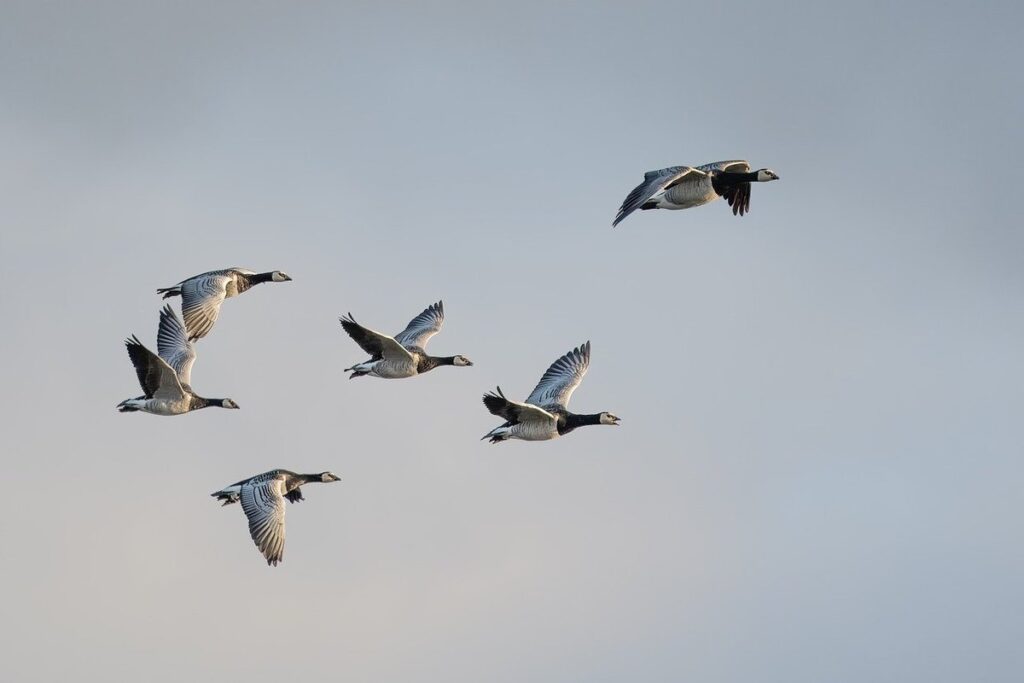
Introduction to Goose Flocks
When it comes to goose flocks, understanding their behavior and needs is crucial for both enjoyment and effective management. Let’s start by exploring what makes a healthy and thriving goose flock.
What Are Goose Flocks?
Goose flocks are social groups of geese that live and migrate together. They’re incredibly fascinating creatures, known for their unique communication patterns, strong family bonds, and impressive migration feats. A goose flock typically consists of a dominant pair, often referred to as the “alpha” geese, who lead the group during migrations and breeding seasons.
One of the most notable characteristics of goose flocks is their ability to form close-knit relationships within the group. Geese are known for their loyalty and will often stay with their flock mates for many years, even decades. This social behavior is essential for their survival, as it provides protection from predators and allows them to share resources such as food and breeding territories.
Understanding goose flocks is crucial for effective management and conservation efforts. By learning about their behavior, habitat needs, and migration patterns, we can better protect these amazing birds and their habitats. For instance, knowing when and where geese migrate can help us identify areas that require conservation attention, such as protecting wetlands or creating safe flyways for the birds to travel through.
Importance of Studying Goose Flocks
Understanding goose flocks is more than just a niche interest; it’s crucial for the well-being of our planet. These magnificent creatures have a profound impact on local ecosystems, agriculture, and human societies. A single goose can eat up to 1-2 pounds of grasses and aquatic plants daily, making them significant grazers in certain areas.
When left unmanaged, goose flocks can lead to crop damage, particularly in agricultural regions where fields are vulnerable to overgrazing. For instance, a large flock can devour an entire field of crops in a matter of days, resulting in substantial financial losses for farmers.
On the other hand, studying goose flocks can also inform conservation efforts and resource management. By understanding their migration patterns, habitat needs, and social structures, we can create more effective wildlife reserves and protected areas. This knowledge can also aid in mitigating human-wildlife conflicts, allowing both humans and geese to coexist peacefully.
Types of Goose Flocks
Goose flocks can be broadly categorized into different types, including migratory and resident populations, each with unique characteristics. Understanding these differences is crucial for effective management and conservation efforts.
Migratory vs. Resident Goose Flocks
When it comes to goose flocks, one of the most fascinating aspects is their migration patterns. Migratory and resident goose flocks exhibit distinct behaviors, habitat preferences, and population dynamics.
Migratory geese are highly mobile birds that travel long distances between breeding and wintering grounds each year. They tend to congregate in large numbers during their migrations, often forming impressive V-formations in the sky. These birds can be found in a variety of habitats, from grasslands and wetlands to agricultural fields and coastal regions.
In contrast, resident geese are non-migratory birds that remain in their year-round territories. They tend to prefer areas with abundant food sources, such as parks, golf courses, and farmland. Resident geese often form smaller flocks compared to migratory populations, which can be beneficial for local ecosystems by controlling weed growth and serving as a food source.
Understanding the differences between these two types of goose flocks is crucial for effective management and conservation efforts. For example, farmers may need to employ bird-scaring methods or use geese-proof fencing to protect their crops from migratory birds. In contrast, resident geese require more targeted control measures to prevent overgrazing and maintain ecological balance in urban areas.
It’s also worth noting that some goose flocks exhibit a mix of both migratory and resident behaviors, known as partial migrants. These birds may migrate short or medium distances but still return to their year-round territories. By recognizing the unique characteristics of each flock type, we can develop more effective strategies for managing goose populations and preserving these incredible creatures’ habitats.
Waterfowl Communities: Goose Flocks as Part of a Larger Ecosystem
Goose flocks are not isolated entities within their ecosystems; they interact with other waterbirds and wildlife in complex ways. These interactions can lead to both conflicts and synergies that impact the overall balance of the environment.
For instance, geese often compete with ducks for food resources, particularly during times of scarcity. However, they also benefit from the presence of herons and egrets, which help control aquatic insect populations that might otherwise be a nuisance. In return, geese contribute to nutrient cycling by dispersing plant seeds through their droppings.
In addition, goose flocks can impact other waterbirds’ nesting success. For example, an aggressive goose may chase away a pair of terns trying to nest nearby. On the other hand, some species, like swans, have been observed forming symbiotic relationships with geese, often taking advantage of their vigilance to protect themselves from predators.
When managing waterfowl communities, it’s essential to consider these intricate dynamics and strive for balance rather than focusing solely on controlling goose populations.
Goose Flock Behavior and Social Structure
Within a goose flock, social dynamics play a crucial role in maintaining order and ensuring the group’s overall well-being. Let’s dive into the fascinating world of goose hierarchy and behavior.
Communication and Social Interactions within Goose Flocks
Goose flocks are incredibly social creatures, and understanding their communication and interaction dynamics can be just as fascinating as it is complex. One of the primary ways geese communicate with each other is through vocalizations. They produce a wide range of sounds, from soft honks to loud hisses, which serve various purposes such as alerting others to potential predators, signaling the location of food or water, and even expressing emotional states.
In addition to vocalizations, geese also use visual displays to communicate. This can include raising their feathers, stretching their necks, or performing elaborate courtship rituals. These displays often involve a combination of posturing, strutting, and preening behaviors that serve as nonverbal cues between flock members.
Agnostic behavior within goose flocks is also noteworthy. Aggression can arise due to various reasons such as resource competition (food, water, or nesting sites) or even territorial disputes. During these encounters, geese will often establish dominance hierarchies through displays of aggression and submission behaviors. Understanding these dynamics can be crucial for effective flock management and ensuring the overall well-being of your geese.
Leadership and Hierarchy within Goose Flocks
Within goose flocks, leadership and hierarchy play crucial roles in maintaining social order and ensuring the flock’s survival. Dominant individuals, often characterized by their size, age, and breeding experience, assume leadership positions. These dominant geese establish a pecking order through a complex process of displays, threats, and submissive behaviors.
For example, a pair-bonded goose may become the leader due to its success in defending territory and resources. As new birds join or leave the flock, the hierarchy adapts to reflect changes in dominance status. Breeding success also influences leadership roles, with successful breeders often becoming dominant individuals.
Understanding this hierarchy is essential for effective management of goose flocks. When introducing new birds, it’s crucial to monitor their integration and adjust management strategies accordingly. By recognizing and respecting established leaders, you can minimize conflicts and promote a harmonious flock environment.
Managing Goose Flocks: Conservation and Conflict Resolution
When dealing with large groups of geese, finding a balance between conservation efforts and community needs can be a delicate challenge to navigate. Effective management strategies are crucial in this situation.
Strategies for Mitigating Human-Goose Conflict
Managing human-goose conflict effectively requires a multi-faceted approach that addresses the root causes of these interactions. One key strategy is to use deterrents, such as noise-making devices, visual repellents like balloons and streamers, or even motion-activated sprinklers. These tools can help scare geese away from areas where they’re causing problems.
Another effective method is habitat modification. This involves altering the environment to make it less appealing to geese. For example, removing vegetation or water features that attract them, or installing fencing to keep them out of gardens and parks. By making these changes, you can reduce the likelihood of conflicts between humans and geese.
Population control measures, such as culling or relocating geese, should be considered a last resort due to potential animal welfare concerns. Instead, try to modify the behavior of geese already present by providing alternative food sources and habitats elsewhere. This approach not only reduces conflict but also supports local ecosystems by managing goose populations sustainably. By understanding and addressing the needs of both humans and geese, we can mitigate these conflicts and coexist peacefully.
Best Practices for Goose Flock Management and Conservation
Goose flock management and conservation is an area where human intervention can have a significant impact on both goose populations and local communities. Successful management strategies often involve a combination of habitat modification, non-lethal deterrents, and community engagement. For instance, the city of Toronto implemented a comprehensive plan to manage its large Canada goose population, including the creation of artificial nesting islands and the use of noise-making devices to deter geese from specific areas.
Another effective approach is to establish goose-friendly habitats that promote healthy breeding and feeding behaviors. This can involve restoring wetlands, creating bird-friendly gardens, or implementing sustainable agriculture practices. A notable example is the efforts made by the Audubon Society in the United States to create wildlife corridors and restore natural habitats for various bird species, including geese.
To adopt these best practices, local authorities must work closely with residents, farmers, and other stakeholders to develop tailored management plans that balance goose conservation with community concerns. Effective communication and education are key components of successful goose flock management, as they help build support for non-lethal approaches and foster a sense of shared responsibility among all parties involved.
Impact of Climate Change on Goose Flocks
As we explore the fascinating world of goose flocks, it’s essential to acknowledge the significant impact that climate change has on these magnificent creatures’ habitats and migratory patterns. Changes in temperature and precipitation are altering their traditional routes.
Effects of Climate Change on Migration Patterns and Habitat Availability
Climate change is having a profound impact on goose migration patterns and habitat availability. Rising temperatures and changing precipitation patterns are altering the timing of migrations, with many goose species arriving at their traditional breeding grounds earlier than usual. This can lead to conflicts with human activities such as agriculture and urban development.
For example, in North America, the Canada Goose is experiencing changes in its migratory route due to warming winters. As a result, they are spending more time on the wintering grounds, which can lead to increased competition for resources with other waterfowl species. In some areas, this has also led to conflicts with humans, as geese congregate in large numbers near urban parks and golf courses.
Local ecosystems are also being affected by changes in goose migration patterns. For instance, some species of plants that rely on geese for seed dispersal are experiencing a decline in population due to the changing timing of migrations. Human communities are also impacted, particularly those that depend on tourism related to migratory birdwatching.
Adaptation Strategies for Goose Flocks in a Changing Environment
As we explore the fascinating world of goose flocks, it’s essential to consider their remarkable ability to adapt to changing environmental conditions. Climate change is a pressing concern for these magnificent creatures, and it’s heartening to see how they’re employing creative strategies to cope with the shifting landscape.
One notable adaptation is the shift in migration patterns. As warmer temperatures alter seasonal changes, goose flocks are adjusting their migratory routes and timing to ensure optimal feeding grounds and suitable habitats. For instance, some species like the Canada Goose have been observed arriving at their traditional spring staging areas earlier than usual, a phenomenon linked to rising temperatures and changing vegetation.
To support these adaptations, conservation efforts can focus on preserving natural habitats, restoring wetlands, and promoting sustainable land-use practices. By doing so, we can help goose flocks thrive in this new environment, ensuring the long-term health of these incredible birds.
The Role of Science in Understanding and Managing Goose Flocks
When it comes to understanding and managing goose flocks, science plays a crucial role in unraveling their behavior patterns and developing effective management strategies. This section delves into that critical connection.
Research Methods and Techniques for Studying Goose Flocks
To gain a deeper understanding of goose flocks, researchers employ a variety of scientific methods and techniques. Monitoring is a crucial aspect of studying these birds, and it involves tracking their movements, behavior, and interactions with the environment. This can be achieved through satellite tracking, GPS collars, or camera traps that capture images of individual geese.
Data analysis is also an essential component of studying goose flocks. Researchers collect data on various factors such as population size, migration patterns, and feeding habits. Advanced statistical modeling techniques are then used to identify trends and correlations between these variables.
Some researchers use machine learning algorithms to predict goose movement and habitat usage based on historical data. For example, a study in the Arctic found that by analyzing satellite tracking data, researchers could accurately forecast geese’ migration routes and habitats with 85% accuracy. By applying similar techniques to other regions, scientists can gain valuable insights into goose behavior and develop more effective management strategies.
Applying Science to Inform Conservation and Management Decisions
Science plays a crucial role in understanding goose flocks, but its application goes beyond just research and observation. Scientific findings can inform conservation and management decisions that impact both the environment and local communities. By analyzing data from various studies, researchers have identified key areas where science can make a tangible difference.
For instance, tracking migration patterns using satellite technology has allowed scientists to pinpoint hotspots for goose populations, informing targeted conservation efforts. In North America, this knowledge has been used to establish protected wetland areas, safeguarding habitats for over 1 million migratory waterfowl.
Another example is the use of camera traps and DNA analysis to monitor goose populations and detect disease outbreaks. By doing so, wildlife managers can respond promptly and effectively, mitigating the risk of population decline or even extinction. The application of science in these areas not only ensures the long-term survival of goose flocks but also fosters coexistence between humans and geese.
Conclusion: The Future of Goose Flock Research and Management
As we conclude our journey into the world of goose flocks, let’s take a moment to explore what the future holds for their research and management. What advancements can we expect in this fascinating field?
Key Takeaways from the Article
In reflecting on our exploration of goose flocks, several key takeaways stand out. First and foremost, we’ve seen that these complex social structures are far more fascinating than initially meets the eye. From their intricate communication systems to their remarkable adaptability, it’s clear that understanding goose behavior is crucial for effective management.
One significant finding is that habitat quality has a profound impact on flock behavior and composition. Our research highlights the importance of maintaining healthy, diverse habitats in areas where geese are present. By doing so, we can reduce human-wildlife conflict and promote more sustainable coexistence.
Another key insight is the need for integrated management approaches that balance conservation goals with local community interests. By working together, stakeholders can develop effective strategies for mitigating issues like overgrazing and noise pollution while preserving the ecological value of goose flocks. As we move forward in our understanding and management of these remarkable birds, it’s clear that collaboration and holistic thinking will be essential.
Recommendations for Future Research and Conservation Efforts
As we conclude our exploration into the fascinating world of goose flocks, it’s essential to consider the future directions for research and conservation efforts. To further enhance our understanding of these complex social systems, collaboration among scientists, policymakers, and stakeholders is crucial.
One area ripe for investigation is the development of more effective management strategies for human-goose conflict mitigation. By integrating insights from animal behavior, ecology, and sociology, researchers can identify evidence-based solutions that balance human needs with goose flock well-being.
Conservation efforts should also focus on protecting critical habitat areas, such as migratory corridors and breeding grounds. For instance, restoring wetlands and maintaining healthy vegetation can support thriving goose populations.
Researchers could benefit from sharing knowledge through workshops, conferences, and online platforms to foster international cooperation. Moreover, engaging with local communities is vital for understanding cultural perspectives on goose flocks and implementing tailored management plans that balance human needs with conservation goals.
Frequently Asked Questions
Can I attract a goose flock to my backyard or property for wildlife watching purposes?
Yes, you can attract goose flocks to your area by creating a suitable habitat with water sources, grassy areas, and minimal human disturbance. However, it’s essential to check local regulations regarding geese management and consider the potential noise and mess they may bring.
How do I ensure responsible wildlife watching practices around goose flocks?
To avoid disturbing goose flocks, maintain a safe distance (at least 20-30 feet), move quietly, and refrain from feeding them. Also, respect their migratory patterns and habitats, and never attempt to touch or feed the birds, as this can disrupt their natural behavior.
Can I release domesticated geese into the wild to form a flock?
No, releasing domesticated geese into the wild is generally discouraged as it can lead to ecological imbalances, disease transmission, and conflicts with native species. Instead, consider supporting local conservation efforts or adopting responsible goose-keeping practices if you’re interested in owning geese.
How do I contribute to goose flock conservation and management efforts?
You can support local wildlife organizations, participate in citizen science projects, or engage in habitat preservation initiatives that benefit goose flocks. Additionally, spread awareness about the importance of goose flocks through social media or community outreach programs.
What are some common challenges faced by goose flock managers and how can I help mitigate them?
Common challenges include human-goose conflicts, habitat degradation, and climate change impacts. To address these issues, engage with local authorities, participate in community-based conservation efforts, and promote sustainable land-use practices that protect water sources and habitats essential for goose flocks.