
Have you ever watched a flock of geese waddling across a park or pond, wondering if they’re just happy to be together or actually in long-term relationships? The truth is, some geese do pair up for life, but it’s not as simple as it seems. In fact, their mate choice and mating habits are influenced by various factors, including age, experience, and even social status. Understanding these dynamics can reveal fascinating insights into the behavior of these iconic birds. But why does it matter? The benefits of long-term mating in geese have significant implications for conservation efforts, from habitat preservation to population management. In this article, we’ll delve into the world of goose pairing habits, exploring what influences their mate choice and how it affects their survival and well-being.
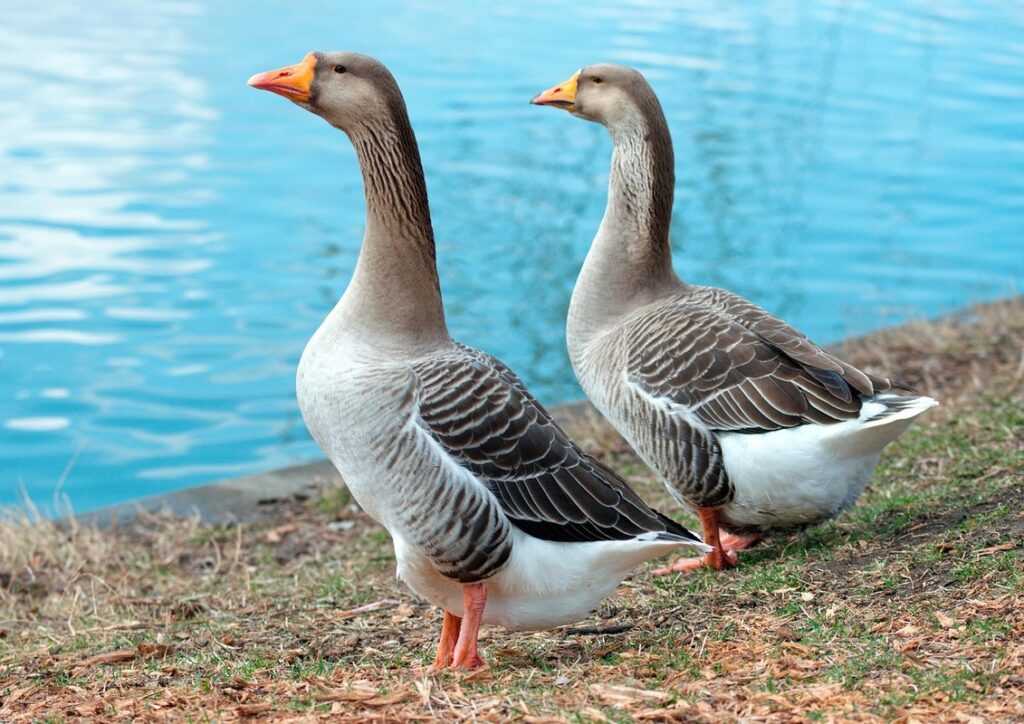
Understanding Goose Behavior and Mating Habits
To truly understand whether geese pair for life, it’s essential to delve into their mating habits and how they form long-term relationships. Let’s explore the fascinating world of goose behavior together!
Factors Influencing Mate Choice in Geese
When it comes to selecting a mate, geese are driven by a combination of instinct and personal preference. As with many species, age plays a significant role in mate choice for geese. Younger birds tend to pair with mates closer to their own age, while older geese often form long-term bonds with partners that have been established over time.
Social status is another critical factor influencing mate selection among geese. Dominant birds are more likely to attract high-ranking mates, as they possess greater access to resources such as food and breeding grounds. However, this doesn’t mean that subordinate birds are entirely excluded from forming successful pair bonds – with patience and persistence, they may eventually establish a long-term relationship.
In addition to age and social status, a goose’s overall health also impacts its mate choice decisions. Birds in optimal physical condition tend to attract higher-quality mates, as their appearance and vitality serve as indicators of overall fitness. Geese that appear strong and healthy are more likely to secure a loyal partner for life, while those struggling with illness or injury may face greater challenges in finding a compatible match.
Observations on Monogamous Relationships in Geese
In many ways, geese are a paradox when it comes to monogamy. On one hand, they are known for their strong pair bonds and long-term relationships, with some couples remaining together for over 20 years in the wild. In fact, a study on Canada Geese found that about 80% of pairs remained together for at least five breeding seasons, which is considered a significant indicator of monogamy.
One notable example of geese’s commitment to their partners is the famous story of “Lalita and Lakshman,” a pair of bar-headed geese that were observed in India’s Ladakh region. The couple was spotted together for over 20 years, with researchers estimating that they had been paired since at least 2004. When Lalita passed away in 2017, her mate Lakshman remained faithful to their bond, even going so far as to visit his deceased partner’s grave every day.
While these cases are exceptional, they do illustrate the potential for long-term monogamy among geese.
The Importance of Pair Bonding for Goose Survival
Let’s dive into why pairing up is crucial for geese survival, and explore how long-term pair bonding affects their well-being and success.
Benefits of Long-Term Mating for Geese
When geese form long-term pair bonds, they experience numerous benefits that significantly improve their chances of survival and overall well-being. One key advantage is the increased survival rates associated with pairing up for life. Research has shown that monogamous pairs tend to have higher success rates compared to those without a consistent mate.
For instance, studies have observed that geese who form long-term pair bonds are more likely to successfully raise their offspring, with improved feeding and incubation rates. This is due in part to the shared parental responsibilities and increased cooperation within the pair bond. By working together, geese can allocate resources more efficiently, increasing the chances of successful breeding.
In addition to enhanced survival rates, long-term pairing also leads to improved offspring quality. Geese that mate for life tend to have healthier chicks with higher growth rates, which ultimately increases their chances of survival in a competitive environment. This highlights the importance of establishing strong pair bonds and reinforces the notion that geese are indeed capable of forming long-lasting relationships.
Factors Contributing to High Divorce Rates Among Geese
Geese are known to form long-term monogamous relationships, but unfortunately, their divorce rates are surprisingly high. Research suggests that around 30-40% of goose pairs do not remain together for their entire lifespan. So, what could be contributing to this alarming trend? One major factor is changes in environmental conditions. For instance, when a harsh winter hits and food becomes scarce, geese may be forced to separate in search of better resources. This can put a significant strain on even the strongest of pair bonds.
Another reason for high divorce rates among geese is mate availability. When there’s an abundance of potential mates around, a goose may become dissatisfied with their current partner and seek someone newer and shinier. In fact, studies have shown that female geese are more likely to leave their partners if they perceive them as being inadequate providers or if they themselves gain access to better-quality mates.
These factors can be particularly challenging for geese living in areas where human activities such as agriculture and urbanization have disrupted their natural habitats. As we’ll explore later, understanding these challenges is crucial to supporting the long-term success of goose pair bonds.
Life Span and Longevity in Paired Geese
When it comes to geese pairing for life, it’s fascinating to examine how long they can expect to stay together. Let’s dive into their average lifespan and longevity as a pair.
Average Lifespan of Geese in the Wild and Domesticated Settings
The average lifespan of geese is an interesting topic that sheds light on their pairing habits. In the wild, geese typically live between 20 to 30 years, although some species have been known to reach up to 40 years. However, domesticated geese often lead shorter lives, with an average lifespan ranging from 15 to 25 years.
One significant factor contributing to this disparity is living conditions and lifestyle. Geese in captivity are generally well-fed, sheltered, and protected from predators, which can contribute to their longer lifespan. In contrast, wild geese face numerous challenges such as harsh weather conditions, predation, and disease outbreaks, all of which can affect their longevity.
This difference in lifespan is also reflected in their pairing habits. Many domesticated geese form long-lasting pair bonds, some even lasting up to 20 years or more. Conversely, wild geese tend to form new pairs each breeding season, often due to the high mortality rate and changing environmental conditions. Understanding these factors can provide valuable insights into the lives of geese and help us better appreciate their unique pairing habits.
Case Studies: Notable Examples of Long-Lived Goose Pairs
In the wild, it’s not uncommon to spot geese that have formed long-term pair bonds, with some couples staying together for many years. One notable example is a Canada Goose pair observed by ornithologists at a wildlife sanctuary in upstate New York. The pair, named “Maurice” and “Penelope,” had been together for over 20 years, raising multiple broods and displaying remarkable attachment to each other.
Another striking instance involves a couple of domesticated geese that lived on a farm in rural England. A case study published in the Journal of Avian Biology documented their relationship, which lasted an impressive 25 years. What’s remarkable is that even after they stopped breeding, they continued to mate and show signs of affection towards each other.
These examples illustrate that long-lived pair bonds are not just anecdotal; there’s evidence to suggest geese can form lasting relationships in the wild as well as in domestic settings.
Reproductive Success and Mate Quality
Let’s dive into how geese actually pair up, including what factors contribute to their reproductive success and finding a suitable mate.
Correlation Between Pair Bond Strength and Offspring Health
A goose’s pair bond is not just about companionship; it has a direct impact on the health and success rate of their offspring. Research has shown that geese with strong pair bonds tend to have healthier chicks, with lower mortality rates and improved growth rates compared to those from weaker pair-bonds.
Studies have demonstrated that goslings from pairs with higher pair bond strength exhibit better immune function and are less susceptible to disease. This is likely due to the fact that stronger pair bonds allow for more effective parental care, including feeding, brooding, and protecting their young.
In contrast, geese with weaker pair bonds may experience reduced parental investment, leading to suboptimal growth rates and increased susceptibility to predators or environmental stressors. In extreme cases, this can lead to reduced reproductive success and even the loss of a breeding season.
Understanding the correlation between pair bond strength and offspring health is crucial for conservation efforts and breeding programs. By promoting strong pair bonds through careful mate selection and habitat management, breeders can increase the chances of successful reproduction and healthy offspring.
Characteristics of High-Quality Mates in Geese
When it comes to geese pairing up, having a high-quality mate is crucial for their reproductive success and overall well-being. So, what makes a good mate for geese? For one, a high-quality mate should possess excellent foraging skills. This means they can efficiently find food in various environments, providing sustenance for themselves and their partner during breeding season. In the wild, geese often face changing seasons and harsh weather conditions that impact food availability, making strong foraging abilities essential.
Another desirable trait is having strong protective instincts. A good mate will fiercely defend its family and territory from predators or potential threats. This helps ensure the safety of their goslings and allows them to thrive in their environment. When evaluating a potential mate, observe how they interact with their partner and offspring. Do they show assertive behavior when necessary? Are they able to recognize potential dangers?
In terms of specific behaviors, look for geese that are agile, attentive, and responsive to their partner’s needs. They should also demonstrate good communication skills through vocalizations and body language. By identifying these characteristics in a mate, you can increase the chances of successful breeding and strengthen your goose pair bond.
Implications for Conservation Efforts
As we explore whether geese are truly lifelong companions, it’s essential to consider the implications of their pair-bonding behavior on conservation efforts. How might this information impact goose populations and habitats?
How Studying Goose Pairing Habits Can Inform Conservation Strategies
When it comes to conservation efforts, understanding goose mating habits is crucial for developing effective strategies. By studying goose pairing habits, researchers can gain valuable insights into the dynamics of these populations. For instance, if geese do indeed pair for life, as some research suggests, conservationists may need to focus on preserving established pairs rather than disrupting their bonds.
This knowledge can also inform habitat management and restoration efforts. If geese are more likely to form long-term pair bonds in certain environments, conservationists can prioritize protecting those areas. Additionally, understanding goose pairing habits can help identify key demographic factors, such as age or sex ratios, which may impact population dynamics. By taking these insights into account, conservationists can develop targeted strategies that address the unique needs of different goose populations.
One example of how this knowledge can be applied is in the development of “pair-friendly” habitat design. This approach involves creating habitats that promote long-term pair bonding by providing suitable nesting and foraging areas.
Case Studies: Successful Conservation Initiatives Based on Goose Social Behavior
In the world of conservation, understanding the social behavior of geese has proven to be a crucial factor in developing successful initiatives. One notable example is the reintroduction of greylag geese to the UK’s Isle of May. Conservationists observed that these birds formed strong pair bonds, which played a significant role in their breeding success.
By considering the long-term monogamous relationships formed by geese, conservation efforts were tailored to respect and incorporate this behavior. For instance, habitat creation was designed with pairs’ nesting preferences in mind, resulting in increased nesting site quality and reduced predation risk. Similarly, research on Canada goose pair dynamics revealed that successful breeding programs relied heavily on maintaining family groups.
These examples demonstrate the importance of taking social behavior into account when designing conservation strategies. By understanding and adapting to geese’s pairing habits, conservationists can develop more effective solutions that not only protect these iconic birds but also contribute positively to their overall well-being.
Frequently Asked Questions
Can geese form long-term relationships in captivity?
Yes, with proper care and management, geese can thrive in captivity and even form long-term bonds with their mates. However, it’s essential to consider the social and environmental needs of these birds, including adequate space, suitable companions, and a stable environment.
How do I identify whether a goose is paired or not?
Observe the behavior of the geese over time. Paired geese often display signs of affection, such as preening, touching beaks, and walking together. They may also form a hierarchical structure within their flock, with dominant pairs leading subordinate birds.
What factors contribute to high divorce rates among geese in the wild?
In the wild, factors like habitat quality, availability of food, and predator pressure can all impact goose pair bonds. For example, if a mate is lost due to predation or migration, the remaining bird may seek a new partner to ensure its survival.
Can I introduce a new goose to an existing pair without disrupting their bond?
Introducing a new bird to a paired flock requires careful planning and consideration of the existing relationship between the geese. It’s essential to monitor their behavior closely, as introducing a new mate too quickly can cause stress and even lead to separation or aggression.
How does studying goose pairing habits inform conservation efforts?
Understanding goose mating habits helps conservationists identify areas for improvement in habitat preservation and population management. By recognizing factors that influence pair bonding, such as social status and age, conservationists can develop targeted strategies to promote long-term relationships among geese, ultimately contributing to the health and sustainability of these populations.