
Are you getting ready to welcome some new chicks into your family, but not sure what to expect? A day-by-day chick hatching timeline can be just what you need to stay on top of things. From the moment a hen lays an egg until those tiny beaks start pecking their way out, it’s a fascinating process that requires patience and planning.
In this article, we’ll take you through the entire journey, from fertilization to emergence. You’ll learn about the critical stages of embryonic development, the perfect incubation conditions for optimal hatching, and what to expect after those first few days post-hatch. With our expert insights, you’ll be well-equipped to provide the best possible care for your new chicks and ensure they thrive in their new environment. Let’s dive into the world of chick development!
Understanding Embryonic Development
To understand what’s happening inside that tiny egg, let’s take a closer look at the incredible process of embryonic development and how it sets the stage for hatching.
Stage 1: Fertilization and Cleavage (Days 0-2)
The fertilization process begins when an egg is laid by a hen. However, the actual fertilization of the egg doesn’t occur until it’s deposited into a rooster. After mating, sperm from the rooster penetrate the outer layer of the egg through a small opening at the large end called the germinal disc.
In the initial stages following fertilization, known as cleavage, the zygote begins to divide rapidly. This process is crucial in setting the stage for further development, including the formation of vital organs and tissues. By around 18-20 hours post-fertilization, the embryo has undergone several rounds of cell division.
The next critical milestone is the formation of a blastoderm, which represents the earliest signs of embryonic development. This usually occurs about 24-28 hours after fertilization. The blastoderm begins to form on top of the yolk, eventually giving rise to the essential components that will ultimately become a chick. As you monitor your incubator and wait for hatching day, remember that the first two days are critical in laying the foundation for healthy development.
Stage 2: Gastrulation and Organogenesis (Days 3-4)
As we enter Days 3-4 of embryonic development, the chick is undergoing crucial processes that will shape its future growth. Gastrulation, a term you may have heard before, refers to the formation of the three primary germ layers: ectoderm, endoderm, and mesoderm. These layers will eventually give rise to all tissues and organs in the chick.
During gastrulation (Days 3-4), cells begin to invaginate, or fold inward, forming a blastula with a defined cavity. This process is crucial for establishing the foundation of the embryo’s body plan. As the germ layers continue to differentiate, they start to interact and influence one another, setting the stage for organogenesis.
Neurulation, the formation of the neural tube, occurs concurrently with gastrulation. The neural plate folds inward, eventually closing to form a tube that will eventually give rise to the central nervous system. Early stages of organ development also begin during this period, including the formation of the heart, liver, and other vital organs.
As you watch your chick embryo develop, pay close attention to these critical processes happening on Days 3-4. The next stage will see the chick’s body take shape in preparation for hatching.
Incubation Begins
As we approach day 7 of incubation, the embryo is starting to move and settle into its final position for hatching. The chick’s down feathers begin to grow, preparing it for life outside the egg.
Setting Up the Brooder and Preparing the Eggs (Day 0-1)
Day 0-1 is a crucial period for setting up the brooder and preparing the eggs for hatching. It’s essential to create a safe and healthy incubation environment that will ensure the well-being of your chicks from the very beginning.
First, make sure you have a reliable brooder in place. This can be a dedicated incubator or a designated area within your home or farm. The ideal temperature for an incubator is between 99°F to 100°F (37°C to 38°C), and it’s essential to maintain this temperature consistently throughout the hatching process.
Next, prepare your eggs by gently washing them with warm water to remove any dirt or debris. Dry them thoroughly with a clean towel before placing them in the brooder. It’s also crucial to handle the eggs carefully to avoid damaging the delicate membranes inside.
Place the eggs in the incubator at an angle of about 45 degrees, pointed end down. Make sure there is enough space between each egg for air circulation and easy access for monitoring. As you place the eggs in the incubator, remember that the temperature will drop slightly when it’s first turned on, so be patient and give it a few minutes to adjust.
To ensure proper humidity levels, cover the top of the incubator with a damp cloth or paper towels. This will help maintain a humid environment necessary for successful hatching. As you wait for the eggs to start developing, keep an eye on the temperature and humidity levels, making any adjustments as needed to create an optimal incubation environment.
Monitor the incubator closely during this period to ensure everything is working correctly. A thermometer, hygrometer, and egg turner are must-have tools during this time. Regular checks will help you catch any potential issues before they become major problems.
Keep in mind that it’s normal for the temperature and humidity levels to fluctuate slightly throughout the incubation process. However, if you notice significant deviations or unusual readings, don’t hesitate to take corrective action immediately.
By following these steps and maintaining a consistent environment, you’ll be well on your way to creating an optimal brooding space where your chicks can thrive from day one.
Early Embryonic Development (Days 1-3)
On day 1 of incubation, the fertilized egg has begun to divide and grow. The embryonic cells start to multiply, and by the end of this day, they will have reached a crucial milestone: the formation of the blastoderm, a cluster of cells that will eventually become the embryo. On day 2, the embryo continues to develop, and its vital organs begin to take shape. The heart starts beating, albeit very slowly, while the lungs start to form.
By day 3, the embryonic growth accelerates significantly. The embryo has developed into a distinct cluster of cells, and you may be able to detect early movement within the egg using a process called candling. This involves shining light through the eggshell to observe the developing chick. It’s essential to handle the eggs gently during this period to avoid damaging the delicate embryo.
In terms of incubation temperature, it’s crucial to maintain a consistent warmth around 99-100°F (37-38°C) to support healthy embryonic growth. Monitor the egg closely for any signs of distress or irregular development, and adjust your incubation settings as needed to ensure optimal conditions.
Critical Periods of Development
As you closely monitor your incubator, it’s essential to note that there are specific critical periods during chick development when crucial milestones and decisions are made. Let’s explore what these periods involve.
Stage 3: Feather Development and Sensory Organ Formation (Days 4-6)
As you reach day 4 of incubation, your embryo’s development accelerates rapidly. Feather formation is now underway, and tiny quills start to grow from the skin. These early feathers are called downy feathers or pycnoptilosis, and they provide essential insulation for the developing chick.
By day 5, sensory organ development takes center stage. The eyes, ears, and beak begin to take shape, preparing your chick for life outside the egg. The eyes are particularly important at this stage, as they start to differentiate between light and dark, setting the foundation for visual development.
Meanwhile, muscle growth and movement become more pronounced. Your chick starts to squirm and kick its legs, exercising its developing muscles in preparation for hatching. This is a crucial phase, as the chick’s ability to move will influence its position within the egg and ultimately affect its chances of successful hatching.
At this stage, it’s essential to maintain precise temperature control and adequate humidity levels. A slight deviation can impact your chick’s development, so ensure your incubator remains at 99°F (37°C) with a relative humidity of around 50-60%.
Stage 4: Muscular and Skeletal Development (Days 7-9)
As you enter day 7 of incubation, your chick’s development is rapidly progressing. One of the most significant changes occurring during this period is muscular and skeletal growth. The embryo’s muscles are starting to differentiate, and the skeletal system is developing rapidly. This is an essential phase, as it lays the foundation for the chick’s future mobility and strength.
By day 8, you’ll notice the development of limbs and digits. The wings, legs, and feet are all taking shape, and the tiny toes and fingers are starting to emerge. It’s a fascinating process that requires precise timing and coordination. The muscles attached to these new limbs are also developing, allowing for greater mobility.
As the chick continues to grow, its skeletal system is becoming more complex, with vertebrae and ribs forming. This development allows the chick to move its limbs and prepare for hatching. Keep in mind that during this period, the embryo’s temperature requirements remain crucial. Ensure your incubator maintains a consistent temperature between 99°F and 100°F (37°C and 38°C) to support proper growth and development.
Approach to Hatching
Now that we’ve covered the initial incubation stages, let’s dive into the approach you’ll take as hatching nears, and what to expect day by day. This is where the magic truly begins!
Pipping and Breaking Free (Days 11-12)
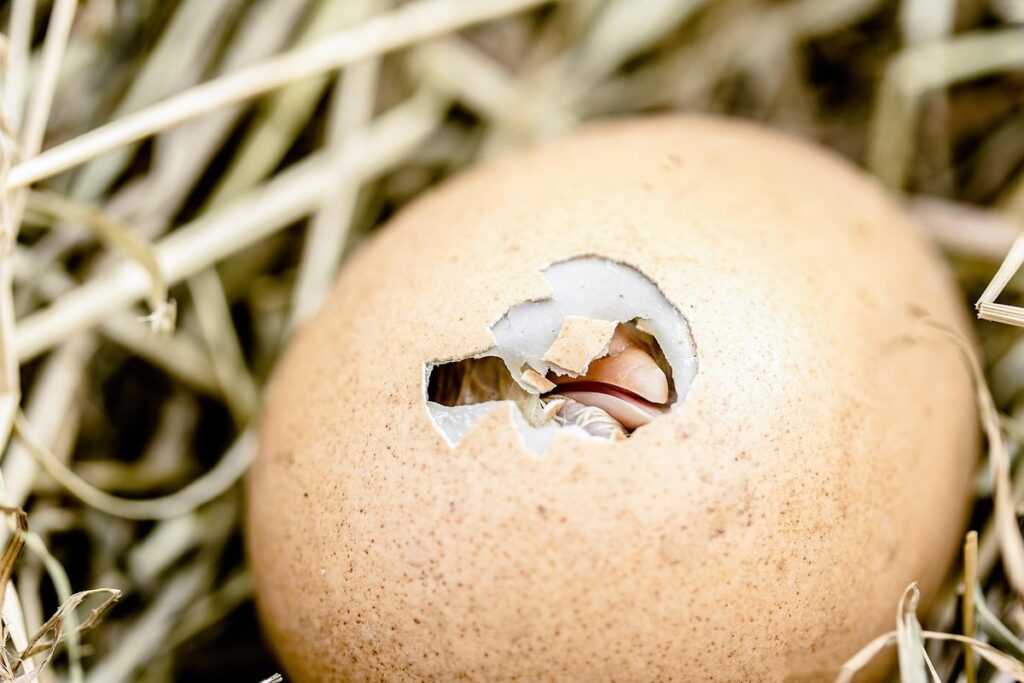
As you approach day 11-12 of incubation, you’ll start to notice some significant changes in your developing chick. One of the most exciting signs is pipping – when the chick begins to crack through the eggshell. This process can be a bit precarious for the chick, but with proper care and attention, it’s usually a smooth transition.
Pipping typically occurs on one of the larger air pockets at the top or bottom of the egg. The chick will use its strong beak to peck through the shell, creating an opening just large enough to extract its head. This process can take anywhere from 30 minutes to several hours, depending on the individual chick’s strength and determination.
Once pipped, the chick will continue to break free by pushing its head and shoulders through the remaining shell fragments. Be careful not to disturb the egg or the chick during this critical stage, as it can cause injury or even lead to the chick returning to the comfort of its air pocket inside the egg.
Initial Post-Hatch Development (Days 13-14)
As the chicks emerge from their eggs, they’re vulnerable and require careful attention to ensure a healthy start. On day 13, the first task is to introduce them to food and water. Begin by placing the feed and water about 6 inches away from the chicks’ reach to encourage exploration and learning. As they become more confident, gradually move the feeding station closer.
Initially, you can offer a starter feed specifically formulated for young chicks, which provides essential nutrients and energy. Ensure fresh water is available at all times, and make sure the chicks know where it’s coming from by placing a dropper or a small cup with water near the brooder area.
Monitor their weight closely during this period as they need to gain weight quickly to develop their immune system and feathers. Aim for a temperature range of 95-100°F (35-38°C) in the brooder, which will encourage activity and growth. Keep an eye out for signs of illness or stress, such as labored breathing, lethargy, or changes in droppings.
Final Stages of Hatching
You’re almost there – now it’s time to witness the final stages of hatching, where chicks break free from their shells and take their first breaths of fresh air.
Preparing for Emergence (Day 12-13)
As we enter days 12 and 13 of incubation, the chick’s emergence is almost imminent. It’s essential to make final preparations for this critical stage. To ensure a smooth hatching process, restrict movement within the incubator to prevent unnecessary vibrations that might disturb the developing chick.
Maintain humidity levels between 50-60% during these two days. High humidity helps soften the eggshell, making it easier for the chick to pip (break through the shell). Use a hygrometer to monitor and adjust the humidity as needed.
In addition to maintaining optimal temperature (around 99°F) and gentle rocking motions, ensure the incubator remains clean and dry. Remove any debris or moisture that may have accumulated during incubation. This attention to detail will help create an ideal environment for the chick’s emergence.
Remember, it’s not uncommon for chicks to pip early or stay in their eggs longer than expected. Be prepared for either scenario by having a brooder ready with heat, light, and adequate ventilation. Stay vigilant, and with careful preparation, you’ll be ready for this exciting moment in your chick’s development.
Chick Emergence and Initial Care (Day 14+)
After 14 days of incubation, your chicks are finally emerging from their shells. Congratulations! The first few days after hatching are critical for establishing good chick health and habits. As your chicks emerge, make sure to provide a warm and safe environment.
The temperature is still crucial during this phase, maintaining a consistent 90-95°F (32-35°C) in the first week post-hatch. You can gradually decrease the temperature by 5°F (3°C) every few days until it reaches ambient levels. Ensure your chicks have access to a shallow dish of water for drinking and a separate feeder for starter crumbles.
Socialization is also essential during this period, as chicks are learning important behaviors from their mother or caregiver. Provide plenty of opportunities for them to interact with each other and explore their surroundings. Keep the brooder draft-free, well-ventilated, and secure to prevent escapes. Monitor your chicks’ behavior closely, watching for signs of stress or illness. With proper care and attention, your newly hatched chicks will thrive in their new environment, setting them up for a healthy and happy life.
Frequently Asked Questions
How do I know if my eggs are fertile?
Yes, a simple way to determine fertility is by candling the egg. This involves shining a light through the egg to see if you can spot any signs of embryo development. However, keep in mind that this method may not be 100% accurate. If you’re concerned about fertility, consider purchasing fertile eggs from a reputable breeder or using an incubation station with built-in fertility testing.
Can I speed up the hatching process?
No, it’s essential to allow the natural hatching process to occur. Attempting to force chicks out of their shells can cause more harm than good and may lead to complications during development. Focus on providing a safe and stable environment for your eggs to incubate, and let nature take its course.
What happens if I experience an extended incubation period?
If you notice that the expected hatching time is passing without any signs of emergence, it’s possible that the egg has stalled or failed to develop properly. Carefully inspect the egg for cracks or damage, and consider consulting a veterinarian or experienced poultry expert for guidance.
How often should I turn my eggs during incubation?
Turning your eggs regularly, ideally 3-5 times daily, is crucial for even development and preventing the embryo from becoming stuck in one position. Use an automatic egg turner or gently rotate the eggs by hand to ensure proper rotation and prevent any potential issues.
What are some common mistakes to avoid when preparing a brooder?
When setting up your brooder, be sure to provide adequate ventilation, maintain a comfortable temperature range (around 90-95°F), and ensure access to clean food and water. Also, make sure to disinfect all equipment and surfaces before introducing your new chicks to prevent the spread of disease.