
Are you waiting with bated breath for your chicks to emerge from their eggs? A chicken hatching day timeline can be a lifesaver, helping you anticipate and prepare for this exciting moment. As an aspiring backyard farmer or seasoned breeder, understanding the embryonic development stages and incubation process is crucial in ensuring a successful hatch. But knowing exactly what’s happening inside that egg and how to recognize signs of approaching hatching can be overwhelming.
This comprehensive guide will walk you through each stage of chicken development from day one until the chicks pip their way out. You’ll learn about the critical signs to look for, such as pip, zip, and hatch, and discover tips on how to assist newly hatched chicks in their first few hours. Whether you’re a seasoned pro or just starting out, this article will provide you with a solid understanding of the chicken hatching day timeline and set you up for success.
Understanding Chick Embryonic Development
To give you a solid foundation, let’s dive into how chicken embryos develop from fertilization to hatching, including key milestones and growth stages. This process is fascinating!
Stage 1: Fertilization to 24 Hours (0-24 hours)
Fertilization is a crucial step in the chicken hatching process. It occurs when a male’s sperm meets the female’s egg yolk, resulting in the fusion of genetic material. This marks the beginning of embryonic development. Within 24 hours after fertilization, several key events take place.
The first sign of life is the formation of the germinal disc, which appears as a dark spot on the yolk. This disc will eventually become the embryo proper and start dividing rapidly. The developing chick’s heart begins to beat around 18-20 hours post-fertilization, pumping blood through its tiny vessels. Meanwhile, the neural plate starts to form, signaling the onset of nervous system development.
The first 24 hours are critical in establishing the foundation for future growth. Any disruptions or abnormalities during this period can impact the chick’s viability and health later on. Monitor your incubator closely during this initial stage to ensure optimal conditions and a successful hatching outcome.
Stage 2: 24-48 Hours – Gastrulation and Organ Formation
As we enter Stage 2 of chick embryonic development, which spans from 24 to 48 hours after fertilization, a crucial transformation takes place: gastrulation. During this period, the embryo begins to undergo significant changes that will shape its future growth and development.
The process starts with the formation of three primary germ layers – ectoderm, endoderm, and mesoderm – which eventually give rise to all major organs and tissues in the chick’s body. This complex process involves cellular movement and differentiation, where cells from each layer begin to organize themselves into distinct structures. For instance, the ectoderm forms the skin, nervous system, and eyes, while the endoderm develops into internal organs like the digestive system and liver.
As gastrulation unfolds, it’s essential for you to keep an eye on incubation conditions to ensure a healthy development pace. Maintain proper temperature (around 99-100°F) and humidity levels (50-60%) in your incubator to provide an optimal environment for the embryo’s growth.
Incubation Process and Temperature Control
To successfully incubate eggs, it’s essential to maintain precise temperature control, with slight variations from day to day affecting hatch rates significantly.
Importance of Maintaining Optimal Egg Temperature (18-22°C)
Maintaining optimal egg temperature is crucial for successful hatching. The ideal range is between 18-22°C (64-72°F), and it’s essential to keep the eggs within this narrow window throughout the incubation period. Temperature fluctuations can lead to developmental issues, including delayed or arrested embryonic development.
The temperature range of 18-22°C is specifically tailored to promote healthy growth and development of the embryo. At 20°C (68°F), for instance, the embryo develops at an optimal pace, and the chances of successful hatching increase significantly. On the other hand, temperatures above 24°C (75°F) can lead to dehydration, while those below 16°C (61°F) can cause stunted growth.
To achieve this ideal temperature range, it’s essential to monitor your incubator closely. This involves setting a stable temperature and keeping an eye on any fluctuations. A simple thermometer will help you track the temperature, but consider investing in a more advanced model with alarms for added peace of mind. By maintaining optimal egg temperature, you’ll increase the chances of successful hatching and healthy chicks.
Monitoring Incubator Humidity Levels (50-60%)
Maintaining optimal humidity levels between 50-60% is crucial for successful chick development and hatching. When the incubator’s relative humidity is within this range, it helps to regulate the chick’s growth rate, prevents dehydration, and ensures proper eggshell formation.
If the humidity level drops below 45%, eggs may not develop properly, leading to underdeveloped chicks or increased mortality rates during incubation. Conversely, excessively high humidity (above 65%) can cause soft-shelled eggs, weakened immune systems in chicks, and reduced hatchability.
To monitor and maintain optimal humidity levels, it’s essential to:
• Use a hygrometer to track the relative humidity within the incubator
• Keep a water reservoir or misting system handy for quick adjustments as needed
• Check and adjust the humidity setting according to your incubator’s manual guidelines
• Maintain a consistent temperature range (around 99-100°F) while making humidity adjustments
Regular monitoring of incubator conditions, especially humidity levels, will help you identify potential issues before they affect hatching success. Remember that precise control over these variables is key to ensuring healthy chicks and successful hatch rates.
Signs of Approaching Hatching
As you wait for the big day, you’ll start noticing changes in your incubator that indicate hatching is just around the corner, so let’s dive into these signs. Look out for increased peeping and pipping sounds!
Softening of Eggshell, Pipping, and Cracking
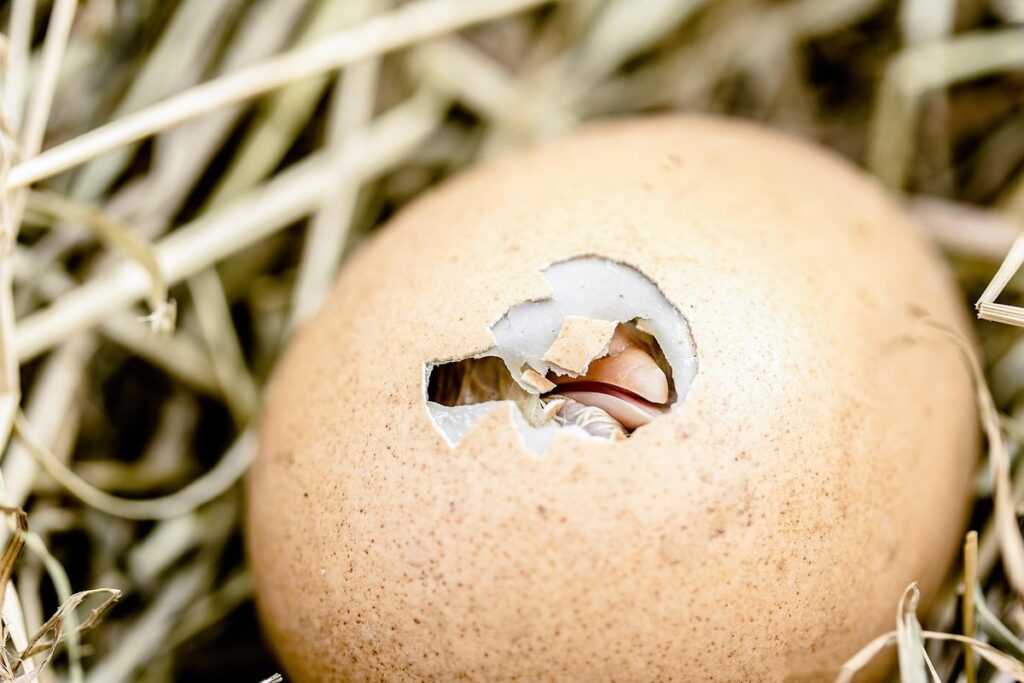
As you approach hatching day, there are several physical signs that indicate the chick is preparing to emerge from its eggshell. One of the earliest and most significant indicators is the softening of the eggshell. This process begins when the chick starts to pip, or break through the shell with its beak, creating a small hole. As the chick continues to absorb calcium and other nutrients, the surrounding shell becomes increasingly brittle and fragile.
You may notice that the egg starts to feel lighter as the shell loses its rigidity. In some cases, you might even see slight cracks or fissures forming on the surface of the eggshell. This is a sign that the chick is preparing to make its escape. Be cautious when handling the eggs at this stage, as they can break easily.
Monitor the egg closely for signs of pipping, such as a small hole or crack in the shell. If you’re new to incubating eggs, it’s essential to be aware of these physical changes and take necessary precautions to ensure the chick’s safe emergence from the shell.
Sounds and Visual Cues Indicating Imminent Hatching
As hatching day approaches, you’ll start to notice various sounds and visual cues that signal the chick is about to emerge from its shell. One of the most distinctive signs is the pip, which is a small hole the chick creates by pecking at the shell with its beak. You may hear a faint scratching or chirping noise coming from within the egg.
Another sign is the cessation of pip attempts and an increase in egg turning. The chick will start to rotate the egg vigorously, indicating it’s preparing to break free. Observe the egg closely for cracks on the surface, which can be a clear indication that hatching is imminent.
Pay attention to your chicken’s behavior as well; she may pace back and forth in front of the incubator or exhibit signs of anxiety, such as panting or restlessness. These cues are not only indicative of an impending hatch but also signal to you that it’s time to be prepared for a possible emergency hatching situation.
When you notice these signs, check the egg frequently to monitor progress and ensure everything is going smoothly. Remember, hatching day can be unpredictable, so stay alert and focused on helping your chicks emerge safely from their shells.
The Final Stages of Hatching
As hatching day draws to a close, you’ll start to see some exciting developments: the chick’s first wobbly steps and initial attempts at independent life. This is where things can get really thrilling!
Chick Emergence and Initial Development
As the chick starts to emerge from its egg, you’ll notice a significant transformation. The beak begins to break through the membrane that covers it, and the chick starts to pip, making tiny holes on both sides of the shell. This process is crucial for the chick’s survival.
The chick will continue to peck at the shell, slowly but surely breaking free from its confinement. Once out, it may appear weak or lethargic due to a sudden change in environment and lack of oxygen. But don’t worry; this is a normal phase of development.
In most cases, chicks will take their first breath within 10-15 minutes after hatching. They may initially struggle to stand upright due to uncoordinated movements. However, with some assistance from the mother hen or breeder, they’ll eventually find their footing and begin to move around.
To ensure a smooth transition for your chicks, provide a warm, draft-free environment, and make sure they have access to food and water immediately after hatching. This will give them the energy they need to grow and develop at an incredible rate.
Tips for Assisting Chicks During Their First Few Days of Life
During their first few days of life, newly hatched chicks require careful attention to ensure they develop properly and avoid health issues. When helping them adjust to the outside world, it’s essential to maintain a warm environment with adequate humidity.
Provide a temperature gradient, allowing your chicks to regulate their own body heat as they grow. Aim for 90-100°F (32-38°C) in the first day, gradually reducing it by 5°F (3°C) each subsequent day.
Ensure your chicks have access to fresh water and food at all times. Use a high-quality starter feed specifically designed for young chickens, and change their water frequently to prevent bacterial growth.
Monitor your chicks’ health closely during this critical period, looking out for signs of respiratory distress or lethargy. Keep the brooder clean by removing soiled bedding and sanitizing it regularly.
By following these guidelines, you’ll create a nurturing environment that promotes healthy development in your newly hatched chicks.
Challenges and Troubleshooting
As you await the arrival of your chicks, it’s inevitable that unexpected issues will arise. This section will help you troubleshoot common problems that may occur during a chicken hatching day.
Identifying Common Issues with Hatching (Infertility, Embryonic Death)
Infertility and embryonic death can be heart-wrenching issues that many breeders face during incubation. These problems often stem from factors related to the egg’s internal environment, which may not provide the necessary conditions for healthy development.
One common issue is low fertility rates due to improper storage of semen or eggs. Failing to store them at the right temperature can lead to a reduction in sperm count and viability. Similarly, exposing fertile eggs to temperatures above 70°F (21°C) can cause embryo mortality.
Inadequate egg handling during collection, transportation, or washing can also compromise fertility. For instance, excessive rubbing against the eggshell can damage its membrane, disrupting osmoregulation and ultimately leading to embryonic death.
To minimize these risks, it’s crucial to maintain a controlled environment for both eggs and incubators. This includes ensuring optimal storage temperatures (around 39-41°F or 3-5°C), proper handling during collection, transportation, and washing, as well as regular cleaning of incubators. Regular candling can also help identify issues early on.
Monitoring fertility rates through post-mortem examination is essential for identifying areas for improvement. By analyzing the data, you can refine your techniques to prevent future losses.
Strategies for Overcoming Hatching Failures and Improving Future Success Rates
Hatching failures can be disheartening, especially after investing time and care into your incubator. But don’t let a single failure discourage you from trying again – with the right strategies, you can improve your future success rates.
Firstly, it’s essential to identify the cause of the hatching failure. Was it due to improper temperature or humidity settings? Or perhaps poor egg quality or handling during transfer? Once you pinpoint the issue, you can take corrective measures to avoid repeating the same mistakes. For instance, investing in a good-quality incubator with precise temperature control can significantly reduce the risk of temperature-related failures.
Another crucial aspect is maintaining proper hygiene and cleanliness throughout the hatching process. Regularly clean your incubator, handling equipment, and breeding area to prevent bacterial contamination. Also, make sure to monitor your eggs’ weight loss during incubation – a 10-15% decrease in weight usually indicates successful embryonic development.
To improve future success rates, consider implementing a controlled environment for your chicks, such as a brooder with adequate ventilation and heat. This will help them adapt quickly to their new surroundings, reducing the risk of disease or stress-related mortality. Additionally, maintaining accurate records of your hatching attempts can help you track progress, identify areas for improvement, and refine your techniques over time.
Frequently Asked Questions
What are the signs I should look for if my incubator’s temperature drops below 99°F (37°C)?
In this scenario, it’s crucial to act quickly. A sudden drop in temperature can cause embryonic death or stunted growth. Monitor your incubator’s temperature closely and take corrective action immediately. Check that the temperature probe is correctly calibrated, and ensure proper ventilation to maintain a stable internal environment.
Can I use a humidifier with my incubator, or will it interfere with hatching?
You can safely use a humidifier in conjunction with your incubator to maintain optimal humidity levels (50-60%). This will help prevent dehydration and promote healthy growth. However, ensure the humidifier is designed for incubator use and follow the manufacturer’s guidelines.
What should I do if my chicks are struggling to pip or have difficulty breathing after hatching?
In this situation, gently assist the chick by carefully rotating it every 30 minutes to facilitate pipping. You can also use a soft-bristled brush to gently encourage the chick to breathe more easily. Monitor your chicks closely and seek professional help if you notice any persistent issues.
How often should I check on my incubator’s humidity levels, and what are the consequences of neglecting this aspect?
Regularly monitoring your incubator’s humidity levels is essential (at least once a day). Failure to maintain optimal humidity can lead to dehydration or even hatch failure. Make sure to keep accurate records of your temperature and humidity readings.
Can I use a broody hen as an incubator, or will it affect the hatching process?
While a broody hen can successfully incubate eggs, using her as an incubator may introduce variables that could impact hatching success. A controlled environment like an incubator ensures consistent conditions, which can result in healthier chicks.