
Have you ever seen a group of ducks resting in the water, their heads submerged beneath the surface, only to wonder if they’re engaging in some sort of bizarre behavior? The notion that ducks drown each other when they rest their heads underwater is a common myth that’s been floating around for years. But what’s behind this curious phenomenon? In reality, duck anatomy and behavior play a crucial role in understanding this supposed “drowning” incident.
In this article, we’ll delve into the truth about duck anatomy, explore real-world studies on duck behavior, and separate fact from fiction to uncover the reasons behind this intriguing myth. By examining the intricacies of duck physiology and observing how they interact with their environment, you’ll be surprised by what you learn. So, let’s dive in and get to the bottom of the question: do ducks really drown each other?
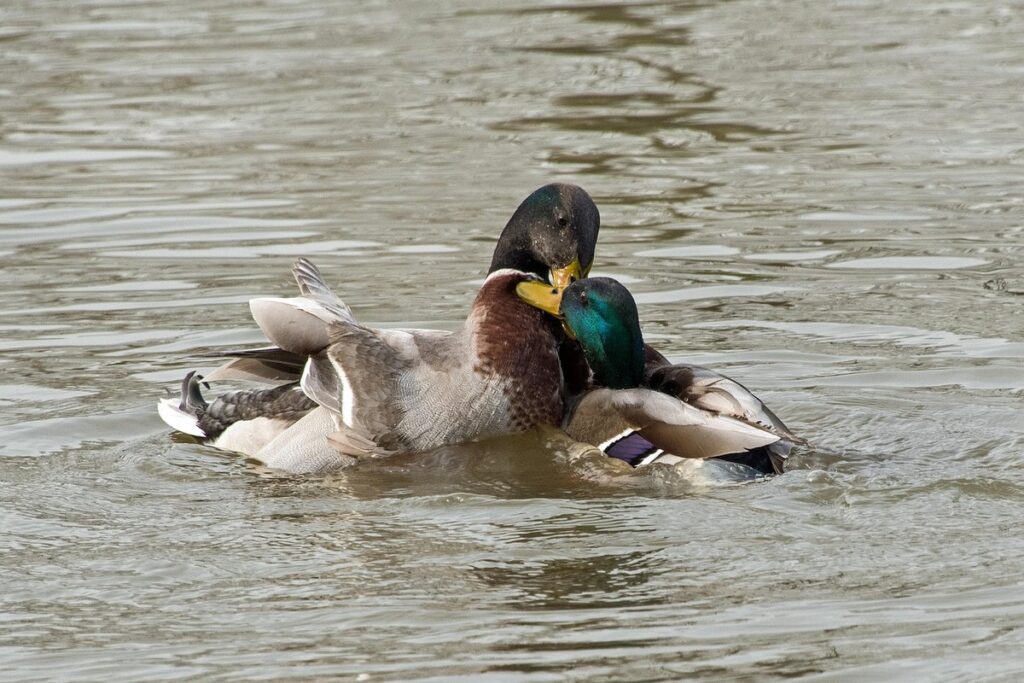
The Myth and Reality
Let’s dive into the fascinating world of duck behavior, where myths and legends have led many to wonder: do ducks really drown each other in their own water?
Origins of the Rumor
The widespread notion that ducks drown if they rest their heads under water has been puzzling many animal enthusiasts. To understand where this myth originated from, let’s take a closer look at the early accounts and writings of duck behavior.
One possible source of this misconception dates back to ancient Greece, where Aristotle noted in his work ‘Historia Animalium’ that ducks can drown if they are submerged too deeply. Although Aristotle didn’t specifically mention ducks resting their heads under water, his observations on aquatic birds struggling with excessive submersion might have laid the groundwork for future misinterpretations.
In the 18th century, British naturalist Thomas Bewick wrote extensively about waterfowl in his book ‘History of British Birds’. He mentioned that ducks can become exhausted if they remain underwater too long, which may have been misinterpreted as them drowning. These early accounts and writings likely contributed to the widespread notion that ducks are susceptible to drowning when their heads are submerged.
Scientific Explanations
When ducks dive underwater to forage for food or escape predators, their unique anatomy allows them to stay submerged for extended periods while resting their heads above water. This remarkable ability is made possible by the duck’s specially adapted body structure.
One of the key factors that enables ducks to avoid drowning is the diving reflex, also known as the bradycardic response. When a duck’s head is submerged in water, its heart rate slows down significantly, and its blood vessels constrict, reducing the amount of oxygen available to the brain. As a result, the duck’s brain is able to suppress the urge to inhale water, preventing drowning.
This incredible reflex allows ducks to stay underwater for up to 10 seconds without taking in water. In fact, studies have shown that ducks can even swallow water and still avoid choking on it due to this unique adaptation. By understanding the diving reflex and the duck’s anatomy, we can appreciate the incredible survival skills of these amazing birds.
Duck Behavior and Drowning Risks
Let’s dive into some fascinating facts about duck behavior, including what drives them to engage in life-or-death battles over water.
How Ducks Rest Underwater
When ducks are not foraging or swimming, they often rest underwater with their beaks submerged. This behavior is particularly common among diving ducks and mergansers. They can hold their breath for up to 15-20 seconds, after which they surface to breathe.
Ducks typically prefer resting in areas with good water quality, where they can easily get oxygen. However, even the most experienced swimmers may become trapped or submerged unexpectedly due to unexpected changes in water levels, strong currents, or aquatic vegetation.
For example, a duck might dive into a patch of dense water lilies and become entangled. Even if it manages to free itself, the struggle could lead to exhaustion, which increases the risk of drowning. Similarly, a sudden drop in water level due to human activities like dredging can leave a resting duck trapped underwater.
As an owner or caregiver for ducks, being aware of these risks is crucial. Providing safe resting areas and monitoring your flock’s behavior during foraging and swimming can help minimize the likelihood of accidental submersion or drowning.
Factors Influencing Drowning Risk
When it comes to understanding whether ducks drown each other, it’s essential to consider external factors that can increase a duck’s likelihood of drowning. One critical aspect is water conditions. For example, if the water is too deep or has strong currents, even a skilled swimmer like a duck may struggle to stay afloat. Water temperature also plays a role; extremely cold or warm waters can cause drowsiness or discomfort in ducks, making it more challenging for them to paddle and breathe.
Additionally, physical health, age, and the presence of predators can all contribute to an increased drowning risk. Older ducks with weakened muscles or compromised health may have difficulty swimming, while ducklings are naturally vulnerable due to their small size and limited swimming abilities. Furthermore, if a duck is chased by predators such as herons, owls, or foxes, it may become disoriented and exhausted, leading to an increased likelihood of drowning.
In many cases, humans can inadvertently contribute to the drowning risk by disturbing waterfowl habitats or providing inadequate access to safe water sources.
Observations and Studies on Duck Drowning
Let’s dive into some interesting observations from real-life studies that investigate whether ducks really do drown each other. We’ll examine some fascinating cases!
Field Studies and Observations
Researchers have conducted several field studies to observe duck behavior in their natural habitats. One notable study observed a group of Mallard ducks resting together on the water’s surface before diving underwater. During this period, the researchers noted that the ducks would occasionally slip beneath the surface, but they would quickly resurface without any signs of distress. However, the team did document instances where individual ducks became submerged for longer periods and struggled to free themselves.
In another study, researchers monitored a population of Wood Ducks in a wetland ecosystem. They found that while resting underwater was a common behavior among these ducks, actual drowning incidents were rare. The researchers suggested that this could be attributed to the ducks’ ability to recover from brief submersion due to their unique physiology and behavioral adaptations.
These field studies provide valuable insights into duck behavior concerning water-based activities. By observing their natural behaviors in controlled environments, scientists can better understand the dynamics of duck social interactions, including instances where they may drown each other.
Laboratory Experiments
In controlled laboratory experiments, researchers have replicated real-world scenarios to study duck behavior and the diving reflex. One such experiment involved placing ducks into a pool of water where they were unable to escape. Observations showed that when submerged, the ducks’ breathing patterns changed dramatically, and their bodies began to respond as if preparing for death. This phenomenon is often referred to as “drowning,” even though the birds may still be alive.
The results of these experiments led researchers to conclude that the diving reflex is a crucial factor in understanding duck behavior during water submersion. The reflex triggers a series of physiological responses, including increased blood pressure and a rapid heart rate, which are designed to help the bird conserve energy while underwater.
Interestingly, some studies have suggested that the diving reflex may be triggered even when ducks are not in immediate danger. For example, researchers observed that ducks will often hold their breath for extended periods while swimming or foraging in shallow water. This behavior can make it challenging to distinguish between voluntary submersion and actual drowning.
Comparison with Other Animals
Let’s take a closer look at how other waterfowl species behave when it comes to drowning, and what we can learn from their quirks. We’ll explore some fascinating examples in the animal kingdom.
Adaptations in Other Waterfowl
When we consider whether ducks drown each other, it’s essential to examine how their anatomy and behaviors compare to those of other waterfowl species. One such example is the Grebe, a bird that spends most of its time on water but doesn’t appear to share the same risk of drowning as ducks do.
Grebes have specially adapted feathers around their eyes and bill, which can be closed when submerged underwater to prevent water from entering. This unique feature allows them to dive and forage for food with relative ease, all while keeping most of their respiratory system protected. In contrast, ducks’ heads are more exposed, making them more susceptible to drowning.
Other waterfowl like geese and swans also have similar adaptations that help reduce the risk of drowning when submerged. Their nostrils are able to close shut when underwater, preventing water from entering their lungs. While this doesn’t eliminate the risk entirely, it certainly makes it less likely compared to ducks. These adaptations offer valuable insights into how different species can thrive in aquatic environments without succumbing to drowning.
Unique Aspects of Duck Anatomy
Ducks have evolved to thrive in aquatic environments, but their unique anatomy makes them more susceptible to drowning than other birds. One key aspect is their beak shape, which is perfectly adapted for filtering water and catching food. However, this flat, broad beak can also trap water, making it difficult for the duck to breathe or even close its mouth.
Their nostrils are another critical factor. Unlike many other aquatic birds, ducks don’t have a closed nasal cavity that would prevent water from entering their lungs when diving. This means water can easily seep into their respiratory system, putting them at risk of drowning. Interestingly, some species of ducks, such as mergansers and harlequin ducks, have beaks specially adapted to allow for more efficient underwater feeding without compromising their ability to breathe.
For duck owners or enthusiasts, recognizing these vulnerabilities can help prevent accidents. Ensuring your duck has access to a safe area where it can come up to the surface to breathe is crucial. Providing a shallow water source and regularly checking on your bird’s well-being can also help mitigate this risk.
Conclusion: Separating Fact From Fiction
Now that we’ve explored the facts and myths surrounding duck drowning, let’s separate fact from fiction and draw some conclusions based on what we’ve learned.
Recap of Key Points
In this article, we’ve explored the phenomenon of ducks allegedly drowning each other while resting. To recap, let’s summarize what we know: when ducks rest underwater, they typically do so with their heads and necks exposed above water. This behavior allows them to breathe easily and keep watch for potential threats.
We also discussed how some species of ducks are more prone to resting underwater than others. For instance, wood ducks tend to spend a significant amount of time in the water, whereas mallards are less likely to do so. Interestingly, research has shown that even when ducks do rest with their heads submerged, they can still remain relatively safe as long as they’re able to lift their head quickly if needed.
In conclusion, while it’s true that some ducks may accidentally drown each other while resting underwater, this behavior is relatively rare and often the result of specific circumstances. By understanding the nuances of duck behavior, we can better appreciate these fascinating creatures and promote a safe and harmonious coexistence with them in our natural environments.
Implications for Duck Care and Management
As we conclude our exploration of whether ducks drown each other, it’s essential to consider the implications of these findings for duck care and management. Our discussion has highlighted that ducks do engage in behaviors like swimming against the current, struggling with each other in water, or even intentionally drowing others.
Enclosure design is a crucial aspect where our understanding can be applied. By providing deeper water pools or areas with slower currents, you can reduce the likelihood of ducks engaging in these potentially fatal behaviors. Consider incorporating ‘beach’ or ‘land areas’ that allow ducks to exit the pool safely and exercise on land. For example, a well-designed duck pond might have a gradual slope leading out of the water area.
Recognizing signs of distress among ducks is also vital. Educate yourself and others about identifying behaviors like swimming erratically, vocalizing excessively, or showing aggression towards other ducks. By being aware of these warning signs, you can intervene early to prevent potential drowning incidents.
Frequently Asked Questions
What are the key takeaways from this article for someone who wants to better understand duck behavior?
The main points from our investigation suggest that ducks do not drown each other, but their unique anatomy allows them to rest with their heads underwater without risk. This is due in part to their specially designed nostrils and ability to extract air from the water’s surface.
How can I apply this knowledge to my own observations of ducks or waterfowl behavior?
When observing ducks, consider how they interact with their environment. Note whether they are able to rest with their heads underwater without struggling. Be aware that individual differences in duck behavior can occur due to factors such as age, health, and species.
What about other animals – do any share similar adaptations or risk factors when it comes to drowning?
Other waterfowl species may exhibit similar adaptations, but the specifics of each bird’s anatomy and behavior should be examined on a case-by-case basis. Research has shown that some species of birds have unique respiratory systems that allow them to extract oxygen from water.
Can I rely solely on anecdotal evidence when making conclusions about duck drowning risks?
While personal observations can provide valuable insights, it is essential to consider the broader scientific consensus and empirical research on this topic. Consult reputable studies and experts in the field to ensure your understanding is informed by a wide range of perspectives and data.
Are there any specific environmental factors that could influence a duck’s risk of drowning when resting underwater?
Environmental conditions such as water temperature, depth, and turbulence can impact a duck’s ability to rest safely with its head submerged. Be aware of these factors when observing or interacting with ducks in different ecosystems.