
When it comes to monogamous birds, some species stand out from the rest. One such example is the mallard duck, known for its distinctive quack and striking green head. But do mallard ducks truly mate for life? While many of us have a romanticized view of long-term pair bonds in nature, the reality can be more complex than we think. In this article, we’ll delve into the social structure and mating habits of mallard ducks to explore whether they’re as loyal as their reputation suggests. We’ll also examine the factors that influence their long-term pair bonds and what it means for these iconic waterfowl birds. Whether you’re a bird enthusiast or just curious about nature’s secrets, this comprehensive guide will give you a deeper understanding of the mallard duck’s fascinating world.
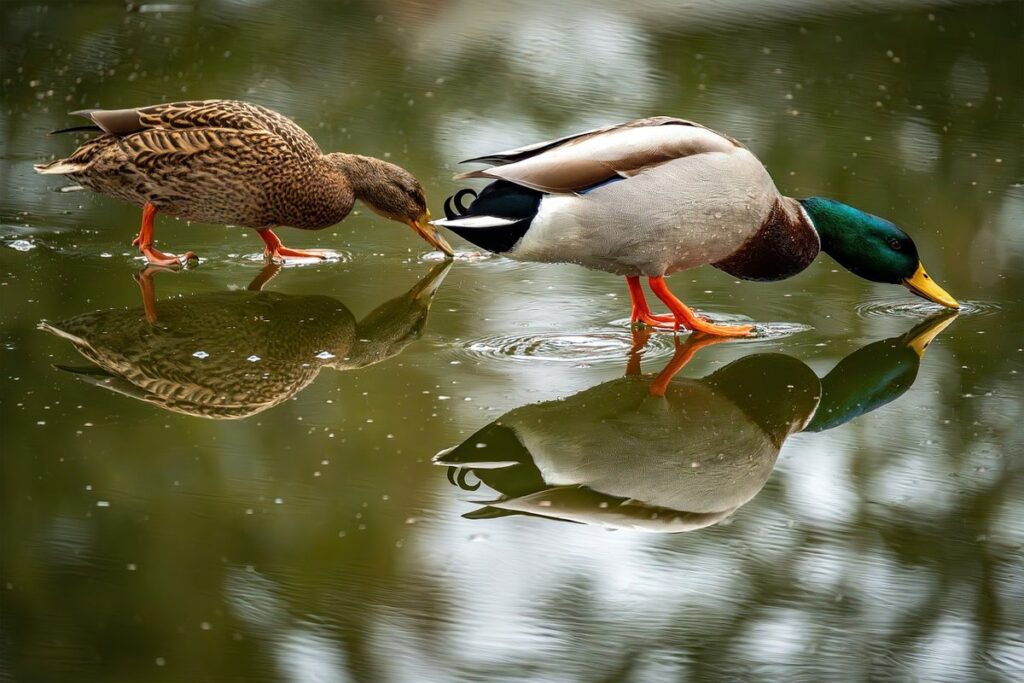
Understanding Mallard Duck Behavior
To better understand whether mallards mate for life, it’s essential to grasp their unique social dynamics and mating habits. Let’s take a closer look at how they interact with each other.
Social Structure of Mallards
Mallard ducks are highly social creatures that thrive in the company of others. In fact, they’re often seen in large flocks during their migratory journeys and in urban areas where food is plentiful. This flocking behavior is a key aspect of their social structure, with individual ducks forming close bonds with each other.
Within these flocks, a dominance hierarchy exists, with alpha males leading the way. Dominant mallards assert their dominance through aggressive posturing, such as head-flagging and loud quacking. However, this dominance hierarchy is not rigidly defined and can shift depending on factors like age, sex, and individual personality.
In some cases, long-term pair bonds form between individual ducks, which can be a sign of mate fidelity. However, it’s essential to note that mallards are not typically monogamous animals. Female mallards often choose their mates based on factors like genetic fitness and access to food resources. As we delve deeper into the mating habits of mallard ducks, keep this social structure in mind – it may hold the key to understanding why some pairs form lasting relationships while others do not.
Mating Habits in Wild Mallards
When it comes to forming pairs during breeding season, wild mallards are quite particular about their mate selection. Factors such as age, health, and compatibility play a significant role in determining who they pair up with.
One of the most important factors influencing mate selection is dominance hierarchy. In the mallard world, dominant males tend to secure the best females, while subordinate males often settle for less desirable mates or remain bachelor ducks. This dynamic can be observed during courtship displays, where dominant males engage in elaborate rituals to establish their superiority and attract a high-quality female.
The choice of mate also depends on compatibility. Mallards tend to form long-term pair bonds with individuals they’ve had prior experience with, often resulting in repeated breeding attempts. For instance, if a male and female have successfully raised a brood together, they’re likely to stick together for subsequent breeding seasons. This suggests that mallards are capable of forming lasting relationships, which is essential for their survival and reproductive success.
In the wild, mallards typically form pairs during late winter or early spring, just before breeding season commences. During this time, males engage in a series of behaviors to attract females, including displaying their plumage, vocalizing, and performing courtship rituals.
Do Mallard Ducks Mate for Life?
One of the most common questions about mallards is whether they mate for life, and the answer might surprise you. Let’s dive into the fascinating world of duck relationships.
Monogamy in Mallards
When it comes to monogamy in mallards, there’s more to their mating habits than meets the eye. While mallard ducks are often depicted as faithful pairs, they don’t strictly adhere to a single-mate-for-life model. In fact, research suggests that around 30% of mallard females will change mates between breeding seasons. This might seem surprising, but it’s essential to consider their behavior in context.
For instance, female mallards may switch partners if the current mate isn’t providing sufficient resources or protection for her and their offspring. Conversely, males might also engage in extrapair copulations (EPCs) with other females when they feel their primary pair bond is weak. In a study on captive mallards, it was observed that EPCs increased significantly during periods of high stress, such as when food or nesting sites were scarce.
To understand monogamy in mallard ducks, observe them in the wild and note any changes in behavior or body language that may signal a mate switch is imminent. This might include increased aggression from either partner or a sudden change in foraging patterns.
Factors Influencing Long-Term Pair Bonds
When it comes to forming long-term pair bonds, mallard ducks are no exception. Various factors come into play that contribute to their ability to mate for life. One key factor is geographic proximity – the closer two mallards live together, the higher the chances of a strong bond developing between them. In fact, studies have shown that mallards living in close proximity tend to form stronger pair bonds than those living farther apart.
Another crucial aspect is familiarity. Mallard ducks are creatures of habit and often form attachments to familiar mates or even locations. This means that if two mallards meet regularly and develop a routine together, they’re more likely to form a long-term bond. Genetic compatibility also plays a significant role in pair bonding. Research suggests that birds with similar genetic profiles tend to have stronger pair bonds, possibly due to the instinctual drive to preserve their genetic lineage.
In practical terms, if you’re interested in helping mallard ducks form strong pair bonds, consider providing them with a stable environment and plenty of opportunities for interaction. This might involve creating a communal nesting area or encouraging regular encounters between potential mates.
The Role of Territoriality in Mallard Mating
Territorial behavior plays a significant role in mallard mating rituals, with males defending their space against other suitors to secure a mate. In this next section, we’ll explore how territoriality affects their relationship.
Territorial Behavior During Breeding Season
During breeding season, male mallards go into high gear to establish and defend their territories. This is crucial for securing a mate and raising a successful brood. One of the primary ways males communicate with each other is through vocalizations. They use distinct calls to advertise their presence, warn off rivals, and attract potential mates.
Visual displays are also an essential part of territorial behavior in male mallards. They will spread their wings, puff out their chests, and engage in aggressive posturing to deter intruders. This visual display serves as a warning sign, making it clear that this is not an area for other males to explore.
In some cases, males may even engage in intense battles over territory, with the victor claiming dominance and control over the area. By establishing and defending their territories, male mallards ensure they have access to prime breeding grounds, food sources, and potential mates – all essential components of successful mating season.
Impact of Territoriality on Mate Choice
When it comes to mate choice among female mallards, territorial behavior plays a significant role. A male mallard’s ability to defend his territory is an attractive quality for females, as it indicates he has resources and strength to provide for potential offspring. In fact, studies have shown that males with larger territories tend to attract more mates and sire more offspring.
But why do female mallards find territoriality so appealing? One reason is that a secure territory provides females with a safe place to nest and raise their young without fear of predation or other threats. By choosing a mate with a strong territory, a female can increase the chances of her ducklings surviving and thriving. Additionally, males who are skilled at defending their territories tend to be more aggressive towards rival males, which makes them more likely to successfully defend their mates and resources.
Ultimately, a male mallard’s ability to protect his territory is a key factor in attracting and retaining a mate. If you’re interested in attracting a female mallard as a breeder or observer, focus on creating a secure and well-maintained territory that showcases your duck’s strength and resourcefulness.
Factors That Can Disrupt Long-Term Pair Bonds
While mallard ducks are known for their long-term pair bonds, there are several factors that can disrupt these relationships and cause them to seek out new mates. Let’s explore some of these disruptions together.
Predation and Mortality Rates
In addition to factors like mate choice and pair bond quality, predation and mortality rates can significantly disrupt long-term pair bonds between mallard ducks. For males, these external pressures can be particularly challenging.
Mallard duck males often prioritize establishing a territory and securing a female mate over maintaining a single long-term relationship. However, when faced with high predation or mortality rates, they may struggle to find a new mate after losing their partner. This vulnerability is especially pronounced in areas where predators like foxes, coyotes, or hawks are abundant.
Statistics show that mallard duck pairs have a relatively short lifespan – typically around 2-3 years in the wild. When males lose their mate due to predation or mortality, they may not have sufficient time to form new pair bonds before succumbing to similar pressures themselves. As a result, it’s common for male mallards to change mates multiple times throughout their lives.
This dynamic highlights the complex interplay between environmental pressures and long-term pair bonding in mallard ducks.
Human Activities Affecting Mallard Behavior
When we consider whether mallards mate for life, it’s essential to acknowledge that human activities can significantly impact their behavior and social structures. Habitat destruction is a significant concern for mallard populations. As wetlands and natural habitats are converted into agricultural land or urban developments, mallards lose access to vital breeding grounds and food sources. This can lead to increased stress levels among mallards, potentially weakening pair bonds.
Pollution also poses a threat to mallard behavior. Chemical pollutants in waterways can contaminate eggs and impact reproductive health. For example, studies have shown that exposure to certain pesticides has been linked to reduced fertility rates in male mallards. Furthermore, hunting regulations often overlook the social implications of taking mallards during breeding season. Removing experienced males from the population can disrupt long-term pair bonds as younger birds may not have the opportunity to form strong relationships.
By acknowledging these human-induced stressors, we can better understand the challenges faced by mallards and take steps to mitigate their impact on pair bonding.
Examples of Long-Term Pair Bonds in Mallards
Let’s take a closer look at some fascinating examples of long-term pair bonds in mallards, where loyalty and dedication shine through in their relationships. These true-life stories will blow your mind!
Case Studies from Field Observations
In the wild, researchers have observed numerous instances of long-term pair bonds among mallard ducks. For example, a study conducted in the 1970s on a population of mallards in Ontario, Canada, found that several pairs had formed lasting relationships, with one pair even remaining together for over 20 years.
A similar study published in the Journal of Wildlife Management in 2015 observed that 22% of mallard pairs in a specific region remained together for at least two breeding seasons. Notably, these long-term pairs were often seen engaging in cooperative behavior, such as mutual preening and joint foraging.
Such observations suggest that some mallards do form strong pair bonds, which can persist over multiple breeding seasons. While the likelihood of forming a lifelong bond may vary depending on factors like availability of food and suitable habitat, it’s clear that long-term pair bonding is not uncommon among mallard ducks.
Lessons Learned from Conservation Efforts
Understanding long-term pair bonds between mallard ducks can provide valuable insights for conservation efforts. By studying these birds’ monogamous relationships, researchers and wildlife managers can gain a deeper understanding of the complex social dynamics within Mallard populations.
One key lesson from conservation efforts is that preserving habitat quality and availability is crucial for maintaining healthy pair bonds. For instance, studies have shown that mallards living in areas with high-quality wetlands are more likely to form long-term pair bonds compared to those living in degraded habitats. This highlights the importance of maintaining wetland ecosystems and restoring habitats to support Mallard populations.
Conservation efforts can also benefit from learning about the factors that contribute to successful pair bond formation, such as mate selection and social bonding. For example, research has found that mallards tend to form strong bonds with mates they have previously paired with, suggesting that familiarity plays a significant role in pair bond success. By incorporating this knowledge into conservation strategies, wildlife managers can develop more effective approaches for promoting long-term pair bonds and ultimately improving Mallard population health.
Conclusion: The Importance of Long-Term Pair Bonds in Mallards
Now that we’ve explored the fascinating world of mallard duck pair bonds, let’s discuss why these long-term relationships are crucial for their survival and success.
Summary of Key Findings
In conclusion to our exploration of mallard duck mating habits, several key findings have emerged. Through observations and studies, we’ve seen that mallards are capable of forming long-term pair bonds, often lasting multiple breeding seasons and even a lifetime. These pairings are not just based on convenience or availability, but are instead formed through complex interactions and behaviors.
One notable aspect is the high divorce rate among young pairs, with approximately 40% dissolving within their first year together. This suggests that mallards may be more interested in forming strong pair bonds than simply finding a mate for breeding purposes. In fact, many females will choose to mate with the same male multiple times, even after initial separation.
This emphasis on long-term relationships is likely driven by factors such as food availability and habitat stability, which can greatly impact breeding success and survival rates. For wildlife enthusiasts or those looking to attract mallards to their backyard, understanding these social dynamics can provide valuable insights for creating a welcoming environment that supports successful pair bonding and overall health of the population.
Implications for Conservation and Research
Understanding that mallards form long-term pair bonds has significant implications for conservation efforts and future research directions. For one, this knowledge can inform habitat management strategies to prioritize areas with stable water sources and suitable nesting sites, allowing pairs to establish and maintain their territories. This, in turn, can lead to healthier populations and more effective management of duck species.
Conservationists can also use the concept of long-term pair bonds to design more efficient breeding programs. By recognizing that mallards tend to form lasting relationships, conservation efforts can focus on promoting these natural behaviors rather than disrupting them with artificial introductions or manipulation.
Researchers can build upon this foundation by exploring the mechanisms driving pair bond formation and maintenance in mallards. Investigating factors such as mate choice, territory defense, and social learning can provide valuable insights into the evolution of long-term monogamy in ducks.
Frequently Asked Questions
How do I identify a long-term pair bond between mallard ducks in the wild?
When observing mallards, look for consistent pairings throughout the breeding season, with individuals often staying together year after year. Note their behavior, such as mutual preening and vocalizations, to determine if they’re forming strong bonds.
Can human activities, like habitat destruction or hunting, disrupt long-term pair bonds in mallard ducks?
Yes, human activities can significantly impact mallard social structures and mating habits. Habitat loss and fragmentation can isolate individuals, while hunting can lead to the loss of dominant males, disrupting pair bonds.
How common are cases of polygyny (multiple mates) among mallards, where a male has multiple females?
While rare, polygyny does occur in mallards, especially when food is scarce or territories are limited. However, it’s essential to note that such instances often result from environmental pressures rather than inherent mating behavior.
What role do dominance hierarchies play in the formation and maintenance of long-term pair bonds among mallard ducks?
Dominance hierarchies can influence pair bond formation, with dominant males often securing top-quality mates. However, this doesn’t necessarily guarantee a long-term commitment; some alpha males may engage in extrapair copulations or change partners if conditions become favorable.
Can mallards form pair bonds outside of the breeding season, or is it exclusive to their reproductive period?
While pair bonds are primarily formed during the breeding season, some studies suggest that mallard ducks can maintain long-term pair bonds even outside this period. However, further research is needed to confirm the extent and consistency of these non-breeding season pair bonds.