
When we think of mallard ducks, we often picture them as a familiar sight in our local parks or lakes. But have you ever wondered about their love lives? Specifically, do mallard ducks mate for life like some other bird species? As it turns out, these ducks are capable of forming long-term pair bonds that can last many years. In fact, some pairs even stay together for their entire lifespan. But what factors influence the longevity of these relationships and the overall lifespan of mallard ducks? Is it really possible for them to mate for life, or is this just a myth? Let’s dive into the fascinating world of mallard duck mating habits and explore the answers to these questions in this article.
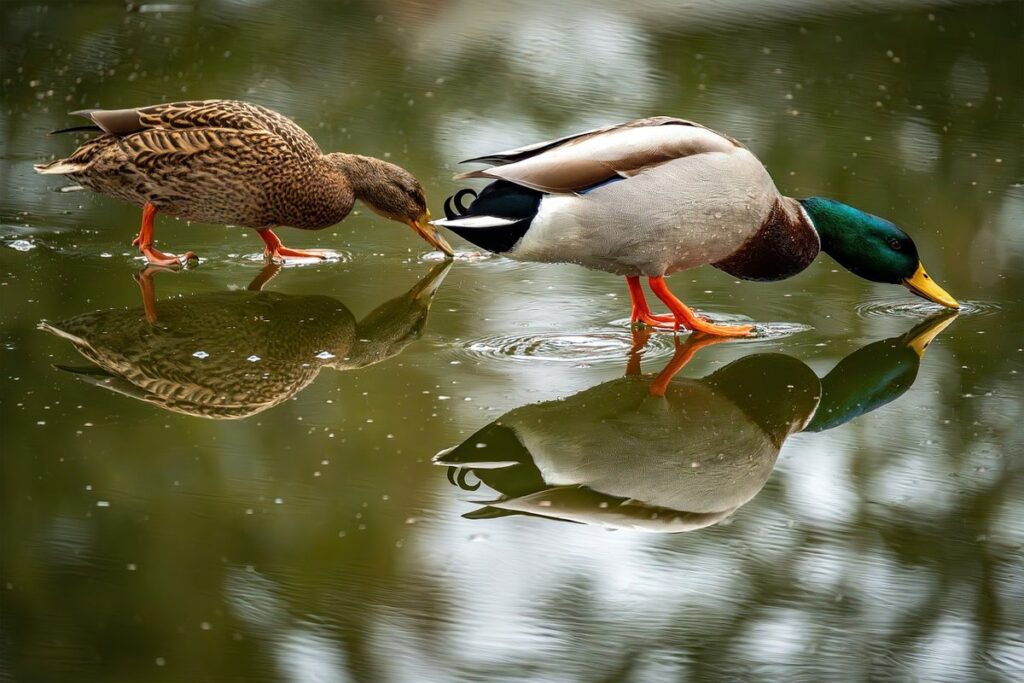
Understanding Mallard Duck Behavior and Lifespan
To truly understand whether mallards mate for life, it’s essential to grasp their natural behavior patterns and lifespan, as these factors play a significant role in their relationships.
Average Lifespan of Mallard Ducks in the Wild
When it comes to understanding mallard duck behavior and lifespan, one aspect that is often overlooked is their average lifespan in the wild. According to various studies, mallards typically live between 2 to 5 years in their natural habitat. This relatively short lifespan is likely due to predation, disease, and harsh environmental conditions.
However, some individuals have been reported to live up to 10-15 years, although this is not the norm. It’s worth noting that these longer-lived mallards often reside in areas with abundant food sources, clean water, and minimal human disturbance.
To put this into perspective, a study on urban mallard populations found that ducks living in areas with high levels of pollution and habitat destruction had significantly shorter lifespans compared to those living in more protected areas. This highlights the importance of providing a safe and healthy environment for these birds to thrive.
It’s essential for wildlife enthusiasts and conservationists to understand the average lifespan of mallards in the wild, as it can inform decisions on how best to protect and manage these populations. By acknowledging the challenges faced by mallard ducks, we can work towards creating a more sustainable future for these beloved waterfowl.
Factors Influencing Lifespan in Mallard Ducks
A mallard duck’s lifespan is significantly impacted by various factors that are often outside of its control. Habitat quality plays a crucial role, with ducks thriving in environments with abundant food sources and suitable breeding grounds. Conversely, pollution, human disturbance, and habitat degradation can lead to reduced lifespans.
Predation also poses a significant threat, particularly for ducklings, which are vulnerable to predators such as foxes, coyotes, and hawks. Disease is another major factor, with avian cholera and botulism being common threats in certain areas. Environmental conditions like extreme weather events and climate change can further impact a mallard’s lifespan.
In addition to these external factors, internal health issues such as respiratory problems and parasite infestations can also contribute to reduced lifespans. By understanding the various environmental and health-related challenges that mallards face, we can better appreciate the complexities of their lives and develop strategies for conservation and management efforts.
The Mating Process of Mallards
Let’s take a closer look at how mallard ducks find their perfect match, and what factors influence their mating choices. We’ll explore the fascinating process step by step.
Attracting a Mate: Display and Courtship Behavior
When it comes to attracting a mate, male mallards get creative. During breeding season, males put on an impressive display of courtship behavior to win over potential partners. They use their distinctive vocalizations to announce their presence and intentions. Listen closely for the iconic “quack” call, often repeated in a series of rising inflections, followed by a low-pitched whistle.
To further entice females, male mallards also perform elaborate visual displays. One common behavior is the “bowing display,” where they lower their head and neck, fluff out their feathers, and raise their tail. This posture makes them appear larger and more impressive. Another visual display involves the “wing-raising” gesture, where males lift their wings above their backs and spread their tails.
By observing these courtship displays, you can get a glimpse into the complex social dynamics of mallard ducks. By understanding how male mallards attract females during breeding season, we can appreciate the intricate mating process of these iconic waterfowl birds.
Pair Bonding and Monogamy in Mallards
In many species of ducks, including mallards, pair bonding is a crucial aspect of their mating process. Mallard pairs often form lasting bonds, and some individuals have even been known to mate with the same partner for multiple seasons or even a lifetime. This phenomenon is particularly evident in studies that have tracked mallard populations over extended periods.
One notable example is a study conducted on a group of mallards living near a lake in Europe. Researchers observed that many pairs formed in their first breeding season remained together for several years, with some couples staying paired for up to 20 years or more. This level of commitment and loyalty is remarkable, especially considering the challenges faced by ducks in finding suitable mates and establishing territories.
For mallards, pair bonding serves multiple purposes, including increasing reproductive success, improving mate guarding and territory defense, and enhancing overall fitness. By forming long-term pair bonds, mallards can also reduce costs associated with constantly seeking new partners and investing time and energy into establishing a new relationship.
Do Mallard Ducks Remain Loyal to Their Partners?
As we explore whether mallard ducks truly mate for life, let’s examine the fascinating reality of their partnership loyalty and how it compares to other duck species.
Field Observations of Long-Term Mating Pairs
Field observations have consistently shown that mallards can form long-term monogamous relationships, with some pairs remaining together for multiple breeding seasons. A study conducted in a park in California observed 17 mallard pairs over several years and found that four of these pairs remained faithful to each other for up to six breeding seasons.
In another study published in the Journal of Wildlife Management, researchers monitored 25 mallard pairs in a wetland in Illinois and discovered that eight of them stayed with their initial mates throughout multiple breeding seasons. It’s worth noting that while these findings suggest that some mallards do form long-term pair bonds, it’s not uncommon for males to engage in extrapair copulations.
Despite this, the females in these observed pairs often continued to mate with their original partners the following year. For example, one study found that a female mallard stayed with her first mate for eight breeding seasons before leaving him and pairing up with another male. These examples demonstrate that while some mallards may engage in extrapair behavior, others remain loyal to their mates over extended periods.
Evidence of Partner Loyalty in Mallard Ducks
Research has shown that mallard ducks exhibit strong pair bonding tendencies, with many pairs remaining together for several breeding seasons. A study conducted by researchers at the University of California found that a significant proportion of male and female mallards remain faithful to their partners, even when given the opportunity to mate with other birds.
In fact, data from this study revealed that only about 10% of pairs divorced after the first breeding season, while another 20% separated after two or more years together. These statistics suggest that a substantial majority of mallard ducks are committed to their long-term partners.
But what drives this loyalty? One key factor is territoriality – mallards tend to be fiercely protective of their nesting sites and surrounding areas, which can create strong bonds between pair members as they work together to defend their territory. By understanding these underlying factors, we can gain a deeper appreciation for the complex social dynamics at play in mallard duck societies.
The Role of Environmental Factors in Pair Bonding
As we explore the intriguing world of mallard ducks, let’s take a closer look at how environmental factors influence their pair bonding habits and relationships. Do external pressures shape their lifelong connections?
Impact of Habitat Quality on Mating Success
The quality and availability of habitats play a crucial role in a mallard’s ability to form successful pair bonds and raise offspring. A mallard’s mating success is closely tied to its access to suitable breeding grounds, which provide the necessary resources for survival and reproduction.
A study on mallards found that females are highly selective when choosing a breeding site, often prioritizing areas with abundant food, safe nesting sites, and proximity to water. In contrast, males tend to focus on defending a territory and attracting a female mate. When habitats are of poor quality or scarce, mallard pairs may struggle to establish a successful bond.
To increase the chances of forming a strong pair bond, mallards require access to reliable food sources, such as aquatic plants and insects, as well as safe nesting sites with minimal predation risk. In areas where habitat quality is compromised, conservation efforts can help improve breeding success by restoring wetlands, managing invasive species, or providing alternative nesting structures.
By understanding the importance of habitats in mallard pair bonding, we can better appreciate the complex relationships between environment and reproductive success in these birds.
Effects of Climate Change on Mallard Breeding Behavior
Climate change is likely to have far-reaching effects on mallard breeding behavior. One of the most notable changes could be shifts in breeding timing. As temperatures rise and weather patterns become more unpredictable, mallards may need to adapt their breeding cycles to coincide with optimal environmental conditions. This might mean earlier or later laying of eggs, which can disrupt the delicate balance of pair bonding and territory defense.
Habitat selection is another area that climate change could impact. Mallards are highly adaptable birds, but they still require specific habitats to breed successfully. As temperatures rise and sea levels increase, their traditional breeding grounds may become less suitable or even disappear. This could lead to mallards selecting new territories, which can be stressful for long-term pair bonds.
Research suggests that climate change is also affecting the stability of long-term pair bonds in some bird species. In the case of mallards, this might manifest as increased mate switching or reduced commitment to a single partner. While more research is needed to understand these effects specifically in mallards, it’s clear that climate change will continue to reshape their breeding behavior in complex and unpredictable ways.
Comparing Mallards with Other Waterfowl Species
If you’re wondering how mallards compare to other waterfowl species, let’s take a closer look at some of their closest relatives and see what sets them apart.
Monogamy in Other Duck and Goose Species
While mallards are often cited as one of the most monogamous duck species, they’re not alone in their long-term pairing habits. Many other waterfowl species exhibit similar patterns of mate fidelity.
For example, Wood Ducks (Aix sponsa) are known to form strong pair bonds that can last for multiple breeding seasons. Like mallards, they also engage in elaborate courtship displays, including synchronized wing-beat and preening rituals. Research has shown that 70% of Wood Duck pairs remained together over the course of several years.
Similarly, some species of geese (Anser spp.) are renowned for their lifelong monogamy. Canada Geese (Branta canadensis), in particular, have been observed to form long-term pair bonds that can last up to 20-30 years or more. These birds often stay together through multiple breeding seasons, migrations, and even family transitions.
What can we learn from these examples? By studying the mating behaviors of other waterfowl species, researchers gain insights into the complex interplay between mate choice, social bonding, and environmental pressures that influence pair formation and stability.
Unique Aspects of Mallard Mating Behavior
One of the most fascinating aspects of mallard ducks is their unique mating behavior. Unlike some other waterfowl species that form long-term pair bonds, mallards are known to be relatively promiscuous. They often engage in extrapair copulations, where a female will mate with multiple males during breeding season. This behavior can lead to confusion about whether or not mallard ducks truly mate for life.
However, what sets mallards apart from other waterfowl species is their strong pair bonding behavior within individual seasons. While they may be unfaithful in the grand scheme of things, a male and female mallard will often form a close bond during breeding season, working together to build a nest, incubate eggs, and raise their young. In fact, studies have shown that mallards are more likely to form long-term pair bonds with individuals they have previously mated with, rather than seeking out new partners.
This complex mating behavior is influenced by factors such as availability of mates, predation pressure, and resource competition. As a result, it’s essential to understand the nuances of mallard mating habits if you’re interested in studying or managing their populations.
What Can We Learn from Studying Mallard Ducks?
Let’s dive into what studying mallards can teach us, from their unique social behaviors to surprising insights on monogamy and long-term pair bonds.
Insights into Evolutionary Adaptations and Behavioral Traits
Studying mallard duck behavior provides valuable insights into evolutionary adaptations and behavioral traits that can be applied to conservation efforts for various bird populations. One key adaptation observed in mallards is their ability to form long-term pair bonds, with some pairs staying together for over 20 years. This level of commitment is rare among ducks and highlights the importance of stable pair relationships in ensuring reproductive success.
Their mating habits also demonstrate a unique example of mate choice and parental investment. Female mallards are known to be discerning partners, often selecting mates based on their quality and suitability as providers. This selective behavior suggests that mallards have evolved a complex system of communication and relationship dynamics, which can inform our understanding of bird behavior in other species.
By studying the behavioral traits of mallard ducks, conservationists can gain insights into how to promote stable pair bonds and reduce conflicts between birds in the wild. For example, creating nesting sites with reduced human disturbance or implementing controlled breeding programs can help mimic natural pair-forming processes and support reproductive success among bird populations.
Conservation Implications of Understanding Mallard Mating Behavior
Understanding mallard mating behavior has significant implications for conservation efforts. By recognizing that mallards form long-term pair bonds, we can better preserve and manage habitats that support these relationships. For instance, creating interconnected wetlands with suitable breeding grounds and adequate food resources can foster stable pairs and promote successful nesting.
Habitat preservation is also crucial in maintaining the integrity of mallard populations. Understanding that mallards often reuse established territories can inform conservation strategies focused on protecting existing habitats. For example, preserving mature trees and shrubs provides vital shelter for nesting ducks, while also promoting vegetation growth to support invertebrates – a primary food source for mallards.
Effective habitat management involves balancing human activities with wildlife needs. Regular monitoring of water levels, vegetation, and predator populations ensures that mallard habitats remain suitable for breeding and raising young. By incorporating insights from mallard mating behavior into conservation practices, we can better safeguard these iconic waterfowl and preserve the delicate balance of ecosystems they inhabit.
Frequently Asked Questions
Can mallards form pair bonds with other types of ducks or waterfowl?
Mallard ducks are known to be polygynous, but they can also form long-term pair bonds with other mallard females. However, it’s less common for them to mate with other species, such as wood ducks or mergansers. In some cases, male mallards may even engage in extra-pair copulations, where they mate with multiple females during the breeding season.
How do environmental factors like climate change and habitat quality impact mallard pair bonding?
Climate change and habitat quality can significantly affect mallard mating behavior and pair bonding. For example, extreme weather events or droughts can lead to increased stress and mortality among mallard populations, making it harder for them to form long-term pair bonds. Additionally, poor-quality habitats with limited food resources may also reduce the likelihood of successful breeding.
Can I observe long-term pair bonding in mallards in my local park or lake?
Yes, observing long-term pair bonding in mallards is possible if you have a good understanding of their behavior and habitat requirements. Look for signs such as regular mating displays, shared nesting sites, and cooperative brood care. However, be aware that these behaviors may be disrupted by human activities like pollution, hunting, or urbanization.
What are some common reasons why mallard pairs may break up after forming a long-term bond?
Mallard pairs can break up due to various reasons such as predation, disease, habitat loss, or conflicts with other birds. Additionally, factors like age, sex ratio imbalances, and genetic incompatibility can also contribute to the dissolution of pair bonds.
Can mallards form pair bonds without any visual displays or courtship behaviors?
While mallard males typically engage in elaborate mating displays to attract females, they can still form pair bonds with other ducks without these displays. In some cases, female mallards may even initiate pair bonding by approaching a potential mate and engaging in gentle preening or other forms of social interaction.