
Ducks are fascinating creatures that have been a part of our ecosystems for centuries. But have you ever wondered about their mating habits? How do they select their perfect match, and what unique rituals do they go through to ensure the survival of their species?
As it turns out, duck mating is not just a simple matter of finding a mate; it involves complex courtship behaviors that are crucial for the health of their populations. In this article, we’ll delve into the world of duck reproduction, exploring the intricate details of their anatomy and the challenges they face in finding suitable mates. We’ll also discuss why conservation efforts are essential to preserving these amazing creatures and their habitats. By the end of this post, you’ll have a better understanding of how ducks mate and why it’s vital for their survival.
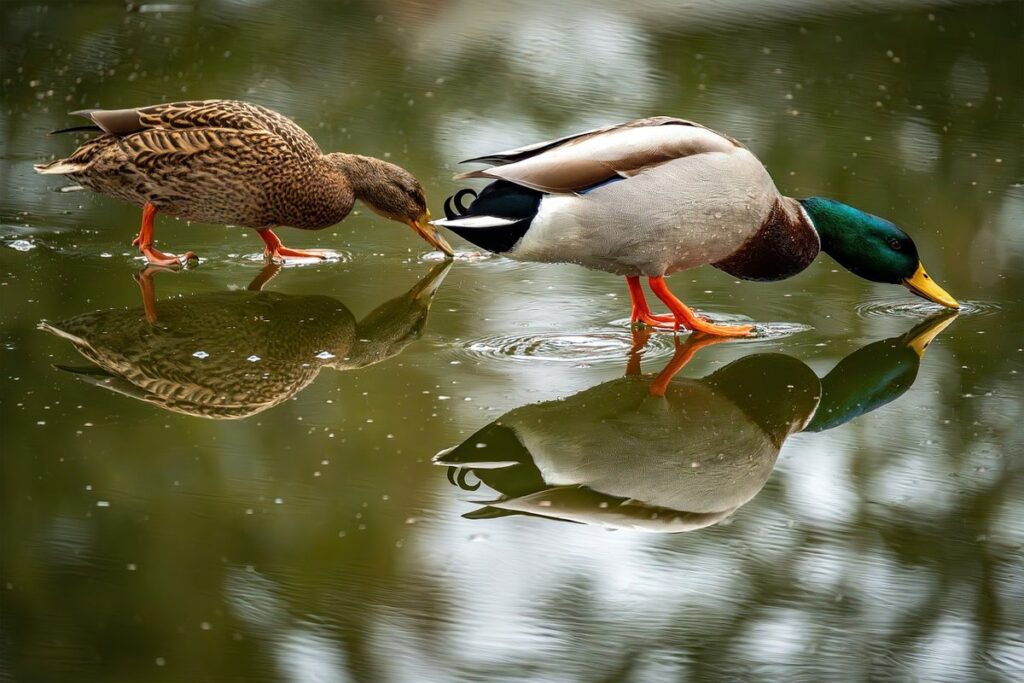
Understanding Duck Courtship and Behavior
Let’s dive into one of the most fascinating aspects of duck behavior: understanding how they court and mate. This crucial process is essential for their survival, and it’s surprisingly complex.
Recognizing Signs of Attraction in Ducks
When it comes to understanding duck courtship and behavior, recognizing signs of attraction is crucial. Ducks use various forms of communication to express their interest, including body language, vocalizations, and visual displays.
One way to identify attraction in ducks is through body language. A male duck displaying a raised crown or fanned tail feathers is often a sign that he’s interested in a female. He may also engage in preening or grooming her to show affection. On the other hand, if a female is attracted to a male, she may exhibit courtship displays such as swimming alongside him or following him around.
Vocalizations are another key indicator of attraction. Ducks use various quacks and whistles to communicate with each other, and when they’re interested in each other, their vocalizations become more frequent and intense. For example, a pair of ducks may engage in a synchronized calling display, where they take turns making high-pitched sounds.
To recognize signs of attraction in ducks, look for pairs that spend a lot of time together, following each other around the pond or lake. They may also engage in mutual preening or grooming, which is a sign of affection and bonding. If you notice a pair displaying these behaviors, it’s likely they’re attracted to each other.
Some species of ducks are more expressive than others when it comes to attraction. For example, Wood Ducks are known for their elaborate courtship displays, which include bowing, quacking, and even flying together in a “dance” above the water. By recognizing these signs of attraction, you can better understand the complex social dynamics of duck behavior.
The Role of Dominance and Submissive Behavior in Mating
In duck mating, dominance and submissive behavior play a significant role. Dominant males exhibit assertive behavior to secure mates, while subordinate males may choose to focus on courtship displays rather than competing for dominance.
Dominant males will often engage in aggressive displays to establish hierarchy within the group. They’ll posture with feathers ruffled and spread out their wings to appear larger. These displays serve as a warning to other males, signaling that they’re not willing to back down. In some cases, dominant males may even attack subordinate males to assert their dominance.
Submissive males, on the other hand, will often retreat or display submissive postures such as lowering their head and neck, or displaying their wingtips in a non-aggressive manner. This behavior signals that they’re not competing for dominance, allowing them to focus on building relationships with females through courtship displays. By understanding these behaviors, duck breeders can better plan pairings to promote successful mating outcomes.
Courtship Rituals: A Display of Affection and Intent
When it comes to duck courtship, males engage in various rituals to showcase their affection and intentions. One of the most recognizable displays is the “bowing” behavior, where a male ducks lowers his head and upper body while spreading his tail feathers, exposing his brightly colored undertail coverts. This elaborate display serves as an invitation for females to join him.
If a female accepts his courtship, she’ll often respond with her own display of affection, such as swimming alongside the male or even mounting on top of him in a sign of dominance and interest. The bowing display is often accompanied by other behaviors like preening, quacking, and gentle nudging.
Males may also use this opportunity to showcase their size, strength, and plumage quality. For example, a drake with vibrant green feathers or an impressive headgear will be more likely to attract a female’s attention than one with duller plumage.
The Mating Process in Ducks: A Step-by-Step Explanation
Let’s dive into the fascinating world of duck mating, and explore the step-by-step process that brings these beautiful birds together. We’ll break down each stage to help you understand their unique courtship rituals.
Approaching Mate Selection and Pair Bonding
When it comes to mate selection and pair bonding in ducks, there are several key factors at play. Age is an important consideration for both male and female ducks. Males typically reach maturity between 6-12 months of age, while females mature a bit later, around 9-18 months. Health is also a crucial aspect, as a duck’s overall well-being plays a significant role in its attractiveness to potential mates.
Social status can also impact a duck’s chances of finding a suitable mate. In some species, dominant males will often fight for mating rights and may even engage in elaborate displays to attract females. However, not all ducks follow this hierarchy-based approach, and many others form pair bonds based on mutual attraction and compatibility.
To increase your chances of finding a healthy, compatible partner, observe the behaviors and characteristics of individual ducks within your flock. Look for signs of good health, such as shiny plumage and robust energy levels, and pay attention to social dynamics to determine which birds seem most interested in each other.
The Role of Visual Displays and Vocalizations During Mating
During the mating process, visual displays and vocalizations play a crucial role in attracting a potential partner. Ducks use various postures to signal their interest and intentions. For instance, a drake (male duck) may spread his tail feathers, puff out his chest, and lower his head to appear more impressive. This display is often accompanied by a series of quacks, which can range from soft chirps to loud, booming calls.
Preening is another vital aspect of visual displays during mating. Ducks will spend time cleaning and arranging their feathers to look their best. A drake may preen his partner’s feathers as well, not only making her look more attractive but also strengthening their bond.
Vocalizations are equally important in the mating process. Quacks serve as a form of communication, allowing ducks to convey information about their presence, location, and intentions. Drakes will often engage in loud quacking sessions to attract females or deter potential rivals. By understanding these visual displays and vocalizations, you can better appreciate the complexities of duck mating behavior.
Mating in Different Duck Species: Variations and Similarities
Duck mating behaviors vary significantly across different species, reflecting their unique evolutionary adaptations and environmental pressures. For instance, Mallard ducks are known for their elaborate courtship rituals, which involve a series of displays including neck-stretching, preening, and quacking to attract a mate. In contrast, Wood Ducks engage in more subtle interactions, with the male presenting a female with food as a sign of interest.
Another notable difference is seen in the mating habits of ducks living in captivity versus those in their natural habitats. While domesticated ducks may form pair bonds for extended periods, wild ducks often engage in polygynous relationships, where males mate with multiple females during breeding season. Despite these variations, there are some common patterns observed across duck species, such as the importance of visual displays and vocalizations in attracting a partner.
In many cases, the success of a duck’s mating efforts also depends on its physical appearance, particularly in species where bright plumage or distinctive markings play a key role in mate selection.
Understanding Reproductive Anatomy in Ducks
Before diving into the intricacies of duck mating, it’s essential to understand the reproductive anatomy that makes it all possible. Let’s take a closer look at how ducks are wired internally.
Male Reproductive Organs and Their Functions
When it comes to understanding duck mating, knowing the male reproductive organs and their functions is crucial. Let’s start with the cloaca, a shared opening for the reproductive, urinary, and digestive systems found in ducks, similar to birds. It’s located at the base of the tail and serves as a multi-purpose exit point. In males, the cloaca houses two openings: one for the penis and another for the urethra.
The penis itself is a relatively small, yet important structure, responsible for transferring sperm during mating. Male ducks have a pair of testes located near the kidneys, which produce and store sperm cells. The size and complexity of these organs may vary among duck breeds, but their function remains the same. It’s worth noting that male ducks typically reach reproductive maturity at around 4-6 months old.
Understanding these anatomical features is essential for appreciating the intricacies of duck mating behaviors. By recognizing the role each organ plays in reproduction, you’ll gain a deeper understanding of why some ducks may exhibit certain mating behaviors over others.
Female Reproductive Organs and Their Roles
In ducks, the female reproductive organs play a crucial role in mating and egg-laying. The ovaries are responsible for producing eggs, which then pass through the oviduct, where they pick up their outer layer of feathers and other protective features. The ovary itself is a small gland that releases yolk from the body to feed the developing embryo.
The oviduct is divided into four sections: the magnum, isthmus, uterus, and vagina. The magnum adds albumen, or egg white, to the egg, while the isthmus adds a thin layer of membranes. The uterus is where the fertilized egg develops until it’s ready to be laid.
When a duck mated female is not laying eggs, her reproductive organs enter a state of dormancy called “egg stasis.” However, once she begins mating again, her ovaries start producing new eggs, and the cycle starts anew. Understanding these organs and their roles in duck reproduction is essential for any backyard breeder or wildlife enthusiast looking to help ducks thrive.
Fertility Cycles and Seasonality in Ducks
As you explore the fascinating world of duck mating, it’s essential to understand that fertility cycles and seasonality play a significant role in their reproductive behavior. One key factor influencing these cycles is photoperiodism – the response to day length changes. Ducks, like many other birds, are sensitive to daylight hours, which regulate their reproductive hormones.
In temperate regions, ducks typically breed during spring and summer when days are longer. During this period, they experience a surge in fertility due to increased production of gonadotropin-releasing hormone (GnRH), stimulating the release of sex steroids like testosterone and estrogen. This hormonal boost prepares them for mating and reproduction.
Conversely, as day lengths shorten during autumn and winter, ducks enter a state of dormancy, or “torpor,” characterized by reduced fertility. Their reproductive hormones decrease, making breeding less likely until daylight hours increase again in spring.
To optimize fertility cycles in your duck flock, consider providing supplemental lighting to mimic longer days year-round. This can help regulate their photoperiodism and encourage breeding even outside natural breeding seasons.
Challenges Facing Duck Mating: Infertility, Inbreeding, and More
Ducks may face unexpected challenges when it comes to reproduction, including fertility issues and the risks of inbreeding, which can impact their mating success. Let’s explore these obstacles together.
Causes of Infertility in Ducks and Their Consequences
Infertility can be a heartbreaking experience for duck breeders. However, it’s essential to understand that many cases of infertility in ducks are preventable with proper care and attention. One common cause of infertility is genetic disorders. For instance, some breeds are prone to conditions like hypothyroidism or testicular aplasia, which can significantly impact fertility.
Environmental stressors also play a significant role in duck infertility. Factors such as poor nutrition, inadequate shelter, and exposure to toxins can all contribute to reproductive health issues. Prolonged exposure to environmental stressors can disrupt the delicate balance of hormones necessary for reproduction, leading to reduced fertility or complete sterility.
Reproductive health issues are another leading cause of infertility in ducks. Conditions like egg yolk peroxidase (EYP) deficiency, which affects the formation of eggs, and reproductive tract abnormalities can significantly reduce fertility. Regular health checks and genetic testing can help identify potential problems early on, allowing breeders to take corrective action before it’s too late.
The Risks of Inbreeding and Its Impact on Duck Populations
Inbreeding occurs when duck populations become too isolated, leading to a reduction in genetic diversity. This can result in weakened immune systems, making ducks more susceptible to diseases. A study published in the Journal of Avian Biology found that inbred duck populations were 2-3 times more likely to contract respiratory infections compared to outbred populations.
The consequences of inbreeding are not limited to disease susceptibility. Inbred ducks also experience reduced fertility rates due to genetic disorders. For example, a common issue in inbred drakes is the inability to mate properly, leading to a lack of successful brood production. This can lead to population decline and even extinction if left unchecked.
To combat the risks of inbreeding, duck breeders should prioritize genetic diversity through careful selection and introduction of new breeds. This can be achieved by maintaining small, isolated populations or participating in breeding programs that encourage genetic exchange between different groups. By taking proactive steps to prevent inbreeding, duck enthusiasts can help ensure the long-term health and sustainability of their flocks.
Conservation Efforts to Preserve Healthy Duck Populations
Conservation efforts to preserve healthy duck populations are crucial for maintaining biodiversity and ensuring the long-term survival of these fascinating creatures. Breeding programs play a vital role in this endeavor, as they help to introduce genetic diversity into isolated or threatened populations. For instance, the Pochard Conservation Programme, launched by the International Union for Conservation of Nature (IUCN), has successfully bred over 1,000 Pochards in captivity and released them back into the wild.
Habitat restoration efforts are also essential for preserving healthy duck populations. This can involve restoring wetlands, creating artificial breeding grounds, or protecting natural habitats from human-induced destruction. The Audubon Society’s Wetlands Restoration Program is a prime example of such an initiative, which has helped to restore over 20 million acres of wetlands across North America.
By supporting conservation efforts like these, duck enthusiasts and researchers can make a tangible impact on the well-being of these incredible birds.
Frequently Asked Questions
What are the key differences between monogamous and polygynous duck mating systems?
In some duck species, males mate with multiple females during a breeding season, while others form long-term pair bonds. Understanding these differences is crucial for effective conservation efforts and managing duck populations.
Can ducks mate outside of their natural breeding season?
Yes, while most duck species follow an annual breeding cycle tied to seasonal changes, some species can be encouraged to breed year-round through controlled environments or artificial lighting. This flexibility can aid in conservation efforts, such as breeding programs for endangered species.
How do ducks adapt to changes in their environment and habitat that affect mating success?
Ducks have evolved various strategies to cope with environmental challenges, including shifting their breeding seasons, altering their courtship behaviors, or even adjusting their visual displays to better suit the conditions. Understanding these adaptations can help conservationists develop effective strategies for preserving duck populations.
What are some common mistakes to avoid when observing duck mating behavior in the wild?
Avoiding human disturbance during courtship and mating is crucial to not disrupt natural behaviors. Additionally, recognizing individual ducks’ unique characteristics and social hierarchies can prevent misidentification of dominant or submissive behaviors, ensuring a more accurate understanding of their mating rituals.
Can ducks form long-term pair bonds with other species, such as geese?
No, while some waterfowl may engage in occasional interspecies interactions, most ducks are known to be highly specific about their mates within the same species. These preferences likely stem from genetic and evolutionary pressures shaped by millions of years of intra-species selection.