
Are you ready to quack your way into the world of waterfowl parenting? Raising ducklings can be an incredibly rewarding experience, but it requires a good understanding of these adorable balls of fluff. As they grow and develop from tiny eggs to waddling toddlers, it’s essential to know how to identify them accurately. From development stages and physical characteristics to behavior and key differences between species, knowing what to look for can make all the difference in ensuring your ducklings thrive. In this expert guide, we’ll take you through the process of identifying ducklings, covering everything from Muscovy to Mallard and beyond. By the end of this article, you’ll be well-equipped to tell your ducklings apart and provide them with the best possible care. Let’s dive in and get quacking!
Understanding Duckling Development Stages
As a duck keeper, it’s essential to understand the different stages of duckling development to recognize and care for your young birds effectively. Let’s break down the crucial milestones in their growth process.
Embryonic Development (0-24 hours)
As you begin to learn about duckling development stages, it’s essential to understand the early stages of their life cycle. From fertilization to implantation and embryogenesis, the first 24 hours are critical for the growth of a healthy duckling.
Fertilization typically occurs within 12-24 hours after mating, when the male’s sperm meets the female’s egg in the oviduct. The fertilized egg then travels back up the oviduct to the infundibulum, where it is released and begins its journey to the uterus.
Within 24 hours, the fertilized egg undergoes implantation, embedding itself into the uterine lining. This process is crucial for the development of the embryo. During this time, the egg begins to divide and grow, a process known as cleavage. By the end of this stage, the embryo has formed a cluster of cells called the morula.
It’s worth noting that during these early stages, the sex of the duckling has not yet been determined. It won’t be until around 24-48 hours after fertilization that the embryo begins to develop into either male or female. Understanding these early developmental stages is crucial for breeders and farmers who want to ensure healthy and robust ducklings.
Incubation Period (24-72 hours)
The incubation period for duck eggs typically spans 24-72 hours and is a critical stage of development. During this time, significant changes occur as the embryo develops into a viable, breathing duckling.
As you observe the egg, note that around 48-60 hours, the first signs of life become apparent – you may see subtle movements or hear faint peeping sounds within the egg. This is an exciting milestone in the incubation process, and it’s essential to provide optimal conditions for continued development.
To promote healthy growth, ensure the eggs are kept at a consistent temperature between 99°F and 100°F (37°C-38°C). Proper humidity levels also play a crucial role; maintain an environment with adequate moisture to prevent desiccation. Regularly check on your eggs, monitoring their progress by gently tilting them onto one side – if the egg doesn’t tip over, it likely contains a developing duckling.
As you approach 72 hours, the ducklings will have fully formed lungs and be preparing for hatching. It’s essential to maintain proper ventilation in the incubation area to prevent carbon dioxide buildup.
Hatching Process (72+ hours)
As you approach the final stages of duckling development, it’s essential to understand what’s happening inside those eggs. After around 72 hours before hatching, a pip is formed – a small hole made by the beak of the developing duckling. This marks the beginning of the end for the eggshell.
Inside, the duckling’s lungs are expanding and contracting, preparing it for its first breath outside the egg. You might start to notice slight movements or twitches as they practice opening their beaks and exercising their new limbs. As hatching progresses, you’ll see more pronounced movement and the pip will begin to enlarge.
If you’re incubating eggs, it’s crucial to maintain a precise temperature of 99-100°F (37-38°C) during this stage. This ensures the duckling develops properly and has enough energy reserves for its first hours outside the egg. Keep an eye on your thermometer and adjust as necessary – a few degrees can make all the difference in successful hatching.
Physical Characteristics for Identification
When it comes to identifying ducklings, their physical characteristics can be a big giveaway. Let’s take a closer look at some key features that will help you tell different breeds apart.
Body Size and Weight
When it comes to identifying ducklings based on their physical characteristics, body size and weight play a significant role. As ducklings grow, they develop at different rates depending on breed, nutrition, and overall health.
On average, newly hatched ducklings are around 2-3 inches (5-7.5 cm) in length and weigh approximately 1/4 to 1/2 ounce (7-14 grams). By the time they’re one week old, they’ll have grown to about 3-4 inches (7.5-10 cm) in length and weigh around 2-3 ounces (57-85 grams).
As ducklings mature, their growth accelerates, with most reaching 6-8 inches (15-20 cm) in length and weighing between 1/2 to 1 pound (225-450 grams) by three weeks. However, some breeds may take longer to reach these milestones.
Keep an eye on your duckling’s body size and weight as a benchmark for their overall development. If you notice any significant deviations from the expected growth patterns, consult with a veterinarian or experienced breeder for guidance.
Plumage Patterns and Colors
When it comes to identifying ducklings, their plumage patterns and colors play a crucial role. Domesticated and wild duck breeds exhibit a wide range of colors and patterns, making identification easier.
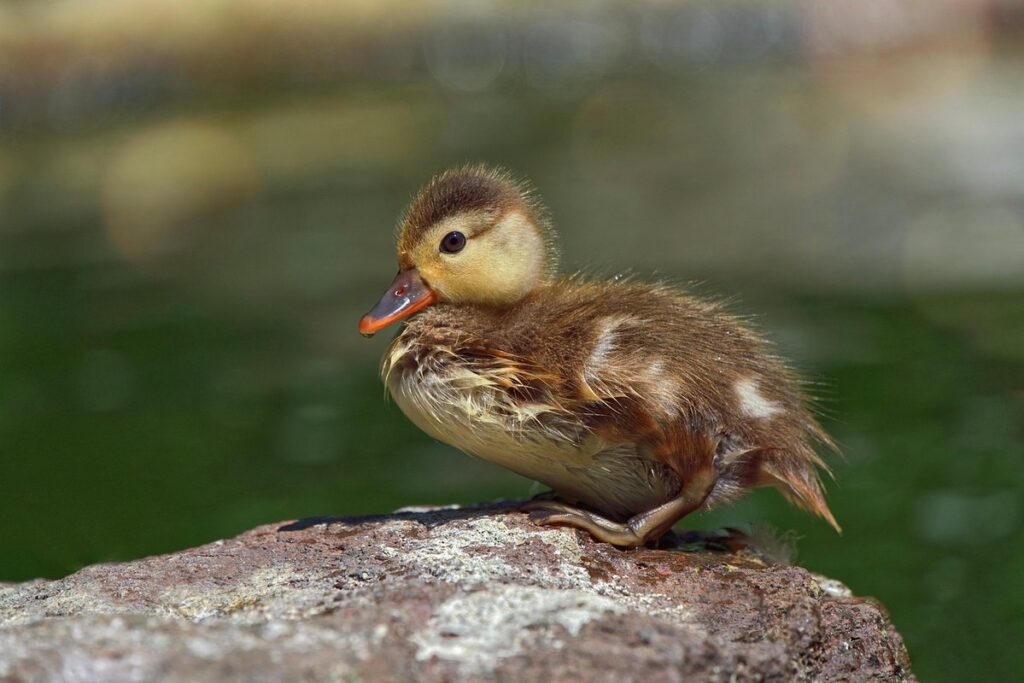
Domesticated duck breeds like Pekin, Khaki Campbell, and Golden 300 Hybrid display predominantly white or light-colored feathers with subtle coloration on the head, neck, or wings. For instance, the Pekin duckling has a yellow beak and orange feet, while its feathers are mostly white with some gray or buff markings.
Wild duck breeds, such as Wood Ducks and Mergansers, showcase vibrant colors like emerald green heads, bright red eyes, and iridescent blues and greens on their bodies. The Wood Duckling’s plumage features a mix of green, yellow, and orange hues, while the Merganser’s has a predominantly black body with a white throat patch.
To identify ducklings based on plumage patterns and colors, observe the following key features:
* Note the intensity and distribution of coloration
* Check for distinctive markings on the head, neck, or wings
* Observe the beak and foot coloration
* Consider the overall pattern and color combination
By paying attention to these characteristics, you’ll become more proficient in identifying ducklings based on their unique plumage patterns and colors.
Beak Shape and Color
The shape and color of a duckling’s beak can provide valuable clues for identification. Different species and breeds exhibit distinct characteristics in this area. For instance, the beak shape of Muscovy ducklings is generally broad and flat, while those of Wood Ducklings are narrower and more pointed.
Beak color also varies significantly among duckling species. Some, like the Mallard, have a bright orange or yellow beak, whereas others, such as the Merganser, display a grayish-blue hue.
When observing a duckling’s beak, it’s essential to note its overall shape and any distinctive markings, such as ridges or serrations. In some cases, the color of the beak can darken or lighten depending on the bird’s age or nutritional intake.
In field identification, pay attention to the beak size in relation to the duckling’s head – this is often a good indicator of its species. A general rule of thumb is that smaller waterfowl tend to have smaller beaks relative to their heads.
While not a definitive method for identifying ducklings, the shape and color of their beaks can serve as an effective supporting tool in conjunction with other physical characteristics.
Behavior and Habitat Clues
When identifying ducklings, understanding their natural behavior and habitat can be a big help. Look for clues such as how they interact with their parents and what kind of environments they seem to prefer.
Foraging Habits
When observing ducklings, their foraging habits can provide valuable clues about their species and age. Different waterfowl families have unique feeding behaviors and preferences when it comes to food sources.
Mallard ducklings, for example, are opportunistic feeders and tend to graze on a variety of aquatic plants, including algae and small invertebrates like snails and insects. They can often be seen pecking at the water’s surface or scratching at the soil with their beaks. In contrast, Wood Duck ducklings tend to prefer more specific food sources, such as insect eggs or aquatic plants that grow near the water’s edge.
To identify a duckling based on its foraging habits, pay attention to where it is feeding and what it is eating. For instance, if you see a duckling foraging in shallow water with its beak buried in the sediment, it may indicate that it is a Mallard or hybrid. Conversely, if you observe a duckling pecking at specific plants near the water’s edge, it could suggest that it is a Wood Duck.
When observing ducklings’ habitats and food sources, look for clusters of feeding birds, as they often gather in areas with abundant food supplies. By paying attention to these behaviors, you can gain valuable insights into their identity and species.
Social Interactions
When observing duckling social interactions, you can gather valuable clues about their identity. One way to do this is by listening for specific vocalizations. Different breeds of ducks produce unique calls that are often loud and distinctive. For example, Muscovy ducklings tend to make a high-pitched whistling sound, while Wood Ducks emit a series of descending quacks.
Pay attention to body language cues as well, such as how the ducklings interact with each other. Some breeds, like the Khaki Campbell, are known for their aggressive behavior and will often chase or fight with others. On the other hand, some breeds like the Rouen are generally docile and may avoid confrontations.
Watch how the ducklings respond to their mother’s presence as well. Some breeds tend to be more affectionate and will follow closely behind her, while others may stay at a distance. Observing these interactions can help you develop an idea of the duckling’s breed identity.
Territorial Markings
When examining duckling behavior and habitat clues, one crucial aspect to consider is territorial markings. These visual signs can reveal a great deal about a duckling’s species or breed. Start by looking for nesting sites, such as burrows, ledges, or even cavities in trees. The type of vegetation surrounding the nesting site can also provide valuable information – for example, if it’s surrounded by tall grasses or dense shrubs.
Next, observe the sheltered areas where ducklings take refuge from predators and harsh weather conditions. These areas often feature specific types of plants or structures that offer protection. For instance, some ducklings may favor sheltered spots beneath overhanging branches or near large rocks. Take note of these subtle signs, as they can significantly aid in identifying the species or breed.
By paying attention to territorial markings and their accompanying habitat features, you’ll be better equipped to distinguish between different duckling varieties. This skill is essential for wildlife enthusiasts, conservationists, and even backyard birders seeking to understand and appreciate local waterfowl populations.
Key Differences Between Species
Now that we’ve discussed general characteristics, it’s time to dive into the key differences between various duckling species and how to identify them accurately. This is where things can get really fascinating!
Mallard Ducklings vs. Wood Ducklings
When it comes to identifying ducklings, two of the most common breeds that often get confused are Mallard and Wood Ducklings. However, these two species exhibit distinct features that set them apart from each other.
One of the key morphological differences between Mallard and Wood Ducklings is their plumage pattern. Mallard ducklings have a brownish-gray back with white underside and orange bill, while Wood Ducklings display a more vibrant coloration featuring a greenish-yellow head, white throat patch, and yellow bill. Moreover, Wood Ducklings tend to have a more intricate plumage pattern with stripes and spots on their breast.
Behavioral differences also play a crucial role in distinguishing between these two species. For instance, Mallard ducklings are often found near water sources like ponds or lakes, whereas Wood Ducklings prefer wooded areas or wetlands with dense vegetation. By observing the environment where you spot the ducklings and paying attention to their plumage patterns, you can make an informed identification.
If you’re still unsure, pay close attention to the beak shape: Mallard ducklings have a broad, orange bill, whereas Wood Ducklings have a distinctive blue or yellow bill with a black stripe.
Domesticated vs. Wild Ducklings
When it comes to identifying ducklings, understanding the differences between domesticated and wild specimens is crucial. Domesticated ducklings have undergone selective breeding for desirable traits such as docile temperament, smaller size, and increased egg production. As a result, they exhibit distinct physical characteristics that set them apart from their wild counterparts.
Domesticated ducklings tend to be smaller in size, with shorter legs and wings compared to wild ducklings. They also have a more compact body shape and are often bred for specific colors or patterns. In contrast, wild ducklings are larger and more robust, with longer legs and wings that enable them to fly long distances.
One of the most notable differences between domesticated and wild ducklings is their behavior. Domesticated ducklings are socialized from an early age to interact with humans, making them more approachable and easier to handle. Wild ducklings, on the other hand, are naturally wary of predators and may exhibit defensive behaviors such as hissing or nipping.
To accurately identify a duckling as domesticated or wild, observe its behavior and physical characteristics. Look for signs of tameness, such as allowing humans to approach or even touch it. Check for any visible identification markers, such as leg bands or ear tags, which may indicate that the bird has been domesticated. If you’re still unsure, examine the duckling’s plumage and body shape – wild ducklings typically have more vibrant colors and a sleeker appearance than their domesticated counterparts.
Rare or Endangered Species
When it comes to identifying ducklings, many of us are familiar with popular breeds like Mallards and Pekins. However, there are several rare and endangered species that can be just as fascinating to spot. Let’s take a closer look at some lesser-known ducks and how to identify them.
The Wood Duck, for example, is a striking breed with vibrant plumage and a distinctive call. To identify this duckling, look for its reddish-brown head, white throat patch, and bright blue bill. Young Wood Ducks also tend to have a more subdued coloration than their parents, making them easier to miss.
The Harlequin Duck is another rare species that can be found in North America. These ducklings are easily recognizable by their mottled gray and brown feathers and distinctive white throat patch. To spot a Harlequin Duckling, look for its small size and energetic behavior.
If you’re lucky enough to encounter one of these rare breeds, take note of any distinguishing features that set it apart from more common ducks. For example, the Wood Duck’s bright blue bill or the Harlequin Duck’s mottled feathers can be a dead giveaway. By keeping an eye out for these unique characteristics, you may just spot a rare duckling in your next waterfowl outing.
Additional Tips for Duckling Identification
Now that you’ve mastered the basics of duckling identification, let’s dive into some extra tips to help you become a pro at recognizing these adorable waterfowl.
Equipment Needed
When venturing into duckling identification, having the right equipment can make all the difference. You’ll need a combination of observation tools and documentation devices to accurately identify and track these adorable creatures.
First and foremost, invest in a good pair of binoculars (7x or 8x magnification is ideal) for observing ducklings from a safe distance. This will allow you to closely examine their plumage, beak shape, and overall body structure without disturbing them. Consider a camera with a zoom lens as well, so you can capture high-quality photos of ducklings in the wild.
For record-keeping, a notebook or a mobile app like iNaturalist can help you document your findings. Note down details such as the date, time, location, and any notable characteristics of each duckling sighting. This will enable you to track patterns and compare observations over time, helping you become a more skilled duckling identifier.
Lastly, don’t underestimate the importance of a reliable field guide or online resource for quick reference. Familiarize yourself with the key characteristics of different duck species and their young to make informed identifications.
Best Practices for Handling and Observation
When it comes to handling and observing ducklings, especially in their natural habitats, safety should be the top priority for both humans and animals. It’s essential to remember that young ducklings are fragile and can easily get injured or stressed by sudden movements.
To ensure safe observation, try to keep a safe distance from the duckling group. A minimum of 10-15 feet (3-4.5 meters) is recommended to avoid scaring them away or causing unnecessary stress. If you need to observe closer, move slowly and calmly, avoiding any loud noises that might startle them.
When handling ducklings, always wash your hands thoroughly before and after handling them. Support their body from beneath when lifting them, making sure not to pick them up by the legs or tail feathers. This will prevent injury to both you and the duckling.
Remember, it’s crucial to respect these young birds’ natural environment. Avoid disturbing their nests or disturbing mothers with ducklings in tow, as this can lead to abandonment of eggs or ducklings.
Resources for Further Learning
If you’re eager to hone your duckling identification skills, there are numerous resources available that can help. Start with field guides specifically focused on waterfowl and ducklings, such as the Sibley Guide to Birds or the National Audubon Society Field Guide to Birds. These comprehensive guides provide detailed descriptions, illustrations, and range maps to aid in accurate identification.
For online support, visit the Cornell Lab of Ornithology’s All About Waterfowl webpage, which features an extensive database of duck species, including photos, videos, and interesting facts. The Duck Hunting Forum is another valuable resource, where seasoned waterfowl enthusiasts share their knowledge and experiences.
Consulting with experienced birders or ornithologists can also be incredibly helpful. They can provide personalized guidance and answer specific questions you may have about duckling identification. Reach out to local bird clubs or wildlife organizations in your area to connect with experts who can offer valuable insights and advice. By leveraging these resources, you’ll become a more confident and skilled duckling identifier in no time!
Frequently Asked Questions
How do I handle a situation where my ducklings are getting too big for their enclosure?
As your ducklings grow, they’ll require more space to move around comfortably. Plan ahead by setting up a larger area or upgrading their existing enclosure with room for them to exercise and play safely. Provide adequate shelter and ensure easy access to food, water, and nesting areas.
What are some common mistakes I can avoid when identifying rare or endangered duckling species?
When encountering unfamiliar ducklings, it’s essential to approach identification with caution. Be aware of your surroundings and the specific habitat requirements for each species. Consult reputable sources, such as wildlife experts or field guides, to ensure accurate identification and avoid misclassifying these vulnerable birds.
Can I use a single piece of equipment for identifying multiple duckling species?
While some equipment can be versatile, it’s often most effective to tailor your tools to the specific needs of each species. For example, a camera with good zoom capabilities can be useful for observing and documenting behavior in various environments but might not replace specialized field guides or identification software.
How do I balance providing food and shelter for ducklings in different development stages?
Meet the unique nutritional and environmental needs at each stage by offering appropriate foods and creating a safe environment. For example, during incubation (24-72 hours), provide adequate ventilation and maintain a consistent temperature range to ensure proper development.
What should I do if I’m unsure about the species of ducklings I’ve found?
If you’re unable to identify your ducklings using field guides or consulting with experts, consider reaching out to local wildlife organizations or conservation groups for guidance. They may be able to provide further assistance and support in ensuring the well-being of these young birds.