
If you’re looking for a nutritious and versatile ingredient to add to your recipes, Japanese dogwood fruit is definitely worth exploring. Native to East Asia, this lesser-known fruit has been a staple in traditional medicine and cooking for centuries. Not only does it boast an impressive nutritional profile, with high levels of antioxidants and vitamins A and C, but it also offers a range of culinary uses, from jams and preserves to savory sauces and marinades. But before you start experimenting with Japanese dogwood fruit, there are some essential things to know – including how to cultivate and harvest it safely. In this guide, we’ll cover everything you need to get started, from the benefits and uses of Japanese dogwood fruit to tips on cultivation, harvesting, and enjoying its unique flavor.
What is Japanese Dogwood?
Japanese dogwood, a shrub native to Asia and North America, is often overlooked despite its unique characteristics and benefits. Let’s explore what makes it special.
Botanical Description and Classification
The Japanese dogwood tree (Cornus kousa) is a stunning deciduous shrub that’s native to East Asia. Botanically speaking, it belongs to the Cornaceae family and is closely related to other members of this group, including flowering cornelian cherry and mountain ash trees. Its classification as a species within the Cornus genus has been well-documented in various botanical studies.
In terms of its physical characteristics, the Japanese dogwood tree can grow up to 10-15 meters tall with a spread of around 5-7 meters. It boasts broad, elliptical leaves that are typically 6-12 centimeters long and 2-4 centimeters wide. These leaves often display vibrant shades of green during spring and summer before turning into hues of red or purple in autumn.
Native to Korea, China, and Japan, the Japanese dogwood tree thrives in a range of environments with well-drained soil and moderate temperatures.
Distribution and Cultivation in Gardens
Japanese dogwood (Cornus kousa) is a versatile and adaptable plant that can thrive in various garden environments. In temperate climates with well-drained soil, Japanese dogwood is commonly cultivated for its stunning flowers, attractive foliage, and of course, delicious fruit.
When choosing the right location for your Japanese dogwood, consider providing it with full sun to partial shade, depending on the climate you live in. This allows the plant to receive sufficient light for photosynthesis but also protects it from extreme temperatures. Make sure the soil is well-drained, as Japanese dogwood can be susceptible to root rot if the roots are consistently waterlogged.
To encourage healthy growth and fruit production, Japanese dogwood prefers slightly acidic to neutral soil pH (around 6.0-7.0). Fertilize your plant annually with a balanced fertilizer, following the manufacturer’s instructions for application rates. Prune your Japanese dogwood regularly to maintain its shape, promote air circulation, and remove any dead or diseased branches.
Japanese dogwood can be grown as an ornamental tree or shrub in USDA zones 5-9, making it suitable for many regions worldwide.
Edible Fruit Characteristics
Now that we’ve covered the basics of Japanese dogwood fruit, let’s dive deeper into its unique characteristics as a sweet and edible treat.
Appearance, Taste, and Texture
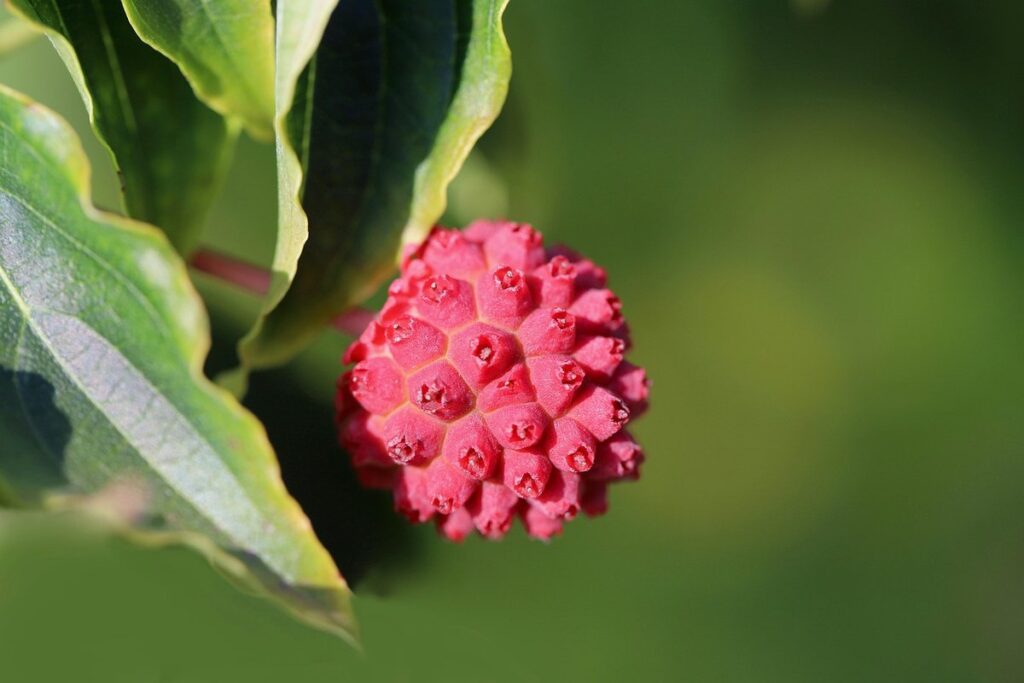
The Japanese dogwood fruit is often overlooked, but its appearance, taste, and texture make it a hidden gem. The fruit itself is small to medium-sized, typically around 1-2 cm in diameter, with a smooth, waxy surface that’s often described as velvety to the touch. Its color ranges from a deep blue to purple, depending on the ripeness, with a subtle sheen that hints at its edible goodness.
When it comes to taste, Japanese dogwood fruit is surprisingly sweet and slightly tart, with a hint of berries or cherries. The flavor profile is often described as refreshing and thirst-quenching, making it a perfect snack for hot summer days. As for texture, the pulp is juicy and tender, while the seeds are relatively small and soft.
If you’re interested in trying Japanese dogwood fruit, look for them at local Asian markets or farmer’s markets during peak season (usually May to July). Be sure to wash them thoroughly before consumption, as their waxy surface can be sticky with impurities. Enjoy them on its own, or use them in salads, desserts, or jams – the possibilities are endless!
Nutritional Value and Health Benefits
Japanese dogwood fruit is not only a delight to eat but also packed with nutrients that can boost your health. One of the standout features of this fruit is its rich content of vitamin C, an essential nutrient that plays a crucial role in immune function and collagen production. A single serving of Japanese dogwood fruit provides about 20% of the recommended daily intake of vitamin C, making it an excellent addition to a healthy diet.
In addition to vitamin C, Japanese dogwood fruit is also a good source of minerals like potassium and manganese. Potassium helps maintain healthy blood pressure levels, while manganese plays a vital role in bone health and metabolism. The fruit’s antioxidant profile is equally impressive, with a range of polyphenols and flavonoids that can help protect against oxidative stress and inflammation.
Eating Japanese dogwood fruit regularly may also have several potential health benefits, including reducing the risk of chronic diseases like heart disease, diabetes, and certain types of cancer. Its high fiber content can also support healthy digestion and bowel function. To get the most out of this nutritious fruit, be sure to consume it fresh or frozen, as cooking or processing can destroy some of its delicate nutrients.
Preparing and Using Japanese Dogwood Fruit
Now that you’ve harvested your Japanese dogwood fruit, it’s time to prepare it for eating and learn how to incorporate it into your cooking and baking. Here are some tips on preparing and using this versatile fruit.
Culinary Uses: Juicing, Baking, and More
When it comes to using Japanese dogwood fruit in cooking, the possibilities are endless. One of the most popular ways to prepare this fruit is through juicing. The pulp and juice can be extracted using a citrus juicer or blender, making for a refreshing and healthy drink. To enhance the flavor, try adding a squeeze of lemon or lime juice and a sprinkle of sugar.
For baking enthusiasts, Japanese dogwood fruit makes an excellent addition to muffins, cakes, and breads. The sweetness of the fruit pairs well with spices like cinnamon and nutmeg, while its tartness complements creamy ingredients like yogurt and butter. Simply puree the cooked fruit and use it in place of some of the sugar or oil called for in your favorite recipe.
In addition to juicing and baking, Japanese dogwood fruit can also be used to make jams, preserves, and sauces. The fruit’s unique flavor profile pairs well with meats like pork and chicken, making it a great topping for grilled or roasted dishes. Experiment with different combinations to find the perfect match for your taste buds.
Traditional Medicine and Folk Remedies
In traditional Japanese medicine and folk remedies, the fruit of the Japanese dogwood tree has been utilized for centuries to promote overall well-being. Historically, the fruit was considered a potent antioxidant and anti-inflammatory agent, often used to treat various ailments such as fever, sore throats, and digestive issues.
According to ancient texts, the fruit was also employed in traditional Japanese medicine to support the immune system and reduce stress levels. In fact, during the Edo period (1603-1868), Japanese dogwood fruit was even used as a treatment for smallpox and measles. The fruit’s high concentration of vitamin C is believed to have contributed to its effectiveness.
When using Japanese dogwood fruit in traditional medicine or folk remedies, it’s essential to note that the fruit should be properly cleaned, dried, and stored to preserve its medicinal properties. To prepare the fruit for use, simply dry the fruit in a low-temperature oven (150°F – 200°F) for several hours until crisp. Store the dried fruit in an airtight container for up to six months.
When consumed as a tea or infusion, Japanese dogwood fruit can be used to support immune function and reduce inflammation. To prepare the tea, simply steep one tablespoon of dried fruit in boiling water for 5-7 minutes. Strain and drink once cool.
Growing and Harvesting Your Own Japanese Dogwood
Growing your own Japanese dogwood is a rewarding experience that requires proper care, patience, and attention to detail throughout its growth stages. Learn how to cultivate this beautiful shrub for a bountiful harvest.
Planting and Care Instructions
When planting a Japanese dogwood tree, it’s essential to choose a location that receives partial shade and has well-draining soil. The ideal time for planting is in early spring or fall, when the weather is cooler and there is ample moisture in the soil. Plant the tree at the same depth as it was in the nursery, making sure the root flare (where the trunk flares out at the base of the tree) is level with the surrounding soil.
To promote optimal growth and fruit production, water your Japanese dogwood regularly during its first year after planting. A mature tree requires about 1 inch of water per week, either from rain or irrigation. Fertilize your tree annually in late winter or early spring with a balanced fertilizer, following the manufacturer’s instructions for application rates.
Prune your Japanese dogwood in late winter or early spring to maintain its shape and promote fruiting. Remove any dead, diseased, or damaged branches, cutting them back to a healthy stem. Thin out the tree’s canopy to allow more sunlight to reach the inner branches, which will help increase fruit production.
Tips for Successful Harvesting and Storage
When harvesting Japanese dogwood fruit, timing is crucial. The optimal time to pick the fruit is when it’s fully ripe and slightly soft to the touch, but still firm enough to hold its shape. If you wait too long, the fruit may become overripe and develop off-flavors.
To ensure maximum flavor and nutritional value, harvest the fruit in the morning after a cool night, as this helps to bring out the natural sweetness. Avoid harvesting during hot or humid weather, as this can cause the fruit to spoil quickly.
Proper storage is also essential for maintaining the quality of Japanese dogwood fruit. Store the harvested fruit in a cool, dry place, away from direct sunlight and heat sources. You can store them in containers lined with paper towels or cloth to maintain humidity and prevent moisture buildup.
For long-term storage, consider freezing the fruit. Simply wash, chop, and freeze the Japanese dogwood fruit in airtight containers or freezer bags. Frozen Japanese dogwood fruit is perfect for smoothies, baked goods, or as a topping for oatmeal or yogurt.
Potential Risks and Precautions
When handling Japanese dogwood fruit, there are some potential risks and precautions you should be aware of to ensure safe enjoyment and minimize any adverse effects. Be cautious when preparing and consuming this fruit.
Allergic Reactions and Intolerances
While Japanese dogwood fruit is generally considered safe for consumption, some individuals may be allergic to it. A food allergy occurs when the body’s immune system mistakenly identifies a specific protein as a threat and mounts an immune response against it.
For those with allergies or intolerances, consuming even small amounts of Japanese dogwood fruit can trigger symptoms such as hives, itching, swelling, stomach cramps, diarrhea, and in severe cases, anaphylaxis. If you suspect you have a food allergy to Japanese dogwood fruit, seek medical attention promptly.
To minimize potential risks, start with a small amount (about 1/4 teaspoon) of ripe fruit and monitor your body’s response over the next 24 hours. Gradually increase consumption if symptoms do not occur.
It is also essential to identify other potential allergens that may be present in the environment where Japanese dogwood fruit is consumed, such as pollen or soil-borne pathogens. Proper washing and preparation can significantly reduce this risk.
Safety Considerations for Growing Your Own Tree
When growing your own Japanese dogwood tree, it’s essential to consider potential safety hazards and take necessary precautions. One of the primary concerns is the thorns that cover the branches and trunk of the tree, which can cause injury when pruning or harvesting fruit.
To avoid accidents, wear protective gloves, long sleeves, and eye protection when working with the tree. It’s also crucial to prune the tree during its dormant season to minimize the risk of sap flow and potential skin irritation.
In addition to physical hazards, Japanese dogwood trees can be susceptible to certain diseases and pests that may compromise fruit quality and tree health. Regular monitoring for signs of disease or infestation is vital to prevent damage and ensure a healthy harvest. Keep an eye out for symptoms like yellowing leaves, black spots, or white powdery patches on the bark.
To minimize risks, make sure to plant your Japanese dogwood in well-draining soil with adequate space for air circulation. This will help prevent moisture-related issues that can contribute to disease development. With proper care and attention, you can enjoy a bountiful harvest of delicious fruit while minimizing potential hazards associated with growing your own Japanese dogwood tree.
Conclusion: Unlocking the Potential of Japanese Dogwood Fruit
Now that you’ve learned about the uses and benefits of Japanese dogwood fruit, it’s time to explore its full potential as a sustainable food source. Let’s unlock the possibilities!
Recap and Future Directions
As we wrap up our comprehensive guide to Japanese dogwood fruit, let’s take a moment to recap some of the key points discussed. We’ve explored the unique characteristics and nutritional benefits of this often-overlooked fruit, from its rich source of antioxidants and vitamins to its potential role in supporting heart health.
We also delved into the practical aspects of cultivating and utilizing Japanese dogwood fruit, including its adaptability to diverse climates and soil types, as well as its traditional uses in various forms – from teas and jams to medicinal remedies. For those interested in foraging or incorporating this fruit into their diet, we provided tips on identifying and harvesting Japanese dogwood safely, along with some creative recipe ideas.
Looking ahead, there are several promising areas of research and potential applications for Japanese dogwood fruit that warrant further exploration. For instance, studies have suggested its antioxidant properties may help mitigate the effects of oxidative stress in various diseases, including cancer and neurodegenerative disorders. Additionally, its high fiber content makes it a valuable ingredient for developing functional foods and nutraceuticals.
As interest in this versatile fruit continues to grow, we can expect to see more innovative uses emerge – from cosmetic products leveraging its anti-inflammatory properties to novel food systems that optimize its nutritional benefits. For enthusiasts and professionals alike, the future of Japanese dogwood fruit looks bright indeed.
To stay abreast of breakthroughs in research and applications, consider following reputable sources or joining online forums focused on edible landscaping, foraging, and plant-based nutrition. By doing so, you’ll be well-positioned to capitalize on emerging opportunities and contribute to a more sustainable food future – one that values the bounty of nature’s hidden gems like Japanese dogwood fruit.
Frequently Asked Questions
How can I ensure the Japanese dogwood fruit is ripe for harvesting?
Consume the fruit when it’s slightly soft to the touch and has a deep red or purple color, indicating optimal ripeness. Check the fruit regularly, as over-ripeness can cause spoilage.
Are there any specific storage requirements for Japanese dogwood fruit after harvesting?
Yes, store the harvested fruit in a cool, dry place, away from direct sunlight to maintain its nutritional value and flavor. You can also consider freezing or dehydrating the fruit for long-term preservation.
Can I grow Japanese dogwood from seeds, or do I need to purchase a seedling or graft?
While it’s possible to propagate Japanese dogwood from seeds, grafting is often preferred due to its higher success rate and faster growth. If you choose to grow from seeds, ensure proper seed stratification and provide optimal growing conditions.
What are some common allergens associated with Japanese dogwood fruit?
Some individuals may experience allergic reactions or intolerances to Japanese dogwood fruit, particularly those with known allergies to other members of the Cornaceae family, such as cherries or plums. Be cautious when introducing new foods into your diet, especially if you have pre-existing conditions.
How can I incorporate Japanese dogwood fruit into my traditional recipes without compromising their authenticity?
Experiment with small batches and taste regularly to ensure the flavor profile aligns with your desired recipe. Consider combining Japanese dogwood with other ingredients native to your region or cultural heritage to create unique fusion dishes that honor both traditions.