
Are you ready to discover the hidden gem in your garden? The Japanese Dogwood Kousa is a stunning ornamental shrub that not only adds beauty to your outdoor space but also produces delicious and edible fruit. If you’re looking for a low-maintenance plant that can thrive in various conditions, look no further. In this comprehensive guide, we’ll delve into the world of Japanese Dogwood Kousa, covering everything from its growth habits and care requirements to utilizing its ornamental value and harvesting its tasty fruit.
We’ll explore how to grow and cultivate Japanese Dogwood Kousa successfully, discussing topics such as soil preferences, watering needs, and pruning techniques. You’ll also learn about the benefits of incorporating this versatile plant into your landscape design and how to make the most of its edible berries in recipes and beyond. Whether you’re a seasoned gardener or just starting out, this guide will provide you with the knowledge and inspiration to bring Japanese Dogwood Kousa into your garden and enjoy its many rewards.
Introduction to the Japanese Dogwood Kousa
Welcome to our comprehensive guide, where we’ll introduce you to the beautiful and unique Japanese dogwood kousa, a stunning ornamental tree perfect for any garden. Let’s start by exploring its fascinating history and characteristics.
What is the Japanese Dogwood Kousa?
The Japanese Dogwood Kousa (Cornus kousa) is a stunning ornamental tree native to East Asia, specifically China, Japan, and Korea. Its rich history dates back centuries, with the first recorded cultivation in Japan during the Edo period (1603-1867). This deciduous tree has captivated gardeners worldwide with its unique characteristics and numerous benefits.
The Japanese Dogwood Kousa is a medium-sized tree, typically growing between 15 to 25 feet tall. Its broad, rounded crown provides excellent shade, while its smooth gray bark adds an elegant touch to any landscape. In spring, showy white or pink flowers appear in clusters, followed by red berries that attract pollinators and birds. The tree’s fall color is equally impressive, displaying a vibrant display of orange, red, and purple hues.
The Japanese Dogwood Kousa thrives in well-draining soil and partial shade to full sun conditions, making it an ideal choice for various climates and garden styles.
Importance of Understanding the Japanese Dogwood Kousa
Understanding the unique needs and benefits of the Japanese Dogwood Kousa is crucial for both novice and experienced gardeners alike. This remarkable plant has been making waves in the horticulture world with its stunning foliage, vibrant flowers, and adaptability to various environments.
One reason it’s essential to comprehend the Kousa’s specific requirements is that it thrives in conditions other plants might struggle with. It excels in moist, well-drained soils but can tolerate drought for short periods, making it an excellent choice for areas with varying water availability. Additionally, its robust nature allows it to withstand extreme temperatures and humidity levels.
By understanding the Kousa’s needs, you can create a favorable environment that showcases its full potential. This includes pruning techniques to maintain its shape, fertilizing schedules to promote healthy growth, and providing sufficient sunlight to ensure optimal flowering. Furthermore, recognizing the benefits of this plant – such as its ability to attract pollinators, provide shade, and enhance biodiversity in your garden – will help you make informed decisions about its placement and care.
Incorporating these insights into your gardening routine can lead to a more harmonious relationship between you and your Japanese Dogwood Kousa.
Identification and Characteristics
When it comes to growing a healthy Japanese dogwood Kousa, being able to identify its key characteristics is crucial. Let’s break down what to look for in terms of appearance, growth habits, and more.
Physical Description of the Japanese Dogwood Kousa
The Japanese Dogwood Kousa has an attractive physical appearance that sets it apart from other dogwood species. On average, this deciduous shrub grows to be around 6-10 feet tall and wide, making it a great addition to smaller gardens or landscapes where space is limited.
Its leaves are the first notable feature, with a unique shape that’s oval with pointed tips and serrated edges. They’re typically a deep green color on top and pale underneath, measuring about 3-5 inches long. The Japanese Dogwood Kousa produces showy white flowers in late spring to early summer, often forming clusters of four or more blooms. These flowers are not only beautiful but also attract pollinators like bees and butterflies.
One of the standout features of this dogwood is its exfoliating bark, which peels off in thin layers, revealing a smooth, grayish-brown surface underneath. This adds an interesting texture to the plant’s overall appearance and becomes more pronounced with age. Overall, the Japanese Dogwood Kousa has a stunning combination of size, shape, leaves, flowers, and bark that make it a desirable ornamental choice for gardeners.
Distinctive Features of the Japanese Dogwood Kousa
The Japanese Dogwood Kousa stands out from other dogwood species with its distinctive features. One of its most notable characteristics is its small, white flowers that bloom in late spring to early summer, often forming a stunning display when planted en masse. These blooms are not only aesthetically pleasing but also attract pollinators like bees and butterflies.
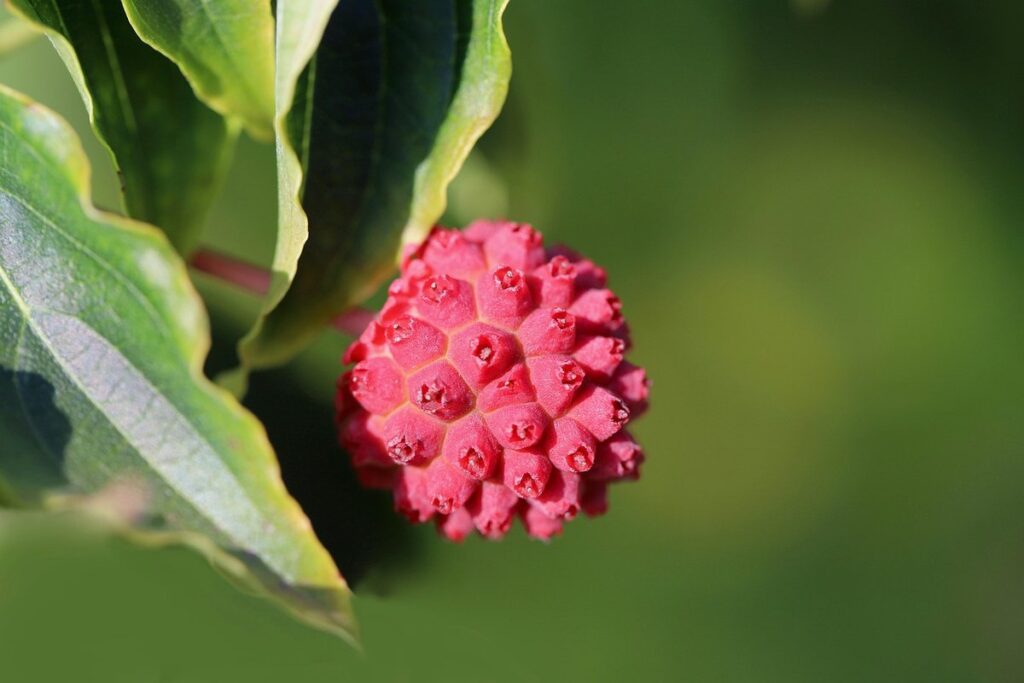
Another feature that sets the Kousa apart is its unique berry production. Unlike other dogwoods, which tend to produce red or purple berries, the Japanese Dogwood Kousa produces showy white or pinkish-red berries in late summer. These berries are a favorite among birds and small mammals, adding to the plant’s value as a wildlife-friendly choice.
Its deciduous foliage, typically dark green on top with a lighter underside, also contributes to its distinct appearance. As autumn approaches, the leaves turn a brilliant red or purple hue before falling, creating a picturesque landscape effect.
When selecting the Japanese Dogwood Kousa for your garden, look for these unique characteristics and consider factors like climate, soil type, and mature size to ensure it thrives under your care.
Growing and Caring for the Japanese Dogwood Kousa
Now that you’ve learned how to plant and establish your Japanese Dogwood Kousa, it’s time to focus on growing and caring for this stunning tree. With proper care, your kousa will thrive and provide beauty for years to come.
Ideal Climate and Soil Conditions for the Japanese Dogwood Kousa
The ideal climate for growing Japanese Dogwood Kousa (Cercidiphyllum japonicum) is temperate, with moderate temperatures and adequate moisture. This deciduous tree thrives in USDA zones 5-8, where it can experience warm summers and cold winters. It’s essential to provide your Kousa with full sun to partial shade, as it will not tolerate deep shade.
When it comes to soil conditions, Japanese Dogwood Kousa prefers well-draining, rich soil with a pH between 6.0 and 7.5. A mix of sand, silt, and loam is ideal, as it allows for excellent drainage and nutrient retention. Avoid planting in areas with standing water or where water tends to collect, as this can lead to root rot.
To create an optimal growing environment, consider the following tips: add organic matter like compost or manure to improve soil fertility and structure; mulch around the base of the tree to retain moisture and suppress weeds; and avoid overwatering, which can cause damage to roots and trunk. By replicating these conditions in your garden, you’ll be well on your way to growing a thriving Japanese Dogwood Kousa.
Watering and Fertilization Needs of the Japanese Dogwood Kousa
Proper watering is essential for maintaining the health of your Japanese Dogwood Kousa. This tree prefers well-drained soil and can tolerate some drought, but consistent moisture encourages vibrant growth. Water your tree when the top 2-3 inches of soil feel dry to the touch, typically during hot summer months or in areas with low rainfall.
Fertilization should occur annually, taking into account your region’s specific needs. In cooler climates, apply a balanced fertilizer (10-10-10 NPK) in early spring for root development and again in mid-summer for fruit production. For warmer regions, split the application to avoid burning the roots during peak growth periods.
Some key points to consider: water deeply but infrequently to encourage deep root growth; avoid over-fertilizing, as this can lead to weak wood and reduced flowering; and mulch around the base of the tree to retain moisture and suppress weeds. By following these guidelines, you’ll provide your Japanese Dogwood Kousa with the ideal conditions for thriving growth and abundant flowers. Regular maintenance will also enhance its natural resistance to pests and diseases.
Propagation and Pruning Methods for the Japanese Dogwood Kousa
When it comes to maintaining your Japanese Dogwood Kousa, understanding how to propagate and prune is essential for its overall health and appearance. Let’s dive into these crucial techniques together!
Techniques for Propagating the Japanese Dogwood Kousa
Propagating the Japanese Dogwood Kousa is a relatively straightforward process that can be achieved through two main methods: cuttings and layering. When it comes to taking cuttings, it’s essential to choose healthy stems with at least two nodes. Cut these sections just above a node using a clean, sharp tool. Remove lower leaves, leaving only the top two sets of leaves intact. Next, dip the cutting in a rooting hormone powder or liquid to stimulate root growth.
Place the cuttings in a propagation tray filled with a well-draining potting mix, and maintain high humidity by covering the tray with clear plastic bags. Roots should develop within 1-2 weeks, followed by new shoots. Layering is another effective method for propagating Kousa Dogwood. This involves bending a branch to ground level and securing it in place using a U-shaped wire or a heavy rock. Allow the branch to grow roots over several months before cutting it from the parent plant.
Regular watering and fertilization will promote healthy root growth, increasing the chances of successful propagation.
Pruning Strategies for Maintaining the Japanese Dogwood Kousa’s Shape and Health
Pruning is an essential aspect of maintaining the Japanese Dogwood Kousa’s shape and health. By controlling size, promoting fruiting, and preventing disease, you can keep your tree thriving for years to come.
To control size, prune your Japanese Dogwood Kousa in late winter or early spring, removing any dead, diseased, or damaged branches. Cut back overgrown branches by one-third to one-half, maintaining a balanced shape and promoting new growth. This will also help prevent the tree from becoming too dense, which can lead to disease.
To promote fruiting, prune your Japanese Dogwood Kousa in late winter or early spring as well, removing any suckers or water sprouts that grow from the base of the tree. These shoots can divert energy away from flowering and fruit production. Cut back select branches by one-quarter to one-third, encouraging more flowers and berries.
Regular pruning will also help prevent disease, such as powdery mildew, which thrives in dense foliage. Prune your Japanese Dogwood Kousa at least once a year to maintain its shape and promote healthy growth, keeping it looking its best for years to come.
Benefits and Uses of the Japanese Dogwood Kousa
The Japanese dogwood Kousa is a versatile tree that offers numerous benefits, from its stunning flowers to its hardy branches suitable for various uses. Let’s explore these advantages in more detail.
Ornamental Value of the Japanese Dogwood Kousa
The ornamental value of the Japanese Dogwood Kousa lies in its versatility and ability to add beauty and interest to a variety of landscapes. One of the key ways to utilize this plant is as a specimen tree, where it can be showcased on its own or paired with other plants to create a stunning focal point.
When used in landscaping, the Japanese Dogwood Kousa’s unique characteristics make it an ideal choice for adding texture and interest. Its white or pink flowers, which bloom in late spring, provide a dramatic pop of color against the backdrop of green leaves. The plant’s habit of producing multiple trusses of flowers also adds to its ornamental value, creating a visually appealing display.
To maximize the ornamental value of your Japanese Dogwood Kousa, consider planting it near water features or in areas where its stunning blooms can be appreciated from multiple angles. With proper care and pruning, this plant can provide years of beauty and interest in your landscape, making it a wise choice for gardeners looking to add some drama and flair to their outdoor spaces.
Edible Fruit of the Japanese Dogwood Kousa
One of the most delightful aspects of the Japanese Dogwood Kousa is its edible fruit. This stunning shrub produces vibrant red berries that are not only a feast for the eyes but also a treat for the taste buds. The fruit is rich in nutritional value, making it an excellent addition to a healthy diet.
The berries of the Japanese Dogwood Kousa are packed with antioxidants, vitamins A and C, and potassium. They have been traditionally used in medicine to treat various ailments, including fever, rheumatism, and digestive issues. You can enjoy them fresh, dried, or cooked into jams and preserves.
To harvest the fruit, wait until it’s fully ripe, as this will ensure the best flavor and nutritional value. Rinse the berries thoroughly before eating or using in recipes. When cooking with the fruit, be mindful of its tartness and balance it with sweet ingredients to create a delicious taste experience.
Common Problems and Pests Affecting the Japanese Dogwood Kousa
As you care for your Japanese Dogwood Kousa, it’s essential to be aware of potential issues that can arise, from pests like aphids and scale to diseases like powdery mildew. These problems can cause significant damage if left unchecked.
Diseases Affecting the Japanese Dogwood Kousa
As you nurture your Japanese Dogwood Kousa, it’s essential to be aware of potential diseases that could affect its health. One of the most common issues affecting this beautiful plant is powdery mildew. This fungal disease appears as a white, powdery coating on leaves and stems, causing them to turn yellow and drop prematurely. To prevent powdery mildew, ensure good air circulation around your Kousa by pruning nearby plants and avoiding overhead watering.
Another disease that can impact the Japanese Dogwood Kousa is root rot, caused by overwatering or waterlogged soil conditions. This leads to soft, mushy roots and a decline in overall plant health. To prevent root rot, ensure your Kousa is planted in well-draining soil and avoid watering it too frequently.
Fungal diseases like leaf spot and anthracnose can also affect the Japanese Dogwood Kousa. Leaf spot appears as small, circular lesions on leaves, while anthracnose causes blisters or lesions on stems and leaves. To prevent these issues, regularly inspect your plant for signs of disease and take action promptly if you notice any problems.
To control diseases affecting the Japanese Dogwood Kousa, adopt a holistic approach that includes pruning infected areas, improving air circulation, and maintaining optimal watering schedules.
Insect Pests and Other Threats to the Japanese Dogwood Kousa
One of the potential threats to the Japanese Dogwood Kousa is its vulnerability to insect pests. Aphids and spider mites can cause damage to the leaves and stems, while scales and mealybugs can secrete a sticky substance that attracts other pests and promotes disease growth. Scale insects in particular can be a significant problem for Japanese Dogwood Kousas, as they can feed on sap, causing dieback and defoliation.
To manage these pests, inspect your plant regularly during the growing season. Look for signs of infestation, such as curled or distorted leaves, sticky substances, or actual insects on the plant. If you catch an infestation early, treat it promptly with insecticidal soap or neem oil according to the product’s instructions.
To prevent pest problems in the future, maintain good garden hygiene by removing weeds and debris that can attract pests. Keep your Japanese Dogwood Kousa watered consistently, but avoid overwatering, which can lead to root rot and create an environment conducive to pest growth. Regularly inspecting your plant and taking swift action when necessary will help prevent infestations from getting out of hand.
Conclusion: Nurturing a Thriving Japanese Dogwood Kousa
Now that you’ve learned how to plant, care for, and enjoy your Japanese dogwood kousa, let’s discuss how to ensure it thrives year after year. Proper maintenance is key to its long-term health.
Recap of Key Takeaways for Growing and Caring for the Japanese Dogwood Kousa
As you’ve made it through this comprehensive guide on Japanese Dogwood Kousa care and benefits, let’s recap the key takeaways to ensure your tree thrives. Remember that consistency is key when it comes to maintaining a healthy Japanese Dogwood Kousa.
Firstly, choose a location with well-draining soil and full sun to partial shade for optimal growth. Ensure regular watering, but avoid overwatering, which can lead to root rot. Fertilize annually with an acidic fertilizer to maintain the tree’s nutrient balance. Prune your Kousa Dogwood in late winter or early spring to control its size and promote new growth.
When it comes to pest management, be on the lookout for diseases like powdery mildew and fungal infections. Regularly inspect your tree for signs of infestation and use organic methods whenever possible to maintain a balanced ecosystem. By following these care tips and staying vigilant, you’ll enjoy the beauty and benefits that your Japanese Dogwood Kousa has to offer for years to come.
Encouragement to Continue Learning and Experimenting with the Plant
As you’ve reached the end of this comprehensive guide, we hope you feel confident and equipped to care for your Japanese Dogwood Kousa. But our journey doesn’t have to end here! In fact, it’s only just beginning. Nurturing a thriving Japanese Dogwood Kousa requires patience, dedication, and a willingness to learn and adapt.
As you continue on this journey, remember that every tree is unique, and what works for one may not work for another. Don’t be discouraged if your tree doesn’t respond immediately to your care efforts – with time, consistency, and the right approach, it will flourish.
To keep your Japanese Dogwood Kousa healthy and thriving, make sure to regularly inspect its condition, prune as needed, and adjust your care routine accordingly. Be open to experimenting with new techniques, such as using different mulching methods or testing out various fertilizers.
By embracing a growth mindset and staying curious about your tree’s needs, you’ll be well on your way to becoming an expert Japanese Dogwood Kousa caretaker – one that will be rewarded with stunning blooms, robust health, and years of beauty.
Frequently Asked Questions
Can I grow Japanese Dogwood Kousa in containers or must it be planted in the ground?
Yes, you can grow Japanese Dogwood Kousa in containers provided they are at least 2-3 times larger than the root ball and have good drainage. This method is ideal for small spaces or areas with poor soil quality.
How long does it take for a Japanese Dogwood Kousa to produce edible fruit?
It typically takes 5-7 years for a Japanese Dogwood Kousa to mature and start producing edible fruit, but this can vary depending on factors like climate, soil quality, and pruning practices.
Can I use any type of fertilizer for my Japanese Dogwood Kousa or are there specific requirements?
Use a balanced, slow-release fertilizer (10-10-10 NPK) in the spring and again in mid-summer to promote healthy growth. Avoid over-fertilizing, as this can lead to weak wood and reduced fruit production.
What should I do if my Japanese Dogwood Kousa is affected by pests or diseases?
Inspect your tree regularly for signs of pests (e.g., aphids, scale) or diseases (e.g., powdery mildew, root rot). Treat any infestations promptly with organic or chemical controls, and take measures to improve air circulation, water drainage, and soil quality to prevent future issues.
Can I propagate Japanese Dogwood Kousa through leaf cuttings or must I use more traditional methods?
While you can try propagating Japanese Dogwood Kousa through leaf cuttings, this method is not always successful. It’s recommended to use more traditional propagation methods like grafting, layering, or softwood cuttings for better results and faster growth.