
If you’re looking to add some beauty and charm to your garden or landscape, consider planting a kousa dogwood tree. Native to East Asia, this stunning tree has been making waves in gardening circles for its unique characteristics and versatility. Not only is it a sight to behold with its showy white blooms and crimson berries, but it’s also incredibly easy to care for. In fact, kousa dogwood trees are known for their hardiness and ability to thrive in a variety of conditions. But what sets them apart from other ornamental trees? And how can you incorporate these beautiful plants into your outdoor space? This article will delve into the history, characteristics, and uses of kousa dogwood trees, covering everything from their native habitat to expert care and maintenance tips for getting the most out of this incredible plant.
History and Origin of Kousa Dogwood
Native to China, Korea, and Japan, kousa dogwood has a rich history dating back thousands of years, with its origins deeply rooted in traditional Asian landscapes. Let’s explore this fascinating background further.
Native Habitat and Distribution
Kousa dogwood is native to East Asia, specifically China, Japan, and Korea. This beautiful tree thrives in a variety of natural habitats, including mountainous regions, forests, and along streams. In its native range, kousa dogwood grows best in well-drained soils with partial shade to full sun.
The geographical distribution of kousa dogwood is quite extensive, spanning across different climates and elevations. It has been successfully introduced to other parts of the world, including North America and Europe, where it has adapted to new environments. This adaptability makes kousa dogwood an attractive option for gardeners and landscapers looking to add a unique and hardy tree to their property.
When planting kousa dogwood in your own yard, consider its native habitat requirements. Choose a location with well-drained soil and partial shade, especially if you live in areas with hot summers or cold winters. With proper care and conditions, kousa dogwood will flourish, providing stunning beauty and benefits for years to come.
Early Adoption and Cultivation in North America
In the mid-20th century, kousa dogwood was introduced to North America as an ornamental plant, and it quickly gained popularity among gardeners. The plant’s unique characteristics, such as its stunning white flowers and vibrant fall colors, made it a sought-after addition to many landscapes.
Notable cultivation efforts played a significant role in the widespread adoption of kousa dogwood in North America. In 1967, the United States Department of Agriculture (USDA) listed the kousa dogwood as a recommended tree for urban planting due to its ability to thrive in poor soil conditions and tolerate heat stress.
As a result, nurseries began mass-producing kousa dogwood plants, making them more accessible to homeowners and landscapers. By the 1980s, kousa dogwood had become a staple in many North American gardens, with some cultivars like ‘Satomi’ and ‘Hillsway Scarlet’ becoming particularly popular due to their improved disease resistance.
Today, you can find kousa dogwood growing throughout much of North America, from urban parks to residential landscapes. If you’re interested in cultivating this beautiful tree, look for nurseries that specialize in native plant species or seek advice from local gardening experts who have experience with kousa dogwood cultivation.
Description and Characteristics of Kousa Dogwood
The kousa dogwood is a stunning tree, but what makes it so special? Let’s take a closer look at its unique characteristics and see why it’s becoming a favorite among gardeners.
Physical Appearance and Growth Habits
Kousa dogwood is a stunning ornamental tree that boasts an array of impressive physical characteristics. In terms of size, it typically grows to be around 15 to 20 feet tall, making it an excellent choice for smaller gardens or landscapes where space may be limited.
Its shape is often described as spreading and rounded, with a broad canopy that provides dappled shade beneath its branches. The bark of the kousa dogwood is smooth and gray when young, gradually developing a more rugged texture with age. Leaves are ovate in shape, measuring around 2 to 5 inches long, with serrated edges and a pointed tip.
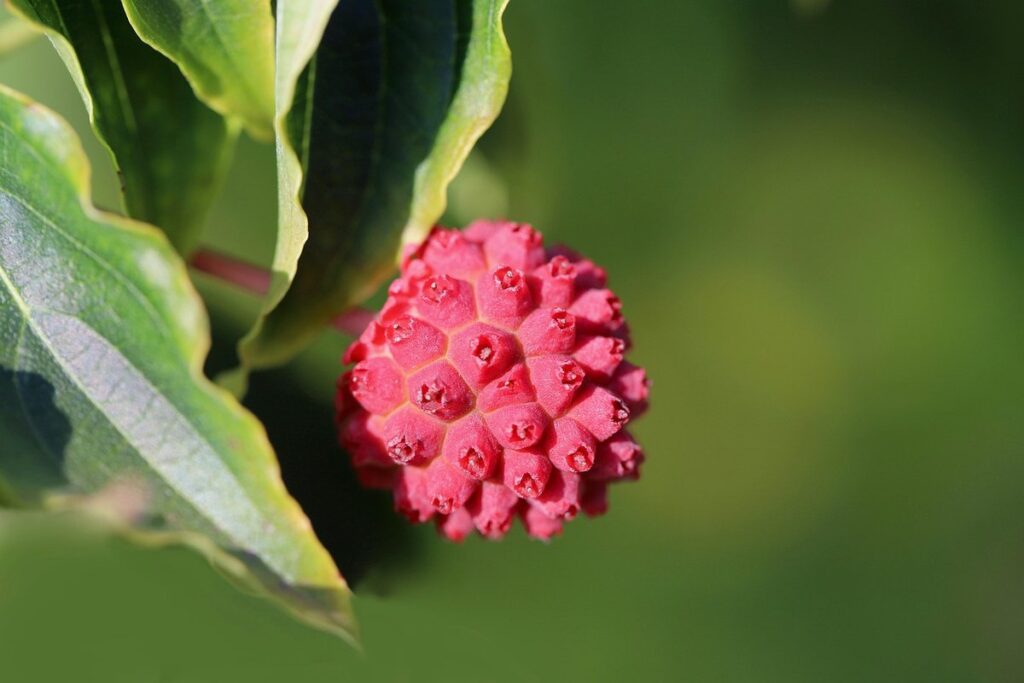
In spring, the tree erupts into bloom, displaying clusters of showy white flowers that attract pollinators like bees and butterflies. In autumn, it produces bright red berries, which are a favorite food source for birds. One of the standout features of kousa dogwood is its adaptability to different environments – it can thrive in a range of soil types and tolerate varying levels of sunlight and moisture. This versatility makes it an excellent choice for gardeners seeking a low-maintenance yet high-rewarding tree.
Distinguishing Features from Other Dogwood Species
When compared to other dogwood species, kousa dogwood stands out with several distinguishing features that make it a highly sought-after choice for gardeners and landscapers. One of the most notable differences is its flowering pattern. Unlike the American dogwood, which blooms in May, kousa dogwood produces showy white or pink flowers in late spring to early summer, often around June. This unique timing allows kousa dogwood to attract a variety of pollinators and provide a burst of color during an otherwise quieter period.
Another key characteristic is its tolerance for heat and humidity. Kousa dogwood can thrive in zones 5-8, making it more adaptable to warmer climates than some other dogwood species. This hardiness also makes it less susceptible to disease and pests, reducing maintenance requirements for gardeners. In addition, kousa dogwood’s compact growth habit and upright shape make it an excellent choice for smaller spaces or hedges, providing a level of versatility that is not always found in other dogwoods.
Kousa dogwood’s unique features also extend to its fruit production. The plant produces small, red berries that are attractive to birds and provide a valuable source of food during the fall and winter months. This aspect alone makes kousa dogwood a great choice for gardeners looking to create wildlife-friendly habitats in their landscapes.
Uses of Kousa Dogwood in Gardening and Landscaping
One of the most exciting things about kousa dogwood is its versatility, and it can be used in a variety of ways to add beauty and function to your outdoor space. Whether you’re looking for a stunning accent tree or a flowering shrub, kousa dogwood has got you covered.
Ornamental Value and Aesthetic Appeal
Kousa dogwood is a standout choice for gardeners and landscapers seeking to add unique beauty and ornamental value to their outdoor spaces. One of the key reasons for its appeal lies in its foliage, which boasts striking variegation with white or yellow stripes on dark green leaves. This visually interesting pattern adds depth and variety to any landscape design.
In the spring, kousa dogwood produces showy flowers that are often described as more vibrant and intense than those of its American counterpart. These blooms attract pollinators like bees and butterflies, further enhancing the plant’s appeal.
As autumn arrives, kousa dogwood puts on a spectacular display of fall color, typically featuring shades of pink, red, or purple. To maximize this colorful display in your garden, consider planting multiple kousa dogwoods near one another to create a naturalized look. This will allow their roots to mingle and help showcase the full range of their vibrant colors.
By incorporating kousa dogwood into your landscape design, you’ll not only add an element of visual interest but also contribute to the overall health and biodiversity of your garden ecosystem.
Wildlife Attraction and Ecological Benefits
Kousa dogwood plays a vital role in supporting local wildlife, making it an excellent addition to any garden or landscape. Its flowers attract a variety of pollinators, including bees, butterflies, and hummingbirds, which are essential for maintaining ecological balance.
The showy white or pink flowers of the kousa dogwood produce nectar that feeds these important pollinators, allowing them to collect energy-rich resources. This is particularly beneficial during the spring season when other food sources may be scarce. Additionally, its berries provide sustenance for birds and small mammals, supporting their survival and reproduction.
To maximize the ecological benefits of kousa dogwood in your garden or landscape, consider planting it near a water source to attract more wildlife. You can also create a pollinator-friendly habitat by incorporating other plants that provide nectar and pollen, such as coneflowers or black-eyed susans.
By providing food and shelter for local wildlife, kousa dogwood contributes significantly to maintaining ecological balance in your garden or landscape. Its beauty is not just skin-deep – it’s a haven for nature’s creatures too!
Care and Maintenance of Kousa Dogwood
To keep your kousa dogwood thriving, you’ll want to follow a regular maintenance routine that includes pruning, watering, and fertilizing on a seasonal basis. Pruning is particularly crucial for this tree’s optimal health and growth.
Planting and Soil Requirements
When planting a kousa dogwood, it’s essential to choose a location with well-draining soil and full sun to partial shade. This deciduous tree thrives in acidic soils with a pH between 5.5 and 6.5, making it ideal for woodland gardens or areas with high organic matter content.
To create an optimal growing environment, amend your soil with compost or peat moss to lower the pH if necessary. A mix of sandy loam and clay loam is also suitable for kousa dogwood, as it retains moisture without becoming waterlogged.
For new plantings, water regularly during the first year, aiming for about 1 inch of water per week through rainfall or irrigation. Established trees require less frequent watering, but consistent moisture throughout their root system promotes healthy growth and flowering.
Keep in mind that kousa dogwood prefers slightly dry conditions over standing water, which can lead to root rot and other issues. By selecting the right soil type and maintaining a balanced watering schedule, you’ll be well on your way to nurturing a thriving and beautiful kousa dogwood tree.
Pruning and Propagation Techniques
To encourage healthy growth and maximize flowering and fruiting, regular pruning is essential for kousa dogwood. Pruning not only maintains the tree’s shape but also promotes optimal development of its showy white flowers and vibrant red berries.
Prune kousa dogwood during its dormant season (winter or early spring) to minimize stress on the tree. Remove any dead, diseased, or damaged branches by cutting them back to a healthy bud or growth node. This will help prevent the spread of disease and encourage new growth.
You can also prune kousa dogwood in late summer after it has finished flowering, but be cautious not to remove more than one-third of its branches at any given time to avoid stressing the tree. To propagate kousa dogwood, take 12-18 inch stem cuttings from the current season’s growth during the spring or early fall.
Cut just above a node using a sharp, clean pruning tool and immediately place the cutting in water or a propagation medium. Keep the soil consistently moist but not waterlogged to promote root development. With proper care, your kousa dogwood will thrive, providing beautiful flowers and foliage for years to come.
Common Issues and Pests Affecting Kousa Dogwood
As you enjoy the beauty of your kousa dogwood, it’s not uncommon for pests and diseases to appear. Let’s take a look at some common issues that may arise in your garden.
Disease Management and Treatment Options
Diseases can affect even the hardiest of trees, and kousa dogwood is no exception. Powdery mildew and root rot are two common issues that may arise, requiring attention to prevent further damage. Powdery mildew, caused by a fungal infection, appears as a white powdery coating on leaves, which can eventually lead to defoliation and decreased growth. To treat powdery mildew, prune infected branches and apply a fungicide according to the product’s instructions.
Root rot, often caused by overwatering or poor drainage, manifests as yellowing or wilting leaves and a general decline in tree health. Prevention is key when it comes to root rot; ensure your kousa dogwood has well-draining soil and avoid overwatering. If your tree is already affected, reduce watering and consider repotting with fresh soil. Regular monitoring of your tree’s condition can help catch issues early on, allowing for prompt action to prevent further damage.
It’s worth noting that some diseases can be avoided by choosing a healthy tree in the first place. Select trees from reputable nurseries or growers who maintain high standards for their stock. This will give your kousa dogwood the best possible start in life and reduce the likelihood of disease issues arising later on.
Pest Control Methods and Integrated Pest Management
When it comes to maintaining the health and beauty of your kousa dogwood, managing pests is an essential aspect. Japanese beetles, aphids, and scale insects are common culprits that target this lovely tree. To tackle these issues effectively, you can employ various pest control methods.
For small infestations, manual removal is a good starting point. For instance, if you notice Japanese beetles on your kousa dogwood, hand-picking them during early morning or evening hours when they’re most active can be an effective way to control the population. For aphids and scale insects, use a strong jet of water to dislodge them from leaves and branches.
However, integrated pest management (IPM) strategies are often more beneficial in the long run. IPM involves combining physical, cultural, biological, and chemical controls to manage pests sustainably. This approach can include pruning infested areas, maintaining a healthy soil ecosystem through mulching and composting, introducing natural predators or parasites of pests, and using targeted insecticides only when necessary.
By adopting an IPM approach, you can maintain the balance between controlling pests and minimizing harm to your kousa dogwood’s delicate ecosystem. Keep in mind that prevention is key – monitor your tree regularly for signs of pest activity and address issues promptly to prevent infestations from spreading.
Conclusion: Embracing the Versatility of Kousa Dogwood
As you’ve learned about the beauty and benefits of kousa dogwood, it’s time to put this incredible plant to work in your garden or landscape. Whether you’re a seasoned horticulturist or just starting out, embracing the versatility of kousa dogwood is easier than you think. Consider incorporating it into your existing design by planting it near water features or as a natural screen to block unwanted views. You can also use its stunning flowers and foliage to create a dramatic focal point in your garden.
Think outside the box and let kousa dogwood’s unique characteristics shine. Plant multiple specimens together for a vibrant, textured display of color and interest. Alternatively, use its adaptable nature to create a low-maintenance habitat for wildlife by planting it in a woodland edge or along a stream bank.
Frequently Asked Questions
Can kousa dogwood trees tolerate extreme temperatures and weather conditions?
Kousa dogwood is known for its hardiness, but it’s not entirely immune to extreme temperatures. While it can withstand moderate frost and heat waves, prolonged periods of freezing or scorching temperatures may cause damage. However, with proper care and protection, kousa dogwood can adapt to various climate conditions.
How do I choose the right location for a kousa dogwood tree in my garden?
When selecting a location for your kousa dogwood, consider its mature size (typically 15-20 feet tall) and ensure it receives adequate sunlight. Since kousa dogwood can thrive in partial shade to full sun, you have some flexibility with placement. However, also take into account the tree’s potential spread and proximity to nearby structures or walkways.
Can I grow kousa dogwood from seed, or should I propagate using other methods?
While it is possible to grow kousa dogwood from seed, this method can be unpredictable and may not yield results similar to the parent tree. Propagating through grafting or cutting may provide more consistent outcomes. Consult with a gardening expert or nursery professional for guidance on the best propagation method for your specific needs.
How often should I prune my kousa dogwood tree for optimal health and appearance?
Regular pruning is essential for maintaining the overall shape, size, and health of your kousa dogwood tree. Prune in late winter or early spring, removing any dead, diseased, or damaged branches. This will promote healthy growth and encourage blooming. Prune less frequently during the first two years after planting to allow the tree to establish itself.
Can I use kousa dogwood as a specimen tree for small gardens?
Yes, kousa dogwood can be an excellent choice for smaller garden spaces due to its compact size and adaptability. Its relatively small stature (15-20 feet tall) makes it suitable for smaller yards or areas where space is limited. However, keep in mind that kousa dogwood does produce berries and may require occasional pruning to maintain a neat appearance.