
Are you tired of worrying about predators threatening your prized poultry? You’re not alone. Many farmers and backyard chicken keepers face this very issue, but there is a solution that’s been used for centuries: livestock guardian dogs. These intelligent and loyal canines are specifically bred to protect their flock from coyotes, foxes, and other threats. By introducing them into your farm operations, you can enjoy peace of mind knowing your birds are safe.
In this article, we’ll explore the benefits of using livestock guardian dogs for poultry protection and provide a step-by-step guide on how to choose the right breed, train it effectively, and integrate it smoothly into your farm’s ecosystem. From selecting breeds that suit your specific needs to managing their territory and behavior, we’ll cover everything you need to know to get started with these incredible guardians.
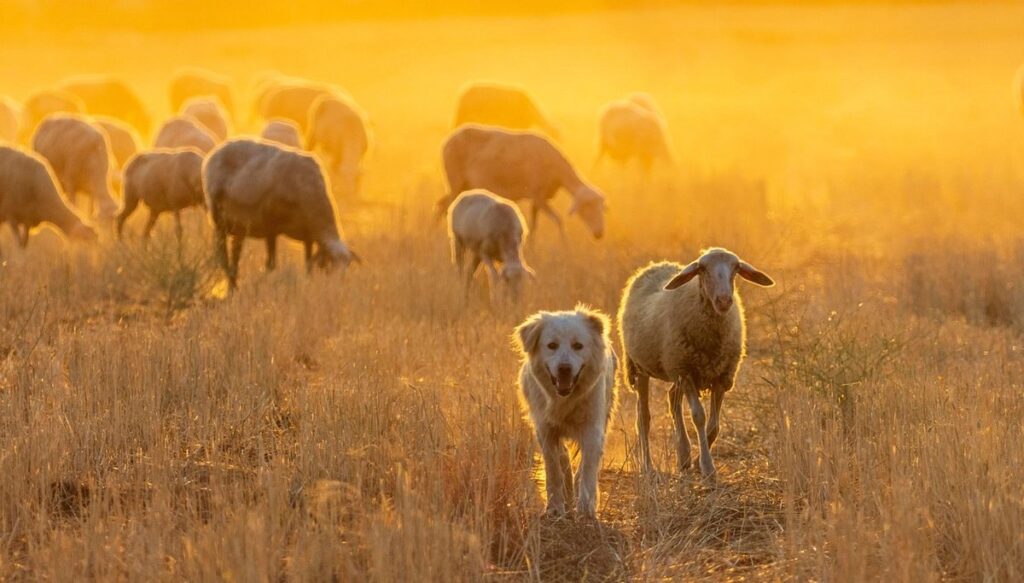
The Importance of Livestock Guardian Dogs
When it comes to protecting your flock from predators, one key factor is the role livestock guardian dogs play in safeguarding their well-being and safety daily. Let’s dive into why these canine guardians are essential.
Origins and History of LGDs
Livestock guardian dogs have been an integral part of agricultural practices for thousands of years. The origins of these canine guardians date back to ancient civilizations where they were used to protect herds and flocks from predators such as wolves, bears, and wild dogs. In medieval Europe, large breeds like the Maremma and Akbash were employed to safeguard sheep and cattle from marauding packs.
The role of LGDs has evolved over time, but their primary function remains unchanged: to deter or defend against predators that threaten livestock. For poultry farming, a similar principle applies. LGDs can be trained to recognize the unique sounds and movements associated with chicken coops and enclosures, allowing them to respond quickly in the event of an attack.
Historically, breed-specific characteristics have been shaped by geography, climate, and the types of predators present. For example, breeds like the Great Pyrenees were developed in the mountains of France to guard against large predators like wolves, while others, such as the Australian Koolie, were bred for herding and protecting against dingos.
In modern times, LGDs have become a vital asset for poultry farmers seeking to safeguard their flocks. By selecting breeds that are well-suited to your specific climate and predator population, you can establish a robust defense system that protects your livestock with minimum supervision required.
Benefits of Using LGDs for Poultry Security
Using LGDs specifically for poultry protection offers numerous benefits that can be tailored to meet the unique needs of your flock. One significant advantage is that they serve as an early warning system, alerting you and other family members to potential threats before they even reach the coop. This allows you to take swift action to protect your birds.
LGDs also function as deterrents to predators, such as coyotes, foxes, and stray dogs, that pose a significant threat to poultry farms. By introducing an LGD into the farm environment, you’re sending a clear message to would-be predators: this is not a place for intruders. In many cases, LGDs will chase away potential threats without even barking, thanks to their strong prey drive and territorial instincts.
For example, on a small-scale farm in Colorado, introducing an LGD reduced predator attacks by 75% within just three months. With proper training and socialization, your LGD can become a trusted guardian of your flock, providing you with peace of mind and ensuring the long-term health and well-being of your birds.
Choosing the Right Breed for Your Farm
When it comes to selecting a livestock guardian dog, you’ll want to consider breeds that are well-suited to your farm’s climate and terrain. Let’s explore some top picks for poultry protection.
Factors to Consider When Selecting an LGD
When selecting an LGD breed for your poultry farm, there are several key factors to consider. The size of the dog is crucial, as it must be large enough to intimidate potential predators but not so big that it’s intimidating for you or your family to handle. A general rule of thumb is to choose a breed with a sturdy build and height between 22-28 inches (55-70 cm) at the shoulder.
Temperament is another vital consideration, as LGDs need to be calm and gentle around the birds they’re guarding. Look for breeds known for their even-tempered nature, such as Maremmas or Akbash dogs. These dogs have been bred specifically for guarding livestock and tend to be naturally wary of predators.
Climate adaptability is also essential, especially if you live in an area with extreme weather conditions. Some breeds, like the Peruvian Inca Orchid, are better suited to hot climates, while others, such as the Karakachan, are more tolerant of cold temperatures. Consider your local climate and choose a breed that can thrive in those conditions.
Popular Breeds Used for Poultry Protection
When it comes to choosing a breed for poultry protection, several popular breeds stand out from the rest. One of the most well-known and effective breeds is the Great Pyrenees. Originally bred to guard sheep against predators like wolves and bears, this majestic dog has a strong instinct to protect its flock. With their thick coats and calm demeanor, Great Pyrenees are an excellent choice for farmers looking to safeguard their poultry.
Another popular breed used specifically for poultry protection is the Maremma. Hailing from Italy, these dogs have been guarding livestock for centuries. Maremmas are known for their loyalty and alertness, making them a top pick for farms with smaller flocks. Their natural instinct to defend against predators makes them an excellent addition to any farm.
The Komondor also deserves mention as a popular breed for poultry protection. Originating from Hungary, these dogs have been guarding livestock since the 13th century. With their distinctive corded coats and intelligent nature, Komondors make great watchdogs. They are fiercely protective of their flock, but gentle with their owners.
These breeds are just a few examples of the many excellent choices for poultry protection. When selecting a breed, consider factors like your farm’s size, climate, and type of predators in your area. With the right breed by your side, you can rest assured that your poultry will be safe from harm.
Training Your LGD: A Comprehensive Approach
To effectively train your Livestock Guardian Dog, you’ll need a clear understanding of their unique needs and how to tailor your approach to their breed-specific characteristics. This includes socialization, obedience training, and predator management skills.
Early Socialization and Imprinting
As you bring home your new LGD puppy, it’s essential to focus on early socialization and imprinting. This critical period between 8-16 weeks is when the pup learns what is safe and what is threatening. Proper socialization helps your puppy understand its role as a guardian and teaches them to respond to threats without becoming aggressive.
For poultry guardianship, early exposure to various noises, sights, and smells is vital. Introduce your puppy to loud noises like gunshots or animal calls to help it distinguish between real threats and harmless sounds. Also, ensure it meets birds of different species, ages, and sizes to prevent fear-based aggression towards specific breeds.
During this period, handle your pup gently but frequently, teaching it that human touch is a safe experience. Make sure to expose them to the sights and smells of predators like coyotes or foxes, so they become desensitized to potential threats. By investing time in early socialization and imprinting, you’ll raise a confident, effective guardian for your flock.
Training Exercises and Techniques
Teaching your Livestock Guardian Dog (LGD) to protect your poultry is a crucial step in their training. Boundary setting and response training are two essential techniques to focus on when it comes to protecting your flock.
Boundary setting involves teaching your LGD to recognize the perimeter of your property and respond accordingly. This can be achieved through consistent use of positive reinforcement training methods, such as treats and praise, when they stay within designated boundaries. For example, if you’re using a long line to train your dog, set clear expectations by releasing them at specific points while rewarding their return to these areas.
Response training is equally important in developing an effective guardian. This involves teaching your LGD to recognize and respond to potential threats, such as predators or intruders, within the designated boundaries. Practice scenarios where you mimic a threat and reward your dog’s alert behavior. Start with low-level distractions and gradually increase intensity to help them generalize their responses.
As your LGD becomes more confident in their role, increase exercise duration and intensity. Include mock scenarios with fake prey, such as decoy birds or stuffed animals, to simulate real-life threats.
Integrating Your LGD into Existing Farm Operations
Now that you have a livestock guardian dog on board, let’s explore how to seamlessly integrate it into your existing farm operations for maximum effectiveness. This will involve some strategic planning and adjustments.
Introduction and Acclimation Strategies
Introducing a new livestock guardian dog (LGD) to an existing farm operation can be a daunting task. The goal is to create a harmonious environment where the LGD feels secure and the human staff can work efficiently without disruptions. To achieve this, it’s essential to implement a smooth introduction process for both parties.
Begin by introducing the new LGD to its living quarters gradually, allowing it to explore and claim its territory at its own pace. Provide a separate enclosure or area where the LGD can acclimate to the farm’s sounds, smells, and sights without feeling overwhelmed. This initial phase is crucial in helping the dog establish a sense of familiarity with its new environment.
As for human staff, it’s vital to educate them on proper interactions with the new LGD. Teach them how to approach the dog calmly, avoiding sudden movements or loud noises that might startle it. A good rule of thumb is to let the LGD initiate contact and interactions, allowing it to set its own pace.
Once both the dog and human staff have had time to acclimate, consider a gradual integration process where they can interact with each other under close supervision. This phased approach will help ensure a smooth transition for all parties involved, setting the stage for a harmonious working relationship between the LGD and farm operations.
Managing Human-LGD Interactions
When managing human-LGD interactions, it’s essential to establish clear boundaries and communicate effectively with both humans and dogs. For instance, staff members should be trained on basic LGD body language, recognizing signs of stress or aggression. This knowledge helps prevent accidental conflicts between humans and dogs.
To avoid confusion, designate specific areas for the LGD to roam freely, keeping them separate from human traffic flow. Clearly label these zones, ensuring everyone understands which areas are off-limits. Regular communication with staff members will also help identify any issues early on. For example, if an LGD is displaying persistent stress due to frequent handling or interaction, adjustments can be made to minimize human contact.
Training your staff in non-verbal cues and gentle interactions can significantly reduce stress for both humans and dogs. By teaching staff members how to calmly approach and interact with the LGD, they can build trust and create a harmonious working environment. Consider enlisting the help of an experienced trainer or behaviorist if you’re unsure about how to introduce these changes.
Health and Welfare Considerations
When it comes to introducing livestock guardian dogs into your flock, it’s crucial to consider their impact on both the dogs’ and poultry’s health and well-being. This section explores essential factors to keep in mind.
LGD Health Requirements and Best Practices
Maintaining a healthy livestock guardian dog is crucial to ensure it can effectively protect your flock. Vaccinations are essential, and you should consult with a veterinarian to determine the best vaccination schedule for your LGD. Core vaccinations such as rabies, distemper, and parvovirus should be administered annually or as needed.
Parasite control is also vital, especially in areas with high tick and flea populations. Use broad-spectrum preventatives that cover internal parasites like hookworms, roundworms, and whipworms. Regular deworming is essential, typically every 6-8 weeks depending on the parasite load and region. Ensure your LGD receives a thorough examination by a veterinarian to identify any underlying health issues.
Nutrition plays a significant role in maintaining your LGD’s overall health. Feed high-quality, balanced diets specifically formulated for large-breed dogs. Provide access to clean water at all times, and ensure your dog gets regular exercise through daily walks and playtime. A healthy LGD is more effective at guarding against predators, so prioritize its well-being above all else.
It’s also essential to monitor your LGD’s weight, as obesity can lead to various health problems. Regular check-ups with a veterinarian will help identify any potential issues early on, allowing you to take corrective action promptly.
Managing Conflicts Between Poultry and Your LGD
Managing conflicts between poultry and your Livestock Guardian Dog (LGD) requires attention to establishing clear boundaries and using deterrents to prevent aggression. It’s not uncommon for these two groups to have disagreements, especially when introducing a new LGD to the flock or if the dog is particularly protective.
To avoid conflicts, start by separating the birds from the dog during the initial introduction phase, allowing them to get used to each other’s presence without direct interaction. Gradually increase their time together while observing their behavior, intervening promptly if any signs of aggression are noticed.
Deterrents such as physical barriers (e.g., fencing), visual deterrents (e.g., balloons or reflective tape), and auditory distractions (e.g., loud noises) can also be used to prevent conflicts. For instance, setting up a fence around the poultry area can help maintain separation while allowing them to see each other.
Establishing clear communication with your dog is crucial in preventing conflicts. Positive reinforcement training focusing on desired behaviors like calmness around the birds is vital. By recognizing and rewarding good behavior, you’ll be better equipped to manage potential conflicts between your poultry and LGD.
Case Studies and Real-World Examples
Let’s take a look at how livestock guardian dogs are being used successfully on real farms and homesteads to protect their valuable poultry flocks from predators.
Successful Implementations of LGDs for Poultry Protection
Farms like Red Gate Farm and Springdale Farm have successfully implemented LGDs for poultry protection. At Red Gate Farm, owners Jen and John started with a pair of Maremmas to guard their 200-bird laying flock against predators. They reported an immediate reduction in losses after the dogs’ introduction, citing that the Maremmas effectively deterred coyote attacks.
Another notable example is Springdale Farm’s use of Great Pyrenees LGDs for protecting their free-range chicken and duck flock. Owner Sarah found that the dogs’ presence led to a decrease in predator visits, ensuring her birds’ safety during peak hunting seasons.
These case studies demonstrate how incorporating LGDs into poultry protection strategies can yield tangible results. To replicate this success, consider factors like breed selection (Maremmas and Great Pyrenees are popular choices), dog-to-flock ratio, introduction to the flock, and regular monitoring of both dogs’ and birds’ behavior. By choosing a suitable LGD breed and properly integrating them into your farm’s ecosystem, you can safeguard your poultry from predators and reduce losses.
Lessons Learned and Best Practices from Experienced Farmers
We’ve had the privilege of speaking with several experienced farmers who have successfully integrated livestock guardian dogs into their operations. Their collective knowledge and insights are invaluable to anyone considering this approach for protecting their flock. One key lesson learned is the importance of selecting a breed well-suited for the task at hand. Some farmers swear by the Akbash, Kangal, or Anatolian Shepherd due to their reputation for guarding and strong instinct to protect.
Another crucial factor is acclimation – allowing your dog to get accustomed to its new surroundings, sights, and sounds before introducing it to the flock. This can take anywhere from a few weeks to several months, depending on individual circumstances. One farmer we spoke with noted that providing separate housing for the guardian dog, at least initially, can also be beneficial in preventing stress and potential conflict.
It’s also essential to remember that livestock guardian dogs are not meant to replace traditional security measures but rather work alongside them. This includes ensuring proper fencing, adequate shelter, and a well-planned rotation schedule for your flock. By understanding these key elements and adopting best practices from experienced farmers, you can significantly reduce the risk of predation and create a more harmonious coexistence between dogs and poultry.
Frequently Asked Questions
Can I use a single Livestock Guardian Dog to protect multiple farms or properties?
While it’s technically possible, we strongly advise against using a single LGD for multi-farm operations due to the dog’s strong territorial instinct and attachment to its flock. It’s best to have one dedicated LGD per farm to ensure effective protection and minimize conflicts of interest.
How long does it take for an LGD to become fully acclimated to its new environment?
The acclimation period varies depending on factors such as the dog’s breed, age, and prior experience. However, a general rule of thumb is that it can take anywhere from 3-6 months for an LGD to settle into its new surroundings and establish a strong bond with its flock.
Can I integrate my existing chickens into the same enclosure with my new Livestock Guardian Dog?
No, it’s not recommended to introduce an adult LGD to an existing flock of chickens without proper socialization and introduction. This can lead to stress and potential conflicts between the dog and birds. Instead, consider introducing young chicks or poults under the watchful eye of your LGD from an early age.
What are some common mistakes new farmers make when introducing Livestock Guardian Dogs to their farm?
New farmers often underestimate the importance of proper socialization, training, and introduction procedures for LGDs. They may also assume that any breed will suffice, neglecting factors such as climate, terrain, and specific predator threats in their area.
Can I train my Livestock Guardian Dog myself, or do I need professional help?
While it’s not essential to hire a professional dog trainer, having some experience with canine training can certainly be beneficial when working with an LGD. However, for optimal results, we recommend enlisting the services of a reputable and experienced LGD breeder or trainer who has extensive knowledge in this specific area.