
If you’re an aspiring backyard farmer or just starting to raise chickens, understanding how chicken egg hatch is crucial for successful brooding. But have you ever wondered what happens inside that tiny eggshell as it transforms into a fluffy chick? From embryonic development to post-hatch care, the process of hatching eggs requires precision and attention to detail. As an expert in poultry care, I’m here to guide you through every stage of chicken egg hatch, from identifying fertile eggs to providing optimal conditions for healthy chicks. Whether you’re looking to boost your hatching rates or ensure the well-being of your new additions, this article will cover it all – expert tips and insider knowledge on how to raise robust and thriving chicks.
Understanding the Basics of Chicken Egg Hatch
Let’s break down the basics of chicken egg hatching, from embryo development to incubation periods and the conditions necessary for successful hatching.
What is Chick Embryonic Development?
At fertilization, a chicken egg undergoes a remarkable transformation. The initial stage of chick embryonic development is called cleavage, where the fertilized egg cell rapidly divides into multiple cells through mitosis. This process typically occurs within 18-24 hours after incubation and is characterized by the formation of a blastoderm – a cluster of cells that will eventually give rise to the embryo.
During this stage, the egg’s nutrient-rich yolk provides sustenance for the developing embryo. The embryo’s cells continue to divide and grow, forming distinct layers: the epiblast (outer layer), hypoblast (inner layer), and the primitive streak – a critical structure that will eventually form the embryo’s body.
The pace of development accelerates significantly during this stage. By around 72 hours after incubation, the blastoderm has formed into a compact, cylindrical mass called the germ disc. This marks the beginning of organogenesis, where the germ disc begins to differentiate into distinct embryonic structures – including the heart, lungs, and liver.
It’s essential to maintain optimal temperature (99-100°F) and humidity levels during incubation to facilitate healthy development.
Importance of Temperature in Egg Incubation
When it comes to successfully hatching chicken eggs, one crucial factor often gets overlooked: temperature control. Maintaining optimal temperatures during incubation is essential for supporting healthy chick development.
Why is temperature so critical? Simply put, chicks develop at an incredible rate – from fertilization to pip (the first crack in the eggshell) takes a mere 21 days! During this time, their bodies undergo rapid growth and development, requiring precise control over environmental conditions. Temperature fluctuations can have disastrous effects on embryonic development.
To support optimal chick development, it’s essential to maintain temperatures between 99-100°F (37-37.8°C). Any significant deviations from this range – whether too high or too low – can lead to slowed growth rates, increased mortality, and even birth defects. Imagine your chicks being stuck in a perpetual state of “go slow” due to inconsistent incubation conditions.
To keep temperatures consistent, most incubators come equipped with precise temperature control mechanisms. Be sure to familiarize yourself with these features to ensure you’re providing the best possible environment for your eggs.
Stages of Embryonic Development: From Fertilization to Hatching
As you follow your chicken’s egg journey, it’s essential to understand the intricate process of embryonic development that occurs inside the shell. Let’s dive into the fascinating stages from fertilization to hatching.
Germ Layers Formation and Organogenesis
As we delve deeper into the stages of embryonic development, it’s essential to understand how the chick embryo forms its germ layers. These three primary layers – ectoderm, endoderm, and mesoderm – serve as the building blocks for various organs and tissues.
The process begins around 2-3 days after fertilization, when the blastula stage is reached. The blastula undergoes gastrulation, during which it folds in upon itself to form a two-layered structure called the bilayer. This bilayer then differentiates into the three primary germ layers: ectoderm (outer layer), endoderm (innermost layer), and mesoderm (middle layer).
The ectoderm gives rise to the skin, feathers, and nervous system. The endoderm develops into the lining of the digestive tract, lungs, and other internal organs. Meanwhile, the mesoderm contributes to the development of muscles, bones, blood vessels, and the urogenital system.
As these germ layers interact and differentiate, they begin to form complex structures that will eventually become various organs and tissues within the chick embryo. This intricate process sets the stage for further development, including organogenesis and morphogenesis, which we’ll explore in subsequent sections.
Pipping and Beak Emergence
As the final stages of embryonic development come to a close, you may be wondering what’s happening inside that incubator. The chick is getting ready for its grand entrance into the world! This is an exciting time, and we’re about to explore two crucial milestones: pipping and beak emergence.
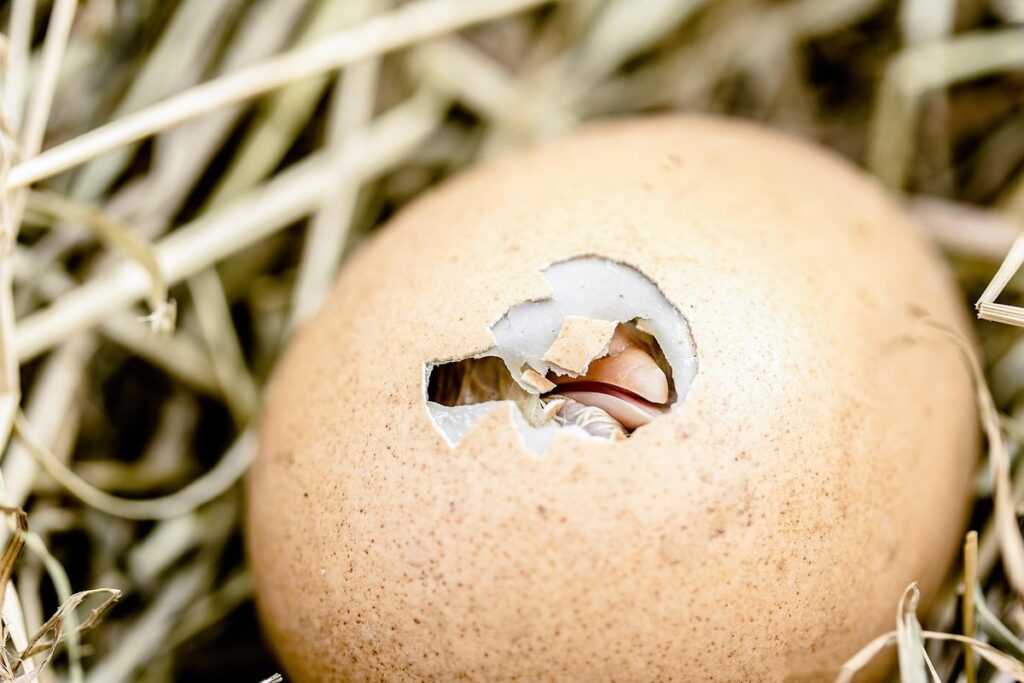
Pipping is the process by which the chick breaks out of its eggshell. It usually starts with a small hole appearing on one end of the shell, and as the chick pecks and flails its tiny beak, it gradually enlarges the opening. This can take anywhere from 30 minutes to an hour, depending on the individual chick. Be patient – it’s a tough job breaking free from that hard shell!
Meanwhile, the chick is also working on developing its beak. At first, it appears as a small bud or nubbin, but soon it starts to elongate and take shape. By the time pipping is complete, the beak should be fully formed, ready for the chick’s first meal.
It’s essential to provide a safe environment for your chicks during this critical period. Make sure the incubator is at a stable temperature (around 99-100°F) and humidity level (around 50-60%). Also, gently turn the eggs daily to prevent the embryo from sticking to the shell membrane. With proper care and attention, you’ll soon be welcoming a brand-new brood into your flock!
Environmental Factors Affecting Chick Hatch
Did you know that environmental factors can significantly impact chick hatch rates and overall chick health? Let’s explore how temperature, humidity, and other conditions affect the incubation process.
Humidity and Air Quality
When it comes to hatching eggs successfully, maintaining optimal humidity levels and air quality is crucial. High temperatures and humidity can lead to respiratory issues in chicks, while low humidity can cause dehydration.
The ideal range for incubation humidity is between 40-50%. If the level drops below 30%, eggs will dry out quickly, causing them to not hatch or hatch weakly. On the other hand, if it exceeds 60%, it creates an environment where bacteria and fungi can thrive, leading to increased mortality rates.
Proper air circulation within the incubator is also vital. A minimum of three to four inches between each egg allows for even temperature distribution and prevents moisture from becoming trapped. If you’re using a fan, set it to run at a low speed to avoid disrupting temperature stability.
Keep in mind that it’s not just about maintaining the right levels; monitoring and adjusting them frequently is equally important. Use hygrometers to track humidity levels and ensure they stay within the optimal range throughout the incubation period.
Ventilation in Incubators
When it comes to incubating chicken eggs, one of the most critical environmental factors is ventilation. Proper airflow within an incubator helps maintain a healthy environment for the developing chicks by removing moisture and heat. Without adequate ventilation, condensation can build up, leading to mold growth and potentially harming the embryos.
Inadequate ventilation can also lead to overheating, which is often caused by poor airflow or a malfunctioning thermostat. When this occurs, it’s not uncommon for incubators to overheat beyond 100°F (38°C), causing significant harm to the developing chicks.
To ensure proper ventilation in your incubator, make sure to follow these best practices:
• Use an incubator with built-in ventilation systems, such as a fan or heat exchanger.
• Regularly clean and maintain the incubator’s vents and fans to prevent blockages.
• Monitor temperature and humidity levels closely, making adjustments as needed.
• Provide adequate space between eggs for optimal airflow.
By prioritizing proper ventilation in your incubator, you’ll help create an environment that promotes healthy embryo development.
Common Issues During Chick Egg Hatch
If you’re trying to hatch chicken eggs but running into problems, don’t worry – we’ve got some common issues covered that might just save your brood. From infertile eggs to hatching failure, let’s troubleshoot together.
Causes of Delayed or Failed Hatching
One of the most disheartening experiences for backyard chicken keepers is witnessing delayed or failed hatching. It’s essential to understand that chick eggs can fail to hatch due to various reasons, and some of these causes are beyond our control. However, knowing what might have gone wrong can help us prevent similar situations in the future.
Genetic factors play a significant role in determining whether an egg will hatch successfully. Some breeds are naturally more prone to delayed or failed hatching than others. For instance, certain heritage breeds may have genetic traits that make them more susceptible to fertility issues.
Fungal and bacterial infections can also cause eggs to fail to hatch. These microorganisms can penetrate the shell and compromise the embryo’s development, leading to a failed hatch. Proper hygiene practices, such as disinfecting equipment and maintaining a clean coop, can significantly reduce the risk of infection.
Proper temperature control is another crucial factor in successful hatching. Temperature fluctuations can cause eggs to stop developing or even die inside the egg. Make sure your incubator is set at the correct temperature, typically between 99°F and 100°F (37°C to 38°C) for most breeds.
Troubleshooting Tips for Hatchery Professionals
As a hatchery professional, you’re likely no stranger to the occasional hatching issue. But knowing where to look and what to do can make all the difference between a successful hatch and a disappointing failure.
To start troubleshooting, it’s essential to identify the potential problem early on. Monitor your incubator closely for temperature fluctuations, as this is one of the most common issues affecting hatch rates. Aim for a consistent temperature range between 99°F and 100°F (37°C and 38°C) during the first 18 days.
Another crucial factor to consider is humidity levels. A well-ventilated incubator can help maintain optimal humidity levels, usually around 50% relative humidity. If you notice excessive moisture buildup or dryness, adjust your ventilation settings accordingly.
When it comes to egg handling, proper orientation and handling are key. Make sure eggs are placed with the large end up and not jostled excessively during transfer. Regularly inspect eggs for cracks, cleanliness, and any signs of internal damage.
By keeping a close eye on these factors and taking prompt action when issues arise, you can significantly improve your hatch rates and reduce stress in the process.
The Role of Genetics in Chicken Egg Hatch
Genetics play a crucial role in determining a chick’s sex, fertility, and overall health when it comes to hatching eggs successfully. Let’s dive into how genetics impact the hatch process.
Breed-Specific Characteristics
When it comes to egg hatchability, genetics play a significant role. Different chicken breeds have been developed over time to thrive in various environments and climates. For instance, some breeds are better suited for hot and humid climates, while others excel in cooler temperatures.
Breeds like Leghorns and Rhode Island Reds are popular choices for backyard flocks due to their high egg production rates and adaptability to different conditions. However, these birds may not perform as well in extreme heat or cold. On the other hand, breeds such as Silkie and Polish chickens have a unique feathering that protects them from harsh weather conditions.
When selecting a breed for your flock, it’s essential to consider the climate and environment you’re raising them in. For example, if you live in an area with scorching summers, look for breeds like Leghorns or Brahmas, which are known for their heat tolerance. Similarly, if you reside in a region with cold winters, choose breeds like Orpingtons or Wyandottes, which have thick coats to keep warm.
Ultimately, understanding the breed-specific characteristics of your chickens will help you provide them with the best possible care and increase egg hatchability rates. Research different breeds and their traits to make an informed decision that suits your needs.
Genetic Factors Influencing Hatching Success
When it comes to hatching chicken eggs, genetics play a significant role in determining fertility and hatch rates. One key factor is the sire’s (rooster’s) genetic contribution. Research has shown that certain breeds are more fertile than others, with some sires producing 80-90% fertile eggs, while others may only achieve 40-50%. This highlights the importance of selecting a high-quality rooster for breeding purposes.
The dam’s (hen’s) genetics also have an impact on hatching success. A hen’s age, breed, and nutritional status can all affect her fertility and ability to produce healthy eggs. For example, older hens tend to be less fertile than younger ones, while some breeds are naturally more prolific layers than others.
To maximize the chances of successful hatching, it’s essential to consider both sire and dam genetics when selecting breeding stock. Breeders should aim to combine high-quality roosters with proven fertility records with healthy, young hens that are well-nourished and free from stress.
By understanding these genetic factors, breeders can make informed decisions about their breeding programs and take steps to improve hatch rates and overall flock health.
Post-Hatch Care: Raising Healthy Chicks
Now that your baby chicks have hatched, it’s time to focus on their post-hatch care and ensure they grow into healthy, happy birds. This section will guide you through the essential steps for raising thriving young chickens.
Brooding and Nutrition
When it comes to raising healthy chicks, proper brooding and nutrition are crucial for their development. Brooding involves providing a safe and controlled environment that mimics the natural conditions of an incubator. This can be achieved by using a brooder with adequate ventilation, heat, and lighting. A good rule of thumb is to provide 1-2 watts of light per chick, depending on the age and breed.
For the first few weeks, chicks need a diet rich in protein (around 20-22%) to support their rapid growth. A starter feed specifically formulated for young chickens should be introduced as soon as possible, usually around day three or four after hatching. Make sure to provide fresh water at all times and ensure it’s easily accessible.
It’s also essential to monitor your chicks’ consumption of food and water regularly. Observe their behavior and adjust the feeding schedule accordingly. For instance, if you notice they’re pecking at the bedding excessively, it may be a sign that they need more calcium or grit in their diet. Be prepared to make adjustments as needed to ensure your chicks receive the optimal nutrition for healthy growth.
Vaccination and Health Management
As you welcome your newly hatched chicks into their new environment, it’s essential to establish a strong foundation for their health and well-being. Vaccination strategies play a crucial role in protecting your flock from common diseases.
Typically, hatcheries vaccinate chicks against Marek’s disease and Newcastle disease before shipping them out. However, additional vaccinations may be necessary depending on your location and the specific health risks present in your area. Consult with a local veterinarian to determine the best vaccination schedule for your flock.
In terms of general health management, it’s vital to maintain a clean environment, provide adequate nutrition, and ensure proper hydration. Ensure that your chicks have access to fresh water at all times, and consider using a chick starter feed specifically formulated for their nutritional needs.
Monitor your chicks closely for any signs of illness or stress, such as labored breathing, loss of appetite, or lethargy. Keep an eye on temperature fluctuations in the brooder, as this can impact your chicks’ overall health. With proper care and attention to detail, you’ll be well on your way to raising healthy, thriving chickens.
Frequently Asked Questions
Can I hatch chicken eggs without any experience?
Yes, with proper guidance and attention to detail, it’s possible to hatch chicken eggs successfully even if you’re new to poultry care. Start by researching reputable incubator brands and reading up on best practices for maintaining optimal temperature, humidity, and air quality.
What are the signs of a healthy chick after hatching?
Look out for vibrant plumage, active movement, and bright eyes. Healthy chicks will also have a strong beak and robust leg development. Be cautious of any unusual behavior or physical deformities that could indicate potential health issues.
How can I maintain proper ventilation in my incubator?
Regularly clean the incubator’s air filter and ensure good airflow by leaving space between eggs and the sides of the container. Also, avoid overcrowding the incubator to prevent moisture buildup and reduce the risk of respiratory problems.
What are some common mistakes beginners make when hatching chicken eggs?
New hatchery professionals often overlook the importance of precise temperature control or neglect to monitor humidity levels. These oversights can lead to delayed or failed hatchings. Regularly checking the incubator’s temperature and humidity gauges will help you avoid these common pitfalls.
How long does it take for chicks to fully develop after hatching?
In the first 24-48 hours, newly hatched chicks rely on their stored yolk sac for nutrition. After this initial period, they begin to explore their surroundings and start eating solid food around 1-2 weeks of age. Be prepared to provide supplemental nutrition during this critical growth phase.