
The magic of watching ducklings hatch is an unforgettable experience for any poultry enthusiast. As you eagerly await the arrival of your new feathered friends, understanding the crucial process of hatching is essential to ensure their survival and health. The duck hatching period is a complex journey that begins with fertilization and spans several weeks, ending with the momentous emergence of newly hatched ducklings into the world. But what happens during this time? In this article, we’ll take you through the key stages of duck development, from incubation to care, providing expert tips on how to create a nurturing environment for your young ducklings. Whether you’re an experienced breeder or just starting out, this guide will help you navigate the joys and challenges of raising healthy, happy ducks.
Understanding the Basics of Duck Incubation
Before you begin incubating your duck eggs, it’s essential to understand the basic principles and requirements for successful hatching. This foundation will help ensure a smooth and stress-free process.
Types of Duck Hatching Periods
When it comes to duck hatching periods, there are several types to consider. One of the most straightforward ways is through fertile eggs, where you purchase eggs from a reputable breeder and hatch them at home using an incubator. This method allows for precise temperature control and humidity levels, resulting in healthy and strong ducklings.
Another option is incubator-hatched ducks, which involve collecting eggs from your own flock and hatching them using an incubator. While this method requires some initial investment in the equipment, it can be a cost-effective way to hatch multiple broods over time.
Lastly, some breeders opt for broody hen-reared ducks, where they allow a mother duck to sit on her eggs until they hatch naturally. This method mimics natural breeding conditions and can produce robust and resilient ducklings. However, it does require more space and attention from the breeder, as the broody hen needs to be monitored closely during the incubation period.
It’s essential to research each method thoroughly and consider factors like your available resources, expertise, and desired outcomes before choosing a type of duck hatching period for your flock.
Importance of Proper Care During Incubation
Proper care during incubation is crucial for successful duck hatching. Temperature control is one of the most critical factors to consider. A consistent temperature between 99°F and 100°F (37°C to 38°C) is essential, with slight variations depending on the breed. If the temperature fluctuates, it can affect embryonic development, leading to weak or deformed ducklings.
Humidity management is also vital, as it prevents moisture buildup inside the incubator. Aim for a relative humidity of 50-60% during the first few days and adjust accordingly as the embryos develop. Turning frequency is another essential aspect; gentle turning (about every 12 hours) helps prevent the ducklings from developing unevenly.
To give your duck eggs the best chance at hatching, make sure to maintain optimal incubation conditions. Consider investing in a high-quality incubator with precise temperature control and humidity management features. Additionally, follow the manufacturer’s guidelines for recommended turning frequencies and temperature settings. With proper care during incubation, you’ll be rewarded with healthy, robust ducklings that will thrive once they hatch.
Stages of Duck Embryonic Development
Let’s dive into the fascinating world of duck embryonic development, where a tiny egg transforms into a fully formed duckling. We’ll explore each critical stage in this incredible process.
Fertilization to Morula Formation (0-3 days)
When a duck egg is fertile, the incredible journey of embryonic development begins. It’s an intricate process that starts with fertilization and continues through various stages until the duckling emerges from the shell.
The first step in this remarkable journey is fertilization. This occurs when a sperm penetrates the outer layer of the egg yolk, called the zona pellucida. The sperm then fuses with the yolk’s cell membrane, initiating the formation of the zygote. The zygote begins to divide, and within 24 hours, it reaches the morula stage.
During this initial period, the embryo undergoes a series of complex transformations. At around 12-18 hours post-fertilization, the sperm penetration is complete, and the zygote starts to form two distinct layers: the inner cell mass (ICM) and the trophoblast. These layers will eventually give rise to the duckling’s body and organs.
Within 48 hours, the morula stage is reached, characterized by a cluster of cells with distinct boundaries. This marks an essential milestone in the development process, signaling the transition from single-celled to multi-cellular structure.
Gastrulation and Organogenesis (4-7 days)
During gastrulation and organogenesis, which span from day 4 to 7 of incubation, the duck embryo undergoes a series of complex transformations that lay the foundation for its eventual growth into a fully formed duckling. At this stage, the blastula begins to invaginate, forming a layer called the epiblast, which will eventually give rise to the ectoderm, endoderm, and mesoderm – the three primary germ layers of the embryo.
The ectoderm will develop into the skin, nervous system, and eyes, while the endoderm will form the lining of internal organs such as the digestive tract and lungs. Meanwhile, the mesoderm will give rise to muscles, bones, and connective tissue. Somites, derived from the mesoderm, will eventually segment and differentiate to form the vertebrae, ribs, and other skeletal structures.
As organogenesis progresses, major organs begin to take shape. The heart starts to pump blood through a vascular system, while the lungs begin to expand and contract. The liver and pancreas also start to develop, playing crucial roles in digestion and glucose regulation. By day 7, the embryo has formed many of its essential organs, laying the groundwork for its eventual hatching into the world outside the egg.
Signs and Indicators of Successful Incubation
Now that you’ve learned the basics of duck incubation, it’s time to know what to look out for as your duck eggs develop – here are the signs of a successful hatching process.
External Signs
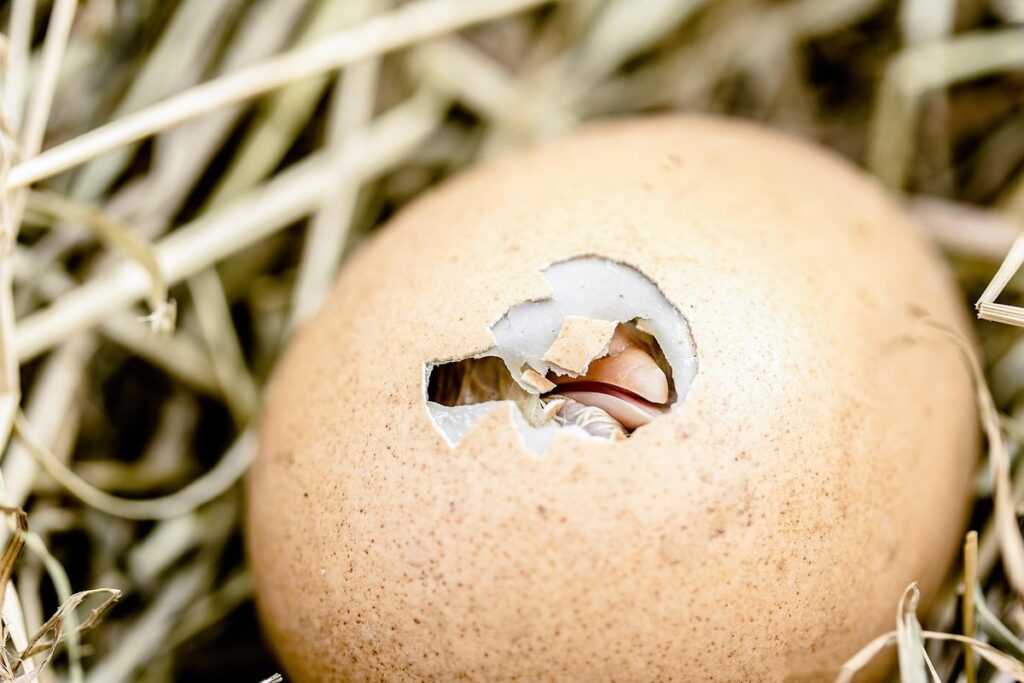
As you monitor the development of your duck eggs during incubation, it’s essential to recognize external signs that indicate successful hatching. One of the first indicators is pipping, which occurs when the duckling starts to break through the shell. You might notice a small hole or crack in the eggshell, usually around 24-48 hours before hatching.
As pipping progresses, you may see more significant cracks and eventually, the beak will start to emerge. This can happen on either side of the egg, but it’s essential to gently turn the eggs several times a day to ensure even development.
Around this time, you might also observe some feather development on the duckling’s body. Soft, fluffy feathers may become visible as the embryo grows and matures. Keep in mind that not all duck breeds exhibit significant feather growth before hatching, but it’s a good sign when you do see some.
These external signs are crucial indicators of successful incubation and can give you a sense of excitement for what’s to come – the moment your new ducklings hatch!
Internal Signs
As you closely monitor your duck’s incubation process, it’s essential to recognize internal signs that indicate successful hatching. One of the primary indicators is an increase in heart rate acceleration. Around 24-26 days into incubation, duck embryos typically start exhibiting a faster heartbeat, which can be observed through candling. This accelerated heart rate signals that the embryo is getting ready for hatching.
Another crucial sign is blood vessel formation. As the embryo develops, you’ll notice a network of tiny vessels forming within the egg white and on the membrane surrounding the embryo. This process usually begins around 22-24 days into incubation and continues until hatching.
The respiratory system also undergoes significant changes during this period. The air sacs in the duck’s lungs start to mature, preparing the bird for its first breath outside the egg. By day 26-28 of incubation, you should notice a distinct increase in air sac development, which is essential for successful hatching.
Keep an eye on these internal signs, and you’ll be well-prepared for the big moment – when your ducklings finally emerge from their eggs!
Common Issues During the Hatching Period
During the duck hatching period, unexpected issues can arise, and knowing how to identify and address them is crucial for a successful hatch. Let’s take a closer look at some of these common problems.
Abnormal Egg Turning or Positioning
As a duck breeder or enthusiast, you’re likely aware that proper egg turning and positioning are crucial for successful hatching. However, abnormal egg turning or positioning can lead to complications during the incubation period. One common issue is when eggs don’t turn naturally due to their shape or size. This can cause the embryo to develop unevenly, leading to reduced viability.
Another concern is eggs that become stuck in a position, such as against the side of the incubator or under other eggs. This can restrict blood flow and oxygenation, ultimately affecting hatch rates. To mitigate this risk, ensure your egg turner is calibrated correctly, and consider using a specialized duck egg turner designed for larger eggs.
Regularly inspecting your eggs for correct positioning and turning is essential. If you notice any abnormalities, gently adjust the position of the egg to ensure proper circulation. Remember that even small issues can have significant consequences on hatch rates. By being vigilant and taking proactive measures, you can help minimize the risk of abnormal egg turning or positioning affecting your duck hatching success.
Temperature Fluctuations
Temperature fluctuations during incubation can have devastating effects on duck development. Even small variations in temperature can significantly impact the hatching process. For example, a 1-2°C deviation from the ideal temperature of around 99°F (37.5°C) can lead to delayed or failed hatchings.
This is because duck embryos are highly sensitive to temperature changes, and their growth is closely tied to it. During incubation, the embryo undergoes critical developmental stages, including organ formation and feather development. If the temperature is too high or too low, it can disrupt this process, resulting in weakened or deformed ducklings.
To avoid these risks, it’s essential to maintain a stable temperature within 0.5°C of the recommended range throughout the incubation period. This can be achieved by using a reliable incubator and monitoring the temperature regularly. It’s also crucial to handle temperature fluctuations carefully if they do occur – sudden drops or spikes in temperature should be corrected as quickly as possible to minimize their impact on duck development.
Duck Hatching Timeline: A Detailed Breakdown
Now that you know the basics of duck incubation, let’s dive into the exciting period of hatching and explore what to expect every day from egg to duckling.
Week 1-3: Embryonic Development and Growth
During weeks 1-3 of incubation, the duck embryo undergoes rapid growth and development. At this stage, the formation of major organs begins to take shape. By day 7, the heart starts pumping blood, while the lungs begin to develop and prepare for future function.
As the embryo grows, its limbs start to form, and by day 10, the wings are taking shape. The beak also starts to refine its shape, a crucial milestone in preparing the duckling for post-hatch life. Feather development begins around week 2, with quill knobs forming on the skin where feathers will eventually attach.
During this critical period, it’s essential to maintain proper incubation conditions, ensuring a consistent temperature of around 99-100°F (37-38°C) and maintaining humidity levels between 50-60%. By week 3, the embryo has grown significantly, and its organs are nearly fully formed. This is also an ideal time for candling, allowing you to monitor progress and detect any potential issues that may arise during the hatching process.
Week 4-5: Pipping and Beak Emergence
As we approach weeks 4-5 of incubation, the ducklings are preparing to make their grand entrance into the world. The pipping process is a critical and exciting phase where the duckling breaks through the eggshell and emerges with its beak and head first.
During this time, you may notice the egg starting to pip – a small crack or hole appears on the surface of the egg. This is usually a sign that the duckling is preparing to hatch. You’ll know it’s happening when you see the egg begin to rock gently back and forth, as the duckling inside is shifting its position.
As the pipping continues, the crack will widen until eventually, the beak emerges, followed closely by the head. It’s a delicate process, and it’s essential to provide a safe and stable environment for the duckling to complete the hatching process. Keep the incubator at a consistent temperature between 99-100°F (37-38°C), and make sure the humidity levels are optimal.
The beak is usually visible first, followed by the head, and then the body will slowly emerge. Be patient and allow the duckling to take its time – it’s essential for the successful hatching of your ducklings. With proper care and attention, you’ll soon have a batch of adorable, fluffy ducklings waddling around their new home!
Supporting Ducklings After Hatching
Once you’ve waited patiently for the eggs to hatch, it’s essential to know how to care for these vulnerable ducklings and ensure their survival. Proper nutrition and hygiene are crucial during this critical stage of development.
Initial Care and Nutrition
When you first bring home your newly hatched ducklings, it’s essential to prioritize their initial care and nutrition. These tiny balls of fluff rely on you for everything, and getting their dietary needs right from the start is crucial.
For the first few days, feed them a high-quality starter crumble or mash specifically formulated for ducklings. This should be their primary source of nutrition until they’re about 4-6 weeks old. Aim to provide 20-25% protein content in their food to support rapid growth and development.
Hydration is also vital – make sure the water is fresh, clean, and at room temperature. You can place a shallow dish in the brooder for them to access easily. Monitor their water intake closely, as ducklings can quickly become dehydrated if they don’t drink enough.
In addition to food and water, ensure your ducklings have access to grit and oyster shells to support healthy digestion. Place these alongside their food, but avoid giving too much, as this can lead to digestive issues. Keep an eye on your ducklings’ stool quality and adjust their diet accordingly.
Environment and Socialization
Providing a suitable environment for ducklings after hatching is crucial for their growth and development. A clean, dry, and draft-free area with adequate ventilation is essential to prevent diseases and respiratory problems. The ideal temperature range should be around 90-95°F (32-35°C) during the first few days of life, which can be achieved by using a heat source like a brooder lamp or heat mat. Ensure that there are no gaps in the enclosure to prevent escape or injury.
Socialization is equally important for ducklings as they will grow and interact with their human caregivers and other ducks in the future. Handle them gently and frequently from an early age to make them comfortable around humans. Provide a separate, quiet area for feeding and hydration to avoid stressing them during meals. Monitor their behavior and adjust your care routine accordingly. With proper environment and socialization, ducklings will thrive and be well-prepared for integration into their forever home or with other ducks in the flock.
Frequently Asked Questions
How do I ensure consistent temperature and humidity levels during incubation?
To maintain a stable environment, invest in a good quality incubator with precise temperature control (around 99-100°F for duck eggs) and humidity settings (50-60%). Regularly check the temperature and humidity gauges to make any necessary adjustments. A consistent environment is crucial for successful hatching.
What are some common mistakes I should avoid during the hatching period?
Be cautious of over-handling eggs, which can cause damage or stop development. Also, ensure you’re not exposing the incubator to direct sunlight or extreme temperatures. Regularly cleaning and maintaining your equipment will also help prevent contamination and ensure a healthy hatch.
Can I use a broody hen instead of an incubator for hatching duck eggs?
While some breeders successfully use broody hens, it’s essential to understand their specific needs and limitations. A broody hen may not provide the precise temperature control or humidity levels required for optimal hatching. Research and choose a reputable breeder who can provide guidance on using a broody hen.
How do I identify signs of successful incubation before actual hatching?
Look for consistent egg weight gain, clear embryo development, and regular turning within the eggs. You may also notice slight vibrations or movement in the eggs around 24-28 days of incubation. Monitor these indicators closely to gauge the progress and be prepared for hatching.
What are some initial steps I should take after ducklings hatch?
Provide a warm, draft-free environment with adequate lighting. Keep the first meal (starter feed) within reach, and ensure access to fresh water. Be cautious not to overcrowd the area, allowing your new ducklings room to grow and develop properly.