
Are you new to the world of backyard chickens or looking to learn more about these lovable birds? If so, chances are you’ve come across the Polish chicken breed and wondered how to identify one. With their stunning crests and vibrant feathers, it’s no wonder many chicken enthusiasts fall in love with this charming breed.
In this article, we’ll dive into the world of Polish chicken identification, covering everything from crest and comb structure to feathering patterns and color variations. We’ll also explore the breed standards that make a true Polish chicken stand out from the rest. By the end of this guide, you’ll be able to confidently identify your own Polish chickens and even help others with their flock. So, let’s get started on our journey to becoming expert Polish chicken breeders!
Introduction to Polish Chickens
Welcome to our guide on Polish chicken breed identification! In this opening section, we’ll introduce you to the delightful characteristics and features of the Polish chicken breed.
Brief History of the Breed
The Polish chicken breed has a rich and fascinating history that spans centuries. Originating from Poland, these chickens were highly valued for their unique appearance and impressive egg-laying abilities. The exact date of their creation is unknown, but it’s believed to have started in the 16th century.
Developed from various local breeds, including the Frizzle and Campine, Polish chickens were bred to possess distinct characteristics that set them apart. Their crested heads, white feathers, and sturdy build made them a favorite among chicken enthusiasts. As trade and cultural exchange between Poland and other European countries increased, the breed spread rapidly throughout the continent.
By the 18th century, Polish chickens had become a staple in many European backyards and farms, prized for their high egg production and hardiness. Their popularity continued to grow, and today they remain one of the most recognizable and beloved chicken breeds worldwide. If you’re considering adding Polish chickens to your flock, understanding their history will help you appreciate their unique qualities and care requirements.
In fact, some breeders even claim that the original purpose of breeding these chickens was not just for egg production but also for entertainment purposes – due to their distinctive crests and playful personalities!
Characteristics of Polish Chickens
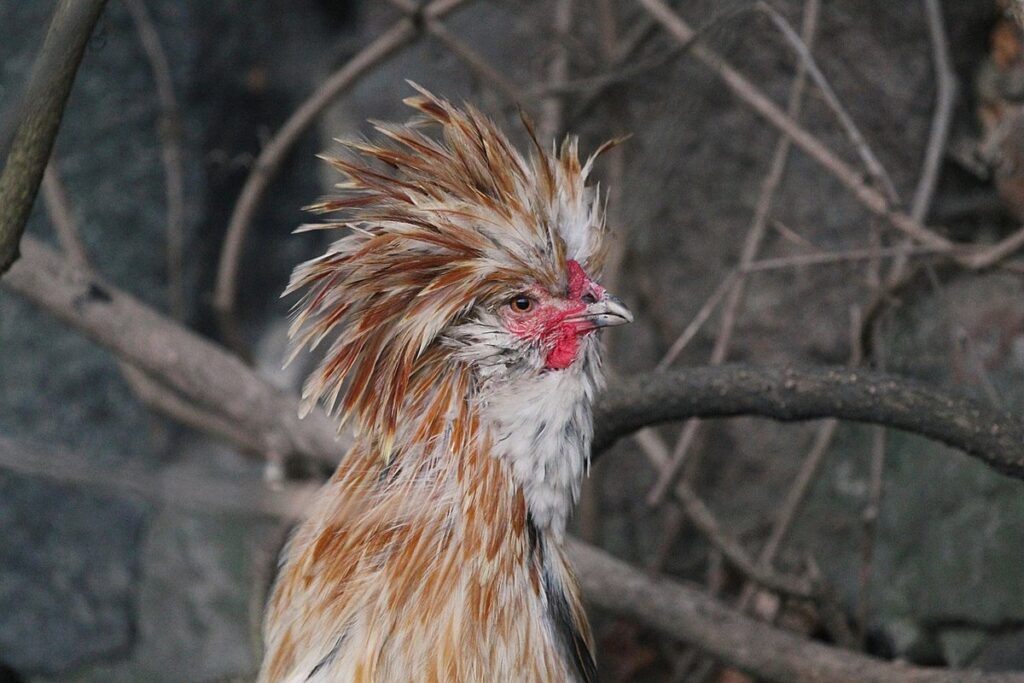
Polish chickens are easily identifiable due to their distinctive physical characteristics. One of the most notable features is their unique crest, which can be quite large and fan-shaped. The crest is made up of feathers that grow from the top of the chicken’s head, creating a rounded or even triangular shape. This impressive tuft of feathers adds to the bird’s overall charm.
Their feathering patterns also set Polish chickens apart from other breeds. They come in a variety of colors and can display one of several different feather types. Bearded and clean-faced varieties are among the most common, but you may also encounter birds with their faces partially covered by feathers or none at all.
When identifying a Polish chicken, look for these distinctive features: a well-defined crest, an abundance of soft, fluffy feathers, and a variety of possible beak styles and feather patterns. By recognizing these physical characteristics, you’ll have no trouble spotting the Polish breed in any backyard flock.
Physical Identification Features of Polish Chickens
One of the most exciting aspects of identifying a Polish chicken is its unique physical characteristics, which can be easily noticed at first glance. Let’s take a closer look at these distinctive features.
Crest and Comb Structure
The distinctive crest and comb structure of Polish chickens are among their most recognizable physical characteristics. One of the defining features of this breed is its Mignon crest, which resembles a pom-pom on top of the chicken’s head. The crest is made up of feathers that grow from a central point, giving it a full and rounded appearance.
The shape and color of the comb also play a significant role in identifying Polish chickens. Their single-comb structure is usually a vibrant red or pink hue, with some variations having a rose-like or strawberry-colored tone. The size of the comb can vary as well – in some cases, it may be quite small, while others have larger combs that are almost as big as the chicken’s head.
When identifying Polish chickens, pay close attention to the color and shape of their crest and comb. This is a key distinguishing feature between this breed and others, such as the Silkie or Cochin.
Feathering Patterns
When it comes to identifying Polish chickens, their distinctive feathering patterns are one of the most telling characteristics. These small, fluffy birds come in a variety of colors and patterns, including solid, mottled, and particolored.
One of the most common feathering patterns on Polish chickens is the “muff” or “beard,” which refers to the long feathers that grow from the chicken’s face, often reaching down to its legs. Some breeds have a shorter muff, while others have longer, more profuse feathers that add to their overall charm.
Polish chickens can also be found in a range of colors, including white, black, blue, and red. The most common color patterns include solid, where the entire body is one color; mottled, which features patches or spots on a lighter background; and particolored, where two or more colors are combined.
When examining the feathering pattern of a Polish chicken, pay attention to its texture as well. Some breeds have smooth, glossy feathers, while others may have softer, more velvety plumage.
Beak and Leg Characteristics
One of the most distinctive features of Polish chickens is their unique beak and leg characteristics. The beak shape and size are typically small and rounded, making it easy to confuse with a miniature or dwarf chicken breed. However, a closer look will reveal that the beak is still proportionate to the rest of the bird’s head.
In terms of leg length, Polish chickens have relatively short legs compared to their body size. This is one of the key physical identification features that distinguish them from other breeds. The legs are also feathered up to the hock, which can make it difficult to determine the exact length when looking at a bird in profile.
When examining a Polish chicken’s beak and leg characteristics, look for the following: a small, rounded beak that is proportionate to the head; short legs with feathers extending up to the hock. By paying attention to these details, you can confidently identify a Polish chicken among other breeds.
Color Variations in Polish Chickens
When it comes to identifying Polish chickens, one of the most distinctive features is their vibrant plumage, which comes in a variety of colors and patterns. Let’s explore some of the different color variations you might encounter.
Black Polish Chickens
When it comes to Polish chicken breeds, their striking coloration is one of their most distinctive features. Some Polish chickens boast a beautiful black plumage that sets them apart from other breeds. These birds are often referred to as Black Polish Chickens.
What makes the black coloration on Black Polish Chickens so unique? For starters, it’s not just a matter of darkening the existing colors found in other Polish breeds. The black pigment is actually a result of a different genetic makeup that produces a distinctively darker tone. This characteristic is often accompanied by a slight sheen or gloss to the feathers, giving them an extra touch of depth and dimension.
If you’re looking to add some Black Polish Chickens to your flock, be sure to look for this specific trait in breeding stock. Keep in mind that while they may share many similarities with other Polish breeds, their black coloration is a key identifying feature. With proper care and attention, these birds can thrive and make a stunning addition to any backyard flock.
Black Polish Chickens are known for their energetic and curious nature, making them a delight to watch and interact with.
White Polish Chickens
When it comes to Polish chicken breeds, one of the most striking and iconic color variations is the pure white. White Polish chickens are instantly recognizable due to their snow-white feathers, which can range from a soft creamy hue to a brilliant shining white.
One notable feature associated with white Polish chickens is their ability to produce eggs that are remarkably clean and free of visible dirt or debris. This is likely due to the breed’s tendency to be meticulous about their personal hygiene, often spending considerable time preening and cleaning themselves.
In terms of temperament, white Polish chickens tend to be just as friendly and outgoing as other Polish breeds, often seeking out human interaction and affection. However, they can also be quite skittish at times, requiring patient handling and gentle training.
If you’re considering adding a white Polish chicken to your flock, keep in mind that their white feathers may not always look their best in direct sunlight, which can cause them to appear yellowed or discolored. Regular grooming and cleaning of their coop will help maintain their coat’s appearance and overall health.
Other Color Variations
In addition to the familiar white and black Polish chicken varieties, there are several other recognized color variations worth noting. The blue Polish chicken is one such variation, distinguished by its slate-gray feathers with a subtle sheen. These birds have a more delicate appearance compared to their solid-black counterparts.
Another interesting color variation is the red Polish chicken. Characterized by its bright reddish-brown plumage, this bird boasts a striking appearance that’s sure to turn heads in any backyard flock. Breeders often appreciate the challenge of developing and maintaining this coloration, as it can be prone to fading over time.
Wheaten Polish chickens are yet another unique variation, featuring feathers with a warm, golden hue reminiscent of wheat fields on a sunny day. Like their blue counterparts, wheaten Polish birds often possess a subtle sheen that catches the light beautifully.
Whether you’re an experienced breeder or just starting out, exploring different color variations can add an exciting dimension to your flock and help you connect with like-minded enthusiasts in the poultry community.
Breed Standards for Polish Chickens
When it comes to breeding Polish chickens, understanding and adhering to breed standards is crucial to ensure you’re raising true-to-type birds. We’ll explore what these standards entail.
American Poultry Association (APA) Standards
The American Poultry Association (APA) is one of the most prominent organizations for poultry enthusiasts and breeders. Their official breed standard for Polish chickens sets a benchmark for the ideal characteristics that define this lovable breed.
According to the APA, Polish chickens should have a plump body type with a small size, typically weighing between 2-3 pounds (0.9-1.4 kg) for males and 2-2.5 pounds (0.9-1.1 kg) for females. Their comb is known as a ‘crest’ or ‘topknot,’ which should be well-developed, rounded, and covered with soft feathers.
Polish chickens are expected to display a calm and docile temperament. They should not be aggressive towards humans but may show some fearfulness around loud noises or sudden movements. Breeders following the APA standards prioritize breeding Polish chickens that meet these specific physical and behavioral criteria to ensure their birds’ suitability as pets and exhibition animals.
When identifying a potential Polish chicken, examine its overall appearance, comb type, and behavior in relation to humans. A reputable breeder will provide you with documentation verifying the bird’s adherence to the APA breed standard.
Other National Breed Standards
When it comes to Polish chicken breed identification, breed standards can vary across different national associations. In Europe, for instance, the British Poultry Standards published by the Poultry Club of Great Britain includes a few notable differences from the APA’s standard. One such difference is in the bird’s size: according to the British standard, Polish chickens should have a large type weighing between 1.6 and 2 kg (3.5-4.4 lbs), whereas the APA standard allows for smaller birds.
In Asia, countries like Japan and China also have their own breed standards for Polish chickens. The Japanese breed standard emphasizes the importance of feather quality, with particular attention to the bird’s saddle feathers, which should be long and flowing according to the standard. In contrast, the Chinese breed standard places more emphasis on egg-laying ability, with a focus on achieving high fertility rates.
These variations in breed standards highlight the importance of understanding regional differences when it comes to Polish chicken breed identification. As a breeder or enthusiast, being aware of these differences can help you make informed decisions about selecting birds that meet local standards and preferences.
Tips for Identifying Polish Chickens at Shows and Fairs
When judging Polish chickens at shows and fairs, knowing how to identify them correctly is crucial. In this section, we’ll share essential tips for spotting these charming birds in action.
Evaluating Crest and Comb Structure
When evaluating the crest and comb structure of a Polish chicken during shows and fairs, it’s essential to examine these distinctive features closely. The crest is the feathered topknot on the head, while the comb is the fleshy growth on top of the beak. A true Polish chicken should have a well-developed crest that is rounded at the tips and sits atop a low, flat skull.
To assess the crest’s structure, look for symmetry, fullness, and proper placement. The crest should sit evenly balanced on either side of the head, with no visible gaps or irregularities. You can gently lift the feathers to inspect the underlying skin; it should be smooth and plump. A good rule of thumb is that a Polish chicken’s crest should cover about one-third to one-half of its skull.
A well-developed comb should be pinkish-red in color, firm to the touch, and have a slightly curved shape. Avoid chickens with combs that are too large or too small for their head size. Pay attention to any signs of dryness, flakiness, or lesions on the comb surface – these can indicate health issues. By carefully evaluating both crest and comb structure, you’ll be able to identify genuine Polish chickens at shows and fairs.
Assessing Feathering Patterns and Colors
When assessing feathering patterns and colors in Polish chickens at shows and fairs, it’s essential to examine the bird’s overall plumage quality. Start by observing the chicken’s body type and size, as these factors can impact how its feathers appear.
Begin with the hackle feathers, which should be long, flowing, and well-defined. Look for evenness in length and density, with no bald spots or thinning areas. Next, inspect the saddle feathers, which should be broad and rounded at the base. They should be held close to the body and not fluffed out.
Consider the color pattern as a whole, taking into account any breed standards that may apply. In Polish chickens, you’ll often see black, white, or red with gold highlights. Note any irregularities in color distribution or patches of unwanted colors. Overall, the plumage should appear healthy, well-maintained, and free from matting or tangling.
When evaluating feather quality, gently run your hand over the chicken’s feathers to assess softness and texture. Avoid birds with overly brittle or coarse feathers, as these can indicate health issues or poor care.
Conclusion: Mastering Polish Chicken Breed Identification
Now that you’ve completed this comprehensive guide on Polish chicken breed identification, you’re well-equipped to confidently differentiate between various breeds. By understanding their unique characteristics, you can make informed decisions when selecting a new feathered friend or identifying an existing one. Remember, practice makes perfect – the more you observe and study these birds, the easier it will become to identify specific breeds. Consider keeping a breed identification journal to record your observations and note any distinctive features that catch your attention. This hands-on approach will help solidify your knowledge and ensure you can accurately identify Polish chicken breeds with ease. With time and experience, you’ll become an expert in this area!
Frequently Asked Questions
Can I raise Polish chickens as a beginner, or do they require special care?
Polish chickens are known for their friendly and docile nature, making them an excellent choice for beginners. However, they do have specific needs regarding temperature, ventilation, and protection from drafts due to their crest and comb structure. Ensure you provide a suitable environment with adequate space and attention to these requirements.
What’s the average lifespan of Polish chickens?
The average lifespan of a Polish chicken is around 5-7 years, although some individuals may live longer or shorter lives depending on various factors such as diet, health conditions, and genetics. Regular veterinary check-ups can help identify potential health issues early on.
How do I distinguish between different color variations of Polish chickens at shows or fairs?
When evaluating different color variations, pay close attention to the breed standards for the specific color you’re assessing. For example, White Polish Chickens should have a pure white plumage with no markings. Consult the American Poultry Association (APA) Standards or other national breed standards for detailed descriptions and requirements.
Can I keep Polish chickens in cold climates?
Polish chickens are sensitive to extreme temperatures due to their crest and comb structure. While they can tolerate moderate climates, it’s not recommended to raise them in very cold or very hot environments. Consider providing additional protection such as heat lamps or ventilation systems if you live in an area with harsh winters.
How often should I trim the beards of my Polish chickens?
Polish chickens’ beards and mustaches require regular maintenance to prevent matting and tangling. Trim them every 2-3 weeks, depending on growth rate, to keep your birds looking their best and prevent potential health issues related to overgrowth.