
If you’ve ever been lucky enough to spot a praying mantis, chances are you might have noticed a peculiar, lumpy brown or green object attached to a branch or leaf. This is often the egg case of a praying mantis, and it’s an incredible sight in its own right. These delicate structures hold the key to the survival and success of the next generation of these fascinating insects. But how do they form? What can we expect from their life cycle, from oviposition to hatching? In this article, we’ll delve into the characteristics and habits of praying mantis egg cases, exploring what makes them so crucial for conservation efforts and why it’s essential to preserve these ecosystems.
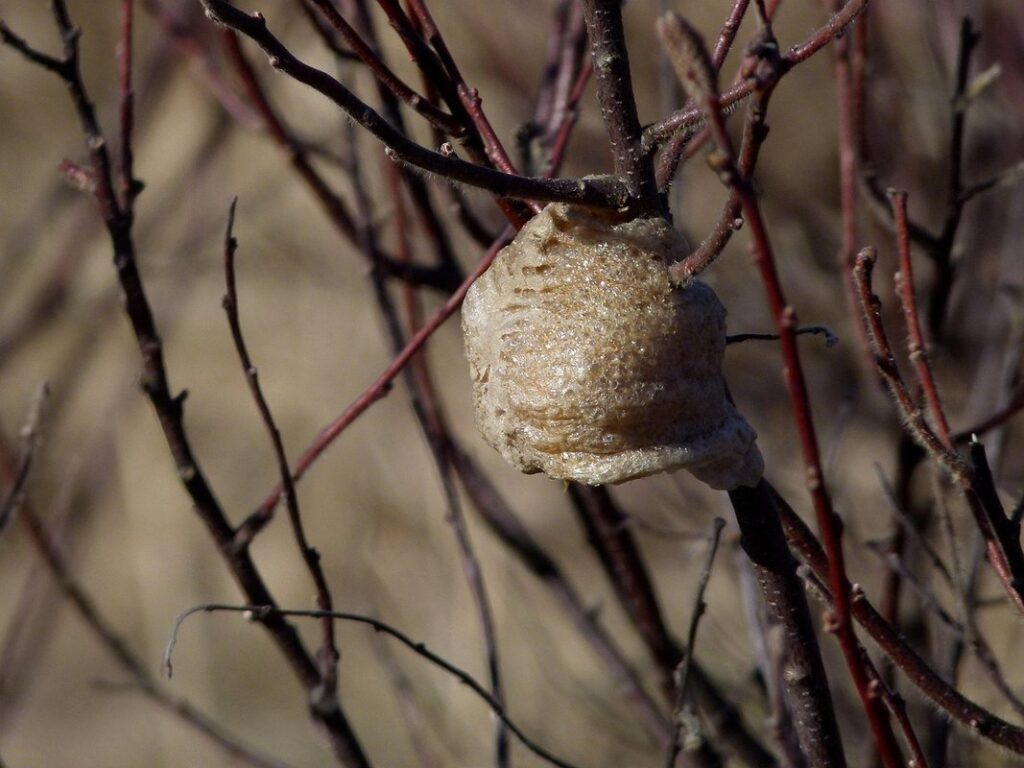
What is a Praying Mantis Egg Case?
You might have wondered what lies within that fascinating, often mysterious egg case your praying mantis laid. This section will delve into the details of this unique reproductive strategy.
Characteristics of Praying Mantis Egg Cases
Praying mantis egg cases are fascinating structures that provide protection and sustenance to the developing eggs. One of the most distinctive characteristics of these egg cases is their shape, which can vary depending on the species but often resembles a frothy, oval or cylindrical mass. In terms of size, praying mantis egg cases can range from about 1-5 inches (2.5-13 cm) in length and are typically around 0.5-1 inch (1.3-2.5 cm) wide.
The coloration of the egg case can also be quite striking, often blending in with its surroundings to provide camouflage for the eggs within. Some common colors include green, brown, gray, or even a mottled mix of these hues. When inspecting an egg case, you may notice that it has tiny little “windows” or small openings along its surface, which allow air and moisture to reach the developing eggs inside.
It’s worth noting that praying mantis egg cases are incredibly resilient and can withstand varying environmental conditions, including temperature fluctuations and humidity changes. This is likely due in part to their unique structure, which allows them to absorb moisture from the surrounding environment while also providing protection against desiccation.
Importance of Recognizing Egg Cases
Recognizing egg cases of praying mantis is essential for several reasons. As a gardener, it’s crucial to identify these cases to avoid mistakenly killing the eggs, thinking they’re pests that need to be eliminated. This can be devastating for future generations of beneficial insects.
Naturalists and entomologists also benefit from identifying praying mantis egg cases. These experts often rely on accurate identification to track population trends, monitor species distribution, and conduct research. Inaccurate identification can lead to skewed data, which can have far-reaching consequences in the field of entomology.
To identify a praying mantis egg case, look for its characteristic ootheca shape – usually brown or beige, with rows of eggs enclosed by a waxy membrane. If you’re unsure, it’s best to consult a field guide or seek expert advice before intervening. By recognizing and respecting these egg cases, gardeners and naturalists can coexist with praying mantis without harming their populations.
Life Cycle of Praying Mantis and Egg Case Development
As we explore the fascinating world of praying mantis egg cases, let’s delve into the intriguing life cycle of these incredible insects and how their egg cases develop over time. From oviposition to hatching, it’s a remarkable process.
Oviposition and Egg Case Formation
Oviposition is a fascinating process in praying mantises, where the female lays her eggs inside a protective case. This intricate process begins when a mature female praying mantis searches for a suitable location to lay her eggs. She will often choose a sheltered spot with good ventilation, such as a leaf or branch, to ensure the safety of her precious eggs.
As she prepares to oviposit, the female mantis will begin to construct the egg case, using her modified ovipositor to spin a silky thread. This thread is rich in protein and helps to secure the eggs inside the case. The female then lays her eggs inside the case, typically numbering between 20-400 depending on the species.
Once the eggs are safely enclosed within the protective case, the female mantis will seal it using her abdomen. The egg case is now ready for incubation, where it will develop into a cluster of praying mantis nymphs after several weeks or months, depending on the temperature and humidity levels.
Factors Influencing Egg Case Size and Shape
The size and shape of a praying mantis egg case are influenced by several factors, which can impact the number of eggs it contains and the overall development of the young. One of the primary factors is the species of praying mantis itself. Different species have distinct egg cases, ranging from 5 to over 400 eggs in a single case. For example, the Chinese Mantis typically lays around 20-50 eggs per case, while the Carolina Mantis can produce up to 200.
Environmental conditions such as temperature and humidity also play a significant role in determining egg case size and shape. A warm and humid environment often leads to larger egg cases with more eggs, whereas cooler temperatures may result in smaller cases with fewer eggs. Nutrition is another crucial factor, with well-fed females generally producing larger egg cases than those that are malnourished.
In addition, nutrition also affects the overall health of the female praying mantis, which can impact the number and viability of eggs produced. A diet rich in nutrients will typically result in a healthier female, leading to more robust egg cases with a higher number of viable eggs. This highlights the importance of providing your praying mantis with a balanced diet for optimal reproduction.
Types of Praying Mantis Egg Cases
You might be surprised by the diversity of praying mantis egg cases, which can vary significantly in shape, size, and even color depending on the species. Let’s explore some of these unique variations together!
Dorsal and Ventral Views
When examining praying mantis egg cases, you’ll often come across two distinct views: dorsal and ventral. The dorsal view, also known as the top-down perspective, showcases the arrangement of eggs from above. In this view, you’ll typically see a hexagonal or polygonal pattern, depending on the species, with individual eggs stacked on top of each other.
On the other hand, the ventral view, or bottom-up perspective, displays the underside of the egg case. This view reveals how the eggs are secured to the substrate through a series of small hooks or pegs. The ventral surface may also feature distinctive markings or patterns that help identify specific species.
Practically speaking, understanding these views can be beneficial for mantis enthusiasts and researchers alike. By examining both dorsal and ventral perspectives, you can gain valuable insights into the reproductive biology and species identification of praying mantises.
Species-Specific Egg Case Characteristics
When it comes to identifying praying mantis egg cases, understanding species-specific characteristics can be a game-changer. Not all egg cases are created equal, and knowing what to look for can make the process of identification much easier.
For instance, the Chinese Mantis (Tenodera aridifolia) is known for producing some of the largest egg cases in the world, with up to 400 eggs per case. These cases are often a pale green or tan color and may have a slight sheen to them. On the other hand, the Carolina Mantis (Stagmomantia carolina) produces much smaller egg cases with only around 20-50 eggs each. These cases tend to be more compact and often have a darker coloration.
The Ghost Mantis (Diapheromera femorata), found in North America, has a unique egg case characteristic – it’s usually transparent or semi-transparent, allowing the eggs to be visible from the outside. This can make identification easier for enthusiasts. Meanwhile, the Indian Mantis (Hymenopus coronatus) produces egg cases with a distinctive ‘basket weave’ pattern on the surface.
When searching for praying mantis egg cases in the wild, knowing these species-specific characteristics can help you quickly identify what you’re looking at and give you an idea of which type of mantis to expect.
Habitat and Nesting Preferences
When it comes to choosing a perfect spot for their egg case, praying mantis mothers have some very specific habitat and nesting preferences that can vary depending on their species. Let’s explore what they are!
Environmental Factors Influencing Egg Case Placement
When it comes to choosing the perfect spot for their egg case, praying mantises are surprisingly particular about their surroundings. Environmental factors play a significant role in determining where these fascinating insects lay their eggs. One crucial factor is vegetation density – praying mantises tend to prefer areas with dense foliage, as this provides protection from predators and harsh weather conditions.
In fact, studies have shown that egg cases laid in densely vegetated areas exhibit higher survival rates than those placed in more open or exposed locations. Temperature also comes into play, with most praying mantis species thriving in temperatures between 65°F to 85°F (18°C to 30°C). This means that your garden’s temperature range will impact where and when the egg case is laid.
Moisture levels are another critical consideration – egg cases require a certain level of humidity to incubate properly. Praying mantises often seek out areas with adequate moisture, such as near ponds or in gardens with consistent watering schedules. By understanding these environmental factors, you can create an inviting habitat for your praying mantis friends and encourage them to lay their eggs in optimal conditions.
Competition for Suitable Nest Sites
When it comes to finding suitable nesting sites, different species of insects often compete for the same resources. This competition can have significant impacts on praying mantis populations, as they rely heavily on specific locations to lay their eggs.
In many cases, female praying mantises are forced to select nesting sites that may not be ideal, leading to reduced egg viability and increased mortality rates among hatchlings. For instance, a study in the southeastern United States found that female praying mantises often compete with other insects like cicadas and katydids for suitable tree branches or leaves.
This competition can be further exacerbated by habitat destruction, climate change, and other environmental factors that reduce the availability of suitable nesting sites. As a result, it’s essential to create a diverse range of habitats in gardens and outdoor spaces to provide praying mantises with alternative nesting options.
By providing a variety of plants with different characteristics, such as leaf shape, size, and texture, you can help reduce competition for suitable nesting sites and give praying mantis populations a better chance at survival.
Egg Hatching and Emergence
As you eagerly wait for your praying mantis eggs to hatch, it’s essential to understand what to expect during the egg hatching and emergence process. This stage is crucial for the survival of your new pets.
Incubation Period and Conditions
The incubation period for praying mantis eggs is crucial for successful hatching. Generally, it takes around 30-40 days for the eggs to hatch after they’ve been laid by the female mantis. However, this timeframe can vary depending on factors such as temperature, humidity, and species.
To create optimal conditions for hatching, keep the egg case in a warm location with temperatures ranging from 75°F to 85°F (24°C to 30°C). A humid environment is also essential, with a relative humidity of around 60-80%. Avoid placing the egg case near direct sunlight or drafty areas, as this can cause temperature fluctuations.
Maintaining consistent conditions throughout the incubation period is vital. Make sure to check the egg case daily for any signs of mold or fungal growth, which can be detrimental to the developing eggs. By providing a stable and suitable environment, you’ll increase the chances of successful hatching and healthy praying mantis nymphs emerging from their eggs. Keep in mind that some species may require specific temperature or humidity levels, so research the needs of your particular species for optimal results.
Emerging Instars: Molting and Development
As the praying mantis eggs inside the egg case begin to hatch, a new generation of mantises emerges. This process is called eclosion. The emerging instars undergo a series of molts, shedding their skin as they outgrow it. During this period, they are incredibly vulnerable and require proper care to ensure their survival.
The first instar, also known as the nymph, emerges with its wings still soft and folded against its body. Its eyes are relatively small compared to its body size, but are already highly developed for hunting and navigation. Within a few hours of hatching, the young mantis will have already eaten its siblings from other egg cells in the case. This is an essential survival strategy, as it provides them with essential nutrients for growth.
The first molt typically occurs within 2-3 days after eclosion, and subsequent molts occur approximately every week or two. During each instar stage, the mantis’s body undergoes significant changes. Its wings begin to harden, its eyes grow larger, and its mandibles become stronger.
Threats to Praying Mantis Populations and Egg Cases
Unfortunately, praying mantis egg cases are vulnerable to various threats that can significantly impact their populations. In this section, we’ll explore some of these dangers.
Predation and Competition
One of the most significant threats to praying mantis populations and egg cases is predation. Various animals prey on praying mantis eggs, including birds, spiders, wasps, and even other insects like ants and beetles. For example, some bird species, such as robins and blue jays, are known to feed on praying mantis eggs.
Competition from other insects can also be a significant threat to praying mantis populations. Praying mantis egg cases often attract other insects that lay their own eggs nearby, increasing the risk of egg destruction or parasitization. For instance, some species of wasps and flies are known to lay their eggs inside praying mantis egg cases.
To protect your praying mantis egg case from predators and competitors, it’s essential to choose a safe location for incubation. Opt for a spot that provides adequate cover, such as a shaded area or a protected corner. Avoid placing the egg case near flowers or other nectar-rich plants that might attract unwanted visitors. Regularly inspect the egg case for signs of predation or competition and take prompt action if necessary.
Conservation Efforts for Praying Mantis
Conservation Efforts for Praying Mantis Populations and Egg Cases are essential to protect these fascinating insects. Habitat destruction and fragmentation threaten praying mantis populations, making it difficult for them to find food, shelter, and suitable mates. To combat this issue, conservation efforts focus on preserving and restoring natural habitats. For example, the creation of insect hotels and gardens in urban areas provides a safe haven for praying mantises.
Another crucial aspect is education and outreach programs that raise awareness about the importance of praying mantis conservation. Many organizations collaborate with schools and communities to teach children and adults about the vital role praying mantises play in controlling pest populations and maintaining ecological balance.
To protect egg cases specifically, it’s essential to avoid disturbing or harming them during the incubation period. This can be achieved by creating a safe environment for the egg case, such as providing a protected area with adequate ventilation and temperature control. In addition, responsible pet owners can contribute to conservation efforts by releasing captive-bred praying mantises back into the wild.
Moreover, research and monitoring programs help us better understand praying mantis behavior, habitat requirements, and population dynamics. This information is crucial for developing effective conservation strategies and protecting these magnificent creatures. By working together, we can ensure the long-term survival of praying mantis populations.
Identification and Distinguishing Features
To accurately identify a praying mantis egg case, you’ll need to look for distinctive patterns and shapes that set it apart from other insect eggs. Let’s take a closer look at these characteristics together!
Visual Cues for Identifying Egg Cases
When examining praying mantis egg cases, there are several visual cues to look out for. One of the first things you’ll notice is their shape – they’re typically oval or cylindrical in shape and often resemble small, inflated buds on branches. The size of the case can also give it away; praying mantis egg cases usually range from 1-3 inches (2.5-7.6 cm) in length.
In terms of coloration, egg cases are often a mottled brown or grayish hue that helps them blend in with their surroundings. You might notice tiny specks or spots on the surface of the case, but these can vary greatly depending on the specific praying mantis species.
To get a closer look at the pattern on the egg case, gently brush away any debris or twigs surrounding it. The cells within the egg case are usually visible as small, hexagonal compartments that are arranged in a repeating pattern. By paying attention to these visual cues – shape, size, coloration, and pattern – you should be able to confidently identify a praying mantis egg case.
Distinguishing from Other Egg Cases
While praying mantis egg cases are distinct, they can be mistaken for those of other insects. To accurately identify a praying mantis egg case, look for its unique characteristics. For instance, the egg case of a praying mantis is typically ovoid in shape and has a distinctive rounded end at one of its extremities. This distinguishes it from the more cylindrical shapes often found in other insect species.
Additionally, praying mantis egg cases are usually around 1-2 inches (2.5-5 cm) in length and have a characteristic “chain-link” pattern on their surface. When examining an egg case, pay attention to its texture and pattern – a smooth or glossy finish is uncommon in praying mantis egg cases. Compare these features with those of other insects, such as the distinctive ridges found on dragonfly eggs or the more irregular shapes associated with stick insect eggs.
Keep in mind that some species can exhibit varying degrees of similarity, so don’t be discouraged if it takes practice to become proficient in identifying praying mantis egg cases accurately.
Frequently Asked Questions
How do I know if the egg case is healthy or infested?
A healthy egg case should have a firm, compact structure with no visible signs of damage or mold. If you notice any soft spots, cracks, or mold growth, it’s likely that the eggs are infested or compromised.
Can praying mantis egg cases be found in urban areas?
While praying mantis populations are often associated with natural habitats like gardens and forests, it’s not uncommon to find their egg cases in urban areas, such as parks, backyards, or even city streets. Keep an eye out for these structures on vegetation and buildings.
How long does the incubation period last for a typical praying mantis egg case?
The length of the incubation period varies depending on factors like temperature, humidity, and species-specific characteristics. Generally, you can expect it to take anywhere from 2-6 weeks for the eggs to hatch after oviposition. Monitor the egg case closely for signs of hatching.
Can praying mantis egg cases be transplanted or moved?
While it’s technically possible to move an egg case, this is not recommended, as it can disrupt the delicate balance of the local ecosystem and potentially harm the developing eggs. It’s best to observe these structures in their natural habitat.
What are some common predators that target praying mantis egg cases?
Praying mantis egg cases have a range of predators, including spiders, wasps, ants, and even other insects like lacewings or dragonflies. These threats highlight the importance of preserving habitats and reducing pesticide use to protect these vulnerable structures.