
If you’re a poultry farmer or owner, you know how vulnerable your birds can be to predators. From foxes to coyotes, there are many threats lurking in the fields and forests surrounding your farm. That’s where livestock guardian dogs come in – these loyal companions have been used for centuries to protect flocks from harm. But not all breeds are created equal when it comes to guarding poultry. In this article, we’ll explore how to choose the right breed of livestock guardian dog for your needs, train them effectively, and keep them healthy and happy on the job. We’ll also cover some essential tips and considerations to ensure a successful partnership between you, your dogs, and your feathered friends.
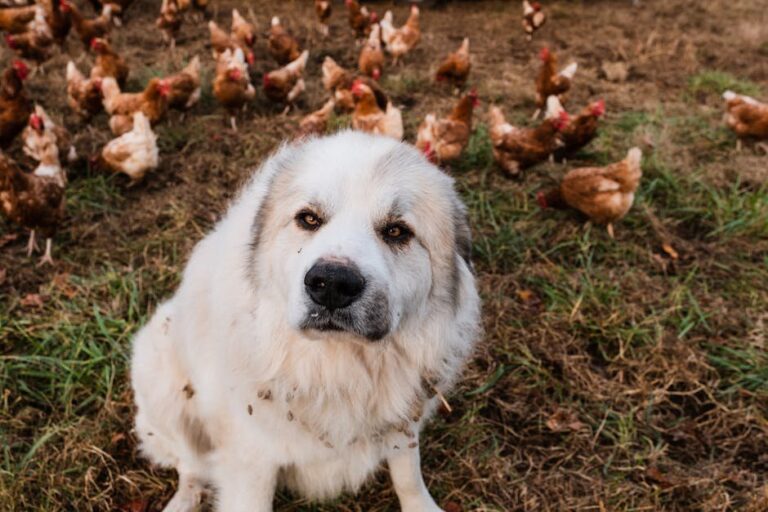
Introduction to Livestock Guardian Dogs
Livestock guardian dogs are a vital component of any poultry farm, providing protection from predators and securing the flock’s safety. In this overview, we’ll explore what makes them so effective at guarding your birds.
What are Livestock Guardian Dogs?
Livestock guardian dogs (LGDs) have been an essential part of agriculture for thousands of years. Their primary role is to protect livestock from predators such as coyotes, wolves, bears, and wild dogs. These intelligent canines are bred specifically to defend and watch over cattle, sheep, goats, and poultry.
The history of LGDs dates back to ancient times when humans first domesticated dogs. In many cultures, they were considered a vital component of farm life. For example, the Great Pyrenees, a popular breed used as an LGD, originated in the Pyrenees Mountains between France and Spain. They were tasked with guarding sheep from predators and protecting them from harsh weather conditions.
LGDs are not simply guard animals; they’re actively involved in defending their flock. They use their keen senses of smell and hearing to detect potential threats, then respond by alerting the rest of the flock and chasing off the predator. With proper introduction and training, LGDs can become an integral part of your farm’s security system, giving you peace of mind while also protecting your poultry from harm.
Benefits of Using Livestock Guardian Dogs with Poultry
Using Livestock Guardian Dogs with Poultry comes with numerous benefits that can significantly improve the health and well-being of your flock. One of the primary advantages is a reduced predation risk. Predators like coyotes, foxes, and stray dogs often target poultry farms due to their easy access and high value as food. By introducing LGDs into your farm, you’re increasing the likelihood that potential threats will be deterred or even attacked.
The presence of an LGD also translates to increased peace of mind for the farmer. No longer do you have to worry about predators sneaking onto your property under the cover of darkness, putting your valuable flock at risk. With a vigilant guardian watching over them, you can rest assured that your poultry are being protected 24/7.
Regularly monitoring the behavior and effectiveness of the LGD is crucial to ensure it remains an effective deterrent. By doing so, you’ll be able to identify any patterns or weaknesses in its vigilance and take corrective action if necessary.
Choosing the Right Breed of Livestock Guardian Dog for Your Farm
When it comes to selecting a breed, consider factors such as climate, terrain, and the specific needs of your farm, along with the temperament and characteristics you desire. This decision will greatly impact the effectiveness of your dog’s guardianship.
Factors to Consider When Selecting an LGD Breed
When it comes to choosing an LGD breed for your farm, several key factors come into play. First and foremost, consider the size of the dog. A larger breed can be intimidating to predators, but it may also require more space and resources on your farm. For example, a Great Pyrenees or Maremma Italiano can grow up to 30 inches in height and weigh over 100 pounds, making them effective deterrents against coyotes and other large predators.
However, if you have limited space or are looking for a breed that’s easier to manage, smaller breeds like the Australian Shepherd or Miniature American Shepherd may be a better fit. Another crucial consideration is temperament: look for breeds known for their calm and gentle nature, as LGDs need to be able to focus on guarding rather than being overly aggressive.
Finally, energy level is also an important factor. Some breeds, such as the Akbash, are bred to be high-energy dogs that require regular exercise and stimulation. Others, like the Komondor, are more laid-back and can thrive in a relatively sedentary environment.
Popular Breeds of Livestock Guardian Dogs Suitable for Poultry Protection
When it comes to choosing a breed of livestock guardian dog for poultry protection, several popular breeds stand out for their effectiveness. The Great Pyrenees, Akbash, and Maremma are three notable examples.
The Great Pyrenees is a natural choice for guarding poultry due to its strong instinct to protect against predators like coyotes and foxes. Originally bred in the Pyrenees Mountains to guard sheep, this breed’s independent nature makes it ideal for working with small flocks of birds. With proper socialization, they can form close bonds with their human caregivers.
The Akbash, hailing from Turkey, is another robust breed well-suited for guarding poultry. Its keen sense of smell and strong prey drive make it highly effective at detecting and chasing off predators. This breed requires consistent training and socialization to ensure it remains focused on its job.
Maremmas are a popular choice in the US due to their loyalty and protective nature. Bred to guard sheep in Italy, they possess an innate desire to safeguard against threats. Their ability to work independently makes them a great fit for farms with limited staff or space constraints.
When considering one of these breeds, it’s essential to remember that socialization is key. These dogs need early exposure to poultry and training to ensure they understand their role as guardians.
Training Your Livestock Guardian Dog to Protect Poultry
To train your livestock guardian dog to effectively protect your poultry, you’ll need to focus on obedience, boundaries, and instinctual guarding behaviors. With patience and consistency, your dog will learn to prioritize flock safety above all else.
Importance of Proper Training and Socialization
Proper training and socialization are crucial for Livestock Guardian Dogs (LGDs) to effectively protect poultry. This is because LGDs need to understand their role, be able to recognize potential threats, and learn how to respond accordingly.
When it comes to protecting poultry, proper training and socialization help LGDs differentiate between friendly and non-friendly animals, reducing the likelihood of unnecessary aggression. For example, a well-socialized LGD will be less likely to chase a chicken that’s trying to escape its enclosure but will instead focus on real threats like predators or intruders.
To ensure your LGD is properly trained and socialized, start by introducing them to various animals, including chickens, ducks, geese, and other poultry species. Gradually expose them to new environments, people, and situations to help them become confident and calm in the face of uncertainty. Socialization should begin from an early age, ideally around 8-10 weeks old, and continue throughout their life with regular training sessions.
Remember, a well-trained LGD is not only more effective at protecting your poultry but also easier to manage and maintain on your farm or homestead.
Techniques for Training an LGD to Guard Against Predators
Training an LGD to guard against predators requires patience, consistency, and positive reinforcement. Begin by exposing your dog to various environments, introducing them to different types of poultry, and gradually increasing the number of birds under their care.
Next, focus on exercises that simulate real-life scenarios. For example, hide a predator toy or mock animal behind a fence or tree, encouraging your LGD to investigate and defend. Reward them with treats and praise when they successfully locate and chase the “predator.”
Drills like “sentry duty” help your dog understand their role as a guardian. Have them sit or stand watch near the flock, with you hiding nearby to test their alertness. When they sound an alarm (barking or growling), reward them for protecting their charges.
Remember to socialize your LGD extensively and teach basic obedience commands like “stay” and “come.” With consistent training and positive reinforcement, your livestock guardian dog will learn to effectively guard against predators and protect your poultry with confidence.
Integrating Livestock Guardian Dogs with Poultry Flocks
When integrating a livestock guardian dog into your poultry flock, it’s essential to consider how they’ll interact and coexist peacefully. This section covers practical tips for a harmonious integration process.
Introduction of the LGD to the Poultry Flock
When introducing an LGD to a poultry flock, it’s essential to do so gradually and carefully to ensure a smooth transition. A sudden introduction can be overwhelming for both the dog and the birds, leading to stress and potentially even attacks on the flock.
Start by allowing the dog to become familiar with the farm or area where the birds will reside. This can be done by simply taking the LGD on a walk around the property or letting it sniff around the bird enclosures while they are still empty. Once the dog seems comfortable, you can begin introducing it to individual members of the flock under close supervision.
Begin with a small group of birds and allow them to interact with the dog in a controlled environment. Reward calm behavior in both the dog and the birds with treats. Gradually increase the number of birds being introduced over several days or weeks, always watching for signs of stress or aggression from either party.
Monitoring and Managing the Relationship Between the LGD and Poultry
Monitoring the relationship between your Livestock Guardian Dog (LGD) and poultry flock is crucial for maintaining harmony on your farm. Signs of stress or aggression from either party can be subtle but critical to address early on. Look out for changes in behavior such as increased growling, snarling, or avoidance around specific birds.
As you introduce the LGD to the poultry flock, keep a close eye on body language and interactions. If you notice any signs of stress or aggression, take immediate action by separating the animals temporarily or re-allocating resources (food, water, shelter) to promote balance. It’s also essential to establish clear boundaries and routines for feeding, exercise, and interaction between the LGD and poultry.
Some common signs of over-exuberance from an LGD include chasing or nipping at birds, while signs of fear or submission in birds may manifest as hiding, cowering, or refusal to access food. Regular monitoring allows you to intervene promptly and prevent damage to your flock’s health and productivity.
Health Considerations for Livestock Guardian Dogs with Poultry
When introducing a guardian dog to your flock, it’s essential to consider their potential impact on the health of both the animals and yourself. This section explores key health considerations for a harmonious coexistence.
Common Health Issues Affecting LGDs and Their Impact on Poultry Protection
As you work with your Livestock Guardian Dog (LGD) to protect your poultry, it’s essential to be aware of some common health issues that can impact their ability to do so effectively. Hip dysplasia is a significant concern for LGDs, as it can lead to mobility problems and affect their vigilance and responsiveness to potential threats. Eye problems such as cataracts or progressive retinal atrophy can also impair an LGD’s visual acuity, making it harder for them to detect predators.
These health issues can have a ripple effect on poultry protection. For instance, if your LGD is experiencing mobility issues due to hip dysplasia, they may struggle to chase away potential threats. Similarly, vision loss can lead to a decrease in their ability to detect and respond to predators quickly. Regular veterinary check-ups are crucial for identifying any health concerns early on, allowing you to address them promptly and minimize the impact on your LGD’s protective abilities.
To mitigate these risks, make sure to keep your LGDs on a balanced diet, provide regular exercise, and schedule annual check-ups with your veterinarian.
Preventative Measures to Keep Your LGD Healthy and Effective
Regular veterinary check-ups are crucial for maintaining the health and effectiveness of your LGD. Schedule annual vaccinations to protect against diseases such as parvovirus and distemper, which can be transmitted from wildlife or other dogs.
Additionally, ensure your LGD receives regular deworming treatments to prevent internal parasites that can compromise their immune system. Consult with a veterinarian to determine the best parasite control program for your region.
A healthy diet is also vital for maintaining an LGD’s physical and mental well-being. Provide high-quality feed that meets their nutritional needs, and ensure access to clean water at all times. A balanced diet will help prevent conditions such as hypothyroidism, which can impact an LGD’s ability to perform its primary function.
Regular foot trimming and nail maintenance are also essential for preventing discomfort and reducing the risk of injury. Regular exercise and mental stimulation through training and playtime will help keep your LGD engaged and focused on their protective duties.
By prioritizing preventative measures, you’ll be able to rely on your LGD to effectively safeguard your poultry flock for years to come.
Conclusion: Maximizing the Effectiveness of Livestock Guardian Dogs with Poultry
Now that you’ve learned how to introduce and train a livestock guardian dog, it’s time to think strategically about getting the most out of this powerful partnership with your poultry. This final section will help you optimize their effectiveness together.
Recap of Key Takeaways
In conclusion, we’ve covered the essential aspects of using Livestock Guardian Dogs (LGDs) with poultry. To recap, here are the key takeaways:
When selecting an LGD breed for poultry protection, consider factors such as size, temperament, and breed-specific traits. For example, a larger breed like a Maremma or Akbash is often more effective at guarding against predators than smaller breeds like Kangal or Komondor.
Effective training of your LGD involves socialization from an early age, boundary setting, and consistent reinforcement of desired behaviors. Positive reinforcement techniques such as clicker training can be particularly useful in building trust between dog and handler.
When introducing an LGD to a poultry flock, start with a slow introduction process to allow the dog to become familiar with the birds’ presence. Supervise interactions closely during this period to ensure both the dogs and birds feel comfortable around each other.
Remember, no two farms or situations are alike – the specific needs of your operation will dictate the most effective LGD strategy.
Future Considerations for Improving Livestock Guardian Dog and Poultry Interactions
As you continue to integrate livestock guardian dogs (LGDs) with your poultry flock, there are several future considerations to keep in mind for improving interactions between the two. Ongoing training and management will be crucial in maintaining a harmonious relationship.
One key aspect of ongoing training is ensuring that LGDs remain alert and attentive to potential threats, even as they become more comfortable with their surroundings. Regular exercises such as “scent work” can help keep them sharp and focused on detecting predators. You should also continue to monitor the behavior of both your LGD and poultry, making adjustments as needed to prevent conflicts or stress.
To further enhance interactions, consider incorporating “puppy socialization” into your training regimen. By introducing young puppies to the presence of chickens from an early age, you can help foster a sense of calm and acceptance among all flock members. This proactive approach will pay dividends in the long run by reducing stress and improving overall well-being for both dogs and birds.
By prioritizing ongoing training and management, you’ll be well-equipped to address any challenges that may arise and continue to enjoy the benefits of LGD-poultry interactions.
Frequently Asked Questions
Can I introduce multiple livestock guardian dogs to a poultry flock at the same time?
Yes, introducing multiple LGDs to your poultry flock can be beneficial, but it’s essential to ensure they’re compatible with each other and the birds. A gradual introduction process is crucial to prevent territorial conflicts and stress on the animals.
How do I handle cases where my livestock guardian dog starts showing aggression towards the poultry?
If you notice your LGD displaying aggression towards the poultry, intervene immediately by separating them and consulting a professional animal behaviorist for guidance. Regular training sessions and consistent boundaries will help address any underlying issues and prevent further conflicts.
What’s the ideal size of a poultry flock for a single livestock guardian dog to effectively protect?
The ideal flock size varies depending on the breed and experience level of your LGD, but as a general rule, a single dog can handle around 50-75 birds. Larger flocks may require multiple dogs or additional protective measures.
Can I use a mixed-breed livestock guardian dog with my poultry flock, or should I opt for a purebred?
While some farmers have success with mixed-breed LGDs, purebreds are often preferred due to their predictable temperament and established protective instincts. However, if you have experience with dogs and can provide proper training and socialization, a well-chosen mixed-breed might still be suitable.
How do I handle situations where predators target my poultry despite having a livestock guardian dog present?
Despite the presence of an LGD, predators may occasionally breach their defenses. In such cases, review your flock’s layout, ensure adequate shelter for both birds and dogs, and reinforce training sessions to improve the LGD’s vigilance and response times.