
Turkeys are known for their impressive displays of strutting, but have you ever wondered why they do this? Whether they’re establishing dominance or trying to attract a mate, turkeys strut with a confidence and elegance that’s hard to ignore. But it’s not just about looks – understanding the behavior behind turkey strutting can also reveal insights into their social dynamics and communication skills.
As we explore the fascinating world of turkey behavior, you’ll learn why strutting is a crucial part of their daily lives. From the cultural significance of this behavior in various societies to potential conflicts that arise when humans misinterpret it, we’ll dive deeper into the complex reasons behind turkey strutting. By the end of this article, you’ll have a new appreciation for these feathered friends and the intricate behaviors they exhibit.
Understanding Turkey Strut Behavior
Understanding turkey strut behavior is crucial for anyone looking to appreciate these birds’ unique displays, which reveal a lot about their mood and intentions. Let’s dive into what your turkey’s strutting habits might be trying to tell you.
Defining Strutting in Turkeys
When it comes to understanding turkey behavior, one of the most fascinating aspects is their strutting. So, what exactly is strutting? In simple terms, strutting refers to a turkey’s display of aggression and dominance through a series of specific postures and movements. This unique behavior sets it apart from other forms of turkey displays, such as courtship displays or threats.
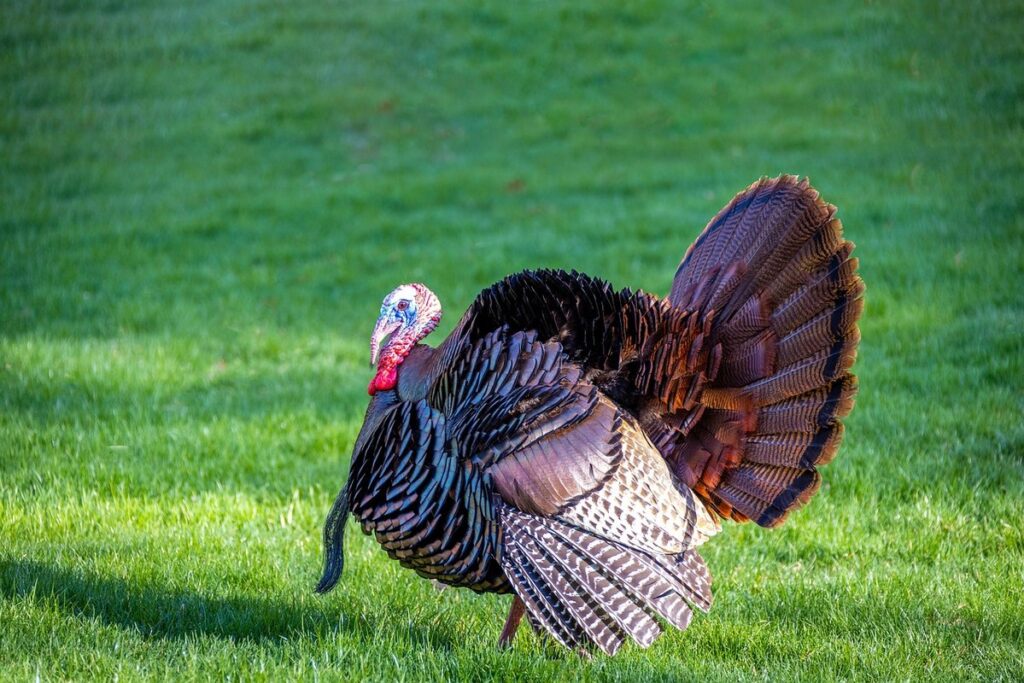
Strutting often begins with the turkey lowering its head and fanning out its tail feathers in an attempt to appear larger than it actually is. As the display progresses, the turkey will start bobbing its head, making a low-pitched gobble sound, and spreading its wings to showcase its impressive plumage. Unlike courtship displays, which are typically performed by males to attract females, strutting is more about asserting dominance over other turkeys.
For example, if you notice two male turkeys facing off in a paddock, one will likely start strutting as a way of intimidating the other and establishing its alpha status. While it may seem aggressive, strutting serves as an essential communication tool for turkeys to maintain social order within their flock.
Why Do Turkeys Strut?
When you observe a turkey strutting around, it’s likely trying to convey something important. One of the primary reasons turkeys engage in this behavior is to establish dominance within their flock. By spreading their tail feathers and puffing out their neck, they’re signaling their strength and status. This display of dominance helps maintain order within the group and prevents any potential power struggles.
Turkeys also strut as a way to attract mates during breeding season. Males will engage in this behavior to showcase their impressive plumage and size, making them more appealing to females. In fact, research has shown that males with larger, more vibrant feathers are more likely to be chosen by females. So, if you’re raising turkeys for breeding purposes, encourage your male birds to strut their stuff!
As a warning signal to potential predators, turkeys will also struts and make loud noises. This alarm call serves as a defense mechanism, alerting other members of the flock to potential danger. By recognizing these different contexts in which turkeys strut, you can better understand their behavior and create a more harmonious environment for them.
Physical Characteristics of Strutting Turkeys
When it comes to strutting, a turkey’s physical characteristics play a significant role in making them appear more impressive. Let’s take a closer look at how their bodies are designed for display.
Visual Cues
When observing a turkey strutting its stuff, it’s not just about watching them move around with confidence. There are distinct visual cues that give away their strut mode, and if you know what to look for, you’ll be able to recognize the difference between a relaxed gander and one in full display.
One of the most obvious signs is when a turkey puffs out its feathers on its neck and breast area. This is often accompanied by raised tail feathers, which can be held high or swept back over their back. The more a turkey struts, the more dramatic these visual displays become. When they’re feeling particularly confident, you may even see them bobbing their heads or making loud vocalizations to get attention.
As turkeys strut around, you’ll also notice an increase in movement and agitation. They might pace back and forth, shake their feathers, or even chase each other as part of the display. This is all a way for them to showcase their health, strength, and suitability as mates – so keep an eye out for these visual cues, and you’ll be well on your way to becoming a turkey strut expert!
Posture and Body Language
When turkeys strut, they undergo a remarkable transformation in their posture and body language. One of the most noticeable changes is the elevation of their head and neck, which becomes almost upright as if proud of themselves. This can be quite amusing to observe, especially when strutting males try to impress potential mates or intimidate rival suitors.
As turkeys strut, they also spread their wings and tail feathers, creating a vibrant display of plumage. The wings may be held high, almost perpendicular to the ground, while the tail feathers are fanned out behind them like a majestic fan. This is not just for show; it’s an important part of communication between turkeys. A strutting turkey with its feathers spread wide is signaling its health and dominance.
But perhaps most striking about a strutting turkey is its rapid, energetic movements. They will often bob their head and shake their tail feathers as they pace back and forth, creating a dynamic display that’s hard to ignore. This frenetic energy can be quite infectious, drawing in onlookers who find themselves mesmerized by the spectacle.
Contexts in Which Turkeys Strut
When it comes to strutting, you might be wondering when and where turkeys engage in their most impressive displays. Let’s explore some of the key contexts that trigger this behavior.
During Mating Season
During mating season, turkey behavior undergoes a significant transformation. Males, in particular, become more aggressive and confident as they compete for the attention of females. One of the most notable changes is an increase in strutting behavior.
As mating season approaches, males will often engage in intense displays of strutting to attract females. They’ll puff out their chests, flap their wings, and shake their tail feathers to create a mesmerizing spectacle. This display serves as a way for males to showcase their fitness and dominance, ultimately increasing their chances of winning over the female’s attention.
But how can you recognize when a turkey is strutting during mating season? Look for these key signs: rapid feather shaking, loud gobbling, and an overall air of confidence. If you’re lucky enough to witness this behavior in person, take note – it’s truly a sight to behold! By understanding the intricacies of turkey behavior, you’ll gain a deeper appreciation for their natural mating rituals.
In Dominance Hierarchies
When living together in flocks, turkeys establish complex social structures to maintain order and ensure survival. Dominance hierarchies are a crucial aspect of these social dynamics, where individual birds vie for higher rankings within the group. Strutting plays a significant role in this process as it serves multiple purposes beyond mere display.
Turkeys that engage in frequent strutting often assert their dominance over others. By performing elaborate displays, they signal their strength and superiority to other flock members. This can be seen in males vying for mating rights or birds competing for access to food resources. For example, in a study on wild turkeys, researchers observed dominant males engaging in prolonged strutting sessions to maintain their rank.
To recognize dominance hierarchies within your own turkey flock, look for repeated displays of strutting from certain individuals. These birds are often the ones that assertively move through the group, taking priority at feeders or roosting sites. By observing and understanding these dynamics, you can better appreciate the intricate social structures at play in your turkeys’ behavior.
As a Threat Display
When turkeys feel threatened by other animals, they often resort to strutting as a warning display. This behavior is particularly common when encountering predators like coyotes, foxes, or hawks. By spreading their tails and fanning out their feathers, turkeys create an illusion of size and intimidate potential threats.
In the presence of rival turkeys, especially during breeding season, males may also use strutting as a display to assert dominance. This competitive behavior can escalate into aggressive posturing, with birds vying for mating rights or territory control.
If you’re observing this behavior in your backyard flock, it’s essential to maintain a safe distance and avoid intervening. Allowing turkeys to express their natural behaviors helps them develop social skills and hierarchy within the group. However, if you notice signs of aggression or stress, consider providing separate enclosures for individual birds or consulting with a wildlife expert.
In some cases, turkeys may also strut as a display when feeling vulnerable due to age, injury, or illness. Recognizing these cues can help you take preventive measures and ensure the well-being of your flock.
Cultural Significance of Turkey Strut Behavior
So, you’re curious how turkey strutting has become such a big deal culturally? Let’s dive into the fascinating ways it reflects human society and its relationship with nature.
Symbolism and Representation
Turkey strutting behavior has been a subject of fascination for centuries, transcending its functional purpose to become a powerful symbol of confidence and status. In various cultures, the display of turkey strut is often associated with pride, dominance, and even spirituality.
In literature, the image of a strutting turkey has been used as a metaphor for human traits such as swagger, charm, and arrogance. For instance, in American folklore, the “strutting turkey” represents the quintessential male figure – boastful, proud, and unapologetic. In contrast, some indigenous cultures consider the turkey’s strut a spiritual dance, connecting the animal with the divine.
In popular culture, the strutting turkey has become an iconic figure, often used as a symbol of masculinity or virility. For example, in ancient Egyptian art, turkeys were depicted as symbols of fertility and abundance, while in modern advertising, companies have harnessed the image of a proud turkey to promote products like energy drinks and gym memberships.
As you observe your own turkey’s strutting behavior, remember that this display is not just about impressing potential mates or rivals – it’s also a reflection of their confidence, status, and even cultural significance. By acknowledging and respecting this symbolism, you can deepen your understanding of the turkey’s natural world and its place within human culture.
Historical Context
Throughout history, turkey strutting has been a subject of fascination and interpretation. In ancient Greece and Rome, turkeys were considered exotic birds, and their elaborate courtship displays were often depicted in art and literature. For instance, the Greek poet Aristophanes wrote about the “strutting” behavior of turkeys in his play “The Birds,” where he described them as “proudly strutting around like peacocks.”
In the Renaissance period, turkey strutting was a popular theme in European art, particularly in Dutch and Flemish paintings. Artists like Frans Snyders and Pieter Bruegel the Elder depicted turkeys in elaborate settings, showcasing their vibrant plumage and strutting behavior.
The 18th-century naturalist and writer, Buffon, also wrote extensively about turkey strutting in his influential work “Histoire Naturelle.” He described it as a crucial aspect of turkey courtship, where males would engage in elaborate displays to attract females. This interpretation has since been echoed by many ornithologists and wildlife experts.
These historical references not only highlight the enduring fascination with turkey strutting but also demonstrate the importance of understanding this behavior within its cultural context. By examining how different societies have interpreted and represented turkey strutting, we can gain a deeper appreciation for the complexities and nuances of animal behavior.
Consequences of Misinterpreting Turkey Strut Behavior
When it comes to turkey behavior, misinterpreting their strutting can have serious consequences for both you and your feathered friends. Let’s explore what happens when we get it wrong.
Human-Turkey Conflicts
When humans misinterpret turkey strut behavior, it can lead to potential conflicts between the two species. One common issue is aggressive behavior by turkeys in response to perceived threats. If a human approaches or enters an area where a turkey feels threatened or territorial, the bird may exhibit aggressive posturing such as spreading its tail feathers, puffing out its chest, and making loud calls.
In some cases, this aggressive behavior can escalate into physical attacks on humans. For example, if a human accidentally steps too close to a nesting site or approaches a dominant male turkey’s harem, the bird may become extremely defensive and attack. To avoid such conflicts, it’s essential to understand that turkeys are naturally wary of predators and will defend themselves when threatened.
To minimize potential conflicts with turkeys, keep a safe distance from them, especially during mating season or when approaching areas where they may be nesting. If you’re unsure about how to behave around turkeys in your area, consult with local wildlife experts or park rangers who can provide guidance on how to peacefully coexist with these fascinating birds.
Conservation Implications
When humans misinterpret turkey strut behavior, it can have far-reaching consequences that impact not only individual birds but also entire populations. Human-turkey interactions play a significant role in shaping the conservation status of wild turkeys.
For instance, if hunters mistake aggressive strutting for signs of aggression towards them, they may be more likely to shoot the bird. This misinterpretation can lead to unnecessary killings and disrupt the natural balance within flocks. Furthermore, if humans consistently view dominant males as threats due to their intense strutting displays, it may encourage hunting practices that target these birds.
As a result, certain populations of wild turkeys may suffer from an imbalance in sex ratios or even face local extinction. For example, a study in the 1990s found that overhunting of dominant male turkeys led to significant declines in population numbers in some regions.
To mitigate this issue, it’s essential for hunters and wildlife enthusiasts alike to educate themselves about turkey behavior and recognize the context behind strutting displays.
Conclusion: Appreciating Turkey Strut Behavior
Now that you’ve learned more about the fascinating reasons behind a turkey’s strut, let’s appreciate these majestic birds in their full glory. We’ll take a closer look at what makes strutting so essential to a turkey’s life.
Recap of Key Points
As we conclude our exploration into the fascinating world of turkey strut behavior, let’s take a moment to recap the key points that will help you better understand and appreciate these majestic birds.
Throughout this article, we’ve delved into the intricacies of turkey strut behavior, uncovering insights on how they communicate, display dominance, and showcase their genetic makeup. We discovered that male turkeys, in particular, are the primary strutters, using their elaborate displays to attract females and establish dominance within their flocks.
We also discussed the role of visual cues, such as feathers, eyespots, and beards, which play a significant part in a turkey’s strut behavior. These physical attributes serve as signals of health, strength, and genetic quality, making them crucial for mate selection.
By understanding these key points, you’ll be better equipped to appreciate the complexities of turkey strut behavior. Whether you’re an avid birdwatcher or simply looking to enhance your knowledge, this newfound appreciation will undoubtedly enrich your experience when observing these remarkable creatures in their natural habitat.
Final Thoughts
As we wrap up our exploration of turkey strut behavior, it’s essential to reflect on why understanding these complex interactions is crucial for effective coexistence with turkeys. By grasping the intricacies of their strutting habits, you’ll be better equipped to manage conflicts and foster a more harmonious relationship between humans and turkeys.
One key takeaway from our discussion is that turkeys are not just wild animals; they have distinct personalities, social dynamics, and communication styles. Recognizing these nuances can help you tailor your approach to interacting with them. For instance, if you notice a dominant turkey strutting around its territory, it’s best to give it space and avoid confrontations.
By appreciating the art of strutting in turkeys, you’ll become more attuned to their needs and boundaries. This not only promotes peaceful coexistence but also enriches your experiences with these fascinating creatures. Remember, every encounter is an opportunity to learn from and appreciate the unique behavior of these magnificent birds.
Frequently Asked Questions
What are the potential consequences of misinterpreting turkey strutting behavior?
Misinterpreting turkey strut behavior can lead to human-turkey conflicts, as humans may misunderstand a turkey’s intentions or mood. For example, if you mistake a dominant turkey’s strutting for aggression towards you, you might inadvertently provoke it. Understanding the cultural significance and symbolism behind turkey strutting is essential in avoiding such conflicts.
Can turkeys strut for reasons other than mating or dominance?
Yes, turkeys can exhibit strutting behavior for various reasons beyond mating or dominance. They may also strut as a threat display to predators or rival birds. Additionally, individual personalities and environmental factors can influence their strutting habits. Recognizing these different contexts is crucial for effective turkey management and appreciation.
How can I distinguish between a dominant turkey’s strutting and an aggressive one?
To differentiate between the two, pay attention to the turkey’s posture, body language, and visual cues. A dominant turkey’s strutting is often more deliberate and confident, while an aggressive turkey may display more rapid or erratic movements. Observe the situation and consider factors like the turkey’s environment and past behavior.
What role does culture play in interpreting turkey strutting behavior?
Cultural significance plays a vital part in understanding turkey strutting. In some societies, turkeys are considered sacred animals with symbolic meanings attached to their behaviors. Recognizing these cultural nuances can help you appreciate the complexity behind turkey strutting and avoid misinterpreting their behavior.
Can turkeys strut during other times of the year besides mating season?
Yes, turkeys may exhibit strutting behavior throughout the year, even outside of mating seasons. Dominant birds often maintain their status through consistent strutting displays, while younger or subordinate turkeys may still engage in strutting as they establish their position within the hierarchy.