
Are you about to embark on an exciting journey with your duck eggs? Turning them from day one to day 25 can be both thrilling and intimidating, especially if this is your first time incubating duck eggs. The process requires careful attention to detail, precise temperature control, and a little bit of patience. In just a few short weeks, you’ll go from carefully turning the eggs by hand to watching your new ducklings take their first wobbly steps outside. As we guide you through each crucial stage, from setting up your incubator to helping your new arrivals adapt to their surroundings, you can expect expert advice on everything in between. Whether you’re a seasoned pro or just starting out with your feathered friends, our comprehensive guide has got you covered every step of the way.
Introduction to Duck Egg Turning
Welcome to our comprehensive guide, where we’ll walk you through each stage of duck egg turning, from day one to 25. Let’s start with day one, when all is new and exciting!
What is Duck Egg Turning?
Duck egg turning has been gaining popularity worldwide for its unique and intricate designs. This process involves carefully rotating and manipulating a duck egg to create symmetrical patterns on the shell. The history of duck egg turning dates back to ancient civilizations, where it was used as a form of entertainment and art.
In recent years, duck egg turning has experienced a resurgence in popularity, particularly among artists and crafters. The rise of social media platforms like Instagram and YouTube has made it easier for enthusiasts to share their creations and connect with others who share similar interests. Many have taken up the hobby as a way to relax and express themselves creatively.
To give you an idea of just how intricate duck egg turning can be, some artists create designs that take hours or even days to complete. The level of detail required is remarkable, from creating uniform patterns to adding subtle shading and texture. With practice and patience, anyone can learn the basics of duck egg turning and start creating their own unique masterpieces.
As we explore the 25-day process of duck egg turning in this comprehensive guide, you’ll have the opportunity to learn various techniques, tips, and tricks from experienced artists.
Importance of Duck Egg Turning
As a backyard chicken keeper, one of the most exciting aspects of raising ducks is turning duck eggs. However, this process requires more than just tossing an egg into a machine; it demands precision, patience, and practice to achieve perfect results. Duck egg turning is an essential skill for several reasons.
Firstly, hatchable eggs are only viable for a short window – typically around 7-10 days. Beyond that, the chances of successful hatching significantly decrease. Turning duck eggs daily ensures even development, promoting healthy growth within the embryo. This process also fosters strong and straight beaks in ducklings, making them more likely to hatch successfully.
Secondly, regular egg turning helps prevent cracks and breakages, which can lead to losses for your flock. By gently rotating the eggs every day, you’ll reduce the risk of shell damage, preserving the contents inside. Lastly, mastering the art of duck egg turning will allow you to observe firsthand the intricate process of embryonic development – a truly fascinating experience for backyard chicken keepers.
Practicing proper technique early on is key; as you gain confidence and proficiency, your chances of successful hatching increase. Regularly checking on your eggs’ progress also helps identify potential issues before they become major problems.
Setting Up for Success: Day 1-5
Starting from day one, it’s crucial to lay a solid foundation that will help you build momentum and overcome common challenges in your duck egg turning journey. This is where preparation meets reality.
Preparing the Incubator
Before you start turning those duck eggs, it’s essential to prepare your incubator for the task at hand. This may seem like a no-brainer, but trust me, I’ve seen many a seasoned egg turner trip up on this crucial step.
First things first, ensure your incubator is calibrated correctly. Check the temperature control system to guarantee it can maintain a consistent 99°F (37°C) with a ±0.5°C tolerance. You don’t want any fluctuations in temperature that could affect the delicate process of duck egg turning.
Next up is humidity management – crucial for maintaining optimal conditions within the incubator. Aim for around 50-60% relative humidity during the first few days, gradually reducing it to 30-40% by day 10. You can use a hygrometer to monitor this closely. Don’t forget to pre-warm your incubator at least 24 hours prior to turning – this will help regulate temperature and reduce stress on the eggs.
To give you an idea of what to expect, most commercial egg turners have built-in sensors that automatically adjust temperature and humidity levels for optimal conditions. However, if you’re working with a more basic setup or DIY incubator, make sure you understand how these parameters interact and affect your duck egg turning process.
Candler Training and Turning
Now that you have your duck eggs safely stored in the incubator, it’s time to start monitoring their progress. One of the most crucial skills for a successful duck egg turner is candler training. A candler is an essential tool used to examine the developing embryo within the egg without breaking it open.
To use a candler effectively, you’ll need to get comfortable with the process of shining light through the eggshell. Start by holding the candler at a 45-degree angle and slowly moving it around the egg to detect any signs of life. Begin with eggs that are around day 7-10 of incubation, as this is usually when the embryo becomes visible.
When turning the eggs for candling, make sure to rotate them gently but firmly to prevent any damage. Start by rotating the eggs clockwise and then counterclockwise to ensure even development. As you get more comfortable with the process, you’ll be able to detect the subtle signs of life within the egg.
Remember, candler training is an essential step in ensuring the health and success of your ducklings. With practice, you’ll become proficient in detecting any issues or abnormalities that may arise during incubation.
Critical Development Stages: Days 6-12
Between days 6 and 12, your duck eggs will undergo significant development, and you’ll start to notice notable changes in their shape and embryo formation. Let’s dive into what to expect during this critical period.
Embryonic Development
As we reach day 6-12 of duck egg turning, the embryo is undergoing rapid development. During this period, several critical milestones occur that will shape the future growth and health of your ducklings.
At around day 7, you’ll start to notice a significant increase in embryonic movement as the muscles begin to develop. This is an exciting time for many breeders, as they get their first glimpse of the embryo’s potential.
One major milestone during this period is heart formation, which typically occurs between days 8-9. The heart begins to pump blood through its chambers, and you’ll notice a slight change in the embryo’s overall size and shape. Keep in mind that these changes can be subtle, so it’s essential to carefully monitor your egg for any signs of distress.
By day 10, limb growth accelerates, with both wings and legs starting to take shape. This is an important period for breeders who want to ensure their ducklings grow strong and healthy limbs.
Keep in mind that these developments are a normal part of the embryonic process. However, if you notice any unusual changes or signs of distress, consult your breeder’s manual or seek advice from an experienced duck enthusiast.
Monitoring Temperature and Humidity
Maintaining optimal temperature and humidity levels is crucial for healthy embryo development during the critical stages of Days 6-12. A consistent temperature range between 99°F to 100°F (37°C to 38°C) promotes even growth, while maintaining a relative humidity level around 50-60% prevents excessive evaporation. Monitor your incubator’s thermometer and hygrometer closely, as small deviations can significantly impact development.
For instance, if the temperature drops below 98°F (36.7°C), it may cause the embryo to stop developing or even die. Conversely, temperatures above 100°F (37.8°C) can lead to over-development, making it difficult for the chick to break free from its shell during hatching.
To ensure precise control, consider investing in an incubation cabinet with automatic temperature and humidity adjustment. Regularly clean and maintain your equipment to prevent moisture buildup and bacterial growth. By paying close attention to these factors, you’ll significantly reduce the risk of embryo loss and set yourself up for successful duck egg turning.
Key Turning Points: Days 13-18
Now that you’ve made it through the first half of the incubation period, let’s dive into the next set of critical days (Days 13-18) where your duck eggs undergo significant transformations. These developments will determine their hatching success.
Heartbeat Detection
As you approach day 13 of duck egg turning, it’s essential to know when exactly to detect the heartbeat. This crucial milestone signifies the embryo’s development and readiness for incubation. You can use a stethoscope or other tools to listen for the faint heartbeat within the egg.
To begin, gently place the egg in an egg cup or holder, ensuring it remains steady and secure. Next, position the diaphragm of the stethoscope over the large end of the egg, following the curvature of the shell. Hold your breath and focus on listening carefully, as the heartbeat is a delicate sound.
Be aware that not all eggs will produce a clear heartbeat reading. Some may be too early or too late for detection, while others might not develop at all. Factors such as temperature fluctuations, humidity levels, or egg quality can also impact the detectability of the heartbeat.
In general, you should expect to hear the first heartbeats around days 14-15. However, this timeframe may vary depending on factors like breed and environmental conditions. Monitor your eggs closely for any signs of development, and be prepared to intervene if necessary. With attention to detail and patience, you’ll successfully detect those vital heartbeats in no time.
Turning for Air Cell Formation
Around day 13-14, you’ll start noticing a significant change in your duck eggs’ development – the formation of air cells. This process is crucial for the overall health and quality of the chick that will eventually hatch. The air cell is essentially a small gap between the inner membrane of the egg and its shell.
As the embryo grows inside the egg, it produces waste and gases, which accumulate in this space. A well-formed air cell is vital for the chick’s survival, as it allows for gas exchange and prevents the buildup of toxic substances. However, excessive or uneven air cell formation can lead to issues such as poor hatching rates or even embryo death.
When you notice your eggs’ air cells are becoming more pronounced, it’s essential to adjust your turning frequency accordingly. Typically, you’ll want to reduce the number of turns per day to prevent breaking the yolk and causing damage to the delicate inner membranes. A good rule of thumb is to turn the eggs 2-3 times a week once they reach this stage, allowing them to rest in their position for longer periods.
Approaching Hatching: Days 19-22
Now that you’ve made it past day 18, let’s dive into the critical days leading up to hatching – a time of heightened anticipation and careful observation. Your duckling is almost ready to emerge.
Pipping and Beak Development
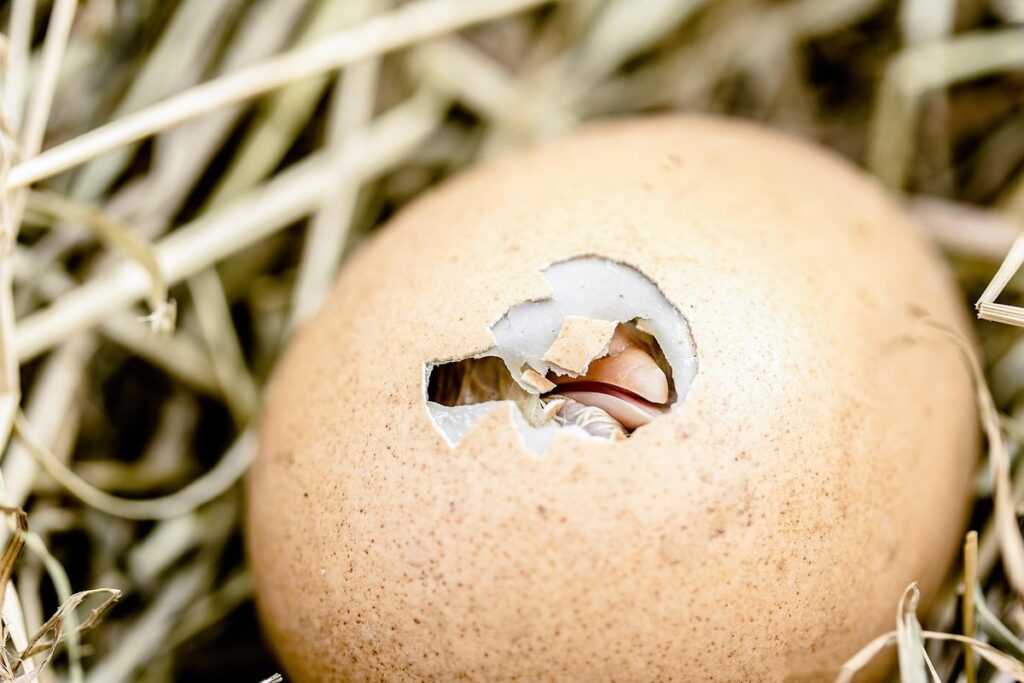
As you approach days 19-22 of incubation, it’s essential to monitor your duck eggs for signs of pipping and beak development. Pipping is the process by which the embryo begins to break through the shell, usually from the air cell end. Around day 21, you may notice a small crack or a faint line on the eggshell, indicating that pipping has started.
Common signs of pipping include a slight depression in the shell, followed by a tiny hole, and finally, the emergence of the beak. Beak development is crucial during this period as it helps the duckling to breathe and eventually break free from the shell. You may observe the embryo’s beak poking out of the eggshell or see it wobbling gently.
Keep in mind that pipping can occur at any time between day 20 and 22, so it’s vital to check your eggs frequently during this period. If you notice any signs of pipping, it’s essential to handle the eggs with care to avoid damaging the developing duckling inside.
Preparing the Brooder
As you approach hatching day, it’s essential to prepare a safe and comfortable environment for your newly hatched ducklings. Setting up a brooder is crucial for their survival and growth during the first few weeks of life. A brooder is essentially a controlled space where your ducklings can grow and develop without being exposed to external stressors.
When setting up a brooder, ensure that it’s large enough for your ducklings to move around comfortably. A good rule of thumb is to provide at least 2-3 square feet of floor space per duckling. You’ll also need to set the temperature correctly – ducklings require a warm environment, especially during their first few days. Aim for a temperature range between 90°F to 95°F (32°C to 35°C) on the first day and gradually decrease it by 5°F every week.
Use a safe and dry bedding material such as pine shavings or straw to line the brooder floor. Avoid using soft materials like blankets or towels as they can cause respiratory problems in ducklings. Change the bedding frequently to maintain hygiene and prevent bacterial growth.
The Final Stretch: Day 23-25
As we approach the final days of your duck egg turning journey, you’ll want to focus on maintaining optimal temperature and humidity levels. Now it’s time to tackle the critical last stretch.
Monitoring for Hatching Issues
As you approach the final stages of incubation (Days 23-25), it’s essential to monitor for potential hatching issues. One common concern is a decrease in embryo movement. If you notice less activity than usual, gently rock the egg or rotate it every hour to ensure proper distribution of the yolk sac and embryo.
Another crucial aspect to keep an eye on is temperature fluctuations. Even slight changes can impact the embryo’s development, making it more susceptible to stress and potentially hindering the hatching process. Keep your incubator at a consistent 99-100°F (37.2-37.8°C), as sudden drops or spikes in temperature can cause harm.
Monitor for any signs of fungal growth on the eggshell, which can be identified by tiny white specks or powdery patches. This should be addressed immediately to prevent mold from spreading and infecting the embryo.
Regular candling is also vital during this period. It allows you to assess the embryo’s development, detect potential issues, and adjust your care accordingly. If you’re concerned about any aspect of incubation or suspect an issue, reach out to a reputable breeder or experienced duck enthusiast for guidance.
Helping Ducklings Adapt to Their New Environment
As you approach the final stretch of raising your ducklings from day 23-25, it’s essential to start thinking about transitioning them from their cozy brooder to their new home. This can be an exciting but also challenging time for both you and your feathered friends.
At around 3-4 weeks old, ducklings are ready to move out of the brooder and into a larger enclosure or area where they’ll spend most of their time. However, this change needs to be done gradually to prevent stress and ensure a smooth transition.
When introducing them to their new environment, make sure it’s big enough for them to roam around and exercise. A minimum of 2-3 square feet per duckling is recommended.
Here are some tips to consider:
* Gradually introduce them to their new surroundings by allowing them to explore at their own pace.
* Keep the first few days in their new home calm and quiet, minimizing stressors like loud noises or sudden movements.
* Ensure they have access to fresh food, water, and a clean area to rest.
* Supervise their interactions with other birds, especially if introducing new additions to your flock.
Socialization is crucial during this period. Ducklings need to interact with each other, as well as with humans, to develop good behavior and a strong bond. Encourage positive interactions by spending quality time with them, handling them gently, and allowing them to explore their surroundings.
Conclusion
Now that we’ve made it through 25 days of duck egg turning, let’s recap the key takeaways and see how far you’ve come as a seasoned turner. You’re on your way to creating beautiful pieces!
Recap of Key Takeaways
To successfully navigate the first 25 days of duck egg turning, it’s essential to recap some key takeaways. By now, you’ve established a routine and are monitoring temperature, humidity, and candling regularly.
Keep in mind that consistent temperature and humidity levels between 50-60°F (10-15°C) and 40-50% will support even development and prevent cracking. You should also have set up a turning device or manual system to ensure the eggs aren’t developing unevenly.
Remember to handle the eggs carefully, as rough handling can cause injury and affect the quality of your ducklings. This is especially crucial during the first week when embryos are most vulnerable. Your records show that you’ve been rotating the eggs every 12 hours, which is correct for this period.
By now, you should be able to see embryo development through candling, and this will help guide your decision-making process going forward. Continue monitoring temperature, humidity, and candling regularly to ensure a healthy hatch rate.
Tips for Future Improvement
As you’ve reached the end of this comprehensive guide to duck egg turning, it’s essential to reflect on what you’ve learned and think about areas for improvement. As a backyard chicken keeper, refining your skills is crucial to consistently producing high-quality duck eggs. One key area to focus on is monitoring temperature fluctuations in your incubator or brooder.
Maintaining a consistent temperature is vital during the first 25 days of development, especially between day 7 and 18. Even slight variations can impact hatch rates or lead to weak chicks. Consider investing in a digital thermometer for precise readings or using analog thermometers with a narrow range to minimize inaccuracies.
Additionally, consider implementing a regular cleaning schedule for your incubator or brooder. Bacterial growth can be a significant threat to egg health and chick viability. Regularly cleaning surfaces, replacing bedding materials, and sanitizing equipment will help prevent contamination.
Frequently Asked Questions
What is the ideal temperature range for duck egg incubation, and how do I ensure consistency?
The optimal temperature range for duck eggs is between 99°F (37°C) and 100°F (38°C). To maintain consistency, invest in a reliable thermometer and hygrometer. Place them inside the incubator to monitor temperature fluctuations. Use a temperature controller or adjust your incubator settings as needed to stay within this narrow temperature window.
How often should I turn my duck eggs during critical development stages?
During days 1-18, turn your duck eggs 3-5 times a day. This helps prevent sticking and ensures even development. Be more gentle with the eggs when turning them closer to hatching (days 19-25), as excessive movement can cause stress.
Can I use a digital candler or a traditional candle for observing heartbeats?
Both methods work, but digital candlers offer more precision and accuracy. However, if you prefer using a traditional candle, ensure it’s clean and at the correct temperature (100°F) to avoid damaging the developing embryo.
How do I handle any issues that arise during incubation, such as mold growth or inconsistent temperature?
Identify the root cause of problems promptly. For instance, check for drafts in your incubator or inspect the humidity levels if you notice condensation. Addressing issues early on will save you time and stress in the long run.
What steps should I take to prepare my brooder for the new arrivals?
Before transferring ducklings to their new environment, ensure the brooder is clean, dry, and at a comfortable temperature (around 90°F). Provide adequate ventilation, heat sources, and nutritious food and water. Monitor temperature fluctuations and make adjustments as needed to create a suitable space for your growing feathered friends.