
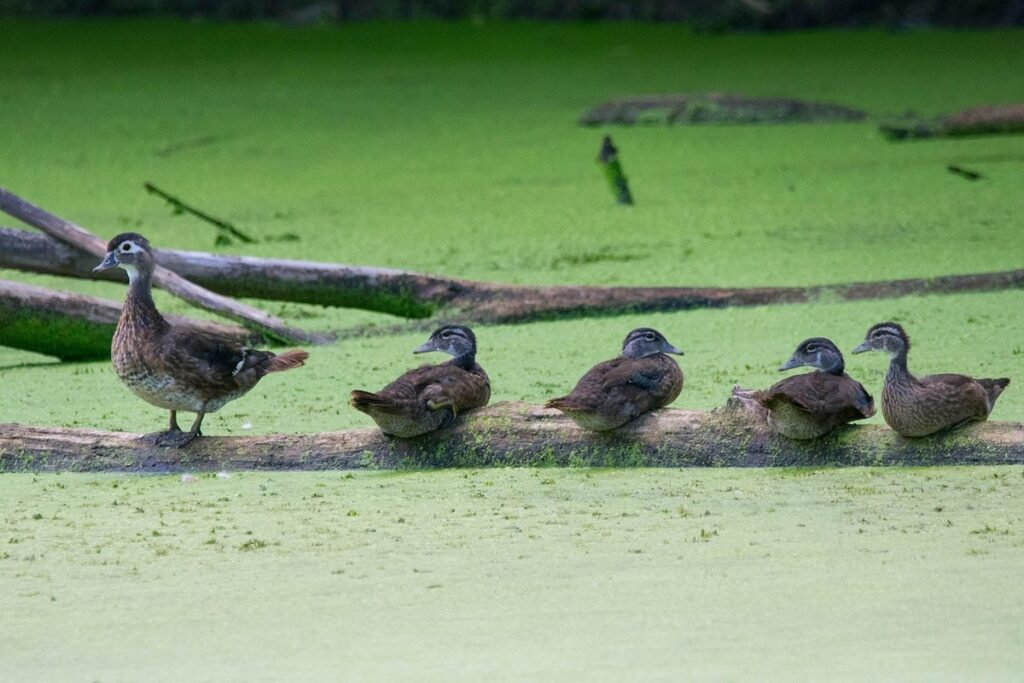
Wood ducklings are one of the most adorable sights in the world of waterfowl, but have you ever wondered what they eat to grow big and strong? As young wood ducks develop from fluffy little balls of down to sleek, flying birds, their diet plays a crucial role in their growth and survival. In the wild, wood ducklings feed on a variety of foods that are rich in nutrients, including insects like mosquitoes and snails, aquatic plants like water lilies, and even tiny crustaceans like crayfish. But did you know that human-provided food sources can also become an essential part of their diet? In this article, we’ll explore the different types of food that wood ducklings eat in the wild and how they adapt to new foods as they grow.
Food Sources in the Wild
When it comes to foraging, young wood ducks need a diverse diet that includes aquatic plants, insects, and small invertebrates found near water. Let’s explore some of their favorite food sources in more detail.
Insects and Worms
As wood ducklings forage for food, they primarily rely on insects and worms to sustain themselves. Aquatic insects like mosquito larvae and beetles are a staple in their diet, providing essential protein and nutrients. Wood ducklings use their sharp beaks to dig into mud and water, uncovering hidden morsels with ease.
One of the most fascinating aspects of wood duckling behavior is their ability to extract food from submerged vegetation. They’ll often swim alongside plants, using their strong legs to kick up silt and reveal hidden insects. This hunting technique allows them to exploit a vast array of invertebrate prey, including aquatic beetles, mayflies, and snails.
To mimic this feeding behavior, you can create a shallow water feature with submerged vegetation for your own wood ducklings (or those in your care). By providing a varied diet rich in insects and worms, you’ll be supporting their growth and development. Remember to also supplement their diet with commercial duck starter feed, ensuring they receive a balanced mix of nutrients.
Aquatic Plants and Algae
In addition to insects and crustaceans, wood ducklings also rely on aquatic plants and algae as a vital source of nutrition. As they forage through the shallow waters of their habitat, they feed on leaves, stems, and flowers from various water plants, such as cattails, bulrushes, and water lilies. These plant parts are rich in fiber, vitamins, and minerals that support the ducklings’ growth and development.
Wood ducklings also consume algae that grows on rocks, logs, and other submerged surfaces. Algae is an excellent source of protein, which is essential for their rapid growth and energy needs. By incorporating aquatic plants and algae into their diet, wood ducklings can meet their nutritional requirements and thrive in their environment.
When choosing water plants to feed your wood ducklings, consider providing a variety of species to ensure they receive a balanced diet. Make sure to maintain clean water conditions to prevent the spread of disease-causing pathogens that may be present on submerged vegetation. By offering aquatic plants and algae as part of their diet, you can help support the overall health and well-being of your wood ducklings.
Introduced Foods and Artificial Sources
When it comes to wood ducklings, they may start incorporating some human-provided foods into their diet, including introduced foods and artificial sources of nutrition that play a significant role in their development.
Human-Provided Food Sources
When it comes to wood ducklings, human-provided food sources can become an integral part of their diet. Many bird enthusiasts and nature lovers enjoy feeding these adorable creatures, often with the best of intentions. However, it’s essential to be aware that relying too heavily on these sources can have unintended consequences.
Wood ducklings fed primarily by humans tend to develop reduced foraging skills, which is crucial for their survival in the wild. As they grow older, they may struggle to find food independently, making them more vulnerable to disease and other environmental threats. In fact, studies have shown that ducklings raised on artificial food sources often suffer from malnutrition, as these foods lack the essential nutrients found in natural plant life.
If you’re considering feeding wood ducklings, it’s crucial to strike a balance between supplementing their diet with nutritious human-provided food and allowing them to forage naturally. A good rule of thumb is to limit hand-feeding to no more than 10% of their total diet, ensuring they have ample opportunities to develop essential foraging skills.
Aquatic Plants in Ponds and Lakes
When it comes to what wood ducklings eat, an often-overlooked factor is the impact of invasive aquatic plants on their diets. Non-native plants can drastically alter the availability and quality of food resources in waterways, affecting not just wood ducklings but entire ecosystems.
Invasive aquatic plants like water hyacinth, Eurasian watermilfoil, and Brazilian elodea are notorious for outcompeting native vegetation and choking out beneficial plant life. This not only reduces the quantity of food available to wood ducklings but also compromises its nutritional quality. For example, an overgrowth of invasive algae can lead to a deficiency in essential nutrients like iron and calcium.
As a concerned wood duck enthusiast, you may wonder how to mitigate this issue. Start by identifying invasive plant species in your area’s waterways and taking steps to control their spread. This could involve manual removal, herbicides (used judiciously), or introducing native plants that will compete with the invaders for space and resources.
By addressing invasive aquatic plants, you can help create a more balanced ecosystem where wood ducklings have access to a diverse array of nutritious food sources.
Developmental Stages and Dietary Changes
As wood ducklings grow, their dietary needs change significantly, making it crucial to understand how their eating habits shift during different stages of development. Here’s what you need to know about feeding your growing duckling.
Nestling Stage (0-4 weeks)
During their first four weeks, wood ducklings are completely dependent on their parents for nutrition. At this stage, they are unable to venture far from the nest and rely heavily on their mother’s care. The most significant way they receive food is through regurgitation, where their mother spits up partially digested food into her beak and then feeds it to her ducklings.
This process begins almost immediately after hatching, with the mother duckling feeding her young ones within hours of emergence from the egg. As the ducklings grow, they start to learn how to eat solid foods on their own, but even at this stage, they still rely heavily on their mother’s regurgitated food for sustenance.
It’s essential for wood duck mothers to produce an adequate amount of food for their young ones during this critical period. A study found that a female wood duck needs to consume up to 2-3 times her own body weight in food each day to ensure her ducklings receive the nutrients they need to grow and develop properly.
By observing how wood duck parents care for their young, we can learn valuable lessons about providing optimal nutrition during this crucial stage of development.
Fledgling Stage (4-8 weeks)
During the fledgling stage, which spans from approximately four to eight weeks after hatching, wood ducklings undergo significant changes in their diet and foraging behavior. At this age, they begin to transition from relying solely on their mother’s milk to eating more solid foods.
As the days pass, you’ll notice your wood ducklings venturing further away from their nest and starting to forage on their own. This is a critical period of exploration, during which they learn to navigate their surroundings and develop essential survival skills. During this stage, it’s essential to provide a balanced diet that includes both aquatic plants and insects.
Start by offering your wood ducklings a mix of chopped aquatic plants such as duckweed, watercress, or spinach. You can also supplement their diet with crushed eggshells, which are rich in calcium, a crucial nutrient for their developing bones. As they become more confident in their foraging abilities, you can begin to introduce insects like mealworms or crickets.
Habitat-Specific Dietary Adaptations
As wood ducklings grow and develop, their dietary needs change based on their surroundings, so let’s dive into what they eat in different types of habitats. This includes ponds, marshes, and forests.
Forested Wetlands
In forested wetlands, wood ducklings have adapted to take advantage of the abundant food sources available. These areas are rich with insects, worms, and other invertebrates that serve as essential components of a wood duckling’s diet.
As they forage through the underbrush, wood ducklings feed on aquatic insects like mayflies, caddisflies, and stoneflies. They also consume various species of worms, such as earthworms and leeches, which are rich in nutrients and protein. Additionally, they’ll eat snails, slugs, and other small mollusks.
To take advantage of these food sources, wood ducklings have developed strong foraging skills that enable them to search both in the water and on land. When foraging in forested wetlands, it’s essential to remember that a diverse diet is crucial for their growth and development. By providing a mix of insects, worms, and other invertebrates, you can help support the well-being of wood ducklings in these unique environments.
Freshwater Marshes and Ponds
In freshwater marshes and ponds, wood ducklings have adapted to thrive on a diet rich in aquatic plants, algae, and small crustaceans. As they forage along the water’s edge, they feed on tender shoots of cattails, bulrushes, and other emergent vegetation. Aquatic plants like duckweed and water lilies provide a valuable source of nutrition, particularly during their early stages of growth.
Small crustaceans like snails, leeches, and tiny crayfish are also an essential part of their diet. Wood ducklings have even been known to raid the nests of other birds, such as herons and egrets, to feed on the eggs or chicks. This adaptability is crucial in these ecosystems, where food sources can be scarce and unpredictable.
To encourage a diverse range of aquatic plants in your pond or marsh, consider incorporating native species that wood ducklings prefer. For example, adding water lilies or cattails can provide a bounty of nutritious shoots for young ducks. By creating a welcoming environment for these plants, you’ll be supporting the local wildlife and ensuring a steady supply of food for wood ducklings to thrive.
Impacts of Environmental Changes
As we explore what wood ducklings eat, it’s essential to consider how environmental changes can affect their food sources and survival. Let’s dive into the impacts these changes have on young wood ducks’ diets.
Climate Change
Climate change poses a significant threat to wood duckling populations. Rising temperatures and changing weather patterns can alter the distribution and abundance of their primary food sources, including insects, aquatic plants, and small invertebrates. Warmer waters can lead to an increase in algae growth, which can deplete oxygen levels and make it difficult for wood ducklings to find nutritious food.
Insect populations, a crucial component of a wood duckling’s diet, are expected to decline due to climate change. This is because warmer temperatures can disrupt the delicate balance between insect populations and their natural predators. As a result, wood ducklings may struggle to find sufficient protein-rich foods, leading to stunted growth and reduced survival rates.
As we continue to monitor the impacts of climate change on wood duckling populations, it’s essential for wildlife enthusiasts and conservationists to take action. By supporting habitat restoration efforts and promoting sustainable land-use practices, we can help mitigate the effects of climate change on these vulnerable birds.
Habitat Alteration and Degradation
When it comes to wood ducklings’ access to food resources, human activities play a significant role. Deforestation, for instance, can lead to the loss of natural habitats that provide wood ducklings with essential food sources such as aquatic plants and insects. Urbanization also contributes to habitat alteration by fragmenting remaining habitats and reducing biodiversity.
The consequences of these changes can be far-reaching. Wood ducklings’ populations are often affected by reduced access to suitable breeding grounds, leading to decreased reproduction rates and survival chances. Furthermore, the loss of aquatic plant diversity can impact wood ducklings’ diet composition. For example, if their primary food source – seeds from aquatic plants – becomes scarce due to habitat degradation, wood ducklings may be forced to adapt to alternative food sources like insects or small invertebrates.
As an indirect consequence of human activities, ecosystems that support wood ducklings also undergo significant changes. The removal of native vegetation for agriculture or urban development disrupts nutrient cycling and can lead to erosion. This can have cascading effects on entire ecosystems, further exacerbating the vulnerability of wood duckling populations.
Frequently Asked Questions
Can wood ducklings adapt to eating human-provided food sources quickly?
Yes, wood ducklings can adapt to human-provided food sources relatively quickly, but it’s essential to introduce new foods gradually and in small amounts to avoid digestive issues. Start by offering high-quality commercial duck pellets or grains near the water source, allowing them to get used to the new diet.
How do I know if my wood ducklings are eating enough aquatic plants?
Monitor their foraging behavior, as they should be actively swimming alongside plants and using their beaks to dig into mud. Ensure that your pond or lake has a diverse range of aquatic plants, including water lilies, cattails, and submerged vegetation. Regularly inspect the area around the plants to see if ducklings are extracting food from them.
What are some signs of malnutrition in wood ducklings?
Look for changes in behavior, such as lethargy or loss of appetite. Check their plumage for dullness or thinning feathers. Inspect their beaks and feet for unusual wear or damage. If you notice any of these signs, assess your food sources and adjust them accordingly.
Can I feed wood ducklings insects that have been collected from my yard?
While it’s tempting to collect insects from your yard, it’s best not to feed wood ducklings captured insects. Wild insects can contain pesticides, heavy metals, or other contaminants that can harm the birds. Instead, provide a diverse range of commercial insect-based foods specifically formulated for waterfowl.
How often should I offer human-provided food sources to my wood ducklings?
Offer human-provided food sources 2-3 times a day, depending on your specific location and the availability of natural food sources. Ensure that you’re not overfeeding or underfeeding your birds. Monitor their body condition and adjust the frequency and quantity of food accordingly to maintain optimal health and growth.